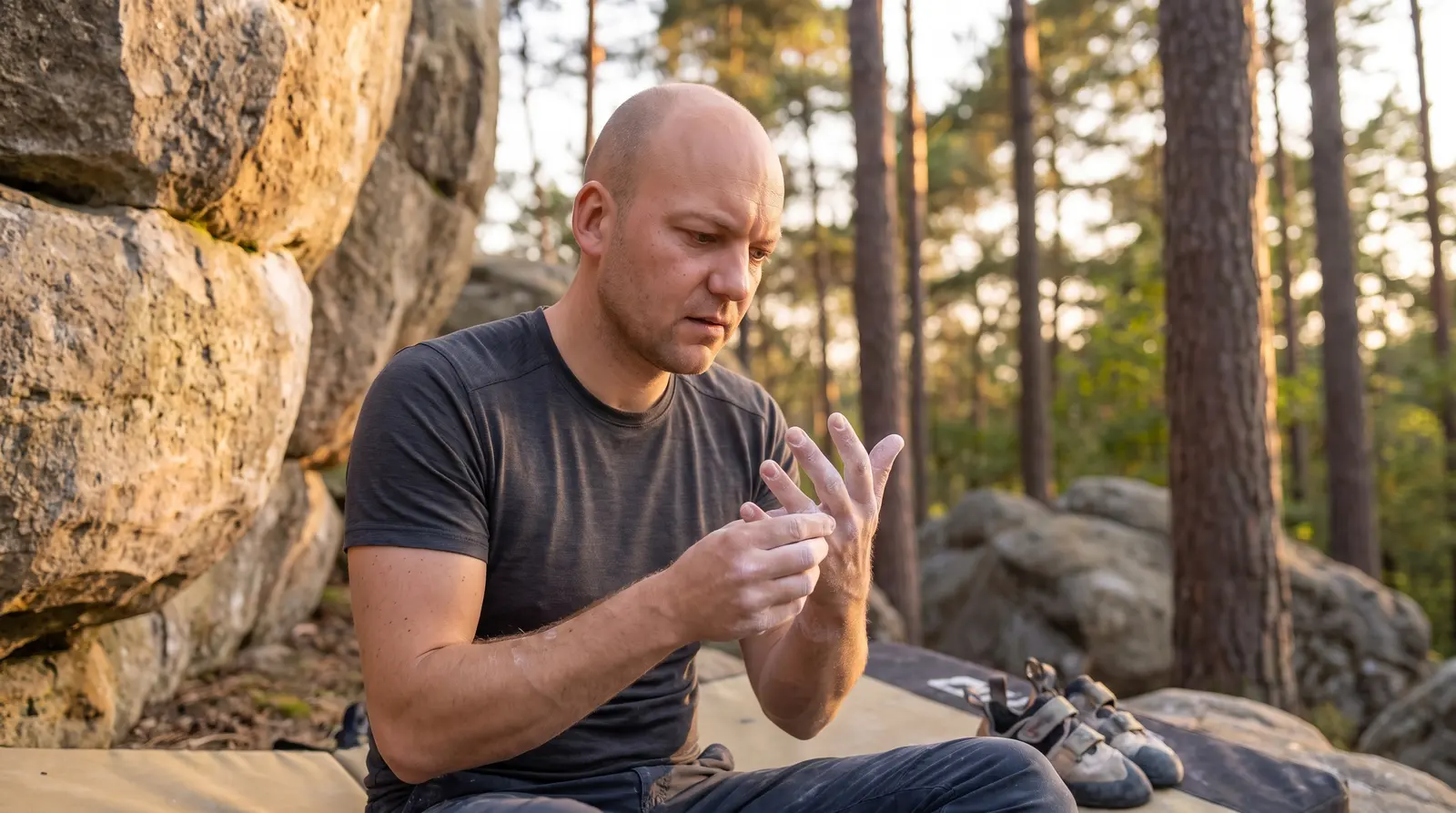
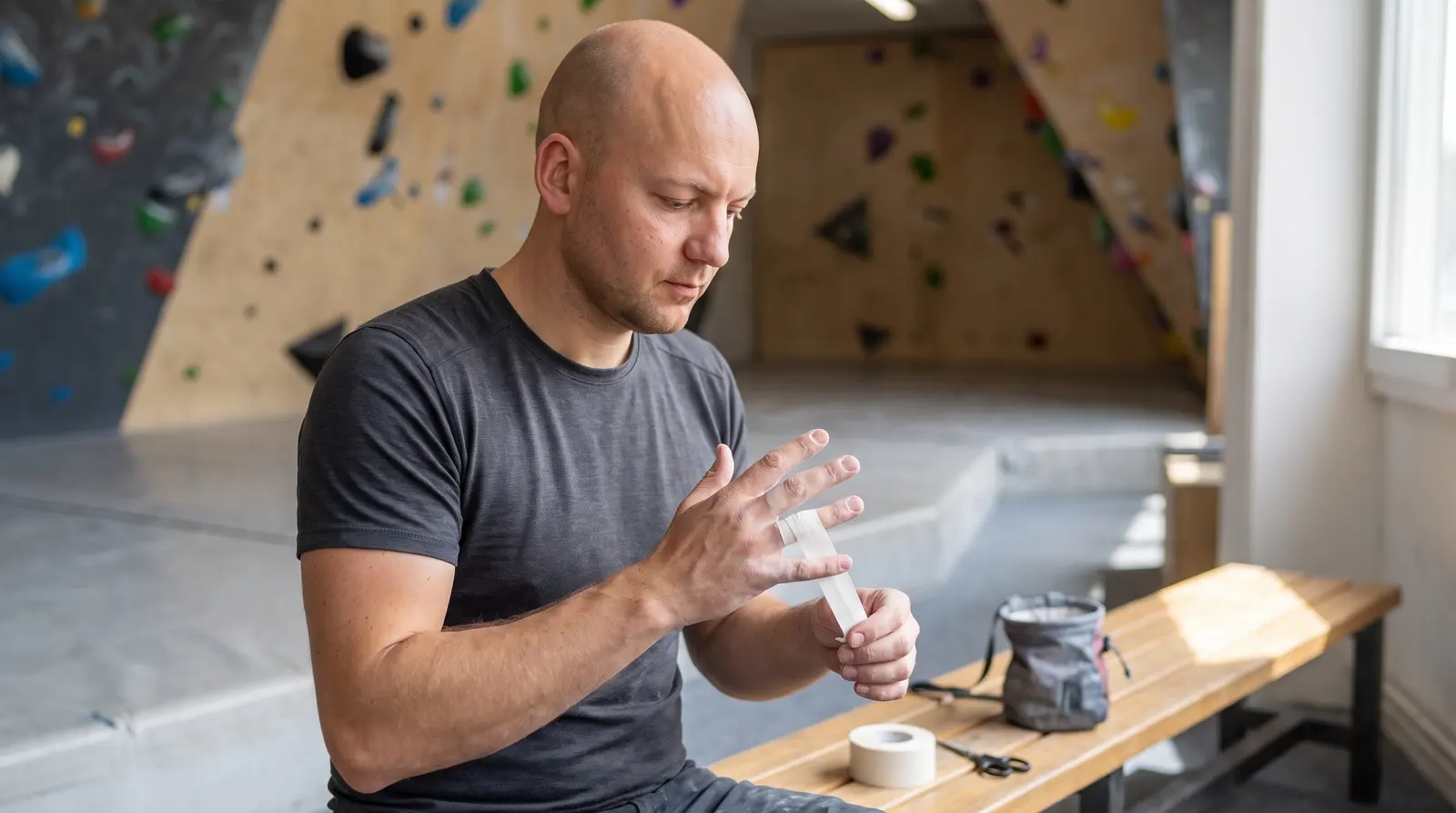
How Long Does an A2 Pulley Take to Heal? Timelines by Grade
 Petr Hess, strength & conditioning coach
Updated 2 Nov 2026 · 10 min read
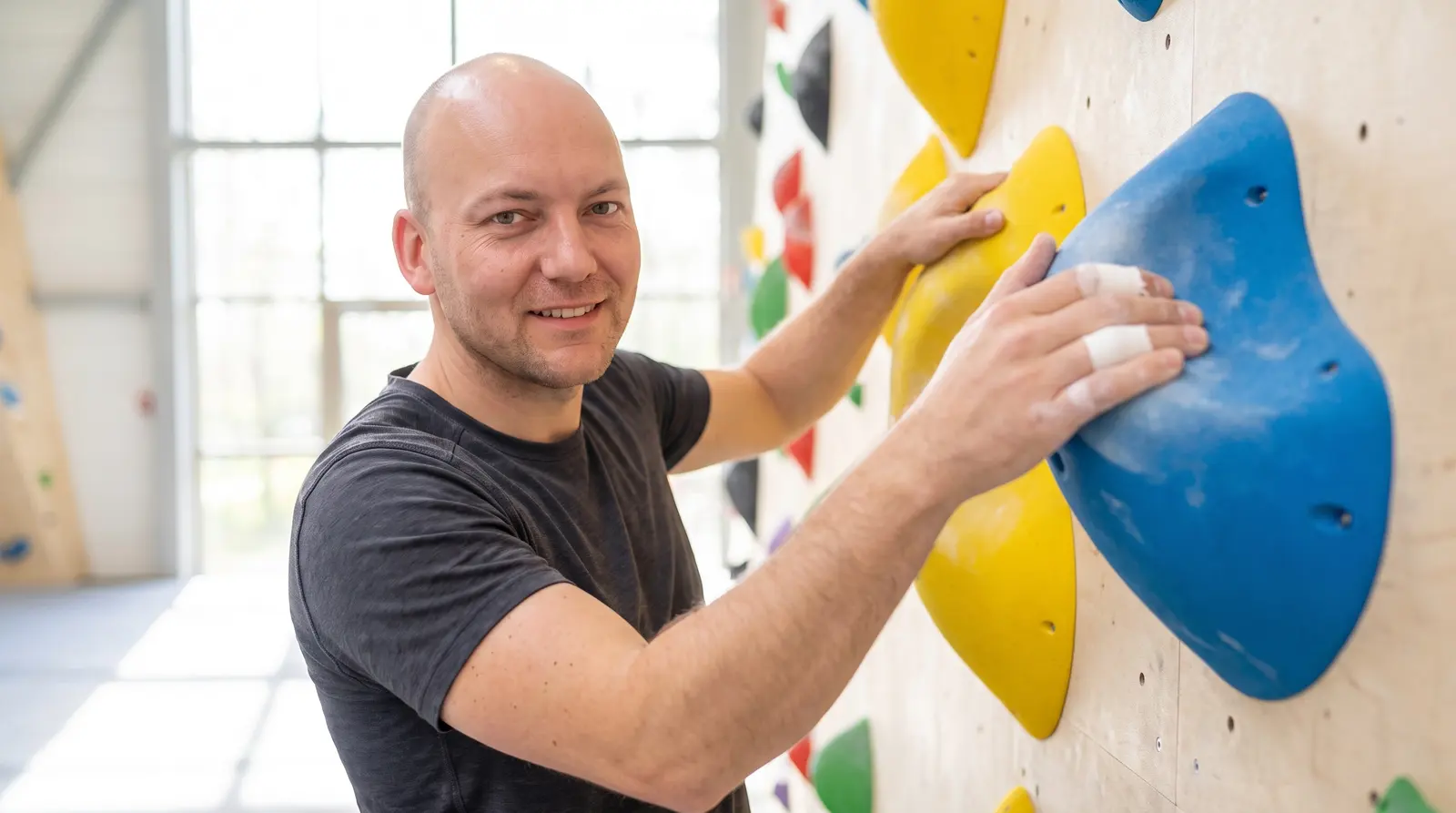
Key takeaways
Best for: Climbers planning their return after an A2 pulley injury
- Strain or partial tear: about six to eight weeks to a gradual return to climbing in Schöffl's scheme.
- Complete single A2 rupture: about three months; multiple ruptures usually need surgery and take longer.
- Protective taping often continues for months after you're back on the wall.
- Early ultrasound grading, respecting the protection phase and progressive loading speed things up.
- Long-term results are good: in follow-up studies, climbers regained their level and finger strength.
An A2 pulley strain or partial tear typically takes about six to eight weeks before a return to climbing, and a complete A2 rupture about three months, based on the treatment scheme by Schöffl and colleagues. Injuries involving several pulleys usually need surgery and take longer. Protective taping often continues for months after you are back on the wall.
Those are typical numbers from the medical literature, not a promise. Your timeline depends on the grade of the injury, how early it is diagnosed and how sensibly you load it. I write as a strength and conditioning coach, not a doctor or physio. For the full overview of finger problems in climbers, see our guide to climbing finger injuries.
Why the grade decides the timeline
"A2 pulley injury" covers everything from a mild strain to a full rupture. The grading system most clinicians use was introduced by Schöffl et al. (2003) after prospectively examining 604 injured climbers. Pulley injuries made up 20% of all injuries, and the 122 pulley injuries split like this:
- Grade 1 (pulley strain): 39%
- Grade 2 (partial rupture of A2 or A3, or complete rupture of A4): 25%
- Grade 3 (complete rupture of A2 or A3): 30%
- Grade 4 (multiple ruptures, or a single rupture with lumbrical or collateral ligament damage): 6%
Grades 1 to 3 respond well to conservative treatment. Grade 4 injuries need surgical repair (Schöffl et al., 2003). So the first question for "how long" is always "which grade?", and the honest answer usually needs an ultrasound scan.
A2 pulley healing time by grade
This table combines the treatment and return-to-sport estimates from Schöffl's scheme, as summarised in two systematic reviews (Artiaco et al., 2022; Larsson et al., 2022). "Return to sport" means a return to climbing, built up gradually, not your hardest crimps on day one.
| Grade | Immobilisation | Functional therapy | Protection | Estimated return to climbing | Protection continued for |
|---|---|---|---|---|---|
| 1 Strain | None | 2–4 weeks | Tape | About 6–8 weeks | About 3 months |
| 2 Partial rupture | About 10 days | 2–4 weeks | Tape | About 6–8 weeks | About 3 months |
| 3 Complete rupture | Up to about 14 days | Up to 4 weeks | Thermoplastic ring | About 3 months | About 6 months |
| 4 Multiple ruptures | Surgery, then about 14 days | Up to 4 weeks | Thermoplastic ring | Several months; set by the surgeon | Individual |
A clinical education page from OrthoEducation gives a similar picture in plain words: mild strains often settle "within several weeks", partial tears usually need "6–12 weeks" of rehab before a full return to climbing, and complete ruptures take "several months".
Real-world outcomes line up with this. In Schöffl's series of grade 1 to 3 injuries treated with taping, about 90% of climbers were back to sport at three months. About 7% kept taping for more than 12 months (Larsson et al., 2022). The review authors note these studies had no control groups, so the numbers are best used as a rough prognosis.
A2 vs A4: why the same pulley "grade" can mean different times
The grading system treats the A2 and A4 differently. A complete rupture of the A4 counts as grade 2, the same as a partial A2 tear, while a complete A2 rupture is grade 3 (Artiaco et al., 2022). The A2 takes very high forces in crimp positions, estimated at up to 36 times those of an open-hand grip in a full crimp (Larsson et al., 2022), so a full A2 rupture is classed as the more serious injury. In practice, that means a complete A4 rupture usually follows the six-to-eight-week path, while a complete A2 rupture follows the three-month path.
How the grade is found: the role of ultrasound
In the study that introduced the grading, every climber with a finger injury had a diagnostic ultrasound, with MRI added when needed (Schöffl et al., 2003). The scan compares how far the flexor tendon sits from the bone with the finger relaxed and when it is flexed against resistance. A torn pulley lets the tendon drift further away. Strains, partial tears and complete ruptures can feel similar in the first days, so a scan is the most reliable way to know which timeline you are on. If you cannot get one quickly, a clinician experienced with climbers can examine the finger and decide whether imaging is urgent.
Strain vs partial tear vs complete rupture
Grade 1: pulley strain
The pulley is overstretched but not torn. There is no immobilisation in Schöffl's scheme, just protected functional therapy with tape for two to four weeks, then a gradual return. This is the grade where people most often go back too fast, because it never felt dramatic.
Grade 2: partial A2 rupture
Part of the pulley has torn. The scheme adds about 10 days of immobilisation, then cautious functional therapy with tape (Artiaco et al., 2022). Partial tears can be hard to tell from strains without a scan, and ultrasound criteria for partial ruptures are still being refined in research.
Grade 3: complete A2 rupture
The pulley is fully torn and the tendon lifts further from the bone when the finger is loaded. Even so, single complete ruptures are mostly treated without surgery: up to about two weeks of immobilisation, a thermoplastic ring and functional therapy, with return to climbing around three months. Artiaco et al. (2022) describe grade 3 as a "gray zone" where both conservative and surgical treatment can work, so the decision is made case by case.
Grade 4: multiple pulleys or combined injuries
When A2 and A3 (or A2, A3 and A4) are ruptured together, the finger loses much more of its pulley support. These injuries are usually repaired surgically, followed by immobilisation and early functional treatment under external pulley protection (Schöffl et al., 2003). In one surgical series of six climbers with multiple pulley injuries, four reached the same climbing level as before and two climbed slightly lower, at a mean follow-up of 28 months (Schöffl et al., 2011).
A case series of 12 patients with triple pulley injuries treated without surgery, summarised by Larsson et al. (2022), used protective and extension splints for two months before open-hand climbing with tape. Crimping was avoided for five to six months in total. All but two regained their previous level. Those two had been diagnosed and treated late, more than two months after injury, and later needed reconstructive surgery.
What each phase of recovery is like
Everyone's finger behaves a little differently, but the phases below follow the structure of the published treatment schemes. For the exercises in each phase, see our A2 pulley rehab protocol.
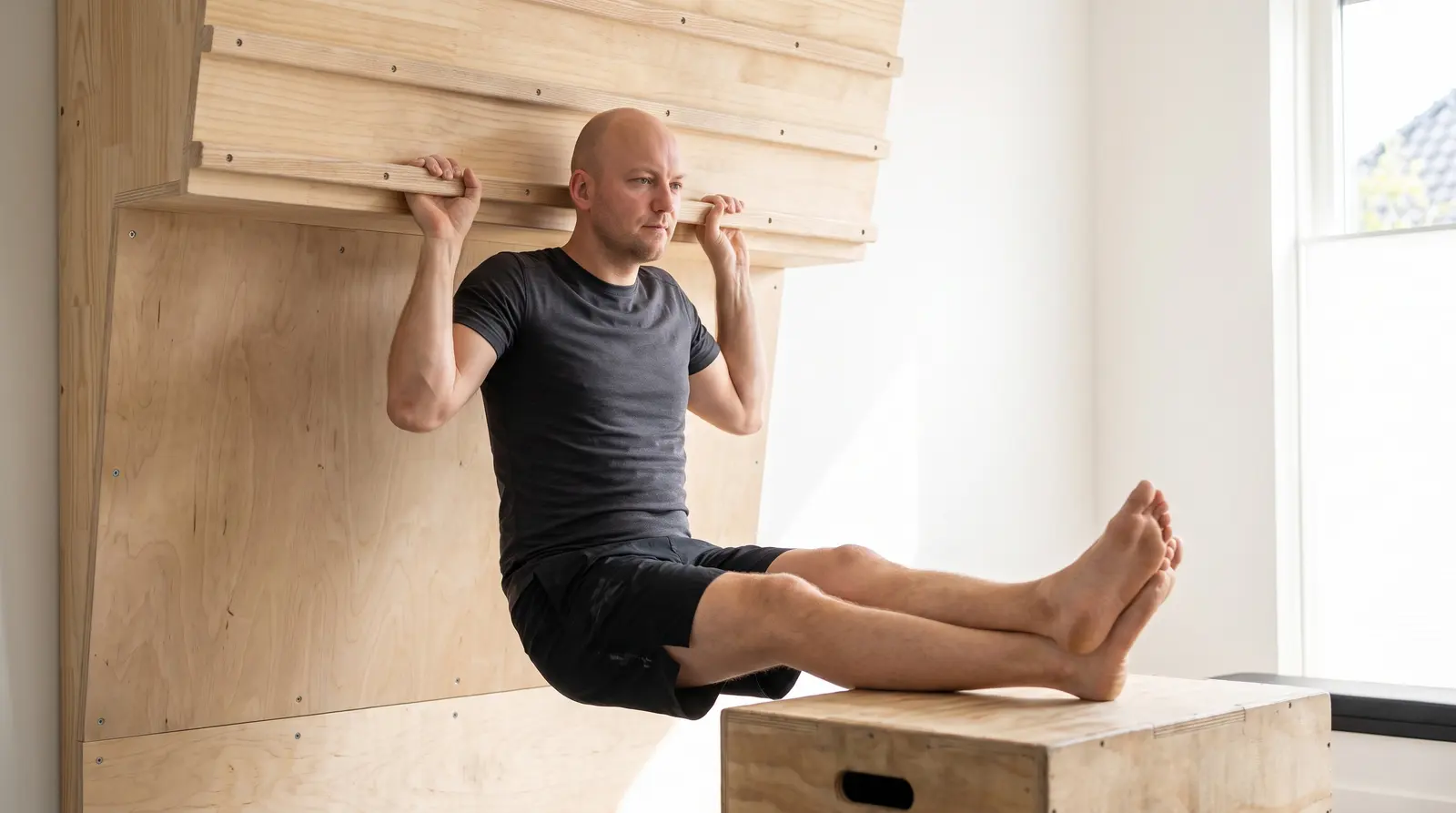
Phase 1: Acute and protected (days to about two weeks)
Pain and tenderness at the base of the finger, often some swelling. Gripping, especially crimping, is uncomfortable. Depending on grade, the finger is splinted, ringed or simply taped. Your job: protect it, keep pain-free movement as advised, and train the rest of your body.
Phase 2: Functional therapy (roughly weeks 2 to 6)
Everyday use becomes comfortable. The pulley may still be tender if you press on it. Range of motion returns and light, controlled loading begins, usually open hand first. Progress is measured in small, boring steps.
Phase 3: Progressive loading and easy climbing (roughly weeks 4 to 12, by grade)
Easy climbing on big holds, taped, becomes possible. Loading progresses from open hand towards half crimp. The finger may feel "aware" after harder sessions; a flare-up the next morning is the signal to step back.
Phase 4: Return to full climbing (about 2 to 3 months for grades 1 to 3)
Volume and intensity build back up. Small crimps and dynamic moves come last. Many climbers keep taping in this phase, in line with the three to six months of protection in Schöffl's scheme. For methods, see how to tape fingers for climbing.
What speeds up or slows down A2 pulley healing
Factors that help
- An early, accurate diagnosis. An ultrasound grade means you protect a rupture enough and do not over-protect a strain. In the triple-pulley series, late diagnosis was linked to failed conservative treatment.
- Respecting the protection phase. The first one to two weeks set up the rest of the recovery.
- Progressive loading. Larsson et al. (2022) stress that the main focus of any pulley rehab should be progressive tissue loading through exercise, with tape only as an add-on.
- Patience with grip positions. Open hand comes back first; the full crimp last.
- Staying active. Training legs, core and the other arm keeps you fit and makes it easier not to rush the finger.
Factors that slow it down
- A higher grade than assumed. A "tweak" that is actually a complete rupture will not follow a strain timeline.
- Multiple pulleys involved. Grade 4 injuries take longer and usually need surgery.
- Returning to hard crimping too early. Re-injury restarts the clock, sometimes at a higher grade.
- Ignoring persistent pain. In Schöffl's taping series, about 9 to 10% of climbers had persistent pain and needed further treatment (Larsson et al., 2022).
- Age. Cadaver studies found pulleys from older donors ruptured at much lower forces than those from younger donors, which fits the general decline of ligament tensile strength with age (Larsson et al., 2022). There is no age-specific timeline in the literature, but older climbers have good reason to progress cautiously.
Can taping or a ring make it heal faster?
Probably not faster, but they may make the loading phase safer and more comfortable. A 2022 systematic review found low-to-moderate certainty evidence that taping reduces bowstringing of the flexor tendons by about 15 to 22%. Evidence on pain, time to return to sport and protection against a new rupture was rated low or very low. In cadaver studies, tape did not change the force needed to rupture the A2 (Larsson et al., 2022).
So tape and rings are tools that let you train and climb with a bit more support while the pulley remodels. They are not a reason to shorten the timeline for your grade. In Schöffl's scheme, tape is used for grades 1 and 2 and a thermoplastic ring for grade 3.
Can you keep training while it heals?
Yes, and from a strength and conditioning point of view you should. The finger needs protection, not the whole body. Lower-body strength, core work, mobility, cardio and pulling exercises where the injured fingers are not loaded (for example with a strap around the wrist, if comfortable) all keep you fit. Pushing and shoulder work fit well here too. Once your clinician clears light finger loading, the A2 work itself becomes part of the plan rather than something you wait out.
Will the finger be as strong as before?
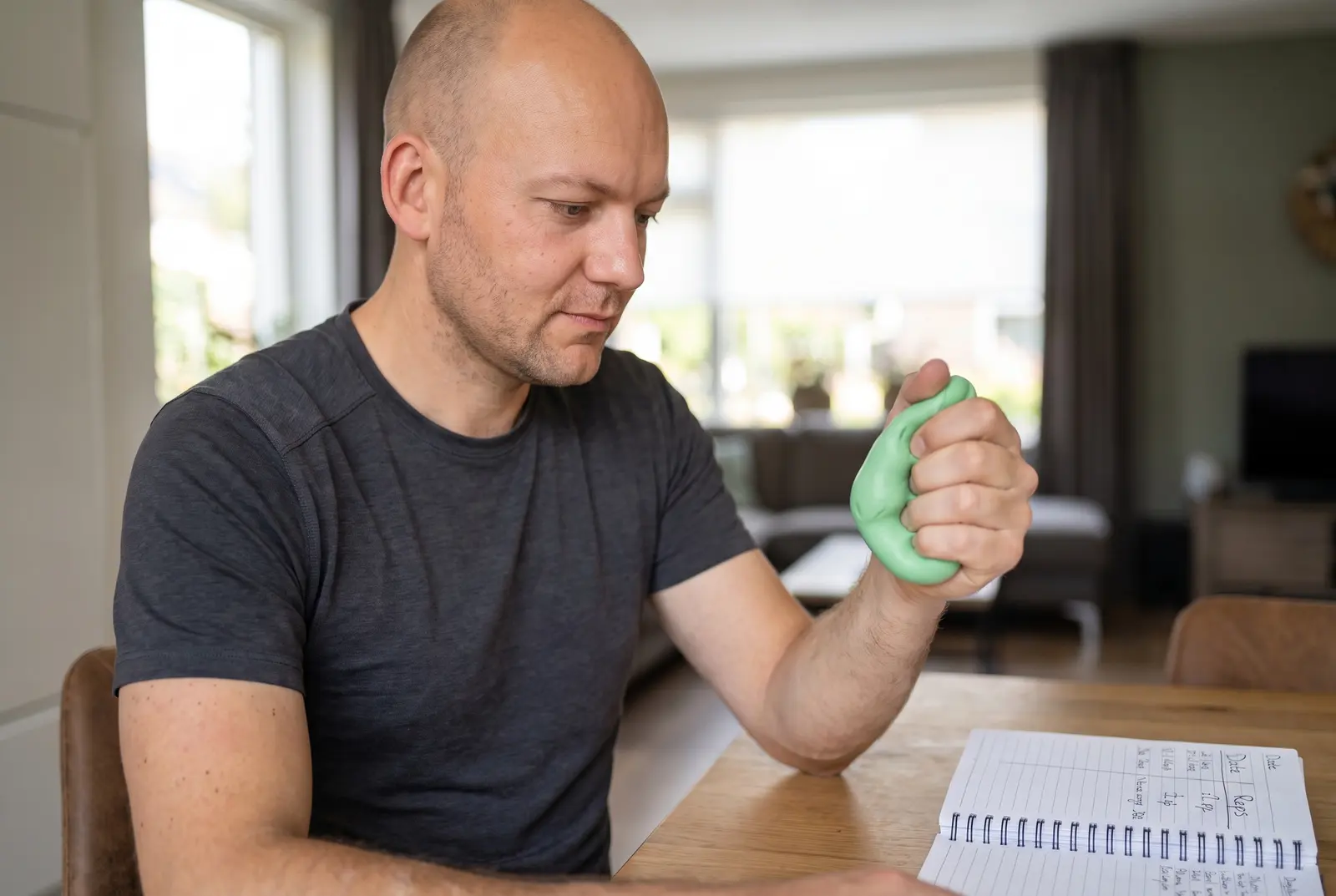
The long-term data is encouraging. In a follow-up of 21 climbers with grade 2 to 4 pulley injuries in 27 fingers, measured on average about three and a half years after injury, clinical outcome was excellent in all cases. The climbers regained their climbing level within a year, and finger strength was not significantly different between the injured and healthy finger in either the hanging or the crimping position (Schöffl et al., 2006).
Ultrasound in that study showed no change between the first scan and follow-up, which means the tendon-to-bone distance did not simply return to normal. The finger can work well again even if the scan never looks "perfect".
When to get help instead of waiting
- You see the tendon lift away from the bone (bowstringing) when you bend the finger.
- You felt a loud pop with fast swelling, or pain along much of the finger, suggesting more than one pulley.
- You cannot fully bend or straighten the finger.
- Numbness, tingling or severe pain at rest.
- Recovery is clearly slower than the timeline for your grade, or the finger keeps flaring up.
- The climber is a child or teenager: finger pain in growing climbers needs a medical check.
Because grade 4 injuries are treated surgically and late diagnosis can make conservative treatment fail, do not sit on a suspected multiple-pulley injury for weeks. A hand surgeon or sports doctor who sees climbers is the right first stop.
The short answer
Most A2 pulley injuries heal well. Plan on about six to eight weeks for a strain or partial tear, about three months for a complete single rupture, and longer for multiple ruptures or surgery. Expect to keep protecting the finger for months after that. The fastest route back is the boring one: get a grade, protect early, then load progressively.
FAQ
How long does an A2 pulley strain take to heal?
In the Schöffl treatment scheme, grade 1 strains and grade 2 partial ruptures were estimated to return to sport in about six to eight weeks, with protective taping continued for around three months. Individual timelines vary, so treat these numbers as a guide, not a deadline.
How long for a complete A2 pulley rupture to heal?
A complete single A2 rupture (grade 3) is usually treated without surgery, with up to two weeks of immobilisation, a thermoplastic ring and functional therapy. The published estimate for return to sport is about three months, with pulley protection continued for about six months.
Can a torn A2 pulley heal on its own?
Single pulley ruptures are routinely treated conservatively, with good long-term results. In one follow-up study, climbers with grade 2 to 4 injuries regained their climbing level within a year and showed no long-term strength deficit in the injured finger. That still means structured treatment, not ignoring it.
Why is my pulley injury taking so long to heal?
Common reasons are a higher grade than assumed, returning to crimping too early, or several pulleys being involved. If you are not improving as expected, get an ultrasound and a review by a clinician who knows climbing injuries.
Sources
- Schöffl V, Hochholzer T, Winkelmann HP, Strecker W. Pulley injuries in rock climbers. Wilderness Environ Med (2003)
- Larsson R, Nordeman L, Blomdahl C. To tape or not to tape: annular ligament (pulley) injuries in rock climbers, a systematic review. BMC Sports Sci Med Rehabil (2022)
- Artiaco S et al. Flexor Tendon Pulley Injuries: A Systematic Review of the Literature and Current Treatment Options. J Hand Microsurg (2022)
- Schöffl VR, Einwag F, Strecker W, Schöffl I. Strength measurement and clinical outcome after pulley ruptures in climbers. Med Sci Sports Exerc (2006)
- Schöffl V, Küpper T, Hartmann J, Schöffl I. Surgical repair of multiple pulley injuries: evaluation of a new combined pulley repair. J Hand Surg Am (2011)
- OrthoEducation (Hand Education), Climber's Finger: A2 or A4 Pulley Strain (edited 2026)