A2 Pulley Injury: Rehab Protocol and Return to Climbing
 Petr Hess, strength & conditioning coach
Updated 2 Nov 2026 · 9 min read
Key takeaways
Best for: Climbers with a suspected or diagnosed A2 pulley injury
- An A2 injury is a strain or tear of the ligament that holds the flexor tendons against the base of the finger.
- Ultrasound is the first-choice test; it grades the injury using Schöffl's 1–4 scale.
- Most single A2 injuries heal without surgery: protect for a time set by the grade, then load step by step.
- H-tape reduces bowstringing, but tape is an add-on; progressive loading is the core of rehab.
- See a hand surgeon if you see bowstringing, suspect several pulleys, or can't fully bend or straighten the finger.
An A2 pulley injury is a strain or tear of the ligament that holds your finger flexor tendons against the base of the finger. Most single A2 injuries heal well without surgery when they are graded properly, protected for a short time and then loaded back up step by step. This guide explains the anatomy, the Schöffl grades, how the injury is diagnosed and what a staged rehab protocol looks like for each grade.
I write as a strength and conditioning coach, not a physio or doctor. Treat this as a map that helps you ask better questions, not as a diagnosis or a personal plan. If you want the bigger picture first, start with our overview of climbing finger injuries.
What is an A2 pulley injury?
Each finger has two flexor tendons running along its palm side. They are held close to the bones by a tunnel of tough bands: five annular pulleys (A1 to A5) and three cruciate pulleys (C1 to C3). Without them, the tendons would lift away from the bone like a bowstring every time you bend the finger. That lifting is called bowstringing.
The A2 pulley sits over the proximal phalanx, the bone between your knuckle and the middle joint. A2 and A4 are the strongest pulleys and also the two most often injured in climbing (Larsson et al., 2022). The A2 of the ring finger is the single most commonly injured pulley (Kubiak et al., 2006).
Why climbers hurt the A2
Crimping is the main cause. In an open-hand grip the load on the pulleys is low. In a half crimp the middle joint bends to about 90° and pulley load rises sharply. In a full crimp, with the thumb wrapped over, the force on the A2 has been estimated at up to 36 times that of open hand. Climbers routinely put up to about 380 N (roughly 38 kg) through a single A2, and a sudden foot slip can shock-load it to around 450 N (Larsson et al., 2022, summarising earlier work).
That is why the classic story is a hard crimp, a foot that cuts loose, and a pop or a sharp pain at the base of the finger.
Grades of pulley injury (Schöffl classification)
The grading system used by most clinicians comes from Volker Schöffl and colleagues, who prospectively examined 604 injured climbers. Pulley injuries made up 20% of all injuries. Of 122 pulley injuries, 39% were grade 1, 25% grade 2, 30% grade 3 and 6% grade 4 (Schöffl et al., 2003).
| Grade | What it means | Usual treatment |
|---|---|---|
| 1 | Pulley strain, no rupture | Conservative |
| 2 | Partial rupture of A2 (or A3), or complete rupture of A4 | Conservative |
| 3 | Complete rupture of A2 (or A3) | Conservative in most cases |
| 4 | Multiple ruptures (for example A2 + A3), or a single rupture plus damage to the lumbrical muscle or collateral ligament | Surgical repair |
Grades 1 to 3 respond well to conservative treatment. Grade 4 injuries need surgery (Schöffl et al., 2003).
Symptoms of an A2 pulley injury
- Pain on the palm side at the base of the finger, over the proximal phalanx.
- A pop or snap felt or heard during a hard move, often a crimp or a foot slip.
- Tenderness when you press on the pulley, and swelling in the first days.
- Pain when crimping, while open-hand gripping often hurts less.
- In more severe tears, bowstringing: the tendon visibly lifts away from the bone when you bend the finger against resistance.
A pop does not automatically mean a full rupture, and the absence of a pop does not rule one out. Symptoms alone cannot tell grades apart reliably.
How is it diagnosed? Why ultrasound matters
A clinician starts with history and examination. Clinical bowstringing is a useful sign, but imaging is needed to characterise the injury. Ultrasound is highly sensitive and specific for pulley injuries and is recommended as the first imaging test. MRI is the backup if ultrasound is inconclusive (Miro et al., 2021). The scan measures the distance between the tendon and the bone while the finger is flexed against resistance: the more the pulley is torn, the further the tendon lifts away.
Getting a grade matters because the protocol and the timeline change a lot between a grade 1 strain and a grade 3 rupture. If you cannot get a scan, a physio experienced with climbers can still guide you, but treat a suspected rupture as a rupture until proven otherwise.
A2 pulley rehab protocol: the staged approach
The published framework is simple: protect the pulley for a period that depends on the grade, then restore movement, then load progressively, then return to climbing. Ehiogu, Schöffl and Jones (2023) argue that rehab after a pulley rupture should be grounded in the principles of strength and conditioning: the tissue adapts to carefully progressed load. Larsson et al. (2022) reach a similar conclusion: tape is an add-on, and the main focus should be progressive tissue loading through exercise.
Protection and timelines by grade
Schöffl's treatment scheme, as summarised in later reviews, looks like this. Exact times vary from person to person.
| Grade | Immobilisation | Functional therapy | Pulley protection |
|---|---|---|---|
| 1 Strain | None | 2 to 4 weeks | Tape |
| 2 Partial rupture | About 10 days | 2 to 4 weeks | Tape |
| 3 Complete rupture | Up to about 14 days | Up to 4 weeks | Thermoplastic ring (splint) |
| 4 Multiple ruptures | Surgery, then about 14 days | Up to 4 weeks | Thermoplastic ring |
For how long each grade takes to get back to full climbing, see our guide to A2 pulley healing time.
Stage 1: Protect (first days to about two weeks)
- Stop climbing and hangboarding on the injured hand.
- Use the splint, ring or tape your clinician prescribes. For grade 1 there is usually no immobilisation at all.
- Gentle, pain-free finger movement as advised, to limit stiffness.
- Keep training everything else: legs, core, the other arm, and pulling with straps or hooks that keep the injured fingers out of the load.
Stage 2: Restore movement and start light loading
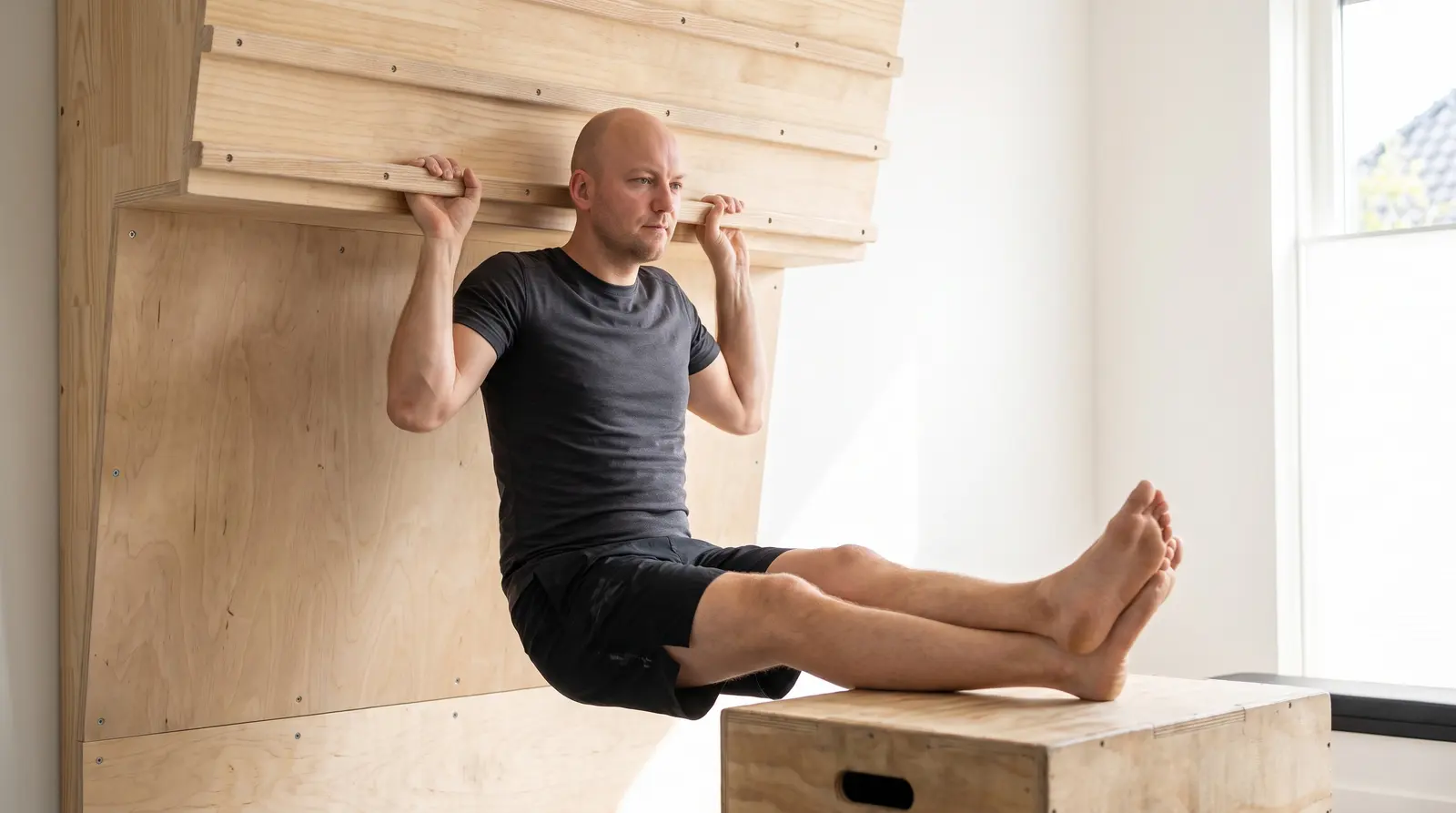
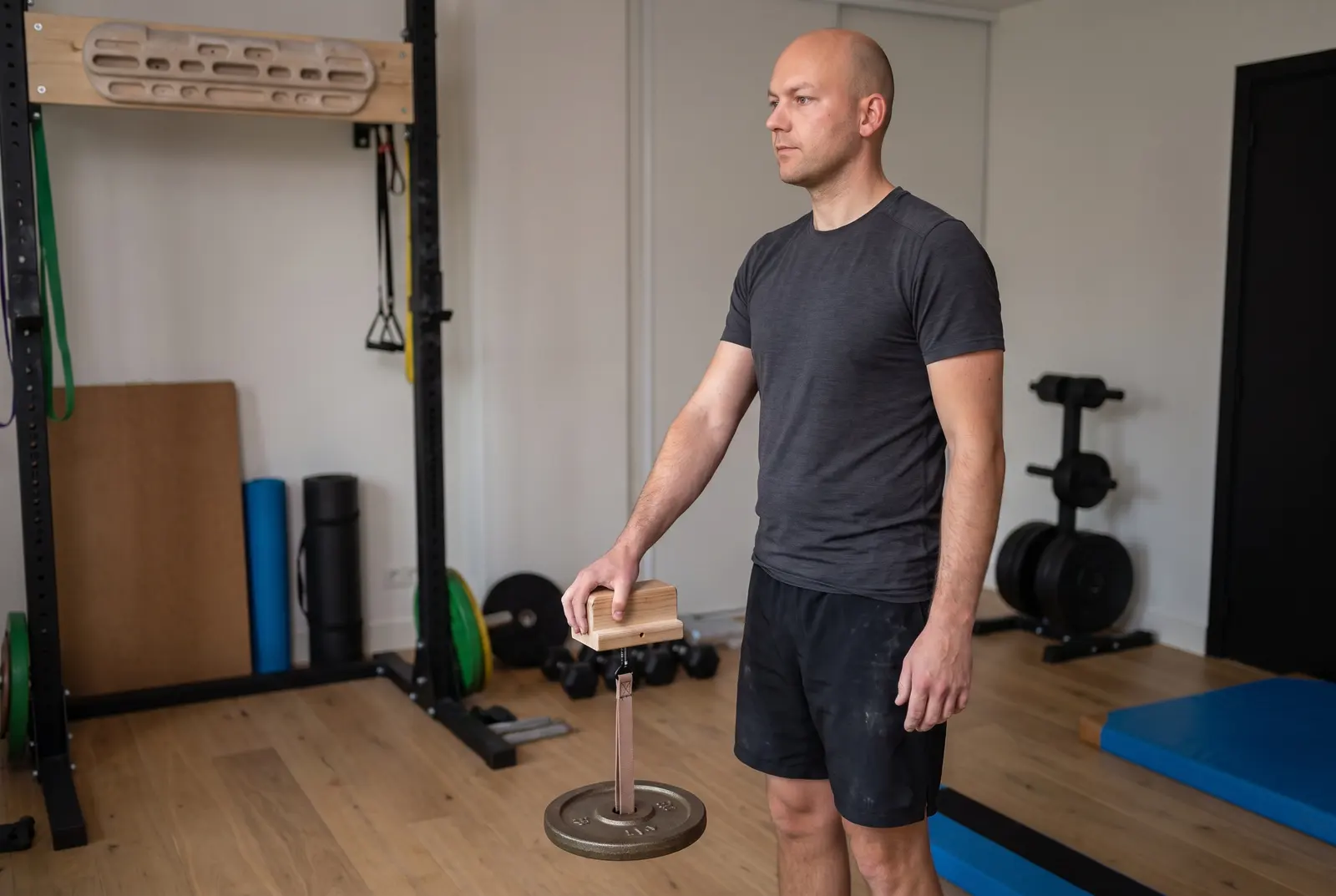
Once the protection phase ends, the goal is full, comfortable range of motion. One published approach is about a week of range-of-motion work after immobilisation, followed by isometric work on a fingerboard once that movement is painless (Kubiak et al., 2006). Early loading here means low effort: think easy squeezes, feet-on-the-floor hangs or a block lifted off the floor, in an open-hand grip.
Stage 3: Progressive loading
This is where an S&C view helps most. Change one variable at a time:
- Load first, in open hand. Increase the weight on a lifting block or the share of bodyweight in a supported hang in small steps.
- Then grip position. Move from open hand to a gentle half crimp. Full crimp comes last, if at all.
- Then edge size. Go smaller only once larger edges feel normal at a decent load.
- Then speed and impact. Dynamic catches and campus-style loading belong at the very end.
Use symptoms as a guide. Mild awareness that settles quickly is usually tolerable. If pain is clearly worse during the session, or the finger is more sore or swollen the next morning, drop back a step. Isometric lifting from the floor is handy because you control the load exactly. Our hangboard for beginners guide covers low-load set-ups that also suit this phase.
Stage 4: Return to climbing
Go back on big holds and easy angles first, with the finger taped. Avoid grip positions that cause pain, and keep away from the closed (full) crimp in the early return phase (Kubiak et al., 2006). Build volume before intensity: more easy climbing first, then harder moves, then small crimps. A thorough climbing warm-up is part of the protocol, not an optional extra.
Taping and splinting: what the evidence says
Tape is the most common support climbers use, but the evidence is thinner than many expect.
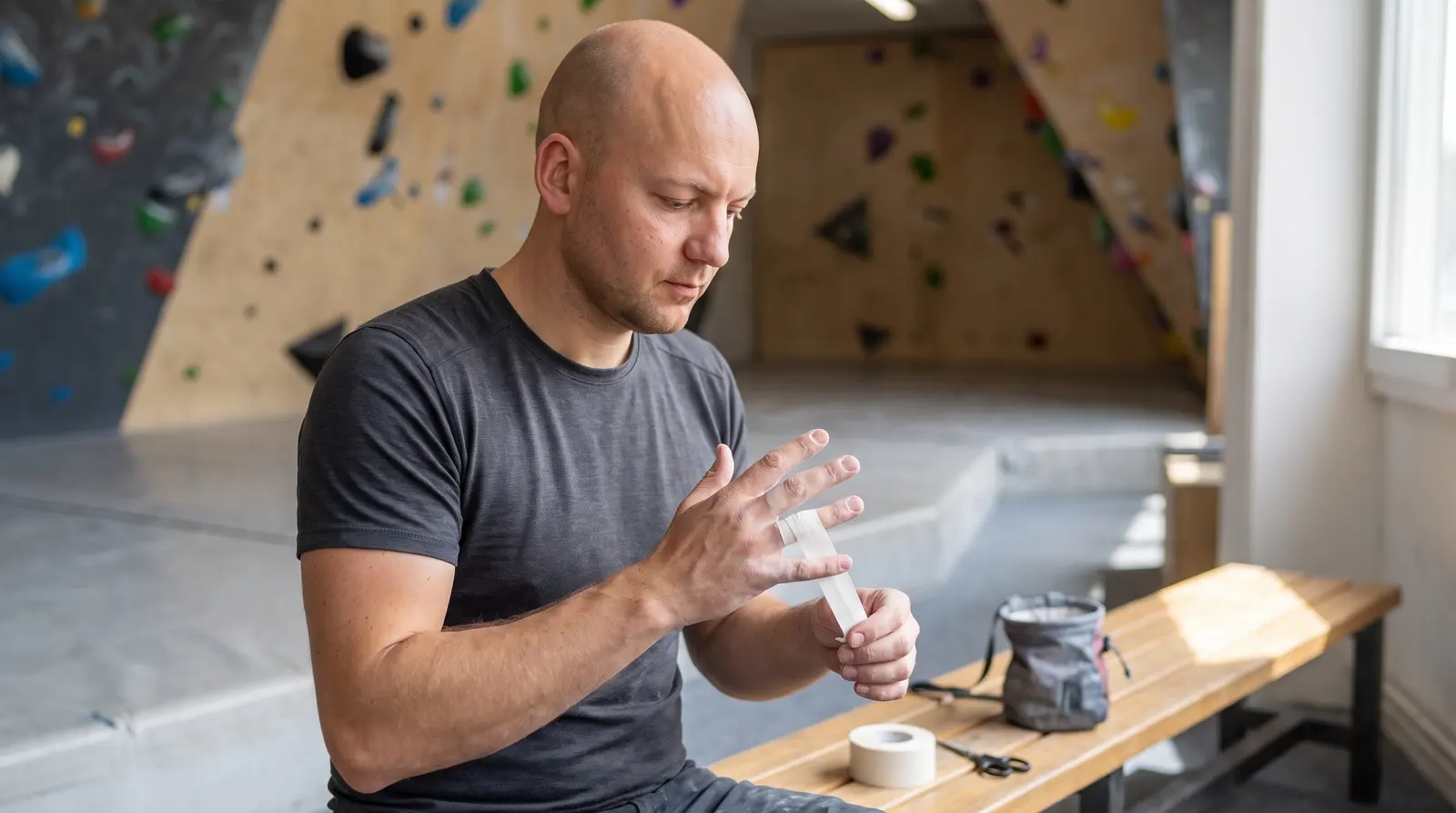
- H-tape reduces bowstringing. In climbers with A2 or A2/A3 ruptures, the H-tape method reduced tendon-to-bone distance by 16%, while the other taping methods tested did not. In fingers with older pulley injuries, H-tape improved strength in the crimp position by 13%, but not in the hanging position (Schöffl I et al., 2007).
- The review picture is cautious. A 2022 systematic review found low-to-moderate certainty evidence that taping reduces bowstringing by about 15 to 22%. Evidence on pain, return to sport and protection against rupture was rated low or very low. Cadaver studies showed no difference in the force needed to rupture the A2 with or without tape (Larsson et al., 2022).
- Rings for complete ruptures. Schöffl's protocol uses a thermoplastic ring for grade 3 injuries, and conservative treatment can include H-tape and a protective pulley splint (Miro et al., 2021).
So tape is reasonable support during rehab and early return, especially after a rupture. It should not be the reason you jump back on hard crimps sooner. For the technique itself, see how to tape fingers for climbing.
Return-to-climbing checklist
There is no validated test battery for pulley injuries yet. From an S&C point of view, these are sensible checkpoints to discuss with your clinician before returning to hard climbing:
- Full, pain-free range of motion in the finger.
- No tenderness over the pulley with daily tasks.
- Comfortable loading in open hand and half crimp at a meaningful load, with no worse symptoms the next day.
- Strength on the injured side close to the uninjured side on the same test, such as a block lift or hang in the same grip.
- Several sessions of easy and moderate climbing without a flare-up.
- For grade 3 and 4 injuries, clearance from the treating clinician, ideally after a follow-up scan.
The good news: in Schöffl's case series, about 90% of climbers with grade 1 to 3 injuries had returned to sport after three months (Larsson et al., 2022). Grade 3 injuries simply take longer than grade 1 strains, so judge your progress against your grade, not against a friend's tweak.
Red flags: when to see a hand surgeon
See a doctor promptly, ideally a hand surgeon or sports physician familiar with climbers, if:
- You see bowstringing: the tendon visibly lifts away from the bone when you bend the finger.
- More than one pulley may be involved, for example pain along a large part of the finger after a big pop.
- You cannot fully bend or fully straighten the finger, or it stays bent.
- Swelling and bruising are large, or pain is severe at rest.
- Numbness or tingling appears in the finger.
- Pain is not clearly improving with sensible relative rest.
- The climber is a child or teenager. Finger pain in growing climbers can be a growth plate injury and needs a medical check.
Multiple pulley ruptures (grade 4) are treated surgically, followed by initial immobilisation and early functional treatment under external pulley protection (Schöffl et al., 2003). Timing matters, so do not wait weeks to get a suspected multiple rupture checked.
How to lower the risk of another A2 injury
- Warm up the fingers gradually before crimping hard.
- Use open hand and half crimp as your default; save the full crimp for when you truly need it.
- Increase finger training load in small steps, never several variables at once.
- Be extra careful on small edges with poor footholds, where a foot slip can shock-load the finger.
- Balance pulling volume with general strength work, such as antagonist training.
Pulley injuries are common, but most single A2 injuries come back well. Get a grade, respect the protection phase, then build load patiently. The rehab is boring by design, and that is exactly what makes it work.
FAQ
What is the best A2 pulley rehab protocol?
There is no single proven best protocol. The most cited framework comes from Schöffl and colleagues: grade the injury with ultrasound, protect it for a period that depends on the grade, then load it progressively until you can climb normally. A 2023 clinical commentary argues that this loading should follow normal strength and conditioning principles. A physio who knows climbing can tailor the details to you.
Can I climb with an A2 pulley injury?
Not hard, and not in the first phase. Published treatment schemes use days to two weeks of protection, then a few weeks of functional therapy before climbing returns. When you do go back, start on big holds in an open-hand grip and keep away from full crimps until late in rehab.
Does taping help an A2 pulley injury?
It may help a little. Studies show that taping, especially the H-tape method, can reduce bowstringing of the tendon, and H-tape improved crimp strength in previously injured fingers in one study. Cadaver studies found no increase in the force needed to rupture the pulley, so tape is a support during rehab, not armour.
When does an A2 pulley injury need surgery?
Schöffl's grading reserves surgery mainly for grade 4 injuries: several pulleys ruptured, or one rupture combined with other damage in the finger. Clear bowstringing after a pop, or a finger you cannot fully bend or straighten, should be seen by a hand surgeon quickly.
Sources
- Schöffl V, Hochholzer T, Winkelmann HP, Strecker W. Pulley injuries in rock climbers. Wilderness Environ Med (2003)
- Larsson R, Nordeman L, Blomdahl C. To tape or not to tape: annular ligament (pulley) injuries in rock climbers, a systematic review. BMC Sports Sci Med Rehabil (2022)
- Ehiogu UD, Schöffl V, Jones G. Rehabilitation of Annular Pulley Injuries of the Fingers in Climbers: A Clinical Commentary. Curr Sports Med Rep (2023)
- Miro PH, vanSonnenberg E, Sabb DM, Schöffl V. Finger Flexor Pulley Injuries in Rock Climbers. Wilderness Environ Med (2021)
- Schöffl I, Einwag F, Strecker W, Hennig F, Schöffl V. Impact of taping after finger flexor tendon pulley ruptures in rock climbers. J Appl Biomech (2007)
- Kubiak EN, Klugman JA, Bosco JA. Hand injuries in rock climbers. Bull NYU Hosp Jt Dis (2006)