Climbing Warm-Up: A 15-Minute Routine for the Gym and the Crag
 Petr Hess, strength & conditioning coach
Updated 2 Nov 2026 · 6 min read
Key takeaways
Best for: Any climber before a gym or crag session
- Spend about 15 minutes: 3 minutes general movement, 3 shoulders and wrists, 4 fingers, 5 easy climbing.
- Load fingers gradually, from jugs with feet on to bigger edges, open hand then half crimp, well below max.
- Ramp through 3–5 climbs, starting 3–4 grades below your max and finishing about 1–2 grades below.
- Keep stretching dynamic before climbing; static holds of 60 seconds or more caused about 4.6% short-term performance drops.
- Extend the warm-up before limit sessions, on cold days or after a long break, without warming up into a pump.
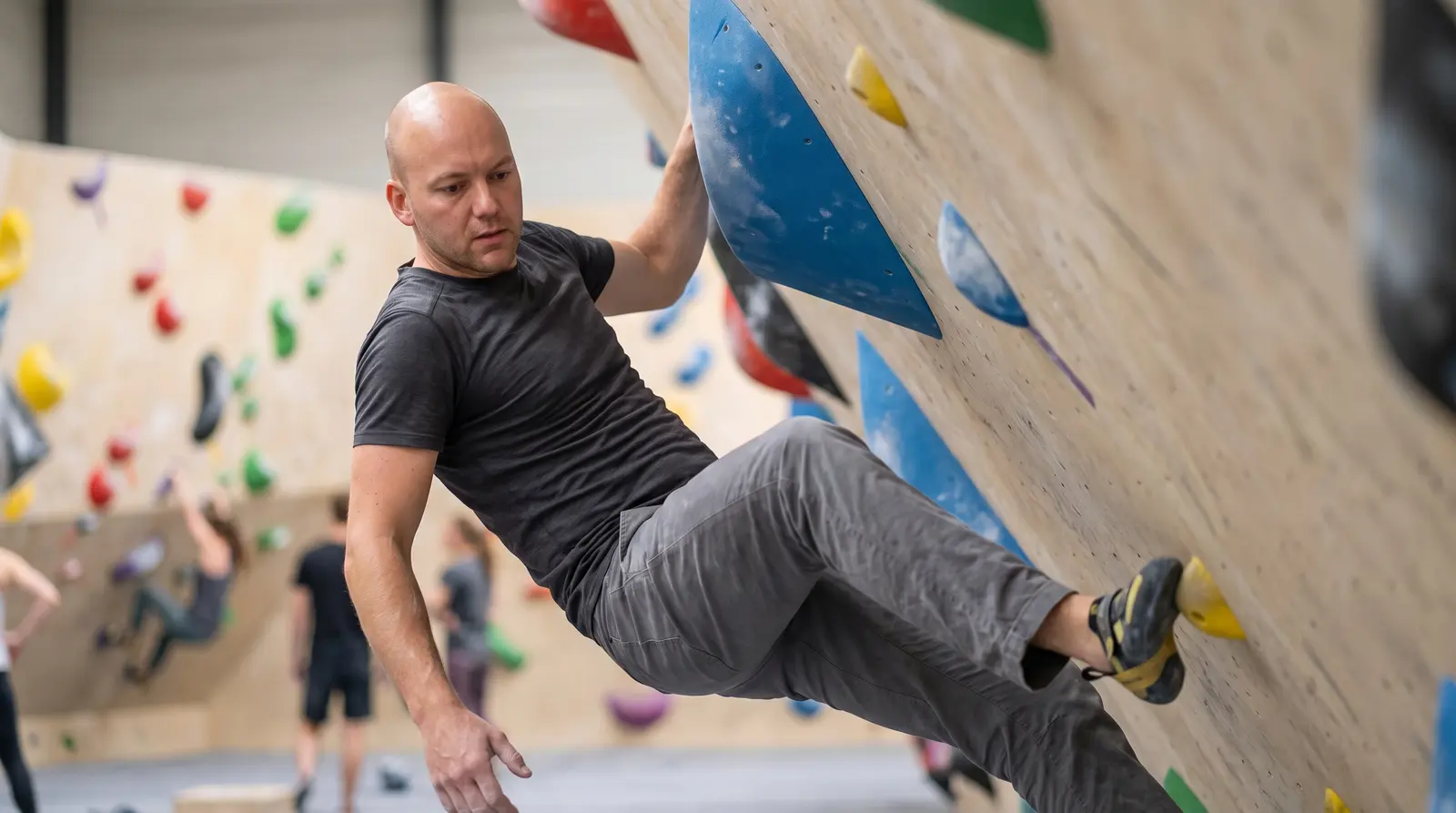
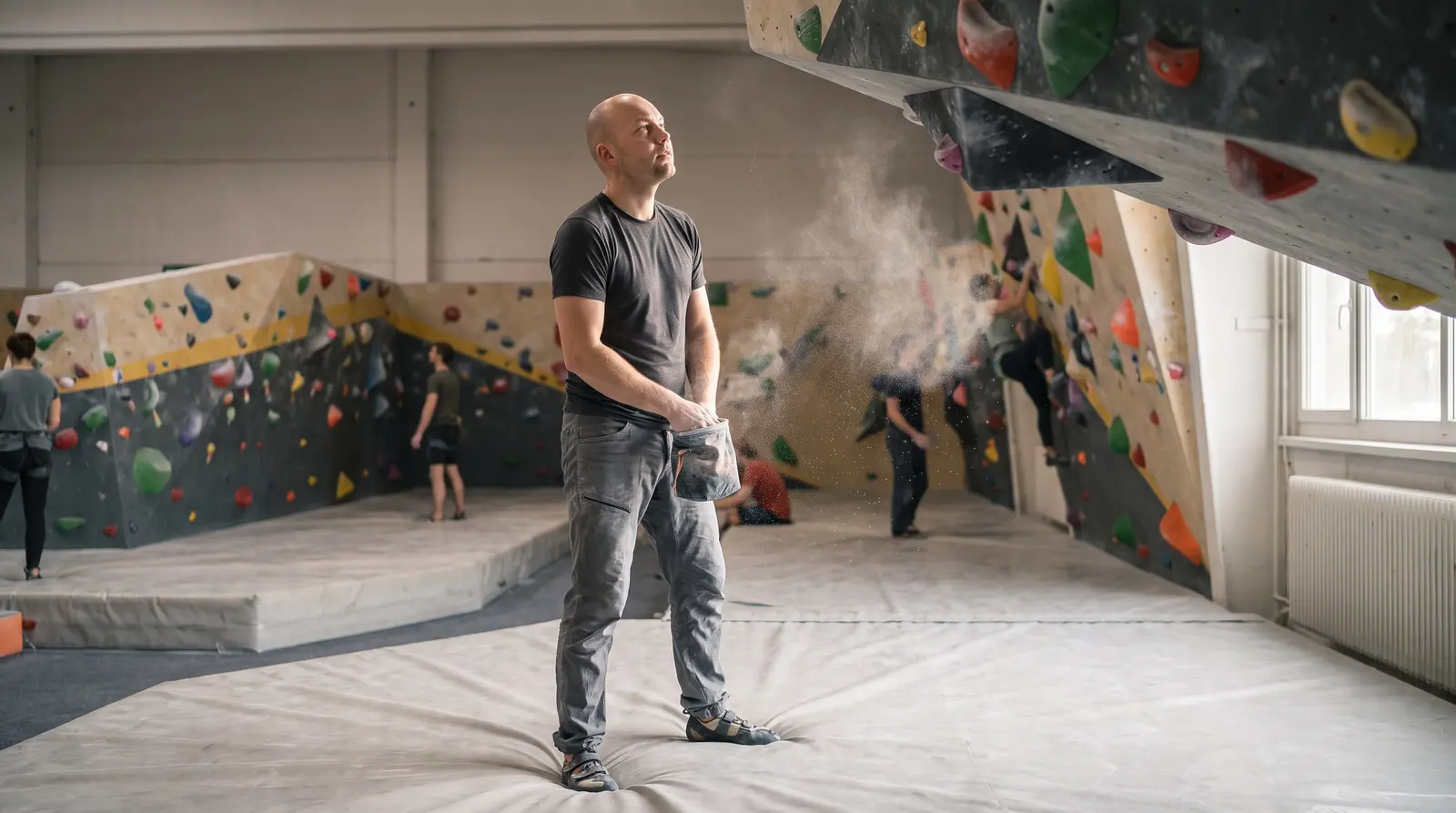
A good climbing warm-up takes about 15 minutes: a few minutes of general movement to raise your heart rate, dynamic shoulder and wrist work, gradual loading of the fingers, and then easy climbing that ramps up toward the difficulty of your session. Keep stretching dynamic, save long static holds for later, and add time before hard sessions or on cold days. Below is a timed routine for the gym and a version for the crag with no equipment.
I'm a strength and conditioning coach, and this is how warm-ups are built in most sports, adapted to climbing. Use it as the first block of your bouldering training program or before any session where you plan to try hard.
Why warm up before climbing?
A warm-up raises muscle and body temperature and blood flow, which helps muscles contract and relax faster. It also gives your nervous system a rehearsal of the movements you are about to do. In sports science this is often taught as the RAMP framework, developed by Ian Jeffreys: Raise (heart rate and temperature), Activate and Mobilise (key muscles and joints), and Potentiate (build intensity up to session level). The routine below follows that order.
There is some climbing-specific evidence too. In a 2025 crossover study, Han and colleagues compared three 10-minute warm-ups in 22 recreational climbers: dynamic stretching with a resistance band, vibration rolling, and a climbing-specific warm-up. All three improved upper-body flexibility, dynamic stability and elbow flexor and shoulder extensor strength. The climbing-specific warm-up gave the biggest gain in shoulder external rotator strength. None of them changed maximal finger strength, which suggests finger readiness mainly comes from actually loading the fingers and climbing.
What about injuries? Warming up is sensible, but the evidence that it prevents climbing injuries is weak. A 2026 survey of 191 Slovenian sport climbers found that preventive routines were not associated with lower injury frequency. Warm up to climb better; to stay healthy, also manage how much and how hard you climb. Our guides on preventing finger injuries cover that side.
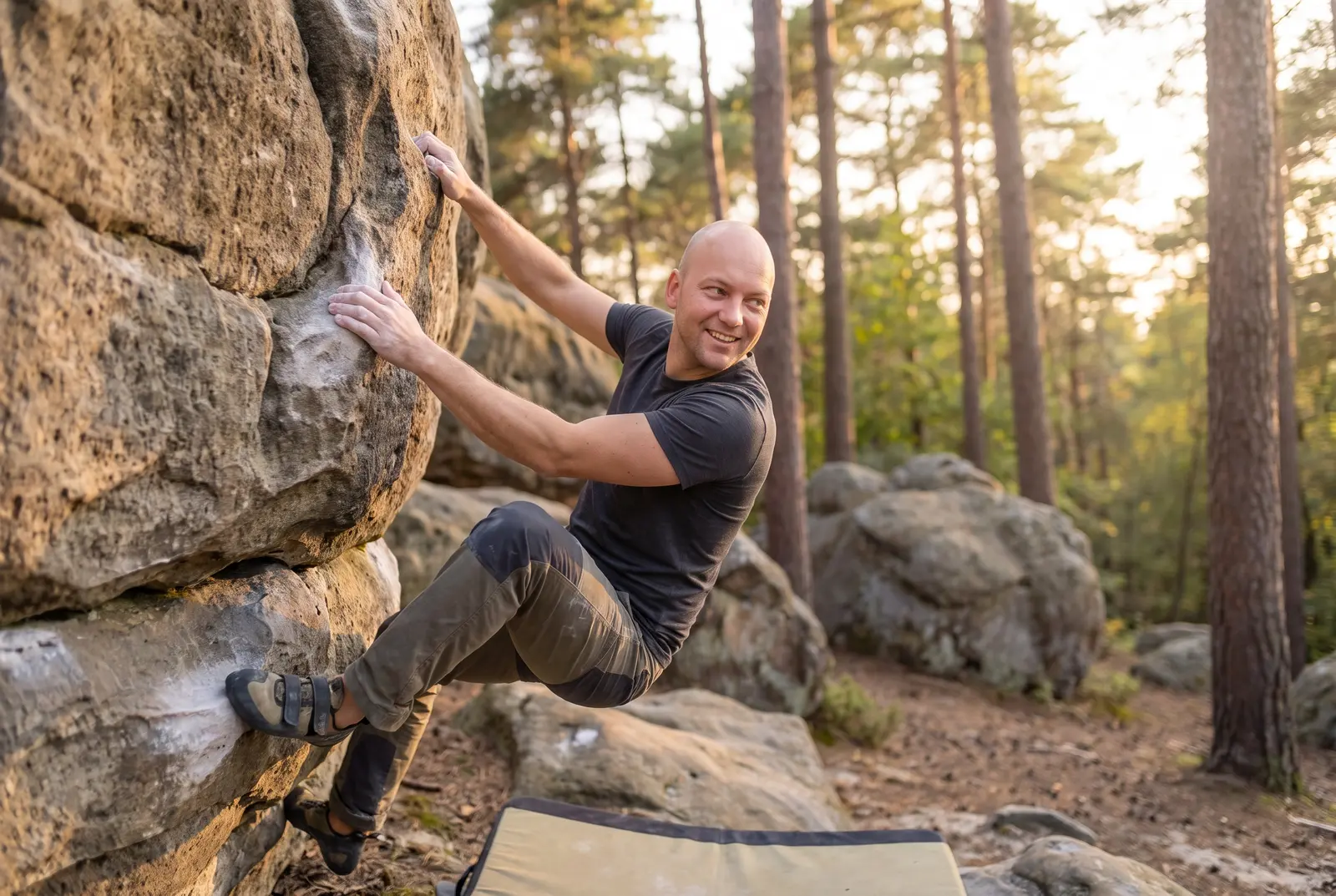
The 15-minute climbing warm-up routine
| Time | Phase | What to do |
|---|---|---|
| 0–3 min | General (raise) | Easy cardio: skipping, jogging, rowing or jumping jacks, plus a few air squats and lunges. Aim to feel warm and breathe a little harder. |
| 3–6 min | Shoulders and wrists | Arm circles, band pull-aparts, band external rotations, scapular pull-ups or scapular push-ups, wrist circles and gentle wrist flexion and extension. 10–15 easy reps each. |
| 6–10 min | Fingers: progressive loading | Open and close the fists, then on big holds or a hangboard: a few short hangs or feet-on pulls, moving from jugs to deeper edges, then to the grip types you'll use (open hand, half crimp). Load stays well below max. |
| 10–15 min | Easy climbing ramp | 3–5 climbs, starting 3–4 grades below your max and finishing about 1–2 grades below. Climb smoothly and rest briefly between them. |
1. General movement (raise)
Get the large muscle groups moving first: legs, hips and back. Three minutes is enough indoors in a warm gym. On a cold day, or if you cycled in from work, take longer. You should feel warm, not tired.
2. Shoulders and wrists (activate and mobilise)
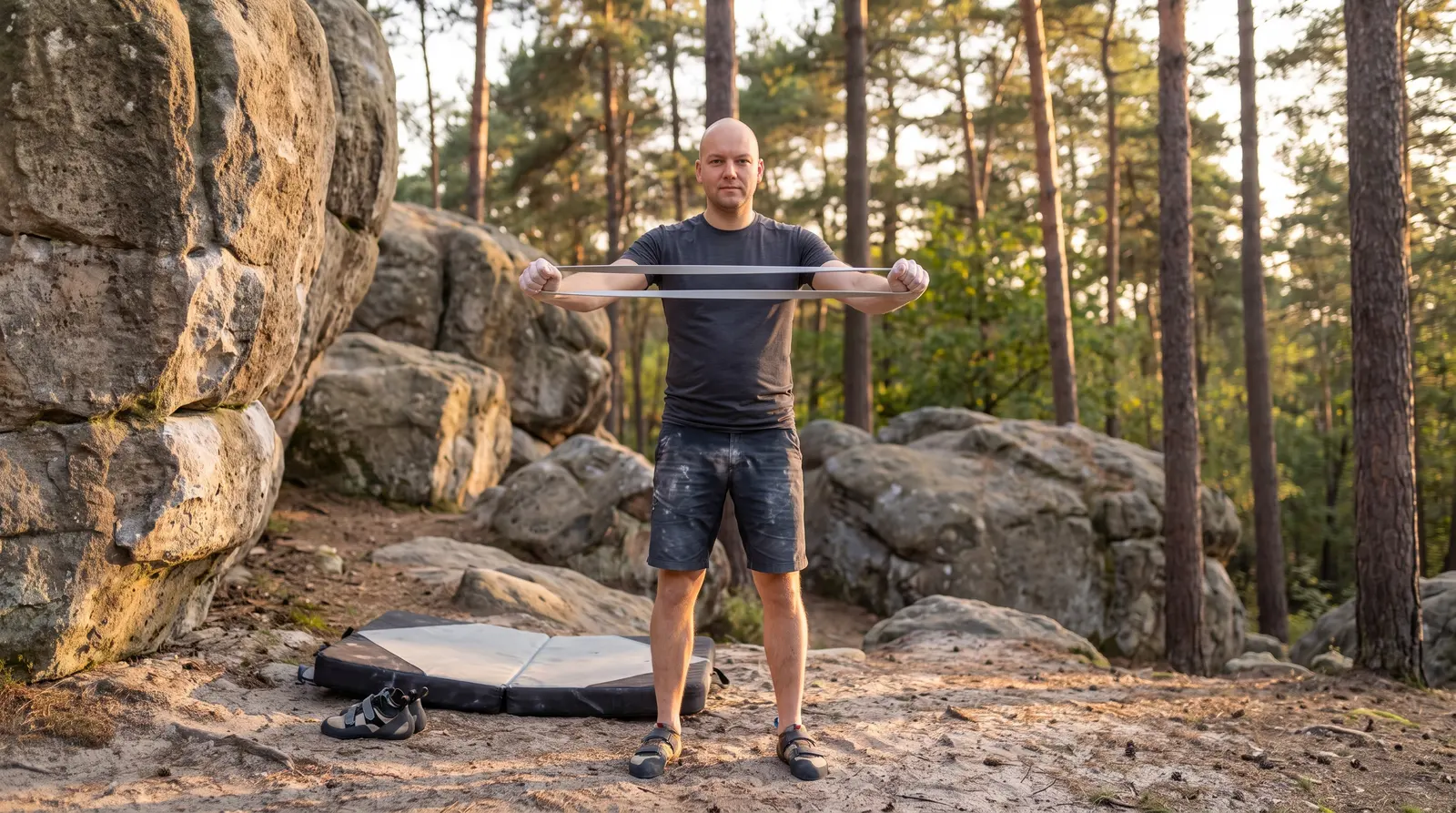
Your shoulders control almost every move, so activate the rotator cuff muscles and the muscles around your shoulder blades. A light resistance band works well: pull-aparts with arms straight, external rotations with the elbow at 90 degrees, and slow shoulder dislocates through a comfortable range of motion. Hang from a jug or pull-up bar with arms straight and pull your shoulder blades down and back without bending the elbows (scapular pull-ups). Finish with wrist circles and slow wrist flexion and extension to get the forearm extensors and flexors moving.
3. Fingers: progressive loading
Fingers warm up by being used, gradually. Start with easy gripping: open and close your fists, squeeze a soft ball or pinch the wall. Then add load in steps:
- Big jugs with feet on, 10 seconds, a few times.
- Bigger edges with part of your weight, open hand, then half crimp.
- If you use a hangboard, a couple of short bodyweight hangs on a comfortable edge, never close to failure.
The goal is a gradual increase in load, not a workout. If you're doing a hangboard session afterwards, our hangboard program builds on this finger warm-up.
4. Easy climbing ramp (potentiate)
Now get on the wall. Climb a ladder of problems or routes that gradually increase in difficulty. Include different hold types and a few dynamic moves before you try anything powerful. Before a hard redpoint or limit bouldering, extend this ramp: add a few climbs near your project grade and rest properly between them, so you start the session fresh rather than pumped.
Crag warm-up with no equipment
Outdoors there is rarely an easy wall right next to your project. Here's a version that needs nothing:
- The walk-in counts. A steady approach does the "raise" phase for you. If you drove to the boulders, do 3–5 minutes of brisk walking, squats and lunges.
- Shoulders without a band: arm circles, arm swings across the body, wall slides on a flat rock and push-ups against a boulder.
- Fingers on the rock: find big holds near the ground. Hang with feet on, then shift more weight onto your hands. Work from jugs to smaller edges over several minutes.
- Traverse or easy problems: low traverses or the easiest problems in the area, gradually harder. On a sport crag, the easiest route at the sector is your warm-up route.
Rock is often colder than gym holds. Keep a layer on until you start trying hard, and add a few minutes to the finger section on cold days.
Dynamic vs static stretching: what the evidence says
A 2016 systematic review by Behm and colleagues in Applied Physiology, Nutrition, and Metabolism is the clearest summary:
- Static stretches held for 60 seconds or more per muscle caused larger short-term drops in performance (about 4.6%) than shorter stretches (about 1.1%).
- Dynamic stretching produced small improvements in performance (about 1.3%) when done within minutes of activity.
- When stretching was followed by dynamic activity, no clear effect on performance was seen.
- Static stretching had no clear effect on injury rates; there was no data for dynamic stretching.
In practice: use dynamic movements before climbing. If you like a short static stretch for tight hips or shoulders, keep it brief and follow it with movement. Longer stretching belongs in your cool-down.
Common warm-up mistakes
- Going straight to the project. Your fingers and shoulders need gradual load first.
- Warming up into a pump. Too many long climbs leave you tired before your hard attempts. Keep the ramp short and rest between climbs.
- Skipping the finger steps. A general warm-up doesn't prepare your fingers; climbing-specific loading does.
- Same warm-up every time. Make it longer before limit sessions, cold days or after a long break.
Fifteen minutes is a small price for better attempts. Build the routine into every session, and browse the training section for what comes after it.
FAQ
How long should a climbing warm-up take?
Around 15 minutes is enough for most sessions. Plan longer, 20–30 minutes, before a limit bouldering session, a hard redpoint or a hangboard workout, or on a cold day, so your fingers reach harder holds gradually.
Should I stretch before climbing?
Use dynamic stretches and mobility drills before you climb. Short static stretches (under about 60 seconds per muscle) are fine if you follow them with active movement, but long static holds right before hard climbing can slightly reduce strength and power. Save longer stretching for after the session.
Can I warm up just by climbing easy routes?
Climbing easy terrain is the most specific part of a warm-up, and some climbers use nothing else. Starting with a few minutes of general movement and shoulder work first gets you to the harder climbs warmer and with your shoulders better prepared.
Does warming up prevent climbing injuries?
It is sensible, but not proven. Surveys of climbers have produced mixed results, and one 2026 survey of Slovenian sport climbers found that preventive routines were not linked to fewer injuries. Warm up mainly to climb better, and manage training load to stay healthy.
Sources
- Han H-P. et al., Comparing The Effectiveness of 10-Minute Dynamic Stretching, Vibration Rolling, and Climbing-Specific Warm-Ups on Exercise Performances in Rock Climbers, Journal of Sports Science and Medicine (2025)
- Behm DG. et al., Acute effects of muscle stretching on physical performance, range of motion, and injury incidence in healthy active individuals: a systematic review, Applied Physiology, Nutrition, and Metabolism (2016)
- Hlebš S, Brezovar T., Survey of injuries among Slovenian sport climbers, Journal of Sports Medicine and Physical Fitness (2026)
- Saville W., Science for Sport, Warm-Ups (RAMP protocol) (updated 2025)