Bouldering Training Program: Weekly Plans by Level
 Petr Hess, strength & conditioning coach
Updated 2 Nov 2026 · 9 min read
Key takeaways
Best for: Boulderers wanting a structured weekly plan
- Do limit bouldering and finger training right after the warm-up, never at the end of a session.
- In limit sessions, try 3–5 problems at your max, rest 3–5 minutes, and stop after roughly 20–30 hard attempts.
- Beginners should mostly just climb 2–3 times a week, with no hangboard in the first year.
- Avoid more than two hard days in a row and take at least one full rest day a week.
- Train in 4-week blocks: three weeks of rising load, then a deload week with volume cut by about half.
A good bouldering training program is simple: climb hard problems when you are fresh, add a little general strength, and rest enough to absorb the work. Beginners should mostly just climb 2–3 times a week; intermediate and advanced climbers add structured limit bouldering, finger training and strength work across 3–4 days. Below you'll find a weekly plan for each level, the session templates behind them, and the rules for progressing without getting hurt.
I'm a strength and conditioning coach, not a climbing coach, so this plan leans on what transfers from S&C: periodisation, progressive overload and recovery. Treat it as a framework you adapt, not a prescription.
How a bouldering training plan should work
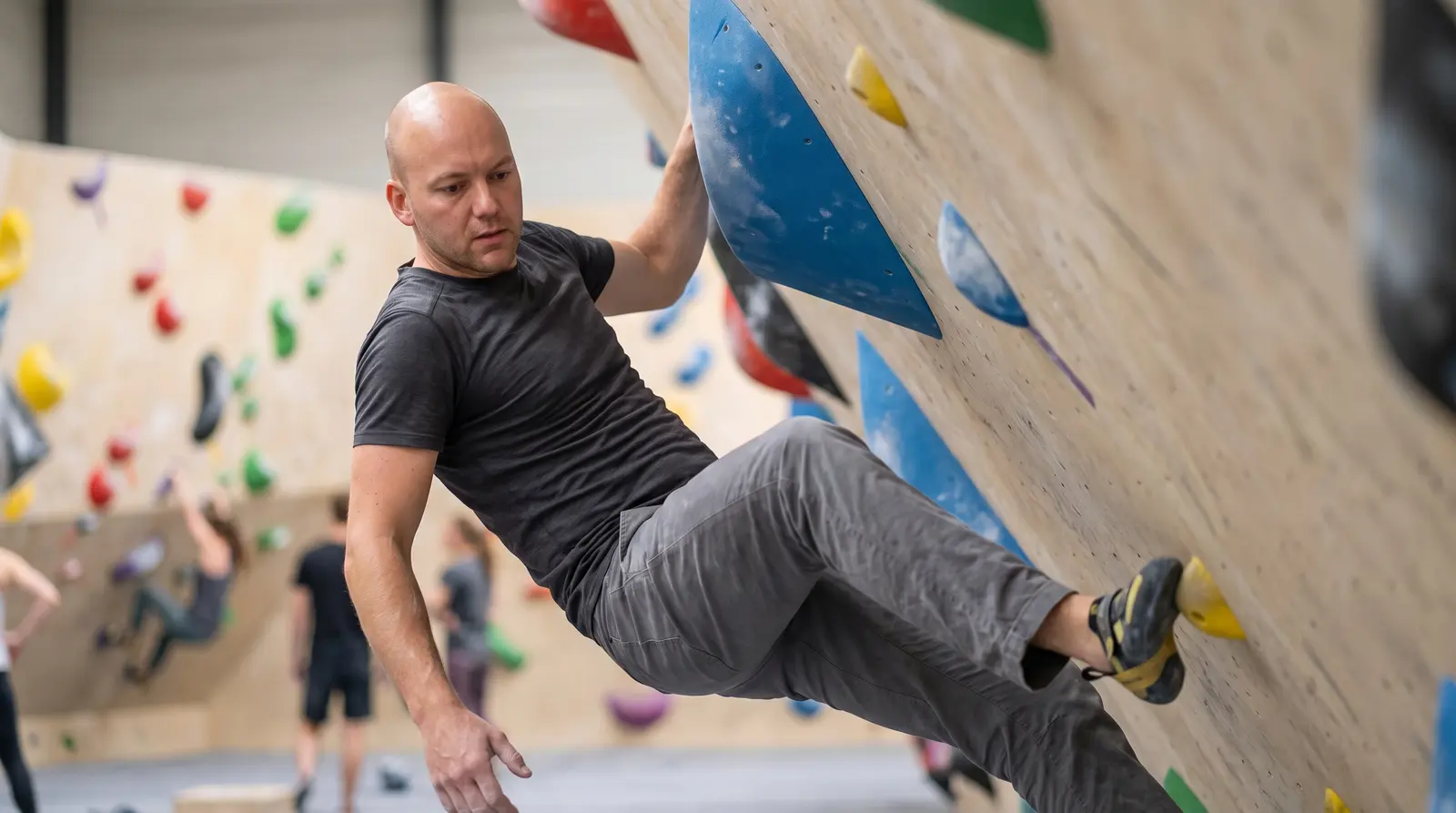
Bouldering is short, intense and skill-heavy. Each problem lasts seconds to a minute, so the qualities that matter most are skill and movement, finger strength, power (moving hard and fast), and some power endurance for longer problems and sessions. Endurance training in the route-climbing sense matters far less.
Three principles from strength training apply directly:
- Do the hardest work first. Limit bouldering and finger training belong at the start of a session, after a warm-up, never at the end when you are tired. Lattice Training lists hangboarding or campusing at the end of a session as one of the most common training mistakes.
- Progress gradually. Increase one variable at a time: number of sessions, number of hard attempts, added weight or difficulty.
- Plan the rest. Adaptation happens between sessions. Rest days and easier weeks are part of the plan, not a break from it.
Is a plan worth it at all? The evidence is limited but encouraging. A 2023 systematic review by Stien and colleagues found that adding climbing-specific resistance training to climbing improved climbing-related test performance more than climbing alone, with clear effects on finger strength and forearm endurance. The authors point out that the studies were few and small, so take it as support for doing some structured strength work, not proof that any one program is best.
How many days a week? Weekly structure and rest days
More days is not automatically better. Lattice Training's analysis of over 2,000 climbers logging sessions in their app found that V4 climbers averaged about 3 training days a week, while V12+ climbers averaged about 4. The number of exercises per week stayed similar across levels. What changed was the load and how focused each session was. Lower-grade climbers did well with broad, mixed sessions; elite climbers split their work into days with one clear focus.
Practical rules for your week:
- Avoid more than two hard days in a row, especially early on.
- Take at least one full rest day a week, and two if you are new to climbing or busy with work.
- Put the session that matters most (usually limit bouldering) after a rest day.
- Strength work in the weight room can go on climbing days (after climbing) or on separate days. Pick whatever you will actually do consistently.
Session templates
The weekly plans below use these building blocks. Times are rough guides.
Warm-up (15–20 min)
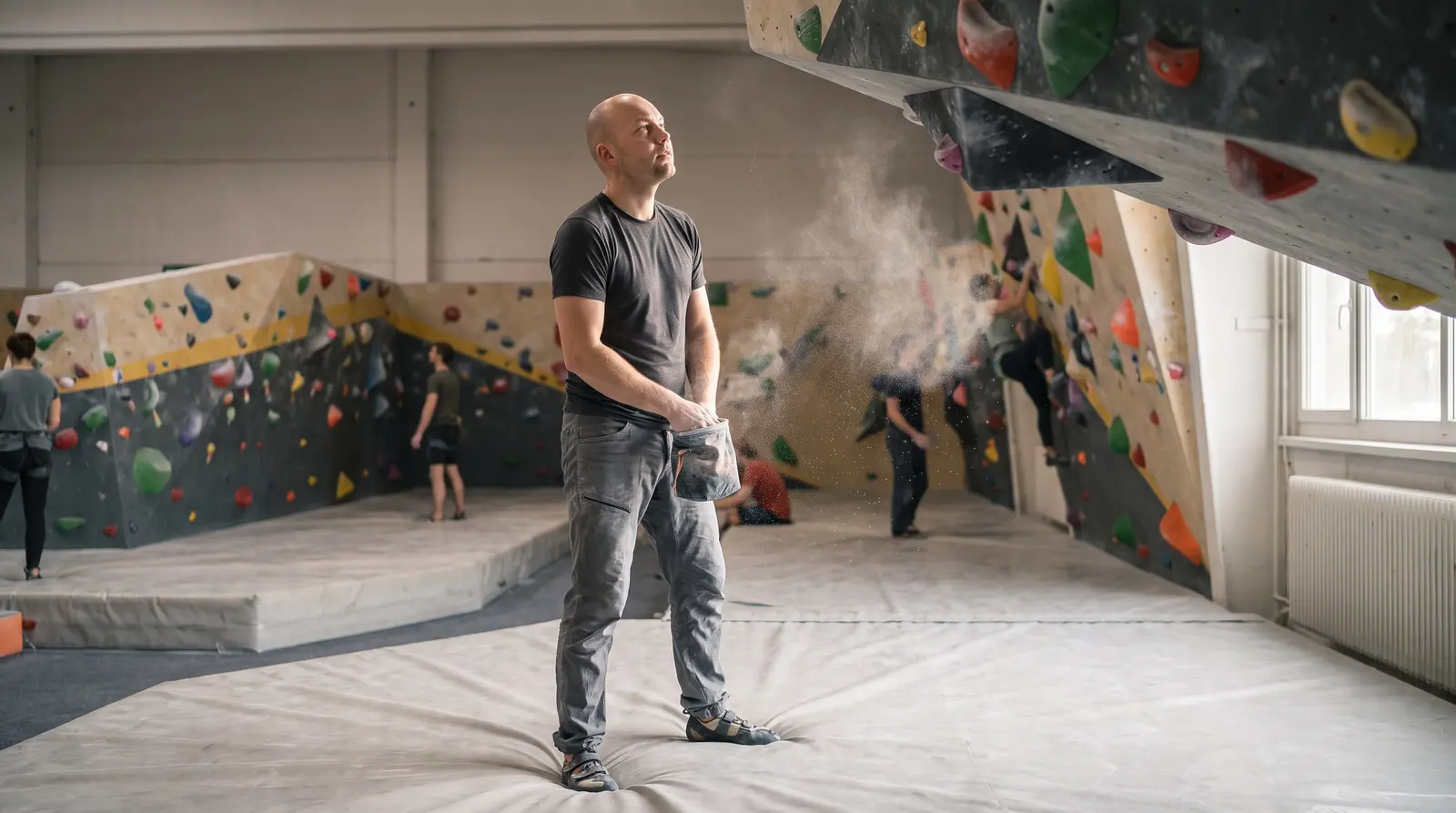
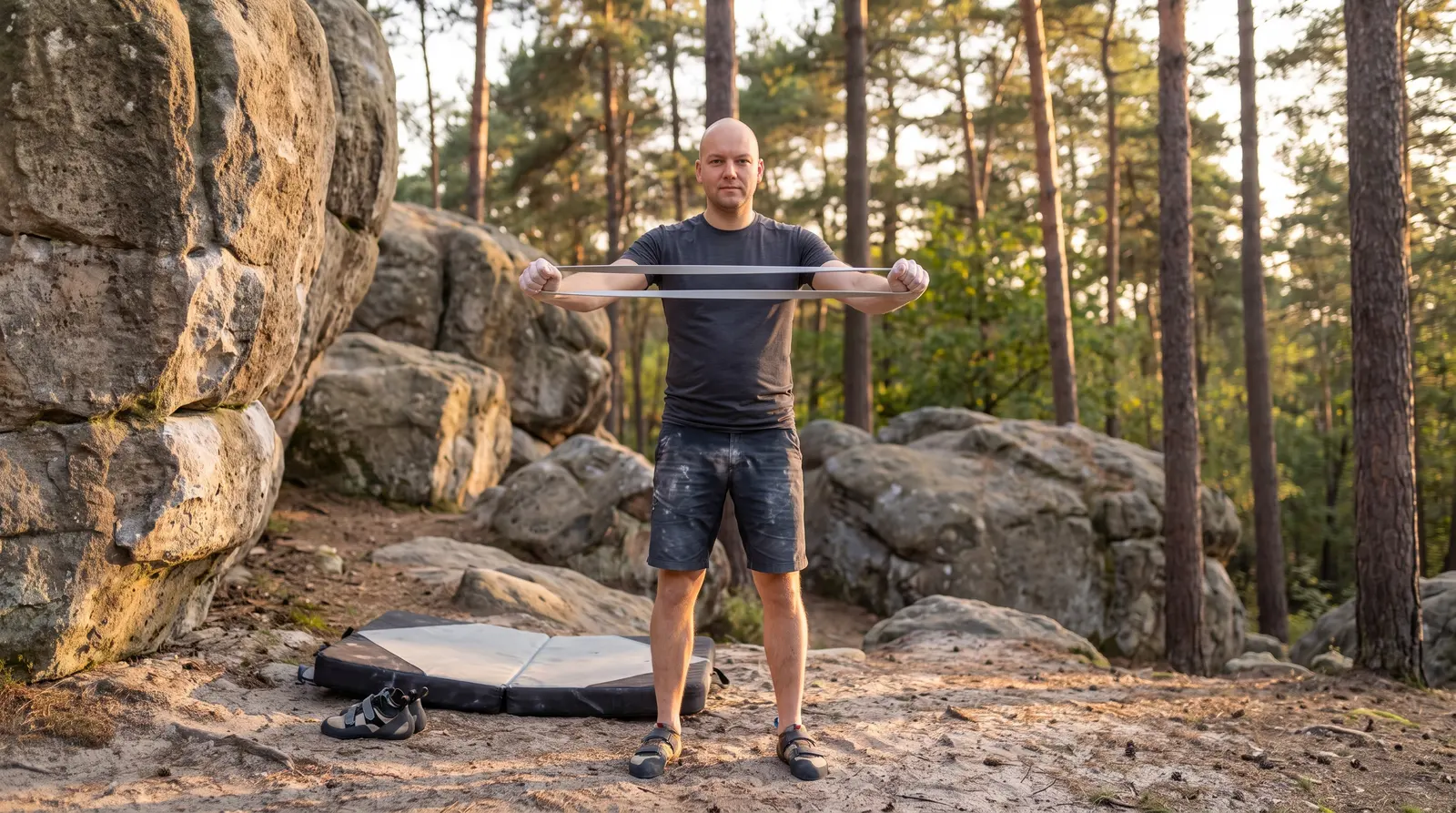
Five minutes of general movement to increase blood flow (rowing, skipping, jogging), then shoulder and scapular activation with a resistance band and some hip mobility. Then climb a ladder of boulder problems: start about three grades below your usual level and work up to problems you can do but have to try on. Steve Bechtel of Climb Strong uses a similar boulder ladder before his sessions.
Limit bouldering (45–60 min)
- Pick 3–5 boulder problems at or just above your maximum, ideally of different styles (overhang, crimps, compression, slab).
- Rest 3–5 minutes between attempts. You want every try at maximum effort, not tired attempts.
- Stop when the quality of your movement drops, or after roughly 20–30 hard attempts.
Volume and power endurance (40–60 min)
- Pick four boulders that are moderately challenging (2–3 grades below your max).
- Climb each one, rest about as long as it took you, and do four laps of the circuit.
- When you can finish all four laps with some margin left, increase the difficulty by swapping one problem for a harder one.
Strength (40–50 min)
A short, full-body workout routine, done after climbing or on its own day. Complete three sets of each, leaving 1–2 reps in reserve:
- Pull: pull-up or weighted pull-up, 4–6 reps (use a band if you can't yet do 5).
- Push: push-up or dumbbell overhead press, 6–10 reps.
- Legs: goblet squat, lunge or step-ups, 6–10 reps per side. Unilateral strength helps with high steps and rockovers.
- Hinge: Romanian deadlift or single-leg deadlift, 6–8 reps.
- Core workout: hanging knee raises and front-lever progressions, 6–10 reps.
Pushing and shoulder work also balances all the pulling that climbing does. Our guide to antagonist training covers it in detail.
Skill practice (10–20 min)
Choose one skill (heel hooks, flagging, drop knees, precise footwork, reading sequences) and practise it on easier problems for 10–20 minutes. Bechtel suggests sticking with one skill for around ten sessions before switching. Skill and tactics are the main focus of our article on how to get better at bouldering.
Beginner plan (roughly 0–1 year)
In your first year, climbing is the training. Fingers, tendons and skin adapt more slowly than muscles, so the goal is consistent climbing, lots of different problems and basic strength. No hangboard yet.
| Day | Session |
|---|---|
| Monday | Climbing session: warm-up, 45–60 min of varied problems at your level, 10 min skill practice |
| Tuesday | Rest day |
| Wednesday | Strength (full-body, 2 sets of each) + light mobility |
| Thursday | Climbing session: warm-up, try 3–4 harder problems, then easier mileage |
| Friday | Rest day |
| Saturday | Climbing session: social, playful, new styles and angles |
| Sunday | Rest day or easy walk/cycle |
If three climbing days feel like too much, drop Saturday. Two quality sessions plus one strength workout is a solid start.
Intermediate plan
Once you climb regularly and your progress has slowed, give each session a clear purpose. This is also when finger strength starts to pay off. A structured hangboard program once or twice a week, done at the start of a session, is a reasonable addition.
| Day | Session |
|---|---|
| Monday | Warm-up, hangboard (short), limit bouldering |
| Tuesday | Strength + antagonist and core work |
| Wednesday | Rest day |
| Thursday | Warm-up, skill practice, volume / power endurance circuit |
| Friday | Rest day |
| Saturday | Limit bouldering or projecting (gym or crag) |
| Sunday | Rest or mobility |
Advanced plan
Advanced climbers need more targeted stimulus and more careful fatigue management. Sessions become shorter and more specific, and finger training is planned across the week rather than squeezed in.
| Day | Session |
|---|---|
| Monday | Max hangs + limit bouldering (board or steep wall) |
| Tuesday | Weight training: heavy pull, hinge, push; core |
| Wednesday | Skill / technique session on moderate problems, mobility |
| Thursday | Rest day |
| Friday | Power: dynamic moves, campus or board (only if healthy), short limit set |
| Saturday | Projecting outdoors or power endurance circuits |
| Sunday | Rest day |
How to progress
Progressive overload in climbing means making the work slightly harder over weeks, not every session. Good options, one at a time:
- Add one hard climbing session a week (but no more than four in total for most people).
- Add a few attempts or one more problem to limit sessions.
- Add weight to pull-ups or hangs in small steps, once all sets feel solid.
- Choose harder problems for the circuit.
A simple way to organise this is in 4-week blocks: three weeks of gradually increasing load, then one easier week. Every 2–3 blocks, change the focus, for example from strength and limit bouldering to power endurance before an outdoor trip.
Set goals you can measure. Track your hardest problems by style (slab, vertical, overhang), how many attempts a problem took, and simple test numbers like max pull-up reps or a hang test. Retest every 4–8 weeks. If the numbers stall for a couple of months, read our guide to breaking a bouldering plateau.
Deload weeks
A deload week is a planned easier week. Lattice recommends taking a week of relative rest about once a month and alternating harder and easier weeks. In a deload week:
- Keep the same number of sessions, but cut the volume by about half.
- Climb easier problems and avoid maximum-effort attempts.
- Skip or reduce finger training and heavy lifting.
Many people come back from a deload feeling stronger. That is the point: you see the results of the previous weeks.
Signs of overtraining (and what to do)
The ECSS and ACSM consensus statement on overtraining describes the problem as too much overload combined with too little recovery. Short-term tiredness after a hard block is normal and goes away with rest. When performance keeps falling despite rest, it is a warning sign. Watch for:
- Performance dropping for more than a week or two, even on problems you used to do easily
- Persistent fatigue, heavy arms during the warm-up, or a lack of motivation
- Poor sleep, irritability, or getting ill more often
- Aching fingers, elbows or shoulders that don't settle between sessions
If several of these appear, take a deload or a few full rest days, then come back with fewer hard sessions. If pain or fatigue persists, get checked by a doctor or physiotherapist.
Balancing climbing with other sports, illness and life
Your body doesn't care where the fatigue comes from. If you run, play football or do heavy gym sessions, count them in your weekly load. Avoid hard leg or upper-body sessions the day before limit bouldering, and cut one climbing day rather than doing everything at half quality.
When you are sick, rest. Don't try to train through a fever or a chest infection. After a short cold, return with one or two easy sessions before going back to limit bouldering. After a longer illness, treat the first week back like a deload. The same goes for stressful weeks at work or poor sleep: a shorter, easier session is still a good session.
A plan only works if you can keep doing it. Start with the plan for your level, be honest about how you recover, and adjust every few weeks. For more guides, browse the training section.
FAQ
How many days a week should I train for bouldering?
Most recreational climbers do well on 2–4 sessions a week. Beginners usually need 2–3 days of climbing with rest days in between; more experienced climbers often train 3–4 days but separate the hardest sessions with easier or rest days.
Should beginners use a hangboard?
Usually not in the first year. Climbing itself loads the fingers enough at that stage. Once you climb regularly and have built a base, a structured, low-volume hangboard program is a reasonable next step.
Do bouldering training programs actually work?
A structured plan helps mainly because it makes you train consistently, progress load gradually and rest on purpose. Research suggests that adding targeted strength training to climbing improves climbing-related test results more than climbing alone, although the number of studies is still small.
Can bouldering help you lose weight?
Bouldering burns energy and builds muscle, so it can support weight loss as part of an overall lifestyle, but body weight is mainly driven by diet. Don't chase weight loss at the expense of recovery or energy for training.
Sources
- Stien N. et al., Effects of climbing- and resistance-training on climbing-specific performance: a systematic review and meta-analysis, Biology of Sport (2023)
- Lattice Training, How many days should I train per week for climbing? (2026)
- Lattice Training, Top 5 Biggest Training Mistakes Climbers Make (2019)
- Steve Bechtel / Climb Strong, Boulder / Strength / Skill Sessions
- Meeusen R. et al., Prevention, diagnosis, and treatment of the overtraining syndrome: joint consensus statement of the ECSS and ACSM, Med Sci Sports Exerc (2013)