Max Hangs vs Repeaters: Which Hangboard Protocol Wins?
 Petr Hess, strength & conditioning coach
Updated 2 Nov 2026 · 11 min read
Key takeaways
Best for: Hangboarders choosing between strength and endurance work
- Use max hangs for maximal finger strength: 5–10 s hangs, 2–3 min rest, about 80–95% of max load.
- Use repeaters, such as 7 s on / 3 s off, to build strength endurance for routes and longer problems.
- Boulderers failing on single hard moves should lean towards max hangs; pumped sport climbers towards repeaters.
- Run a strength block before an endurance block, for example max hangs in weeks 1–4, repeaters in weeks 5–8.
- Keep grip, hold size and finger grouping fixed for 8–12 weeks, adding about 1 kg per week at most.
Neither protocol wins outright. Max hangs (short, heavy hangs of about 10 seconds with long rests) are the more direct way to build maximal finger strength, so they suit bouldering and hard single moves. Repeaters (short hangs with short rests, such as 7 seconds on, 3 seconds off) build strength endurance, so they suit sport climbing and longer problems. Most climbers get the best results by using both, one after the other.
I write this as a strength and conditioning coach, not a climbing coach or physio. The debate looks a lot like the one in any strength sport: heavy, low-rep work versus moderate loads with more volume. Both work; they just work on different things. This article goes deep on the comparison. For the complete picture, including readiness, grips and a sample plan, start with our hangboard program guide.
Max hangs vs repeaters: the quick answer
| Max hangs | Repeaters | |
|---|---|---|
| Typical hang | 5–10 s | 5–10 s, most often 7 s |
| Rest between hangs | 2–3 min (longer if needed) | 3–10 s within a set, often 3 s |
| Intensity | High: about 80–95% of max total load | Low to high (about 30–90%), depending on the goal |
| Sets per session | 3–8 hangs or sets | 1–8 sets |
| Main quality trained | Maximal finger strength | Strength endurance and endurance |
| Best fit | Bouldering, crux moves, limit grades | Sport climbing, long boulders, endurance |
| How it feels | Heavy, short, no pump | Increasingly pumpy |
| Recovery cost | Low fatigue, but high peak load on tissues | More total fatigue and time under tension |
| Beginner friendly? | Only at low intensity | Yes, at low to moderate intensity |
The ranges come from Lattice Training's hangboarding guide and the López-Rivera studies described below.
What are max hangs?
Max hangs are short, near-maximal dead hangs on a single edge. The best-known version comes from climber and researcher Eva López. In the 2019 study by López-Rivera and González-Badillo, each set was one 10-second hang, with a load chosen so the climber could have held it for about 13 seconds. That 3-second margin keeps every hang short of failure. Climbers rested 3 minutes between hangs and built up from 3 to 5 sets per session.
There are two ways to make max hangs harder:
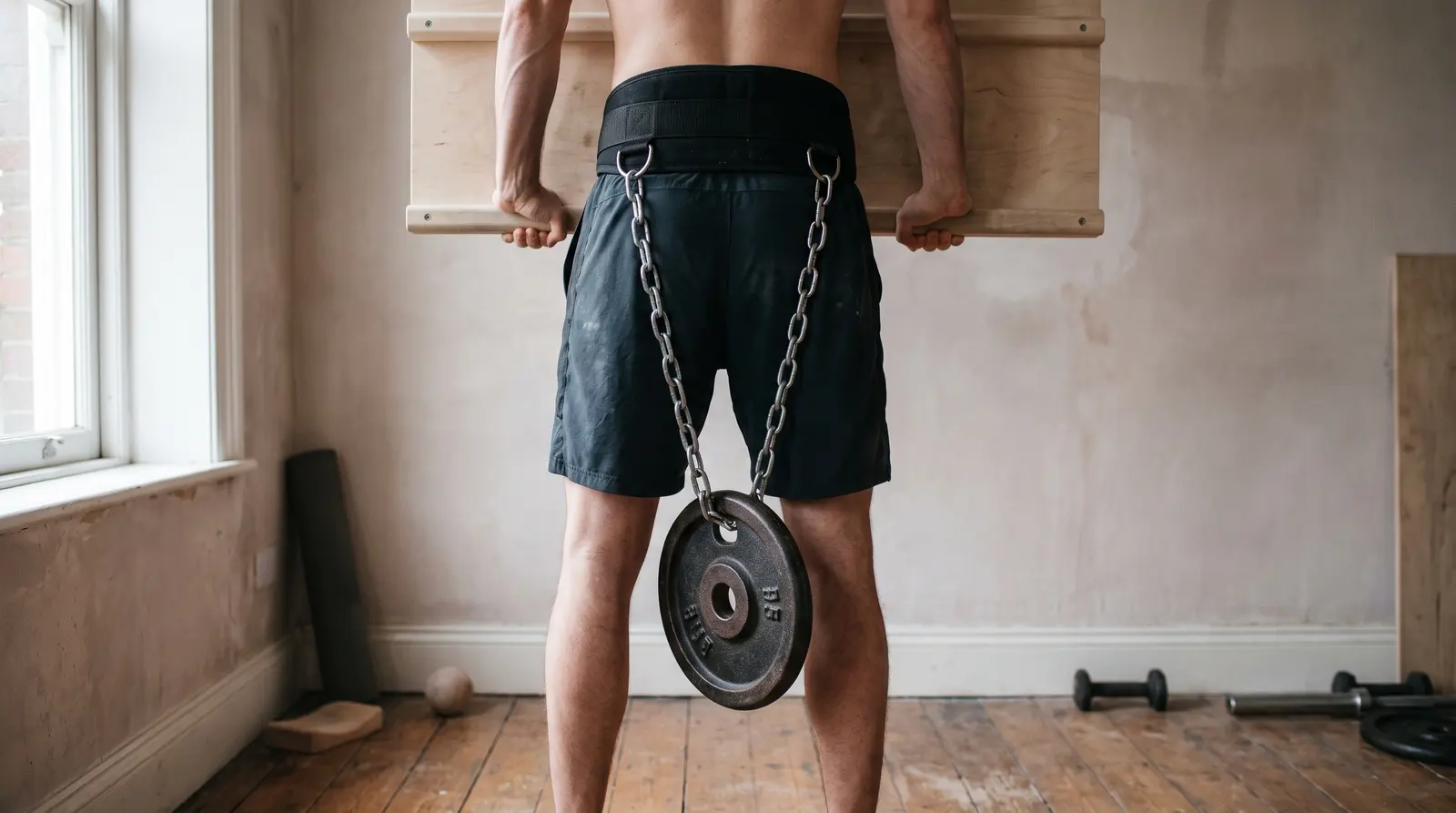
- Add weight on a fixed edge (the López studies used an 18mm edge with added load).
- Use a smaller edge at bodyweight (the "minimum edge depth" method).
Lattice's version uses 80–95% of your maximum total load, 5–10 second hangs, 6–8 reps and 2–3 minutes of rest, ending "each hang 1-3 seconds before you feel like you have to stop." First-timers should stay at the lower end of that intensity range.
What are repeaters?
Repeaters (also called intermittent hangs) string several short hangs together with very short rests, so fatigue builds through the set. The classic hangboard repeaters format is 7 seconds on, 3 seconds off, repeated six or so times, then a longer rest between sets.
The repeater protocol in the 2019 López study was 10 seconds on, 5 seconds off, 4–5 reps per set, with 1 minute between sets and 3–5 sets per session, on the smallest edge each climber could manage.
Lattice explains that repeaters can be tuned by intensity:
- Endurance: 30–45% intensity, 4–10 minute sets.
- Strength endurance: 50–70% intensity, 1–4 minute sets.
- Hypertrophy and strength: 75–90% intensity, 30–90 second sets.
That range matters. "Repeaters" can mean anything from a heavy, strength-focused workout to a long, easy aerobic session, so always check the intensity before comparing results.
What each protocol trains: the physiology
Both protocols load the same tissues: the finger flexor muscles in your forearm, their tendons, and the pulleys that hold those tendons close to the bone. The difference is how hard and how long you load them.
Max hangs: force production
Short, heavy efforts with full recovery train your ability to produce maximal force. Lattice describes this kind of hangboarding as "mostly about increasing the total force your forearm muscles can generate", and lists strength without much size gain as one of its benefits.
In strength training generally, early gains from heavy, low-volume work are often attributed to the nervous system: recruiting more motor units and firing them faster. Devise and colleagues suggested this kind of neural adaptation as a likely explanation for the strength gains they saw with maximal hangboard pulls, though they did not measure it directly. Because each hang is short and rests are long, max hangs create little metabolic fatigue, which is why they rarely feel pumpy.
Repeaters: sustaining force
Repeaters train you to keep producing force while fatigue accumulates, and to recover in the short pauses between contractions, much like shaking out between moves on a route. Devise and colleagues proposed that stamina gains from intermittent hangboarding may come from better aerobic metabolism, larger energy stores and better reoxygenation and blood flow during the short rests. Again, these are hypotheses; the study measured force, not muscle metabolism.
At high intensity, repeaters also produce plenty of time under tension, which is the classic stimulus for muscle growth (hypertrophy) and strength. That is why Lattice lists "muscle size and strength for beginners and intermediates" among the things repeaters train.
What the research says
The research on hangboard protocols is small but useful. Most studies have fewer than 60 participants, last 4 to 10 weeks and use experienced climbers. Keep that in mind as you read.
López-Rivera and González-Badillo (2012): order matters
Nine elite climbers (around 8a+/b) did 8 weeks of max hangs, using two methods: added weight on an 18mm edge, and bodyweight on the smallest possible edge. One group did weighted hangs first, then small-edge hangs; the other did the reverse. The weighted-first group improved grip endurance by about 17% at week 4 and 20% at week 8, more than the other group. With only nine climbers, the differences were not statistically significant, but the authors concluded that weighted hangs followed by small-edge hangs was the most effective sequence.
López-Rivera and González-Badillo (2019): max hangs vs intermittent hangs
This is the study most climbers mean when they talk about max hangs vs repeaters. Twenty-six advanced sport climbers (around 7c+/8a) did two hangboard sessions a week for 8 weeks, at the start of their normal climbing sessions, in one of three groups:
- MaxHangs: 4 weeks of weighted max hangs, then 4 weeks of small-edge max hangs.
- Max_IntHangs: 4 weeks of weighted max hangs, then 4 weeks of intermittent hangs.
- IntHangs: 8 weeks of intermittent hangs on the smallest edge.
Results for grip endurance (a hang to failure on an 11mm edge):
| Group | Change after 4 weeks | Change after 8 weeks |
|---|---|---|
| Intermittent hangs | +25% (significant) | +45% (significant) |
| Max hangs | Small, not significant | +34% (significant) |
| Max hangs, then intermittent | Small, not significant | +7% (not significant) |
Intermittent hangs worked fastest for endurance. Max hangs also improved endurance, probably because stronger fingers make a given hold feel easier. Strength and endurance were strongly correlated throughout (r = 0.83), which supports that idea. There were no statistically significant differences between groups, the sample was small, and dropouts were uneven, so the authors suggested alternating or combining the methods rather than crowning a winner.
Starting strength changes the answer
Lattice's 2018 discussion of another López-Rivera study adds an important detail. After four weeks of max hangs, climbers in the lower-strength group improved added-weight strength by about 36% and endurance by about 36%, while the stronger group's changes (+3.7% strength, −4.2% endurance) were not significant. The takeaway: max hangs give the most to climbers whose finger strength is still relatively low, and stronger climbers may need a bigger stimulus or a longer block.
Devise et al. (2022): intensity decides the outcome
This French study took a different angle. Fifty-four advanced and elite climbers trained twice a week for 4 weeks on an instrumented 12mm hold, at three intensities, plus a control group:
| Group | Protocol | Max finger strength | Stamina and endurance |
|---|---|---|---|
| F100 | Maximal 6 s one-arm pulls, long rests | +14% (significant) | No significant change |
| F80 | 80% of max, 10 s on / 6 s off, up to 12 reps, 3 sets | +12% (significant) | Both improved significantly |
| F60 | 60% of max, 10 s on / 6 s off, 24 reps, 2 sets | +6% (not significant) | Both improved significantly |
| Control | Normal climbing only | +1% | No change |
Maximal efforts built strength only; low-intensity repeaters built endurance only; and high-intensity repeaters at 80% improved all three measures. The authors described F80 as the most versatile option. Climbers who started higher gained less. Note that two authors advise the company that makes the hangboard used, and the study did not measure climbing performance.
Hermans et al. (2022): repeaters for recreational climbers
Thirty-five intermediate to advanced recreational climbers (redpoint 6a or harder) either kept climbing or added a 10-week repeater program (7 s on / 3 s off, twice a week) on a Beastmaker 1000 series board. The hangboard group improved peak force on a 23mm rung more than the control group, while the change in dead-hang endurance was not significantly different between groups. The authors note they cannot say whether the gains transferred to climbing performance, and the control group climbed more often during the study.
What the research adds up to
- Both protocols improve finger strength and endurance in experienced climbers. Neither is useless.
- Heavy, short hangs lean towards strength; lower-intensity repeaters lean towards endurance.
- High-intensity repeaters sit in the middle and can build both.
- The weaker you are to start, the more you gain from almost anything.
- No study yet shows that one protocol clearly improves real climbing grades more than the other.
Which protocol should you choose?
Choose by your goal and your weakness, not by what a stronger friend does.
| Your situation | Lean towards | Why |
|---|---|---|
| Boulderer failing on single hard moves or small crimps | Max hangs | Maximal force is the limiter; low fatigue leaves energy for climbing. |
| Sport climber getting pumped on sustained routes | Repeaters (moderate intensity) | Trains sustaining force with short recoveries, like a route. |
| Long boulders, circuits, onsight goals | Repeaters, with a max hang block first | A higher strength ceiling makes every hold relatively easier. |
| Trad, alpine, all-day endurance | Lower-intensity repeaters | Long, easier sets match the demand. |
| Newer hangboarder | Low-intensity repeaters or assisted hangs | Builds tissue tolerance before heavy loads. |
| Already strong for your grade | Whatever you have done least | Stronger climbers respond less to the same stimulus. |
If you are unsure where your gap is, measure it. Compare your maximal hang and your endurance hang with these finger strength benchmarks. If you want more precise data, you can measure your pulling force with a Tindeq Progressor and set intensities as a percentage of your real maximum, the way the Devise study did with force feedback.
How to combine and periodise max hangs and repeaters
Periodization simply means planning training in phases, so each phase builds on the one before. The evidence and common practice point to a simple rule: strength first, then endurance. The 2012 study found the weighted-first sequence worked best, and the 2019 authors suggested alternating the two methods over longer training cycles.
Option 1: blocks (simplest)
| Weeks | Focus | Sessions per week |
|---|---|---|
| 1–4 | Max hangs: 3–5 × 10 s, 3 min rest, about 3 s short of failure | 2 |
| 5–8 | Repeaters: 3–5 sets of 7 s on / 3 s off × 6, 2–3 min between sets | 2 |
| 9 | Deload and retest on the same edge and grip | 1–2 easy |
Option 2: concurrent (for experienced trainees)
Do one max hang session and one repeater session each week, separated by at least 48 hours. If you put both in one session, do max hangs first while you are fresh, then a shorter repeater set. This keeps both qualities moving, but the total load on your fingers is higher, so cut climbing volume somewhere else.
Progression rules that apply to both
- Keep the variables fixed. Lattice recommends keeping grip type, hold size and finger grouping the same for at least 8–12 weeks, so you can see real progress.
- Change one thing at a time: intensity, hang duration or frequency.
- Progress after two good sessions in a row, and add only a couple of pounds (about 1 kg) per week.
- Test in its own session, once per training cycle, using the grip and hang time you plan to train.
- Fit it into your climbing. Devise and colleagues noted that maximal efforts leave climbers less exhausted than fatiguing intermittent sets, so give repeater phases more room in your week.
Safety: how to do both protocols without getting hurt
Max hangs put the highest peak load on your pulleys and tendons; repeaters add more total time under tension. Each carries its own risk.
- Warm up properly, with progressive hangs before your working sets.
- Stay short of failure on max hangs. The 3-second margin in the López protocol exists for a reason.
- Be careful with the full crimp at high loads, and with one-arm or isolated-finger hangs unless you are advanced. Lattice lists small edges and isolated fingers as less useful for most climbers with both protocols.
- Use a 20mm edge or similar rather than tiny edges. Lattice notes that very small edges limit the force you can transmit to the forearm muscles.
- Count all finger load. A board session, a crimpy bouldering night and a Moonboard session all hit the same tissues.
The bottom line
Max hangs and repeaters are two ends of the same dial. Max hangs raise your strength ceiling; repeaters teach you to use more of it, for longer. If you boulder, lean towards max hangs; if you climb routes, lean towards repeaters; and whichever you choose, run a strength block before an endurance block, keep your variables constant and retest. The best hangboard protocol is the one that targets your actual weakness, at a dose you can repeat for months without getting hurt.
FAQ
Are max hangs or repeaters better for finger strength?
For pure maximal finger strength, short heavy hangs are the more direct tool. In a 2022 study, maximal pulls and high-intensity intermittent hangs both raised maximal finger strength, while low-intensity intermittent hangs did not significantly. Repeaters at high intensity can still build strength, especially in less experienced climbers.
Are repeaters better for endurance?
Usually, yes. In López-Rivera and González-Badillo's 2019 study, intermittent hangs improved grip endurance by 45% over 8 weeks versus 34% for max hangs, and they improved sooner. Devise and colleagues also found that submaximal intermittent hangs improved stamina and endurance, while maximal pulls did not significantly.
Can I do max hangs and repeaters in the same week?
Yes, many climbers do, but it adds up quickly. A simpler approach is to run blocks: a few weeks of max hangs first, then a few weeks of repeaters. If you do combine them in one session, put the max hangs first, while your fingers are fresh.
Should beginners do max hangs or repeaters?
Most newer hangboarders do well starting with low-intensity repeaters or assisted hangs, then adding max hangs once they have a few months of consistent, pain-free training. Lattice lists inexperienced climbers among those for whom max hangs are less useful, unless done at low intensity.
Sources
- López-Rivera E, González-Badillo JJ. Comparison of the Effects of Three Hangboard Strength and Endurance Training Programs on Grip Endurance in Sport Climbers. Journal of Human Kinetics (2019)
- López-Rivera E, González-Badillo JJ. The effects of two maximum grip strength training methods using the same effort duration and different edge depth on grip endurance in elite climbers. Sports Technology (2012)
- Devise M, Lechaptois C, Berton E, Vigouroux L. Effects of Different Hangboard Training Intensities on Finger Grip Strength, Stamina, and Endurance. Frontiers in Sports and Active Living (2022)
- Hermans E, Saeterbakken AH, Vereide V, Nord ISO, Stien N, Andersen V. The Effects of 10 Weeks Hangboard Training on Climbing Specific Maximal Strength, Explosive Strength, and Finger Endurance. Frontiers in Sports and Active Living (2022)
- Lattice Training, Lattice Training's Guide to Better Hangboarding, Part 2, Climbing.com (updated 2025)
- Lattice Training, Research Discussion: Eva Lopez-Rivera Finger Strength (2018)