Bouldering Trip Packing List: The Printable Checklist
 Petr Hess, strength & conditioning coach
Updated 2 Nov 2026 · 5 min read
Key takeaways
Best for: Climbers packing for an outdoor bouldering trip
- Bring at least one crash pad per person, more for high problems or uneven landings.
- Pack a skin kit: nail clippers, a file or fine sandpaper, skin balm and finger tape.
- Pack warmer than you think, including an insulated jacket and waterproof shell, since you sit still between attempts.
- Check that your travel policy names bouldering as covered; an EHIC is not an alternative to travel insurance.
- Carry a very soft brush and a shoe towel, and climb sandstone only when it is completely dry.
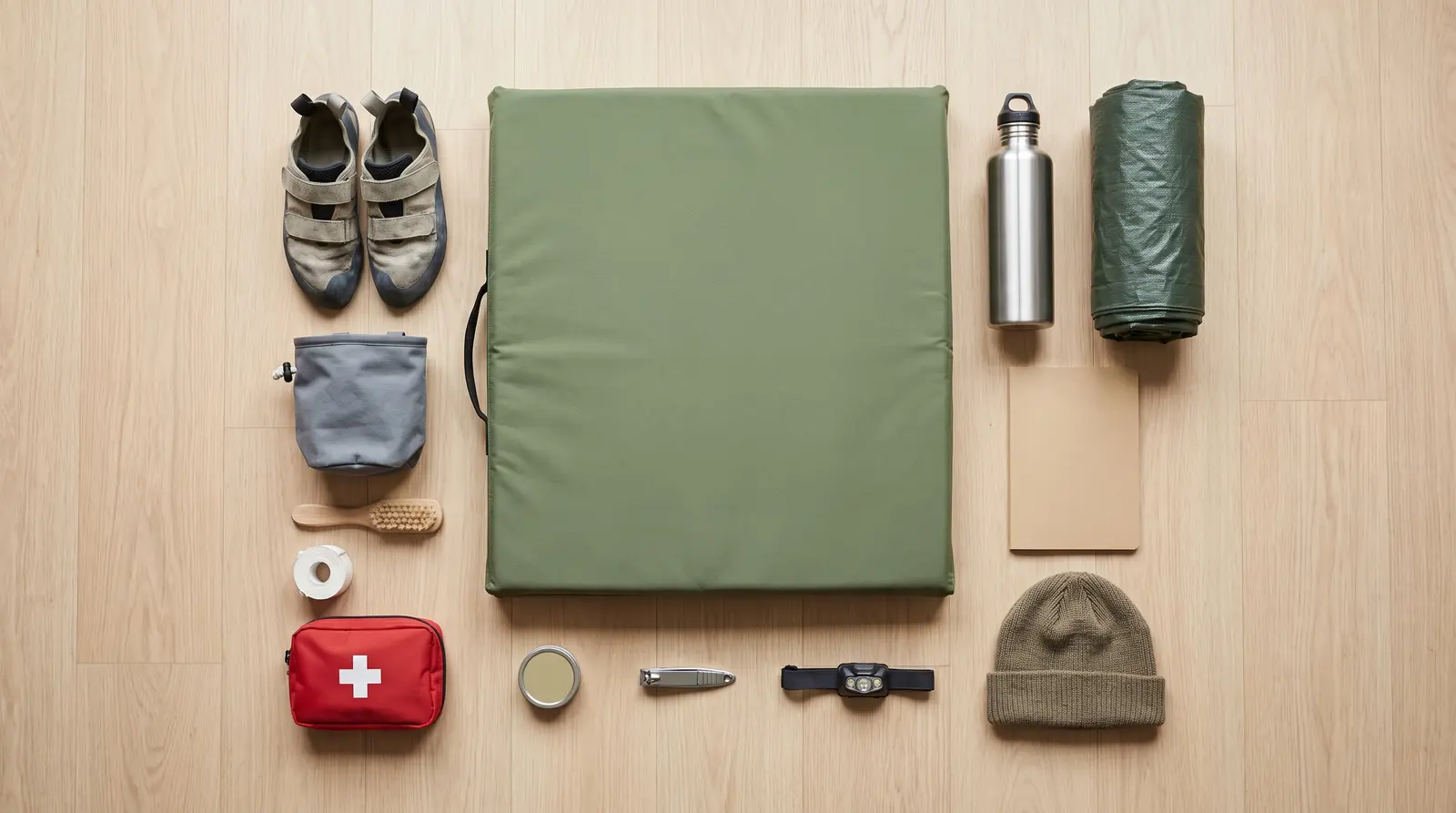
A good bouldering trip packing list covers nine things: pads, shoes and chalk, skin care and first aid, clothing for the weather, small crag kit, travel documents and insurance, sleeping and cooking, guidebooks and apps, and leave-no-trace items. Below is the full checklist, grouped so you can print it or tick it off on your phone. Forget the pads or your shoes and the trip is over; forget almost anything else and you can usually buy it nearby.
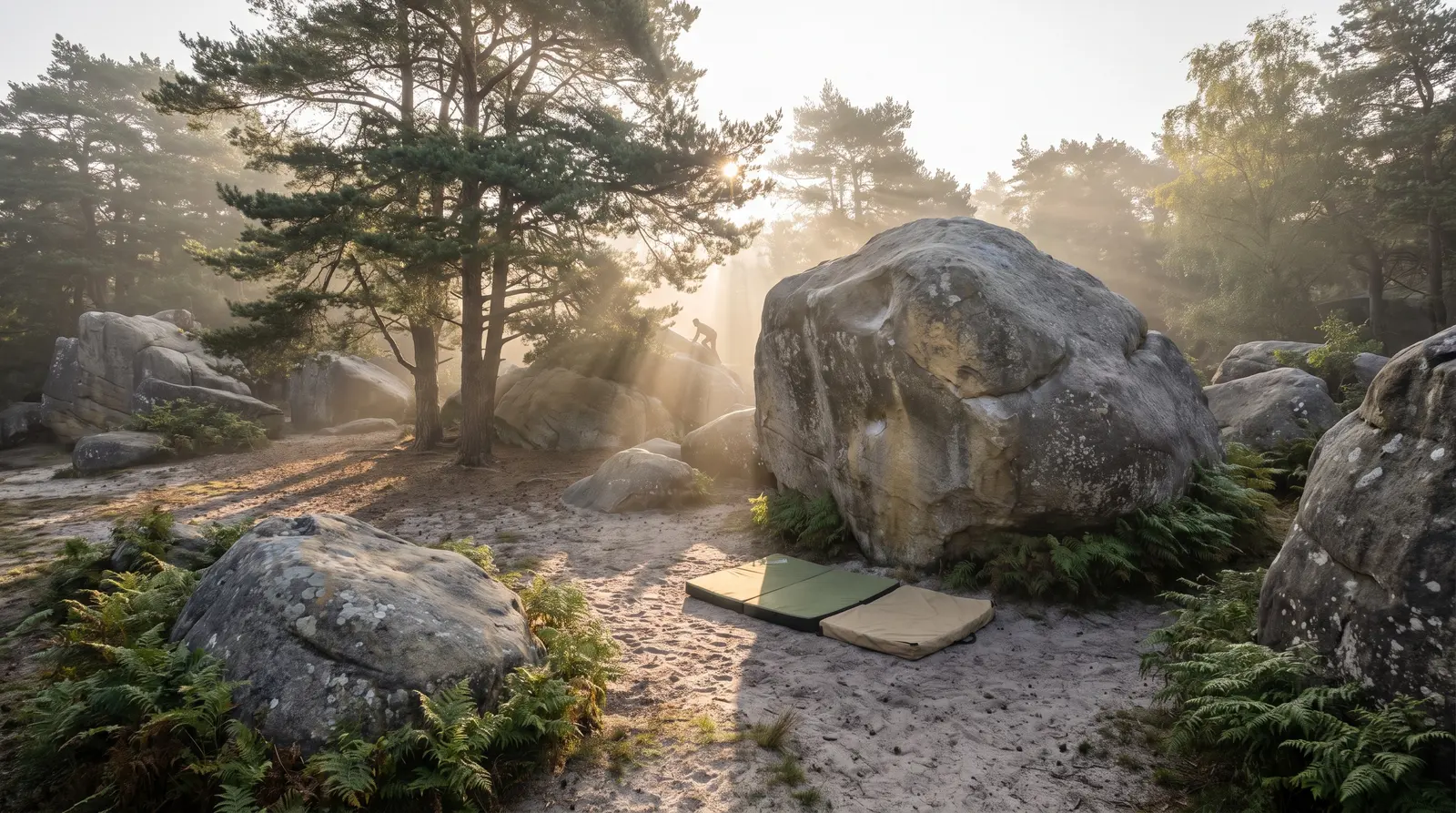
I wrote it with a typical Fontainebleau trip in mind, since Font is one of the most popular bouldering destinations in the world. If that is your plan, read our Fontainebleau bouldering guide alongside this list. The checklist works for any bouldering area, though; just adjust the clothing for the season.
1. Crash pads and spotting
Pads are the biggest and most important item, and the hardest to transport. Decide how you are getting them there before you decide how many to bring.
- ☐ Crash pad(s): at least one per person, more for high problems or uneven landings
- ☐ Small "sit start" or slider pad (optional, for filling gaps)
- ☐ Pad straps or a pad carrier for long approaches
- ☐ Big bag or wrap for the pad if it is going in a plane hold
- ☐ A spotter (or a plan to boulder with friends)
Not sure which pad to buy or how many your group needs? See our guides to the best crash pads and how many crash pads you need.
2. Shoes and chalk
- ☐ Climbing shoes, plus a second pair if you have one (rubber and skin wear faster outside)
- ☐ Approach shoes or trail shoes
- ☐ Chalk bag or chalk bucket
- ☐ Enough chalk for the whole trip (loose chalk or a chalk ball)
- ☐ Liquid chalk (optional)
3. Skin care and first aid
Outdoor rock, especially rough granite or gritty sandstone, eats skin much faster than gym plastic. On a multi-day trip, skin often ends a trip before strength does.
- ☐ Nail clippers and a nail file or fine sandpaper (to file down flappers and calluses)
- ☐ Climbing skin balm or salve
- ☐ Finger tape
- ☐ Small scissors
- ☐ Basic first aid kit: plasters, wound dressings, antiseptic wipes, a triangular bandage, painkillers you normally use
- ☐ Blister plasters for long approaches
- ☐ Sunscreen and lip balm
- ☐ Any personal medication, in your hand luggage
Taping and skin injuries are covered in our climbing injuries hub. If a finger hurts with a pop, swelling or pain when you grip, stop climbing on it and get it checked rather than taping over it.
4. Clothing and weather
Bouldering seasons are often cool, because cold rock gives better friction. You spend a lot of time sitting still between attempts, so pack warmer than you think.
- ☐ Warm insulated jacket (down or synthetic)
- ☐ Waterproof shell jacket
- ☐ Fleece or mid-layer
- ☐ Climbing trousers that you can move in and do not mind wearing out
- ☐ Base layers for cold mornings
- ☐ Beanie, buff and light gloves
- ☐ Sun hat and sunglasses (spring and summer trips)
- ☐ Spare socks, and a dry change of clothes in the car
- ☐ Rest-day clothes
5. Crag kit
- ☐ Soft brush for holds (for sandstone, a very soft brush, not a stiff bouldering or tooth brush)
- ☐ Small towel, rag or doormat for cleaning your shoes before each attempt
- ☐ Tarp or ground sheet for bags (optional)
- ☐ Daypack, 20–30 litres
- ☐ Water bottle (1–2 litres per person per day)
- ☐ Snacks and lunch
- ☐ Headtorch for the walk out after a long day
- ☐ Phone, power bank and charging cable
- ☐ Small notebook or app to log projects
6. Travel documents and insurance
- ☐ Passport or ID card
- ☐ Driving licence and car hire documents
- ☐ Travel insurance documents and emergency phone number
- ☐ European Health Insurance Card (EHIC) if you are covered by an EU/EEA system
- ☐ Bank cards and some cash
- ☐ Accommodation and travel bookings, saved offline
7. Camp and accommodation
Skip this section if you are staying in a gîte, hostel or hotel. For camping or van trips, add:
- ☐ Tent, sleeping bag rated for night temperatures, sleeping mat
- ☐ Stove, fuel, pot, lighter and a mug
- ☐ Food for breakfasts and evenings, plus a cool box
- ☐ Camp chair (your pad works too, but your back will thank you)
- ☐ Washing-up kit and rubbish bags
- ☐ Earplugs and an eye mask
8. Apps and guidebooks
- ☐ Printed guidebook for the area (the best source for access and local rules)
- ☐ Climbing app or website topos, downloaded for offline use
- ☐ Offline maps of the area and parking spots
- ☐ A weather app with hourly rain forecasts
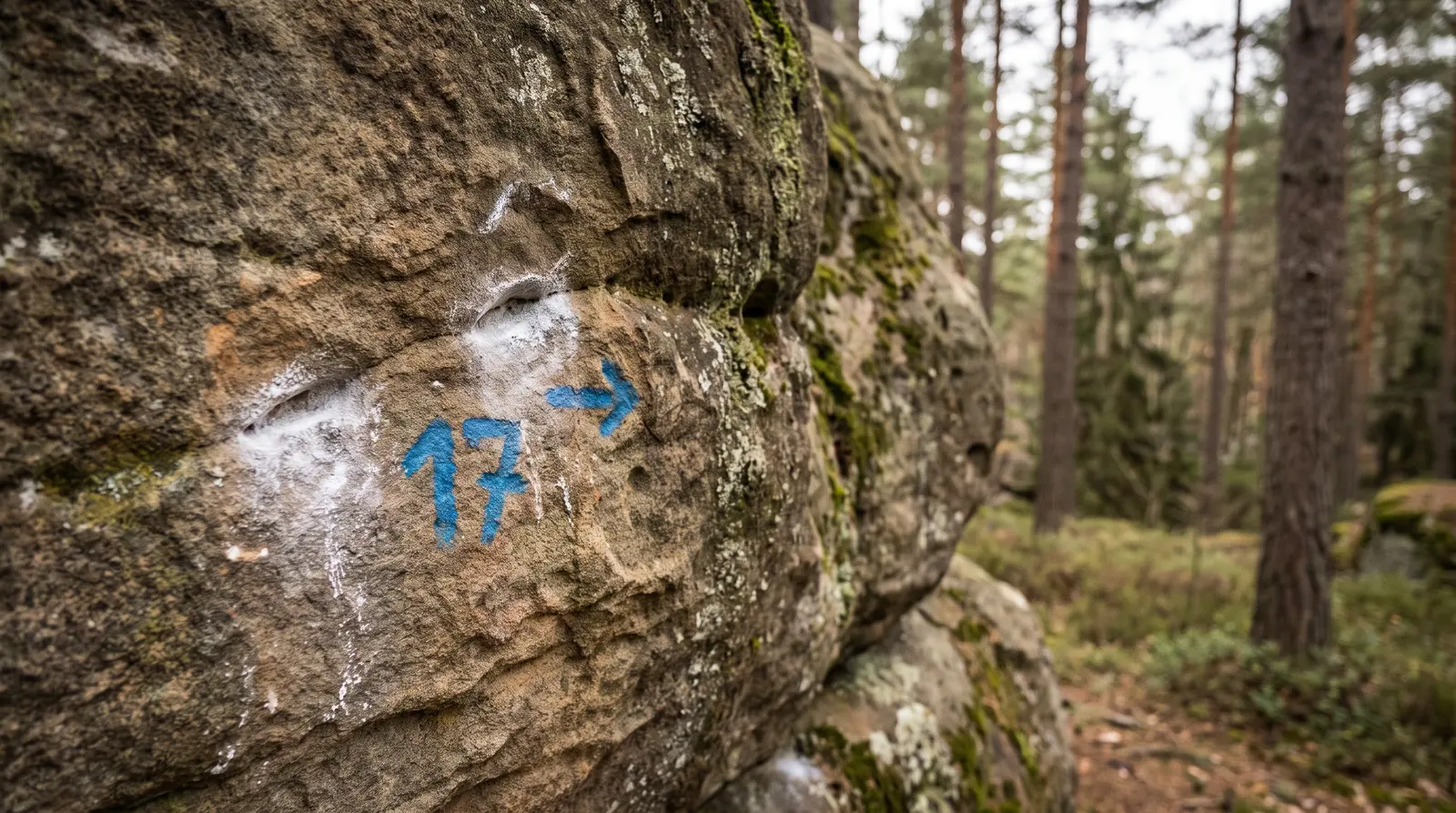
Going to Font? Learn how the coloured circuits and grades work before you arrive with our guide to Fontainebleau grades and circuits.
9. Leave-no-trace items
Bouldering areas are popular and fragile. Access Fund, the US climbing advocacy group, asks boulderers to use designated parking, stay on established trails, pack out everything, brush off chalk and tick marks, and lift pads rather than drag them. These small items make that easy:
- ☐ Rubbish bags to pack out all litter, including fruit peel
- ☐ Toilet bags or a trowel, depending on local rules
- ☐ Soft brush to remove chalk and tick marks before you leave
- ☐ Doormat or towel to keep sand off your shoes and the rock
For sandstone areas such as Fontainebleau, the British Mountaineering Council adds specific rules: only climb when the rock is completely dry (which can take 24 hours or more after rain), clean your shoes before each attempt, brush lightly with a very soft brush, use as little chalk as possible and avoid tick marks. So pack a rainy-day plan as well.
Quick printable summary
- ☐ Pads, straps, spotter
- ☐ Shoes, approach shoes, chalk
- ☐ Clippers, file, balm, tape, first aid kit
- ☐ Warm jacket, waterproof, hat, layers
- ☐ Soft brush, shoe towel or doormat, water, snacks, headtorch
- ☐ ID, insurance that covers bouldering, EHIC (if relevant), bookings
- ☐ Camping kit (if camping)
- ☐ Guidebook, offline topos and maps, weather app
- ☐ Rubbish bags, toilet kit
FAQ
What should I pack for a bouldering trip?
The essentials are crash pads, climbing shoes, chalk, a soft brush, a skin care kit, a small first aid kit, warm and waterproof layers, a towel or doormat for cleaning your shoes, a guidebook or app, and travel insurance that names bouldering. Everything else depends on the area and the season.
How many crash pads do I need for a bouldering trip?
One pad per person is the minimum, and two or more for a group is better, especially on high or uneven landings. Pads are bulky, so plan transport first: check airline baggage rules or share pads with your group.
Does travel insurance cover bouldering?
Not always. Many standard travel policies exclude or limit climbing, so read the wording and check that bouldering is named as a covered activity. Specialist climbing policies exist, for example from the British Mountaineering Council in the UK. In Europe, the EHIC is not a replacement for travel insurance.
What should I bring for bouldering in Fontainebleau?
Everything on this list, plus a very soft brush and a doormat or towel for cleaning your shoes, because the sandstone is soft. Plan for rain: you should only climb once the rock is completely dry, which can take 24 hours or more.