Best Crash Pads for Bouldering: Buyer's Guide (2026)
 Petr Hess, strength & conditioning coach
Updated 2 Nov 2026 · 9 min read
Key takeaways
Best for: Climbers buying their first outdoor crash pad
- For most people, choose a standard 3 x 4 ft (91 x 122 cm) pad with about 4 in of layered foam.
- Look for a stiff closed-cell top over softer open-cell foam, which limits bottoming out while absorbing impact.
- A hybrid fold is the middle ground; consider a taco if you often land on talus or very rocky ground.
- Choose a 5 in pad or a large tri-fold if you climb highballs (roughly 15 ft and up) or alone.
- Dry the pad before folding, patch holes quickly, and retire it from high falls once it feels very squishy.
The best crash pad for bouldering, for most people, is a standard 3 x 4 ft (91 x 122 cm) pad with about 4 in (10 cm) of layered foam, a hinge or hybrid fold and a comfortable harness. Models such as the Organic Full Pad, Organic Simple Pad, Metolius Session II and Black Diamond Impact all fit that brief. If you climb tall problems or often climb alone, add or choose a larger 5 in pad like the Organic Big Pad or a wide tri-fold like the Metolius Magnum.
A quick note on how this guide was made. I'm a strength and conditioning coach, not a gear tester, and we have not tested these pads ourselves. This is a research-based buyer's guide: specs come from manufacturer listings, and the picks reflect published independent tests (Treeline Review, OutdoorGearLab, 99Boulders) and broad climber consensus. Some links may be affiliate links; see our affiliate disclosure.
Best crash pads: quick comparison
| Best for | Model | Open size | Thickness | Weight | Fold style |
|---|---|---|---|---|---|
| All-round first pad | Organic Full Pad | 36 x 48 in (91 x 122 cm) | 4 in (10 cm) | approx. 12 lb (5.4 kg) | Hybrid hinge |
| Value | Organic Simple Pad | 36 x 48 in (91 x 122 cm) | 4 in (10 cm) | approx. 12 lb (5.4 kg) | Hybrid hinge |
| Light carry | Metolius Session II | 36 x 48 in (91 x 122 cm) | 4 in (10 cm) | 9 lb (4.1 kg) | Angled hinge |
| Beginners | Black Diamond Impact | 39 x 45 in (100 x 114 cm) | 4 in (10 cm) | 9.5 lb (4.3 kg) | Hinge |
| Highballs | Organic 5" Big Pad | approx. 46 x 57 in (117 x 145 cm) | 5 in (12.5 cm) | 20 lb (9.1 kg) | Hybrid hinge |
| Maximum coverage | Metolius Magnum | 47 x 70 in (119 x 178 cm) | 4 in (10 cm) | approx. 18.7 lb (8.5 kg) | Tri-fold hinge |
| Long approaches | Asana SuperHero | 57 x 40 in (145 x 102 cm) | 4 in (10 cm) | 15 lb (6.8 kg) | Bi-fold hinge |
Weights are manufacturer-stated or reviewer-measured, and sources differ by up to a pound on some models. Brands also update pads without changing names, so check the current product page before you buy.
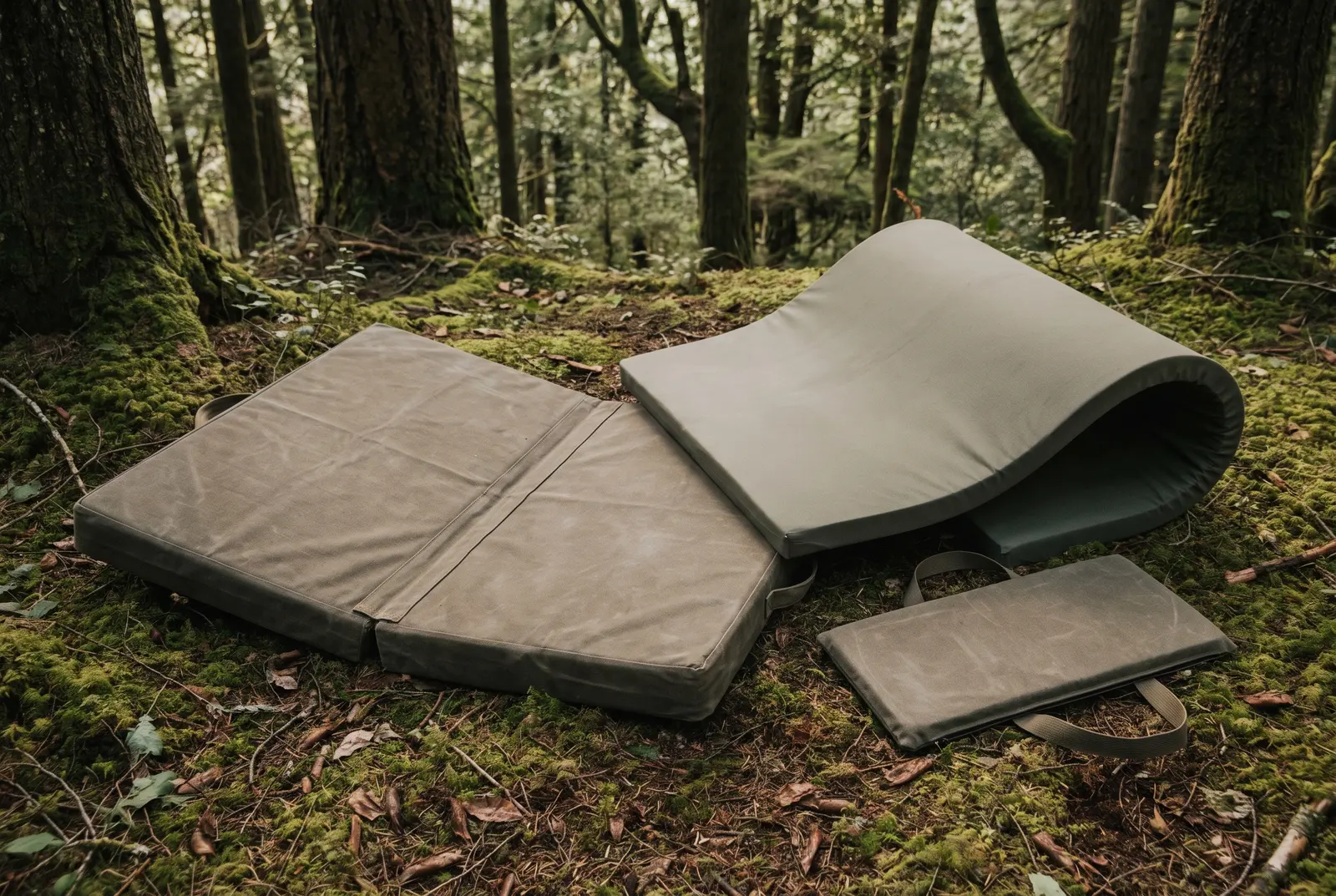
How to choose a bouldering crash pad
A crash pad is a portable landing zone: layers of foam in a tough fabric shell, with straps so you can carry it to the crag like a backpack. Six things decide whether a pad suits you.
1. Foam: firm on top, soft in the middle
Almost every good bouldering pad uses a sandwich of foams. Metolius describes the logic well: "a stiff, closed-cell top sheet minimizes bottoming out, while the softer, thicker open-cell middle layer absorbs impact." A closed-cell base also stops sharp rocks poking through. Treeline Review gives a typical layup of roughly 1 in closed-cell, 2.5 in open-cell and 1 in closed-cell.
The trade-off is simple. Foam that is too soft lets you bottom out on big falls; foam that is too hard is harsh on short, awkward falls. OutdoorGearLab's advice is to look for a pad that balances both. Expect any pad to soften with use.
2. Size and surface area
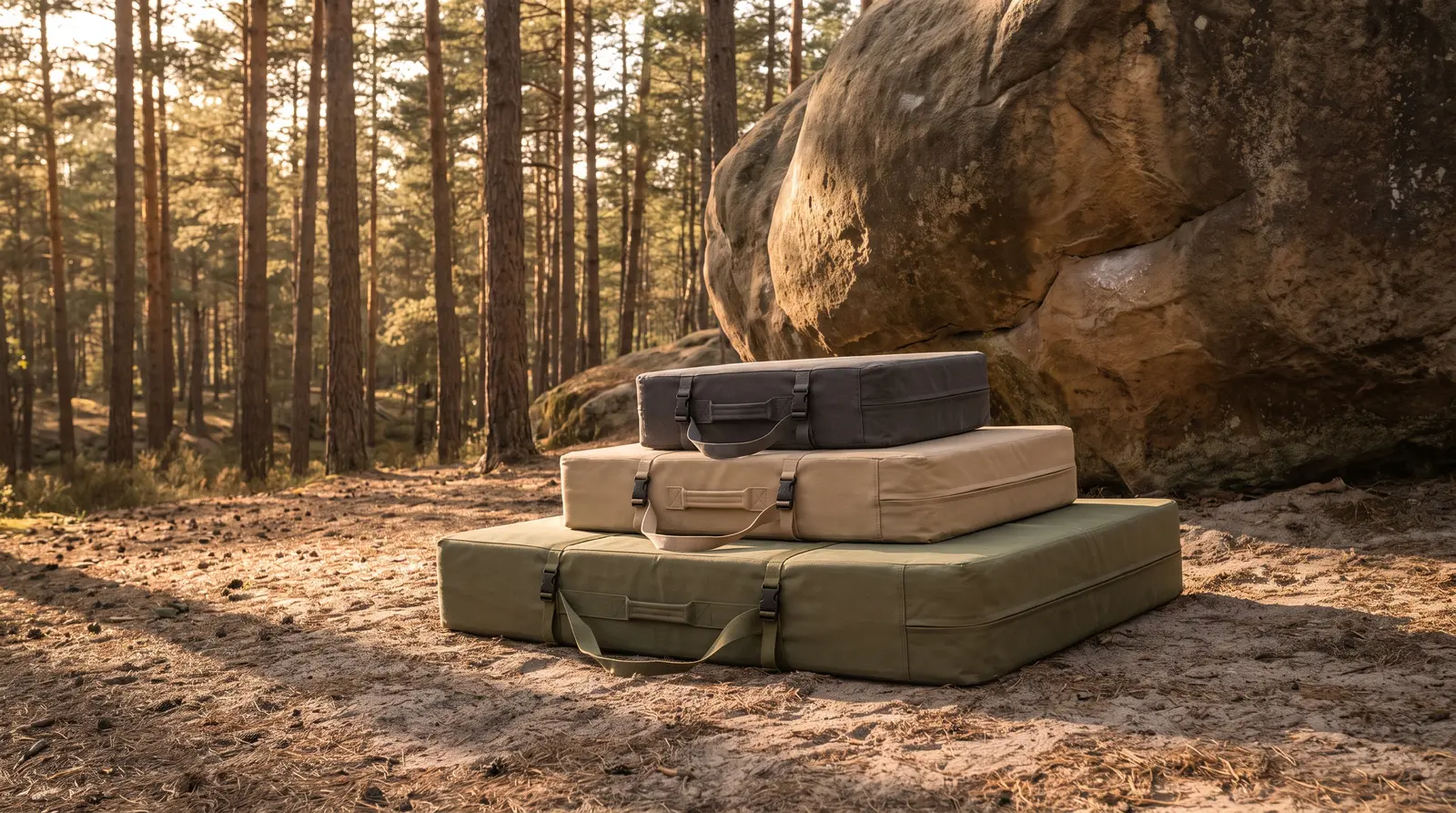
- Standard (about 3 x 4 ft, 91 x 122 cm): roughly 1,700 square inches of landing. Easy to carry, fits in most car trunks, and combines well with friends' pads.
- Large (4 x 5 ft and up): more coverage for solo sessions, highballs and steep problems where falls land further out. Heavier and bulkier.
- Accessory or slider pads: thin, small pads for covering seams, sit starts and rocks between big pads. Never a main landing zone.
If you boulder mostly alone, OutdoorGearLab suggests going bigger. If you climb in a group, a standard pad plus your friends' pads usually beats one huge pad. Our guide to how many crash pads you need covers this in detail.
3. Thickness
Most pads have about 4 in (10 cm) of foam, which handles typical problems well. Treeline Review recommends 5 in pads for highballs, which it defines as roughly 15 ft (4.5 m) and up, along with stacking pads. Thicker foam means more weight, so don't buy a 5 in pad if you mostly climb short problems.
4. Hinge vs taco vs hybrid
| Fold style | Pros | Cons |
|---|---|---|
| Hinge | Lies flat right away, folds easily, stores gear inside | The fold leaves a gap where a rock or root can poke through |
| Taco | One continuous foam slab with no weak spot | Harder to close, may not lie flat at first, should be stored open |
| Hybrid | Hinge with a foam layer bridging the gap | Slightly stiffer to fold than a plain hinge |
| Tri-fold | Big landing zone in a narrower package | Bulky and heavy to carry |
Treeline calls hybrids "the happy medium" between hinge and taco. OutdoorGearLab recommends taco designs if you often climb above talus or very rocky landings, and says a hinged pad is fine for most other conditions.
5. Carry system
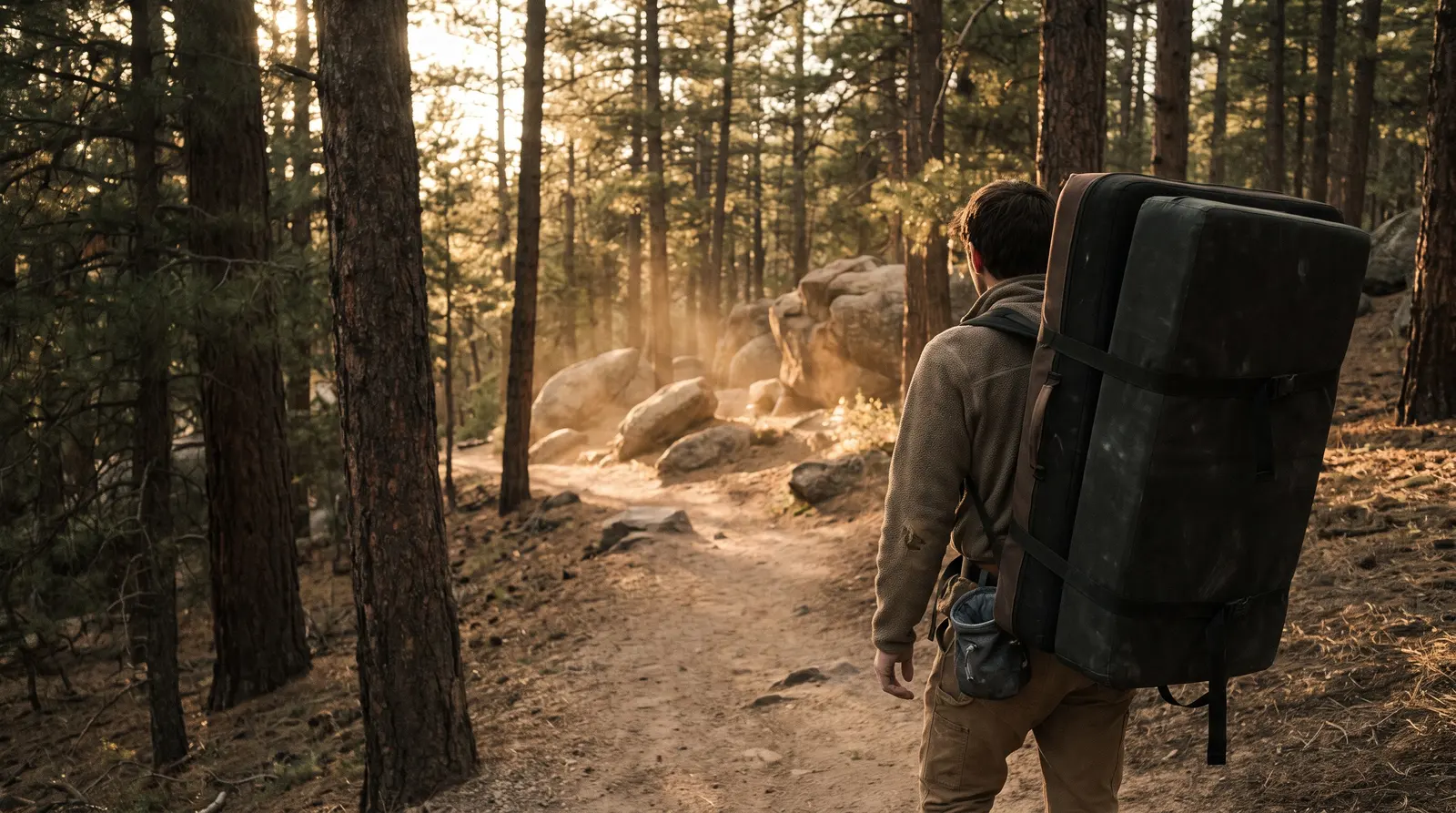
Look at the shoulder straps, hip belt and closure buckles as seriously as the foam. A good harness matters more as approaches get longer. Useful extras include a closing flap that holds shoes and chalk, a sternum strap, carry handles for shuffling the pad between problems, and straps long enough to piggyback a second pad. If you plan to carry several pads together, check that the straps can do it before you buy.
6. Durability and care
Heavy-denier nylon or Cordura on the landing surface lasts longer than light polyester. To get more years from any pad, Treeline Review recommends shaking off dirt, drying it fully before folding, patching holes quickly and storing it cool and dry out of the sun. Retire a pad from high falls when it feels "real squishy".
The best crash pads for bouldering
Organic Full Pad: best all-round first pad
The Organic Full Pad is Treeline Review's best overall pick and OutdoorGearLab's top medium-sized pad. Reviewers like its foam mix for both high and low falls, its hybrid hinge and its closing flap, which doubles as a gear pocket and has straps long enough to carry a second standard pad. It is made in the USA and you can choose colors. One caveat from Treeline: its 1 in closed-cell top layer is a little thinner than many pads, so highball specialists may prefer something firmer.
Organic Simple Pad: best value
The Organic Simple Pad is essentially the Full Pad without the flap: same 36 x 48 x 4 in size and same foam, per Organic. OutdoorGearLab gives it its Best Buy award; Treeline names it best budget. You lose the gear pocket and easy piggyback carry, and Treeline found one strap awkward to thread. It sits in the mid-price tier rather than truly budget, but you are paying for proven foam and shell rather than features.
Metolius Session II: best lightweight pad
At a manufacturer-stated 9 lb (4.1 kg), the Metolius Session II is one of the lightest full-size pads here. Treeline names it best lightweight and likes the angled foam at the hinge, which reduces the gap, plus the carpeted wipe pad. The downside is the Velcro flap, which adds a fiddly step to setup. Metolius lists it at around $200 on its site today.
Black Diamond Impact: best for beginners
99Boulders names the Black Diamond Impact its best beginner pad. It is slightly larger than many entry-level pads at 39 x 45 in, with closed-cell PE foam over high-compression PU foam, shoulder straps and a waist belt. Reviewers call its semi-stiff foam comfortable on low and medium falls, and it fits in most car trunks. A sensible first pad for gym climbers starting to boulder outside.
Organic 5" Big Pad: best for highballs
OutdoorGearLab gives the Organic 5" Big Pad its Editors' Choice, praising the stiff, supportive foam and big landing zone for high falls. The extra inch of foam is exactly what highball advice calls for. The cost is weight and bulk: around 20 lb (9.1 kg), and OutdoorGearLab calls it one of the heavier pads it tried. Best for climbers who regularly fall from height or climb alone.
Metolius Magnum: best for maximum coverage
The Metolius Magnum covers about 3,290 square inches, roughly double a standard pad. Treeline names it best large pad for highballs and OutdoorGearLab gives it a Top Pick. Its tri-fold design packs narrower than a big taco, and OutdoorGearLab notes it works well as a base layer for stacking other pads. Downsides: weight, bulk and, per Treeline, Velcro hinges that don't always hold the sections together. It sits in the premium tier at around $400 on Metolius's site today.
Asana SuperHero: best for long approaches
The Asana SuperHero earns Treeline's long-approach award for what the reviewers called the best carrying system in their test: padded hip belt, load lifters and sternum strap. The 57 x 40 in landing is generous for 15 lb (6.8 kg). If your local boulders are a long hike in, the harness matters more than an inch of foam.
What about a taco pad?
None of the picks above is a true taco, because the most-recommended pads in recent independent tests are hinge, hybrid or tri-fold designs. If your local landings are full of rocks and roots, a taco is still worth considering: OutdoorGearLab specifically recommends the style for talus fields. Older reviews often mention the Mad Rock R3, but Mad Rock says its R3 foam-recycling program ran from 2002 to 2023, so check current availability before chasing one.
What about a pad for a home wall?
Portable crash pads are designed to be carried, not to line a room. Under a home wall you want continuous coverage with no gaps between pads, which usually means dedicated floor matting or several pads joined together. Our guide on how to build a home climbing wall covers landing zones and matting. An outdoor pad can still be useful at home as an extra layer under the steepest section.
Crash pads for outdoor bouldering trips
On classic sandy areas such as Fontainebleau, landings are often flat and forgiving, so a standard pad plus a slider or two goes a long way, especially if you share pads with a group. Check our Fontainebleau bouldering guide for what to expect there. Wherever you go, remember that a pad only protects you if it is in the right place. Flashed's advice is to walk the landing first, cover holes and rocks, stagger seams and never drag pads over vegetation.
Round out your bouldering kit
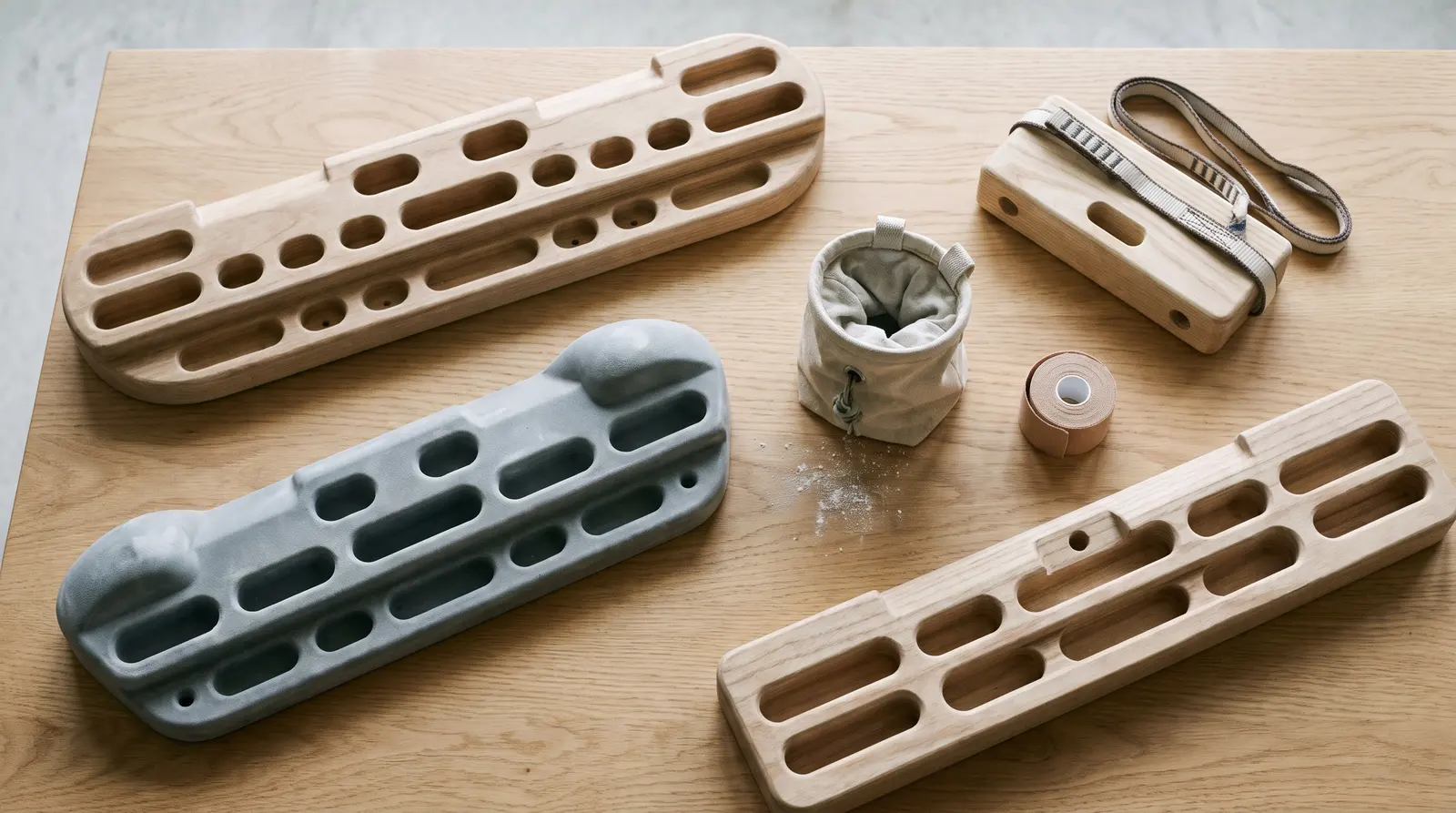
A pad is the biggest single purchase for outdoor bouldering, but not the only one. If you are new to climbing, start with our guide to the best climbing shoes for beginners. If you are ready to train finger strength at home, see our best hangboards buyer's guide. For everything else in this category, browse the gear hub.
FAQ
What is the best crash pad for a beginner?
A standard-size pad of about 3 x 4 ft (91 x 122 cm) with 4 in (10 cm) of layered foam, a hinge or hybrid fold and a simple backpack harness. Models like the Organic Simple or Full Pad, Black Diamond Impact and Metolius Session II fit that description and are widely recommended for first pads.
How thick should a bouldering crash pad be?
Most standard pads use about 4 in (10 cm) of foam, which is fine for typical problems. For highballs, independent reviewers recommend 5 in (12.5 cm) pads, stacking pads, or both.
Is a taco or hinge crash pad better?
Neither is better for everyone. Taco pads have no gap in the middle and suit rocky, uneven landings; hinge pads fold flat and are easier to carry and store. Hybrid hinges sit in between by covering the fold with a foam layer.
How long does a crash pad last?
It depends on use and storage. Pads soften with every fall, so retire one from high falls when it feels squishy or you can feel the ground through it, and keep it dry and out of the sun to slow the wear.
Sources
- Treeline Review, Best Bouldering Crash Pads of 2026
- OutdoorGearLab, The Best Bouldering Crash Pads
- 99Boulders, 5 Best Bouldering Crash Pads in 2026
- WeighMyRack, Black Diamond Impact Crashpad (manufacturer specs)
- Metolius Climbing, Crash Pads collection
- Flashed, How Many Crash Pads Do You Need for Outdoor Bouldering?