Best Climbing Shoes for Beginners: Buyer's Guide (2026)
 Petr Hess, strength & conditioning coach
Updated 2 Nov 2026 · 11 min read
Key takeaways
Best for: First-time buyers of climbing shoes
- Choose a flat (neutral) shoe with thick, durable rubber; Switchback suggests at least 4 mm.
- Fit snug but not painful: toes touching the end, flat or slightly curled, and no heel lift on tiptoe.
- Start at your street size or half a size down, then follow the brand's chart for that model.
- Leather and suede stretch, so they can start a little firmer; synthetic uppers should fit right from day one.
- Resole while the original sole is still about 1 mm thick, before the rand wears through.
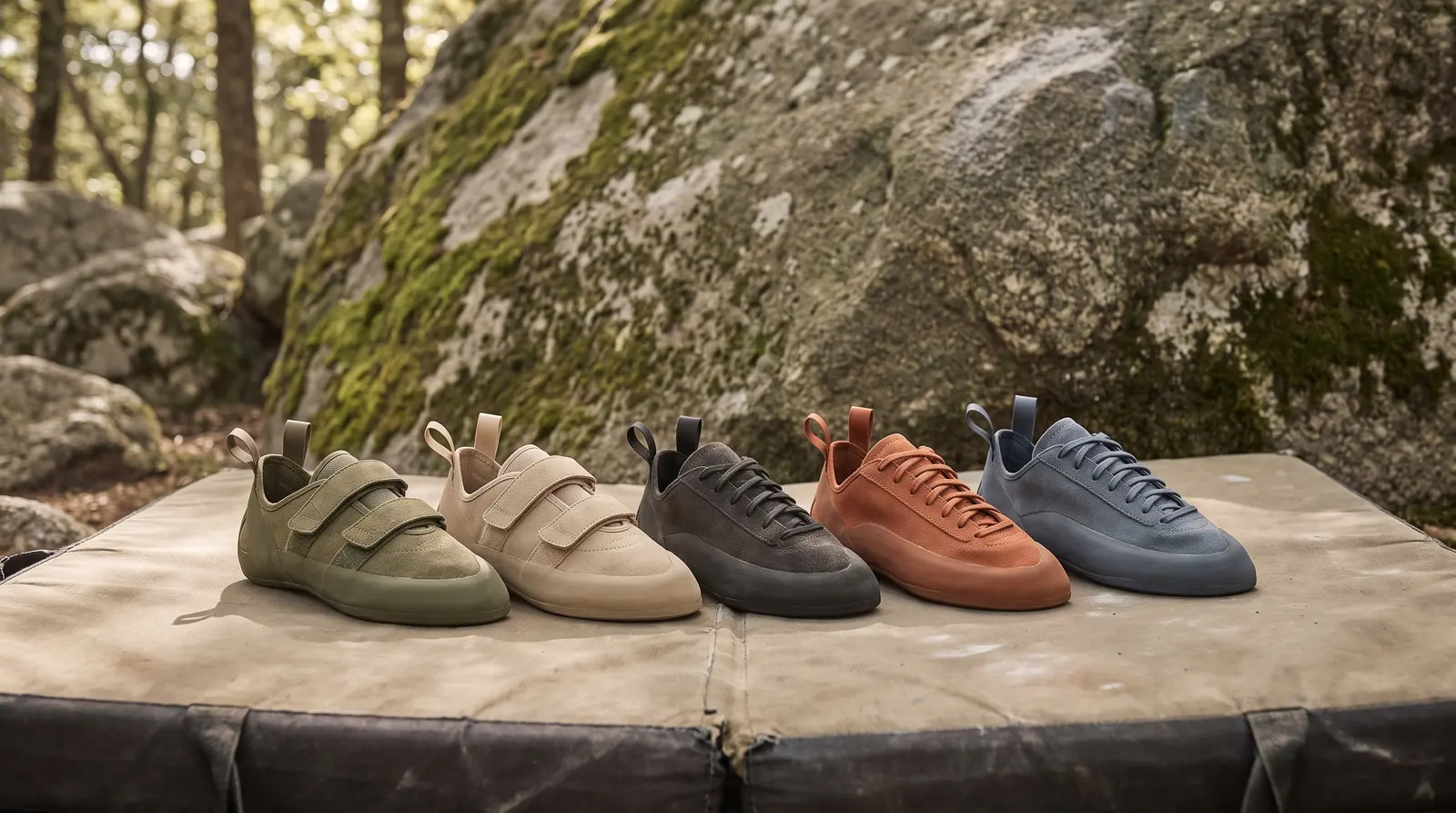
The best climbing shoes for beginners are flat (neutral), comfortable enough to wear for a whole session, and built with thick, durable rubber. Consensus picks from independent reviewers include the La Sportiva Tarantulace and Finale, the Scarpa Origin, the Black Diamond Momentum and the Evolv Defy. Fit matters far more than the brand: choose the model that matches your foot shape and feels snug without hurting.
This is a research-based buyer's guide. We haven't tested these shoes ourselves. The shortlist comes from manufacturer specifications (linked below) and from independent buying guides, mainly Switchback Travel and Treeline Review. Some links may become affiliate links in the future; see our affiliate disclosure.
Best beginner climbing shoes at a glance
Specs below come from each brand's own product page. Models get updated often, so check the current version before you buy.
| Best for | Model | Closure | Downturn / shape | Upper |
|---|---|---|---|---|
| Budget all-rounder | La Sportiva Tarantulace | Laces | Neutral (flat) | Suede leather, lined at the front only |
| Outdoor and longer routes | La Sportiva Finale | Laces | Neutral (flat) | Unlined suede leather |
| All-day comfort | Scarpa Origin | Two straps (hook-and-loop) | Flat-lasted | Leather |
| Gym climbing | Scarpa Origin VS | Hook-and-loop | Neutral, flat | Breathable upper |
| Breathable Velcro shoe | Black Diamond Momentum | Straps | Neutral last | Micro-suede with engineered knit tongue |
| Vegan / gym bouldering | Evolv Defy | Straps | Slightly asymmetric toe, low profile | Synthetic (vegan), perforated |
Shoes are only one part of the kit. If you boulder outdoors, the next big purchase is usually a pad; our guide to the best crash pads covers that, and the rest of our gear guides live in the gear section.
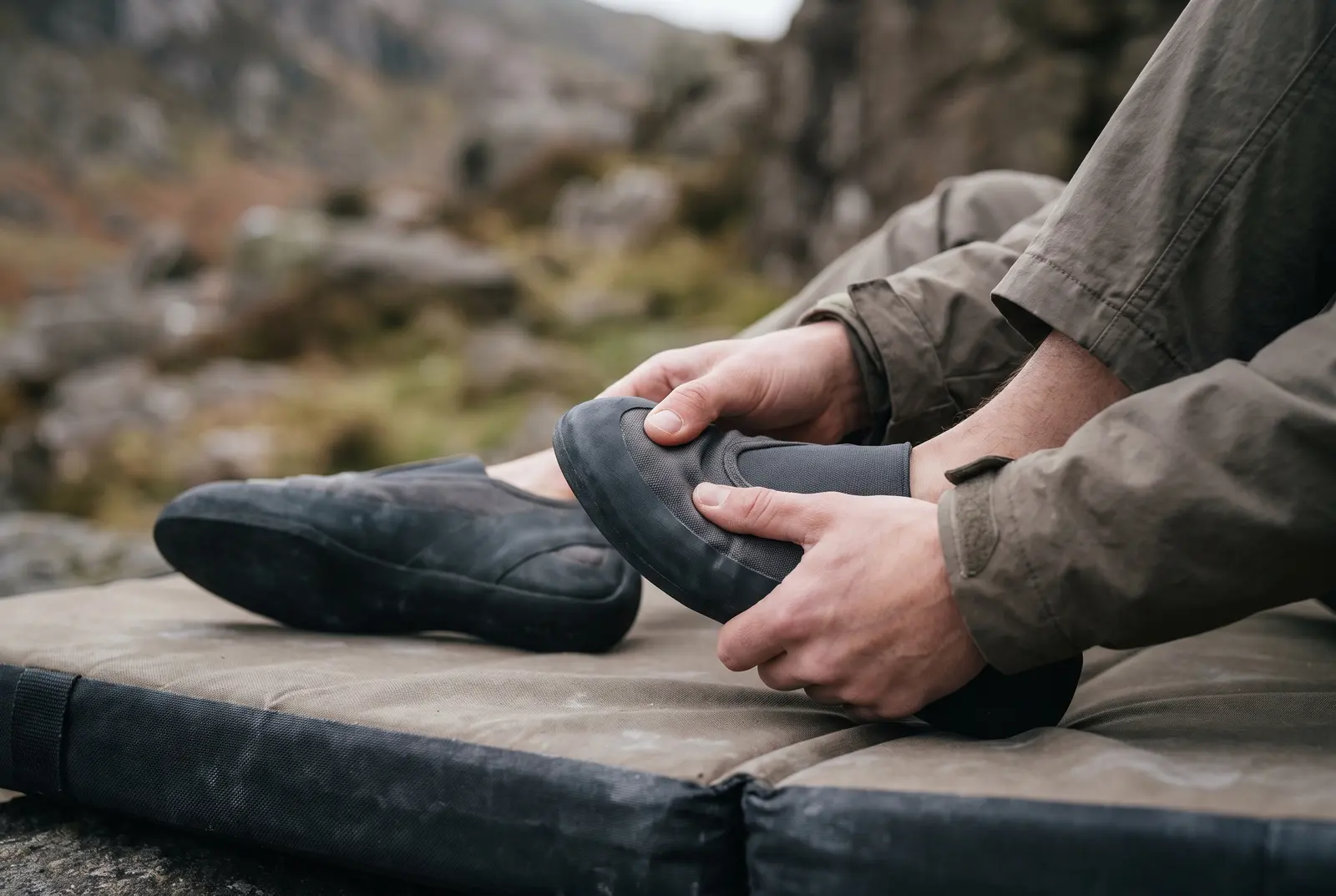
The shortlist: why these shoes keep coming up
La Sportiva Tarantulace: the classic budget pick
The Tarantulace is Switchback Travel's "best budget" pick and Treeline Review's "best affordable" choice. La Sportiva describes a traditional lace-up with a neutral shape "suitable for all types of feet", a suede upper and a thick FriXion rubber sole chosen for durability. The front is lined with a sweat-absorbing insert and the rear is unlined, so expect a little stretch.
The trade-off both reviewers mention: it's comfortable and long-lasting, but the roomy fit and thick, firm rubber are less precise on small footholds. That's a fair compromise for your first months on the wall. If you prefer straps, La Sportiva's Tarantula is the closely related hook-and-loop version.
La Sportiva Finale: a step up that lasts
Treeline Review names the Finale its best overall beginner shoe, and Switchback lists it among its favorites for trad and alpine climbing. La Sportiva specifies an unlined suede upper, laces and a 5 mm Vibram XS Edge sole, and markets it for multi-pitch routes, long crag days and indoor climbing. It's stiffer than most beginner shoes, which helps you stand on edges outdoors but means less feel for the wall. Reviewers note a longer break-in period. It's a good "buy once" option if you already know you'll climb outside.
Scarpa Origin: built for newer climbers
Scarpa positions the Origin as "an ideal introduction to climbing." It has a flat-lasted profile, a leather upper, two straps, Scarpa's Vision rubber and a passive rand, and the current version was updated with a roomier fit at the widest part of the foot. Scarpa lists it at around $129 on its US site. Switchback calls it comfort-focused; Treeline mentions some durability and sizing concerns, so try it on if you can.
The Origin VS is the gym version: hook-and-loop closure, a breathable upper and a flat last, aimed at indoor climbing and long training sessions.
Black Diamond Momentum: the comfortable Velcro option
Treeline Review rates the Momentum its best Velcro beginner shoe. Black Diamond describes a neutral last, a micro-suede upper and an engineered knit tongue for breathability, and calls it "a great one-shoe-quiver" while you figure out which style you like. It's listed at around $129.95 on Black Diamond's US site. Independent reviewers say it's comfortable and good value but weaker on small edges than stiffer lace-ups.
Black Diamond is unusually clear about sizing: for an "all-day comfort fit" it suggests going 0.5–1 EU size below your street-shoe size, and for maximum performance 2–2.5 sizes below. Beginners should start with the comfort fit.
Evolv Defy: synthetic, vegan and gym-friendly
Switchback picks the Defy as its best beginner shoe for bouldering, and Treeline names it the best vegan option. Evolv describes a single-layer, perforated synthetic upper, a slightly asymmetric toe, 4.2 mm TRAX SAS rubber and strap closure, intended for "climbers that want a comfortable fit and a modest amount of performance." Evolv also makes a lace-up version and a low-volume (LV) version for narrower feet. Synthetic uppers can hold odor, a downside Treeline mentions.
Other names you'll see
- Butora Endeavor: Switchback's best overall pick and Treeline's choice for wide feet, because it comes in two widths. We couldn't find it on Butora's current website, so check availability before setting your heart on it.
- Five Ten NIAD Moccasym: Treeline's bouldering pick, an elastic slip-on with a leather upper. Slippers are fast to put on, but Switchback notes they're harder to fit because there's nothing to tighten.
- La Sportiva Skwama, Scarpa Veloce, La Sportiva TC Pro: excellent shoes, but both guides describe them as next-step or specialist shoes rather than a true first pair.
How beginner climbing shoes should fit
Fit is the most important decision you'll make, and it's where most beginners go wrong, usually by buying shoes that are far too small.
How tight should they be?
Both Switchback and Treeline say the same thing: snug and secure, not painful. Your toes should touch the end and lie flat or curl very slightly. The heel shouldn't lift when you stand on your toes. Numbness, sharp pressure points or pain that lingers after you take the shoe off mean it's too tight.
There's a reason this matters beyond comfort. In your first year you learn by climbing a lot of moves. Shoes you want to rip off after every problem cut your volume and your concentration on technique.
Sizing: start with your street size
- Switchback's general rule for beginners is your street-shoe size or half a size down.
- Treeline cautions that street size is only a starting point, because sizing varies a lot between brands and models.
- Brands publish their own guidance. Black Diamond's comfort fit is 0.5–1 EU size down; always read the size chart for the exact model.
- Try shoes later in the day, when your feet are slightly swollen, as they will be mid-session.
Will they stretch?
It depends on the upper. Leather and suede stretch and mould to your foot over the first sessions, unlined leather the most, so a leather shoe can start a bit firmer. Synthetic uppers barely stretch, so buy them in the size you want to wear. Switchback makes the same point: size leather down a little and expect a break-in; synthetics hold their size.
Socks or no socks?
Climbing shoes are designed to be worn barefoot, which improves fit and feel. Thin socks are fine if you prefer them, for example in rental-heavy gyms or cold conditions, but try shoes on with those socks, because they change the size you need.
Foot shape: Egyptian, Greek, Roman, wide or narrow
Length is only half of fit. Look at your toes and your foot width. Czech brand OCÚN uses three toe shapes:
- Egyptian: big toe longest, other toes taper down in a slanted line. Many asymmetric climbing shoes follow this shape.
- Greek: second toe longer than the big toe, giving a more pointed line. A straighter, more symmetrical toe box tends to suit it better.
- Roman: first three toes about the same length, giving a squarer line. Look for a roomier, rounder toe box.
Width and volume matter just as much. OCÚN describes narrow feet needing a low-volume last that wraps snugly, and wide feet with a high instep needing a wider, higher-volume last (often labelled "HV" or "wide"). If you have wide feet, shoes made in a wide version, or with a fit the brand describes as roomier, are the place to start. If you have narrow feet or a slim heel, low-volume (LV) versions exist for several models, including the Evolv Defy.
Features that matter (and ones that don't yet)
Flat vs moderate vs aggressive
The shape of the shoe, called the last, ranges from flat to strongly downturned:
- Flat (neutral): toes lie flat, comfortable, good on vertical walls and slabs. The right choice for a first pair, according to every guide we read.
- Moderate: a slight downturn for more precision on steeper and technical climbs. A sensible second shoe.
- Aggressive: a pronounced, often asymmetric downturn for steep bouldering and overhangs. Usually uncomfortable for beginners and not recommended as a first pair.
An aggressive shoe won't make overhangs easier if you don't yet have the body tension and foot placement to use it. That brings us to the honest truth about shoes.
Velcro vs laces vs slippers
| Closure | Pros | Cons | Good for |
|---|---|---|---|
| Velcro (hook-and-loop) | Fast on and off between problems | Less fine adjustment; straps can snag in cracks | Gym climbing, bouldering |
| Laces | Most precise adjustment along the whole foot | Slower to take off between attempts | Outdoor routes, longer sessions, unusual foot shapes |
| Slip-on (slipper) | Fastest, very sensitive | Hardest to fit, nothing to tighten | Experienced gym climbers |
For bouldering, where you take your shoes off between every attempt, Velcro is the popular choice. If you plan to climb long routes or cracks outside, Switchback recommends lace-ups because Velcro can snag or loosen.
Leather vs synthetic uppers
- Leather / suede: breathes well, stretches and moulds to your foot. Unlined leather stretches most; dyed leather can colour your feet temporarily.
- Synthetic / microfiber: stretches very little, so the fit you buy is the fit you keep. Often vegan. Can hold odor, so air them out after every session.
Rubber and stiffness
Beginner shoes use thicker, firmer rubber and stiffer midsoles. That feels less "grippy" on tiny holds, but it supports your foot while your calf and foot muscles adapt, and it lasts longer while you drag your toes across the wall learning footwork. Switchback suggests looking for at least 4 mm of rubber; thinner soles wear out faster.
Footwork matters more than shoes
From a strength and conditioning point of view, this is the part beginners underestimate. A shoe only transmits force; it doesn't decide where your foot goes. Precise, quiet foot placement, keeping weight over your feet and trusting smears will improve your climbing faster than any upgrade. Switchback puts it well: upgrade when your shoes start limiting your progress, not in anticipation of it.
If you want a plan for building that skill, read our guide on how to get better at bouldering, which starts with footwork drills you can do on easy problems.
How much should a beginner spend?
You don't need to spend much. Think in three tiers:
- Budget: durable lace-ups and basic Velcro shoes such as the Tarantulace, often discounted at the end of a season.
- Mid-range: the bulk of the shortlist, such as the Scarpa Origin and Black Diamond Momentum (both listed at around $129 on the brands' US sites today), and the Finale.
- Premium: performance shoes with softer rubber, downturn and thinner soles. Great tools, but beginners usually wear them out quickly without benefiting from the features.
Last season's colorways and older versions are often the best value. For example, Evolv listed the Defy at a reduced price on its European store at the time of writing. Rental shoes are fine for your first few sessions; once you're climbing regularly, your own pair fits better and lets you learn precise footwork in a shoe that doesn't change every session.
Indoor vs outdoor climbing shoes
Most beginner shoes work for both, but there are differences:
- Gym climbing and indoor bouldering: Velcro or slip-on closures for quick changes, breathable uppers, a bit of toe rubber for hooks. Gym holds are relatively kind to rubber, but resin volumes and plastic grind down the toe.
- Outdoor climbing: stiffer shoes help on small edges, and stickier rubber gives confidence on real rock. Lace-ups are better for long routes and crack climbing. Abrasive rock wears rubber faster, so Switchback expects shorter shoe life outdoors.
Heading outside to boulder? Our bouldering trip packing list covers what else to bring.
When to upgrade your first pair
There's no fixed timeline. Signs it's time for a second, more technical shoe:
- You can see that your feet slip off small edges because the shoe is too stiff or too roomy, not because of your technique.
- You climb regularly on steep terrain and the flat shoe can't hold a toe on overhanging holds.
- Your first pair is worn out anyway, so the choice is between a resole and a new pair.
Many climbers keep their comfortable first shoes as a training or warm-up pair and add a moderately downturned shoe for harder problems.
Care, lifespan and resoling
Switchback estimates that a new pair lasts roughly 6 to 12 months of regular use. You can stretch that with a little care:
- Dry them out. Take shoes off between attempts and air them after each session, away from direct heat. Climbing Magazine notes that trapped moisture breaks down leather.
- Clean the rubber. A toothbrush and a little water removes the dirt and chalk that make soles feel slippery.
- Store them well. Keep them cool and dry, not in a hot car.
- Climb quietly. Dragging your toes up the wall wears the front first. Better footwork literally saves money.
When to resole
Most of the shortlisted shoes can be resoled by a specialist. Timing is everything:
- Lacrux, citing a resoler's guideline, recommends resoling while the original sole is still about 1 mm thick and before the edge of the sole shows from below.
- Climbing Magazine suggests sending them off when they're about 80 percent worn.
- Once the rand (the thinner rubber wrapping the toe) is worn through, you need a rand repair too, which is more involved and costs more.
- Climbing Magazine says a well-cared-for pair can take several resoles; Lacrux recommends two to three. Resoling takes weeks, so a spare pair helps.
Quick checklist for your first pair
- Choose a flat (neutral) shoe with thick, durable rubber.
- Match the shape to your toes and width before worrying about brand.
- Size snug but pain-free; start near your street size and follow the brand's chart.
- Leather can start a little firmer; synthetics should fit right from day one.
- Velcro for the gym and bouldering, laces for long outdoor days.
- Spend on fit, not features. Upgrade when the shoe, not your technique, holds you back.
FAQ
Should beginner climbing shoes hurt?
No. They should feel snug with your toes flat or slightly curled against the end, but not painful. Numbness, sharp pressure points or pain that lasts after you take them off mean the shoe is too small or the wrong shape for your foot.
Do you wear socks with climbing shoes?
Usually not. Climbing shoes are designed to be worn against bare skin for fit and feel. Thin socks are fine if you prefer them for hygiene or warmth, but try shoes on with the same socks you plan to climb in.
Are expensive climbing shoes worth it for beginners?
Rarely. Pricier shoes add downturn, softer rubber and precision that new climbers can't use yet, and those features often cost comfort and durability. A flat, durable entry-level or mid-range shoe is the better first buy.
How long do beginner climbing shoes last?
Switchback Travel estimates roughly 6 to 12 months of regular use for a new pair, less on abrasive outdoor rock. Many models can be resoled, which extends their life if you send them off before the rand wears through.
Sources
- Switchback Travel, Best Rock Climbing Shoes for Beginners in 2026 (2026)
- Kate Butler / Treeline Review, Best Beginner Rock Climbing Shoes (2026)
- Climbing Magazine, How to Get the Most Out of Your Climbing Shoes (2024)
- Lacrux, New sole instead of a new shoe: the time to resole (2026)
- OCÚN, How to Choose the Right Climbing Shoes for Your Foot Shape