How Many Crash Pads Do You Need? (And How Thick?)
 Petr Hess, strength & conditioning coach
Updated 2 Nov 2026 · 8 min read
Key takeaways
Best for: Boulderers planning outdoor sessions and highballs
- Bring two to three pads for a typical outdoor session; one standard pad suits only short, flat landings.
- For highballs, use 3–4+ pads including a 5 in or large pad, plus spotters.
- Walk the landing, cover hazards first, and put the best pad under the crux.
- Lay pads flat side by side with staggered seams, and stack only to add height or level a landing.
- For big feet-first falls put the firmer pad on top; for low falls or landing on your back, the softer one.
For most outdoor bouldering, you need two to three crash pads per session: one standard pad covers short problems with flat landings, but taller, steeper or traversing problems need more foam. Highballs and solo sessions call for three or more pads, ideally including a 5 in (12.5 cm) pad. Thickness matters less than coverage: a standard 4 in (10 cm) pad is fine for most problems as long as the landing has no gaps.
I'm a strength and conditioning coach, not a climbing guide, so this article pulls together advice from independent gear testers, experienced boulderers and pad manufacturers rather than personal testing. If you're still choosing a pad, start with our guide to the best crash pads for bouldering.
How many crash pads do you need? Quick answer by scenario
| Scenario | Pads that work | Notes |
|---|---|---|
| Solo, short problems, flat landing | 1 standard pad (minimum), 2 is better | No spotter, so you have to move the pad yourself between moves |
| Solo, mixed problems | 2 standard pads + 1 slider, or 1 large + 1 standard | Flashed calls three pads ideal for climbing alone |
| Group session | About 1 big or mid-size pad per person, plus sliders | Pool pads to build one big landing zone per problem |
| Highball (roughly 15 ft / 4.5 m and up) | 3–4+ pads incl. a 5 in or large pad, plus spotters | Treeline recommends 5 in foam and stacking |
| Traverse | Enough pads to cover the whole line, or 1–2 moved by a spotter | Agree beforehand who moves which pad and when |
| Steep overhang | 2–3 pads extending out from the wall | Falls land further out on steep terrain |
| Home wall | Continuous matting, not loose pads | Cover the whole fall zone with no gaps |
Treeline Review puts it simply: "most climbers bring two to three pads for a typical session." A standard 3 x 4 ft (91 x 122 cm) pad covers around 1,700 square inches, which is a smaller target than it looks when you fall sideways off a sloper.
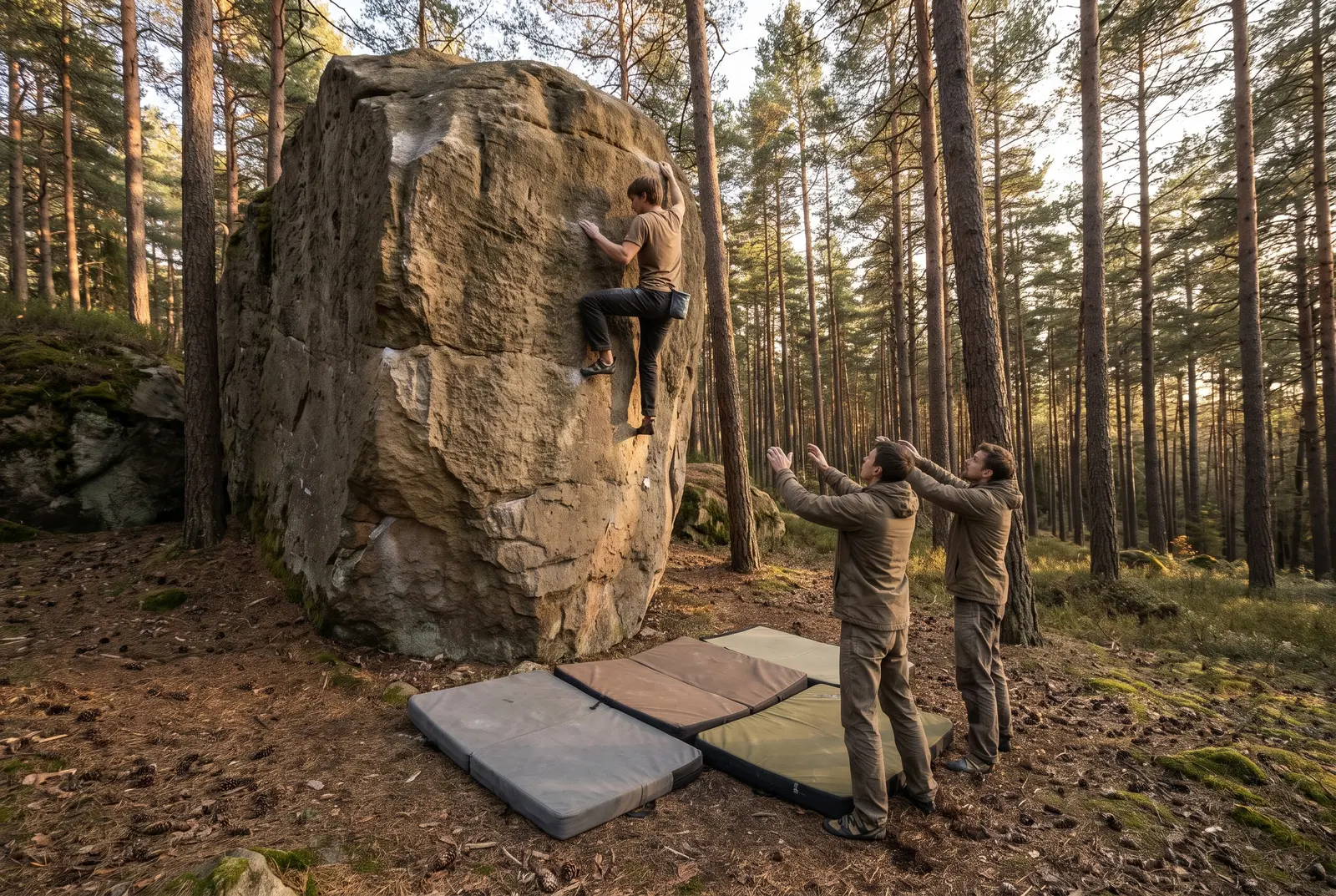
Is one crash pad enough?
Sometimes. One pad works for short problems with a flat, clean landing, and many people start this way. Flashed lists a single full-size pad as the minimum for easy, flat landings. The problem is gaps: if the fall line is longer than one pad, or the ground slopes, one pad leaves you landing on rock or roots.
If you boulder alone, also remember there is no spotter to push you back onto the foam. That is why OutdoorGearLab suggests a larger landing zone for solo bouldering, and why Flashed recommends going with a partner if you can't bring enough foam to feel safe.
One big pad or two regular pads?
This is a common question on climbing forums, and there is no single right answer.
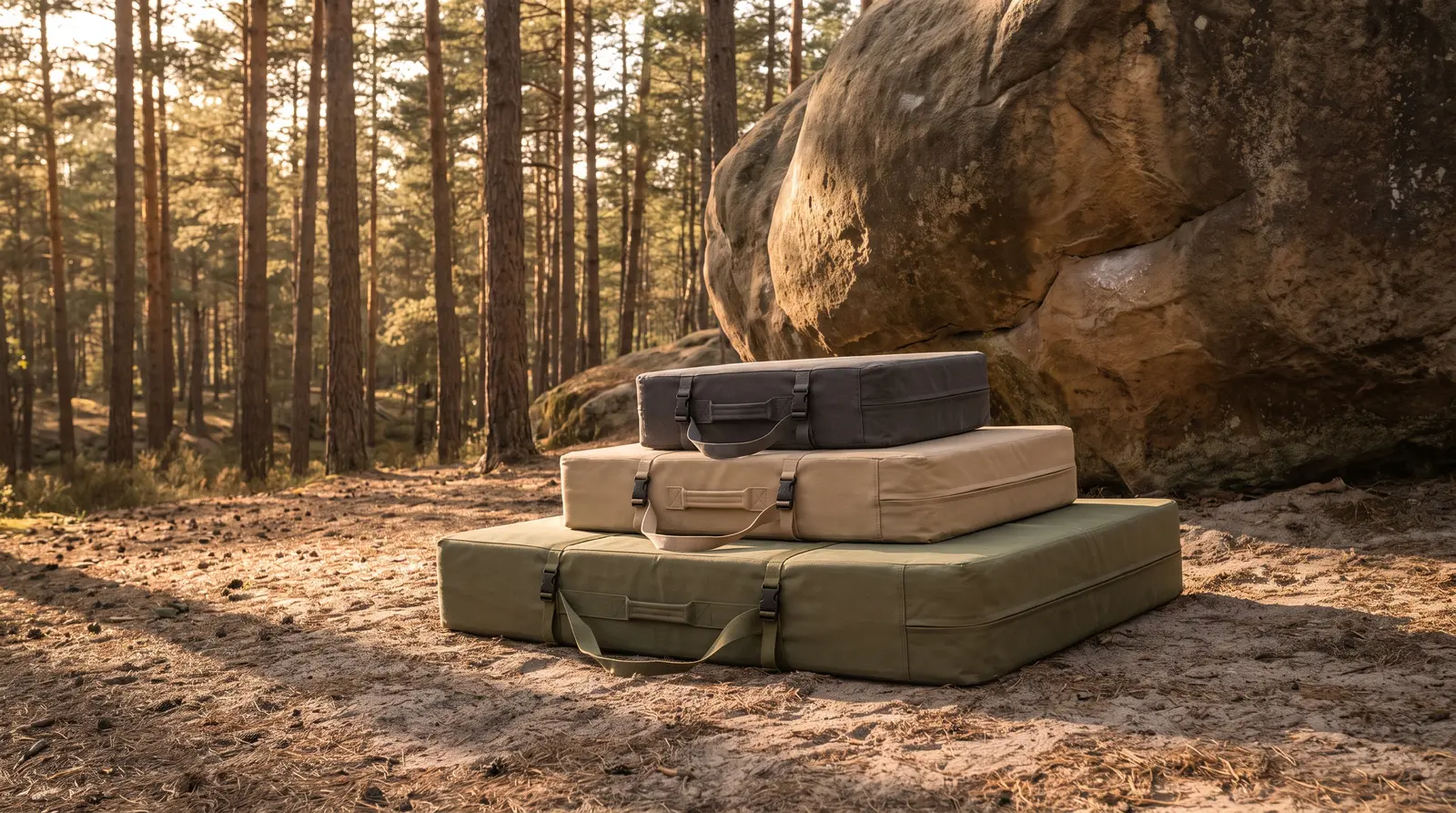
- One big pad (for example 4 x 5 ft or a tri-fold) gives a continuous landing with no seams. Good for solo sessions and highballs, but heavy and awkward on narrow trails.
- Two standard pads can be laid end to end for a traverse, side by side for a wide fall zone or stacked for height. More flexible, but the seam between them needs managing.
A practical path: buy one good standard pad first. When you need more coverage, add a large pad, and later a thin slider pad to cover seams and sit starts.
How many pads for group sessions?
Groups are where pad counts get easy. Flashed suggests roughly one big or mid-size pad per person, plus sliders. For three climbers, its example is three full-size pads for the main landing, one or two oversize pads for highballs or rough ground, and two sliders for gaps and sit starts. Pooling pads like this gives you one well-built landing per problem instead of three thin ones.
How thick should a crash pad be?
Most bouldering pads have about 4 in (10 cm) of foam. That's enough for typical problems. Thicker isn't automatically better: thicker pads weigh more, and very stiff foam is less comfortable on short falls.
| Thickness | Best for |
|---|---|
| Thin slider or accessory pad | Covering seams, small rocks and sit starts; never a main landing |
| About 4 in (10 cm), standard pad | Most boulder problems, the default first pad |
| About 5 in (12.5 cm), thick pad | Highballs, solo sessions, repeated big falls |
For highballs, Treeline Review says a 5 in pad "provides meaningfully better energy dispersion" and also recommends stacking pads. It defines highballs as generally anything above about 15 ft (4.5 m).
Foam layup matters as much as total thickness. Metolius explains that "a stiff, closed-cell top sheet minimizes bottoming out, while the softer, thicker open-cell middle layer absorbs impact." Pads also soften with use, so an old 4 in pad may protect less than a new one. Retire a pad from high falls once it feels squishy.
Pad placement: where the pads go matters more than how many
Flashed's bottom line is that placement and coverage matter more than raw pad count. A good routine before every problem:
- Walk the landing. Look for holes, rocks, roots, slopes and anything that sticks out.
- Visualize the fall. On a slab you fall close to the wall; on an overhang you land further out.
- Cover hazards first. Put foam over the rocks and holes before worrying about the rest.
- Put the best pad under the crux. With limited pads, the thickest one goes under the hardest or most dynamic move, the slider under the start.
- Lay pads flat and stagger seams. Side by side first; stack only to add height or level a sloping landing.
- Test it. Step off a low hold onto the setup before you commit.
Jesse Firestone adds a few useful habits: treat pads like "3D tetris" to level a rocky landing, avoid leaving a folded pad next to the landing where you could land on it, and use slider pads for seams on flat ground rather than on chunky terrain, where they hide uneven surfaces.
Protect the place as well. Flashed advises not dragging pads, not placing them on plants or moss and not throwing them downhill. This matters on popular areas like Fontainebleau, where the sandy landings are part of the forest floor; see our Fontainebleau bouldering guide.
Stacking pads: firm or soft on top?
Stack pads only when you need more height or to level a landing; side by side is the default. When you do stack, the order depends on the fall:
- Big, feet-first falls: firmer pad on top. Firestone's rule is "hard pads on top for big falls and landing on your feet", because soft foam on top increases the chance of rolling an ankle.
- Low falls, or landing on your back or side: softer pad on top, which is more comfortable on short, awkward falls.
- Always offset the seams so a foot can't punch through to the ground. For unpredictable falls, Firestone prefers a 2 x 2 grid of pads over a tall stack.
This mirrors how pads are built: firm closed-cell foam on top spreads the load, and softer foam underneath absorbs it.
Spotting: the other half of protection
Pads don't replace a spotter. Good spotters keep their hands up, watch the climber's hips and shoulders and guide a fall toward the pads rather than trying to catch it. Firestone's advice is to spot only where the climber asks, and to keep out of the landing zone otherwise. Rotate roles, since tired spotters lose focus. If you plan to move a pad mid-climb, for example on a traverse, agree on it before the climber leaves the ground.
Carrying multiple pads
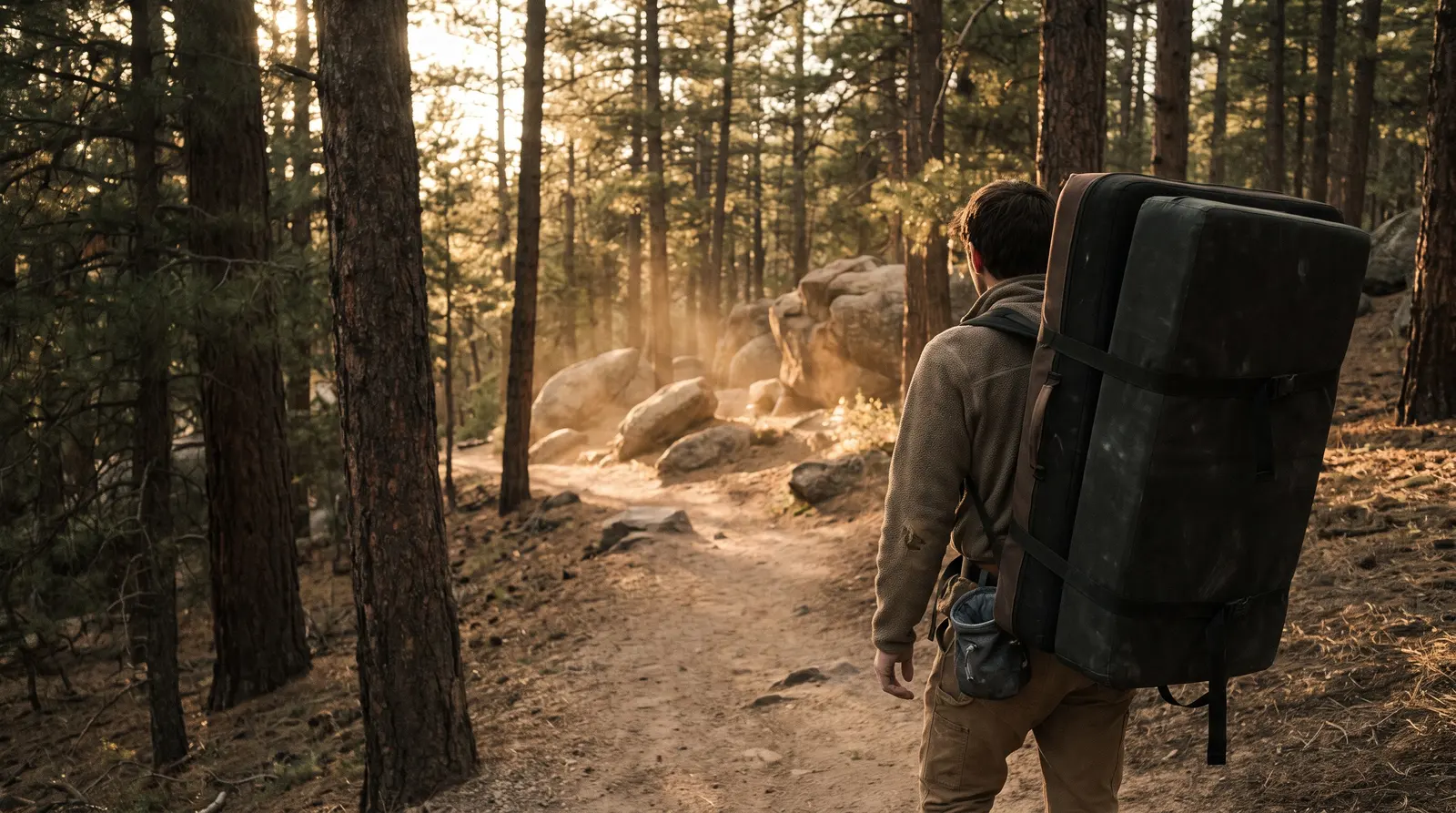
More pads means more weight on the approach. Many pads have straps or a flap that can carry a second standard pad piggyback-style, and some brands sell add-on straps or load flaps for the same job. Treeline Review rates harness quality highly for long approaches. If you're traveling, our bouldering trip packing list covers the rest of the kit.
Signs you need another pad
You don't have to guess. If any of these keep happening, it's time to borrow, rent or buy more foam:
- You skip problems because the landing is longer, wider or rockier than your pad.
- You keep shuffling one pad between the start and the top-out mid-attempt.
- Your falls regularly end on the seam or the edge of the pad.
- You've started trying taller problems, or you climb alone more often.
- Your main pad has gone soft and you can feel the ground through it on bigger falls.
The cheapest fix is often social: boulder with friends and pool pads. If you're buying, a second standard pad usually adds more useful coverage than a slider, and a large or 5 in pad makes sense once highballs are a regular goal.
What about a home wall?
Home walls are different. You fall in the same zone again and again, often onto a hard floor, so loose crash pads with gaps between them are a poor fit. Aim for continuous matting that covers the whole fall zone, with no seams where a foot could drop through. Our guide on how to build a home climbing wall covers flooring and landing zones.
FAQ
Is one crash pad enough for bouldering?
One standard pad is enough for short problems with flat, clean landings, especially with a spotter. For taller, steeper or traversing problems, or rough ground, one pad leaves too many gaps; most climbers bring two to three per session.
Is it better to have one big pad or two regular pads?
Two standard pads give more flexibility: you can spread them out, cover a traverse or pair them with friends' pads. One big pad gives a continuous landing with no seams and suits solo highballs. Many boulderers end up with one large pad and one standard or slider pad.
How thick should a crash pad be for highballs?
Most pads have about 4 in (10 cm) of foam. For highballs, generally above about 15 ft (4.5 m), Treeline Review recommends 5 in (12.5 cm) pads and stacking pads for extra protection, along with experienced spotters.
When stacking pads, should the firm or soft pad go on top?
For big, feet-first falls, put the firmer pad on top so your feet don't punch through and roll. For low falls where you may land on your back or side, a softer pad on top is more comfortable. Offset the seams either way.