Best Climbing Brush: Buyer's Guide to Boar Hair, Vegan Brushes and Brush Sticks (2026)
 Petr Hess, strength & conditioning coach
Updated 2 Nov 2026 · 7 min read
Key takeaways
Best for: Climbers buying brushes for gym holds and rock
- A boar hair brush such as the Mammut Crimper Brush is the sensible default; 99Boulders' testers preferred boar hair to nylon.
- Carry a small brush for crimps and a larger one for slopers, and check both fit your bucket's holders.
- On soft sandstone such as Fontainebleau, use only a very soft brush, lightly, and never brush damp rock.
- Stiff vegan Tampico bristles suit gym and board holds but can damage fragile rock; wire brushes never belong on holds.
- Brush only the holds you use with short, light strokes, use less chalk, and add a brush stick for high holds.
For most climbers a boar hair brush is the sensible default: boar hair performed better than nylon in 99Boulders' comparison, though that test did not establish which bristle is gentler on rock. Carry a small brush for crimps and a larger one for slopers, add a brush stick if you project high holds, and on soft sandstone such as Fontainebleau use only a very soft brush, lightly.
This is a research-based buyer's guide. We haven't tested these brushes ourselves. Specs come from brand pages (linked), the bristle advice from 99Boulders' brush test, and the rock-care rules from the BMC and bleau.info. Some links may become affiliate links; see our affiliate disclosure.
Prices and stock change often; the button opens the retailer or brand page so you can check today's price.
Climbing brushes compared
| Model | Best for | Bristles | Size (brand spec) | Main drawback |
|---|---|---|---|---|
| Mammut Crimper Brush | Crimps, everyday use | Wild boar | 19 cm long | Small head for big holds |
| Mammut Sloper Brush | Slopers, big holds | Wild boar | 22 cm long | Too wide for thin edges |
| Wild Country Brush Large | Budget boar hair | Wild boar | Tapered head, compact handle | No published dimensions |
| Moon Voyager Brush | Vegan, gym and wooden holds | Tampico (agave) | 17 x 2 cm | Too stiff for soft sandstone |
| Mammut Brush Stick Package | High holds and top-outs | Wild boar (2 brushes) | 40 cm collapsed, 120 cm extended | Premium price |
Bristle types: boar hair, synthetic and plant fibre
| Bristle | Stiffness | Pros | Cons | Use it on |
|---|---|---|---|---|
| Boar hair | Medium | Lifts chalk well; brands say it's gentle on rock and lasts | Animal product | Gym holds and most rock |
| Synthetic (nylon) | Medium to stiff | Vegan, widely available | Testers found it less effective than boar hair | Gym holds; harder rock |
| Plant (Tampico/agave) | Stiff | Vegan, plant-based | Stiffer than boar; risky on soft rock | Plastic and wooden holds, dirty hard rock |
| Very soft hand brush | Soft | Safest on fragile rock | Slow on greasy holds | Soft sandstone |
| Wire | Very stiff | None for climbing holds | Damages rock | Never on holds |
In 99Boulders' test, which used gym holds and chalked boulders at the Gunks, testers unanimously preferred boar's hair to nylon. They found the gap noticeable but not big enough to bin a nylon brush you already own. Their rule of thumb: softer bristles follow the pockets and contours of plastic holds, while stiffer bristles dig into harder outdoor rock.
Wire brushes don't belong on holds. The BMC's bouldering code says "No wire brushing", and bleau.info says metal permanently damages the surface layer of Fontainebleau's sandstone.
Brushes and rock types
Sandstone
Sandstone is the rock where brushing does the most damage. At Fontainebleau, bleau.info's ethics page asks climbers to brush holds only with a soft brush. The BMC's best-practice guide for Font is stricter: "Only brush holds lightly with a very soft dustpan brush," because a toothbrush or regular bouldering brush is too harsh for sandstone. The BMC also explains why less chalk helps: chalk that builds up leads to more cleaning, and over-cleaning erodes holds.
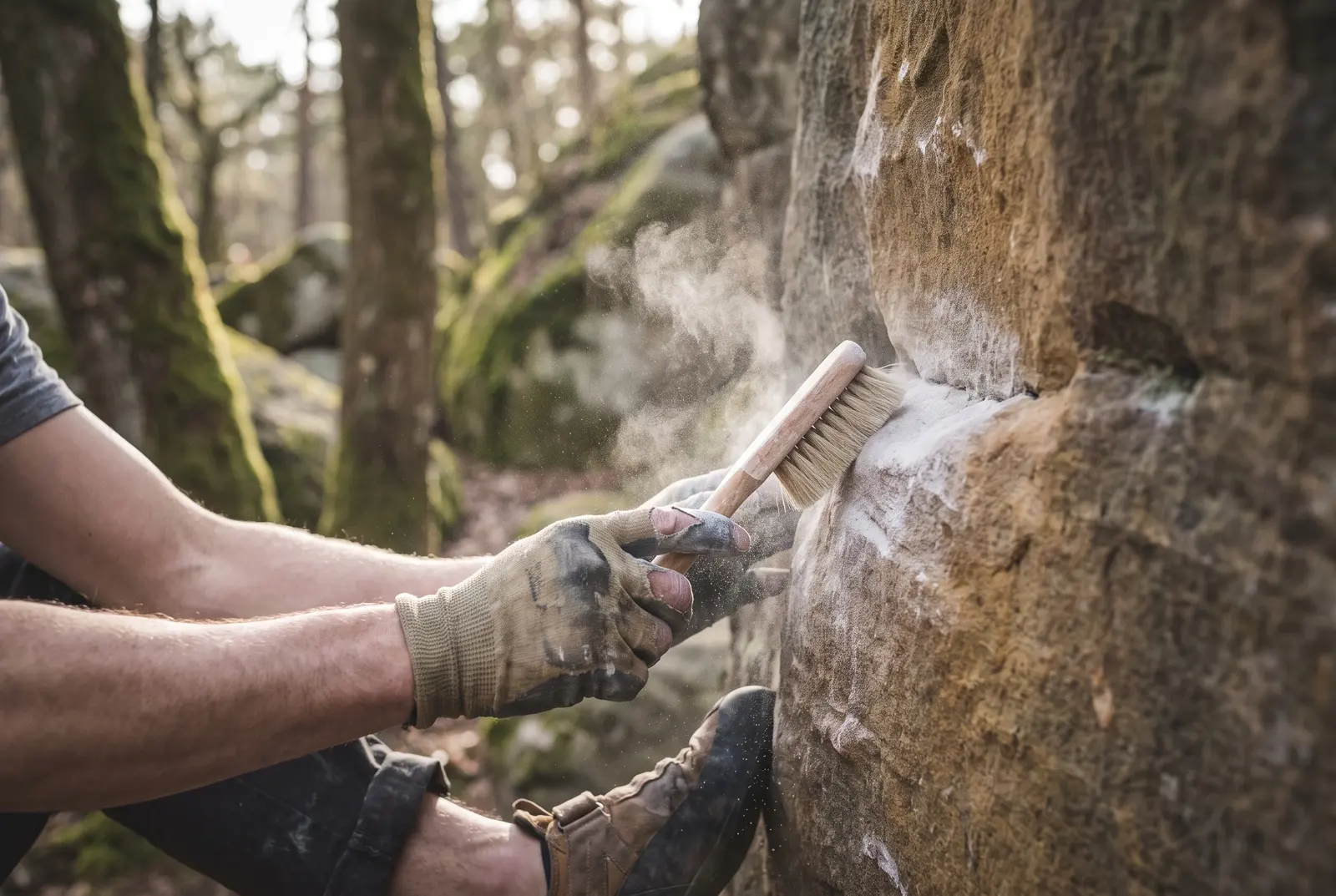
Wet sandstone is weaker still. Both sources say to climb only when the rock is completely dry, and the BMC notes that drying can take 24 hours or more. Don't brush damp holds. Our Fontainebleau bouldering guide covers the rest of the local rules.
Granite, gritstone and limestone
99Boulders' rule of thumb is that stiffer bristles suit harder outdoor rock, but brush choice depends on local guidance and the surface's condition: Moon warns that damaged gritstone, which has lost its hard outer layer, can also be vulnerable to stiff bristles. If the rock is crumbly, sandy or polished, go softer and lighter.
Gym holds
Plastic, polyurethane and wooden holds are the least fussy. Softer boar hair follows textured plastic well; stiff Tampico suits board holds such as wood, says Moon.
Sizes: why most climbers carry two
- Small or narrow brush: for crimps, pockets and the back of edges. This is the one to keep on your chalk bucket or bag.
- Large or wide brush: for slopers, pinches and top-outs. 99Boulders found wide palm-grip brushes clean big holds fast but are poor for detail work.
- Handle: a curved handle or thumb rest lets you press harder without scraping your knuckles. A hole or slim end lets it hang from a brush loop.
Make sure the brush fits your bucket's brush holders. Our best chalk bucket guide compares how many holders each bucket has.
The best climbing brushes
Mammut Crimper Brush: best everyday brush
Mammut's Crimper Brush is a 19 cm boar hair brush designed "to find better grip for smaller holds," for indoor and outdoor use, with a recycled plastic shaft. Mammut says the natural boar hair gives "gentle brushing that doesn't damage or polish the rock" (a brand claim, not an independent test result). Its narrow head is the right shape for edges and pockets.
Best for: your main bucket brush. Drawback: slow on big slopers. Skip it if: you only climb at Font, where a softer brush is the safer choice.
Mammut Sloper Brush: best for big holds
The Sloper Brush is the bigger sibling: 22 cm long, with wild boar bristles on both sides of an angled head and a recycled plastic shaft. Mammut pitches it for "a secure grip both indoors and outdoors" and says the hair prevents the rock "from becoming damaged or polished." Check Mammut's site for current pricing and availability.
Best for: slopers, volumes and top-outs. Drawback: too wide for thin edges, so pair it with a small brush. Skip it if: you want one brush only.
Wild Country Brush Large: best budget boar hair
Wild Country's brush uses natural wild boar bristles, a tapered head for hard-to-reach spots and a compact handle with an attachment hole, listed at around $14.95 on Wild Country's US site when we checked in November 2026; check current pricing and availability.
Best for: a cheap, simple boar hair brush. Drawback: Wild Country doesn't publish dimensions, and we didn't find an independent test. Skip it if: you can't find it in stock.
Moon Voyager Brush: best vegan brush
Moon's Voyager is a plant-based brush with 16,000 Tampico (agave) bristles in a sloping head and a beech wood handle, 17 x 2 cm. Moon says the bristles are "significantly stiffer than boar hair," good for its polyester, polyurethane and wood MoonBoard holds and for dirty or lichen-covered rock. Moon is also refreshingly honest: stiff Tampico "could risk causing damage to some fragile rock types, such as soft sandstone." The Voyager Pro is a larger 20 x 2.5 cm version.
Best for: vegan climbers, board training and gym holds. Drawback: too stiff for soft rock. Skip it if: you mostly climb on sandstone.
Mammut Brush Stick Package: best extendable brush stick
Mammut's package combines a carbon telescopic stick, 40 cm collapsed and 120 cm extended, with two boar hair brushes: one for crimps and one for slopers. Mammut says the stick can double as a trekking pole. Mammut's UK and EU stores listed it at around £66.50 and €77 when we checked in November 2026; check current pricing. Mammut's spec table gives 350 g while the feature list says the stick alone is 170 g.
Best for: projecting outdoors, where you want to brush high holds or the top-out from the ground. Drawback: 120 cm plus your arm won't reach the top of tall boulders. Skip it if: you mainly climb indoors.
Other brushes you'll see
- Sublime Slimline and Sublime Premium: 99Boulders' Top Pick/Best Value and Best for Outdoor Use. The Premium is stiffer and denser for outdoor rock. We couldn't open a current official product page, so they're not in our buy boxes.
- Lapis Boar's Hair: softer and well suited to contoured gym holds in 99Boulders' test, but it took more effort to clean with.
- Black Diamond brush sets: 99Boulders found the small nylon brushes in BD's set weak and recommended against buying it for the price. That verdict concerns the set it reviewed; Black Diamond also lists individual boar hair brushes, which that verdict does not assess.
- Other brush sticks: the Trango Beta Brush Stick and BetaStick systems are popular alternatives. Compare the extended length with the height of the boulders you climb before you buy.
How to brush without damaging the rock
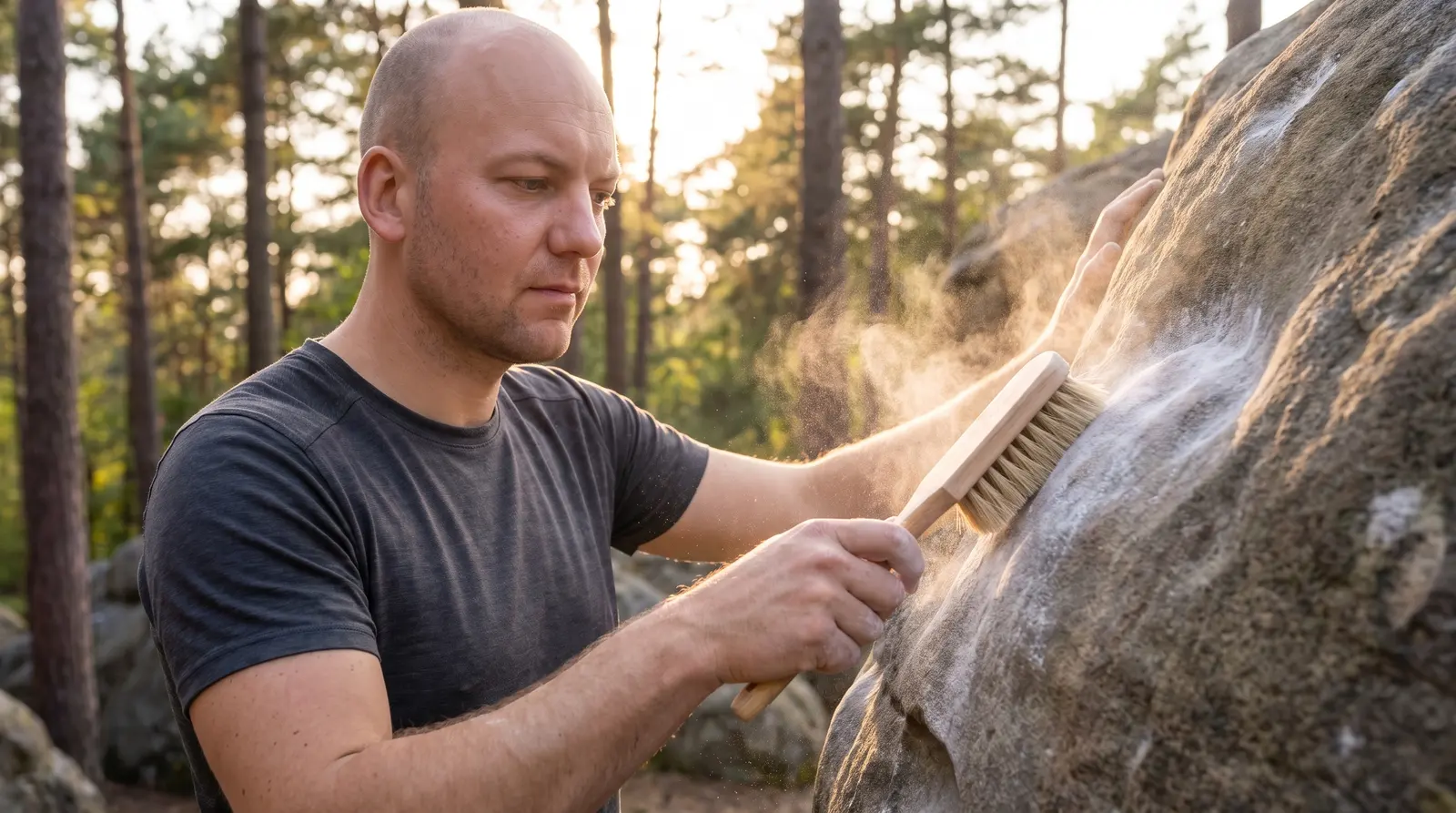
- Brush only what you need. Remove chalk gently from the established holds you use, not the whole boulder, and don't remove moss, lichen or vegetation without landowner and conservation approval.
- Use the softest brush that works. On sandstone that means a very soft hand brush, used lightly.
- Short, light strokes. Let the bristles lift the chalk; don't scrub the rock, and stop once the hold is clean.
- Never brush wet rock, and wait until sandstone is completely dry before climbing.
- Use less chalk in the first place. The BMC code says to "minimise chalk use" and brush away any build-up; bleau.info asks you to clean your chalk marks before leaving.
- No wire brushes, no resin (pof), no chipping. All three are on the BMC's bouldering code.
- Clean your shoes before each attempt so sand on your soles doesn't polish the footholds.
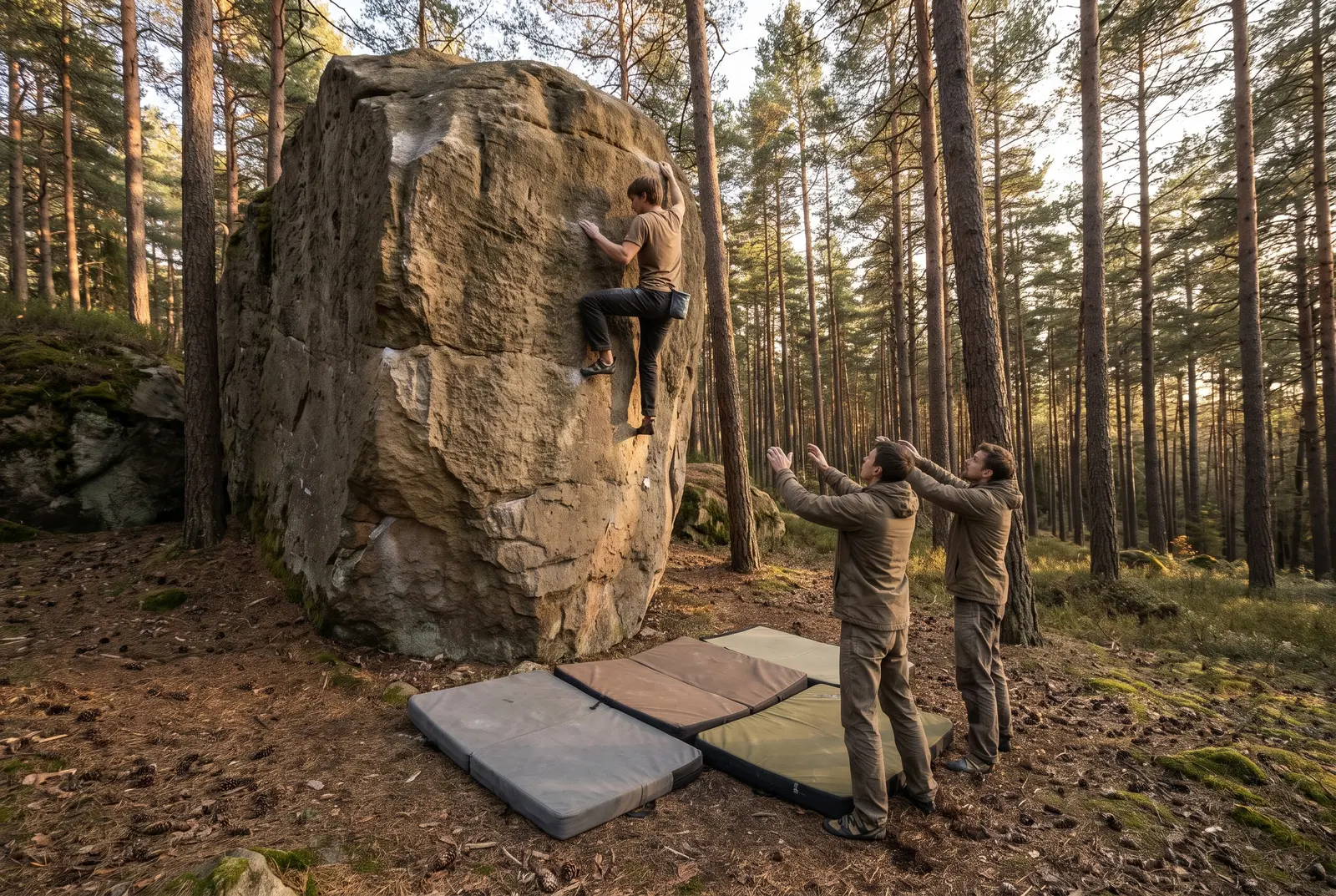
Brushing is part of good crag manners. Our guides to bouldering etiquette and outdoor bouldering for beginners cover the rest.
Brush care
Bristle tips wear first, which is why 99Boulders praised brushes with longer tip hairs. Tap the chalk out after each session and keep brushes in your bucket's holders so the bristles don't get crushed. Replace a brush once the bristles splay or wear short and stop lifting chalk.
FAQ
Is boar hair the best bristle for a climbing brush?
For most climbers, yes. In 99Boulders' brush test the testers unanimously preferred boar's hair to nylon, although the difference was noticeable rather than huge. Boar hair is softer than plant-fibre brushes such as Tampico (according to Moon) and far gentler than wire, but no test we found measured rock damage by bristle type.
Can I use a climbing brush on sandstone?
Only a soft one, and lightly. bleau.info asks climbers at Fontainebleau to brush holds only with a soft brush and says metal permanently damages the rock. The BMC goes further for Font and recommends a very soft dustpan brush rather than a toothbrush or regular bouldering brush. Never brush wet sandstone.
What is a vegan alternative to a boar hair brush?
Brushes with synthetic (nylon) bristles or plant fibres such as Tampico, which comes from agave. Moon's Tampico brushes are stiffer than boar hair, which suits plastic and wooden holds, but Moon warns they could damage fragile rock such as soft sandstone.
Do I need a brush stick?
Only if you project problems with holds you can't reach from the ground. A telescopic brush stick lets you clean top-outs and high crimps without climbing up to them. For gym bouldering and most short outdoor problems, a hand brush is enough.