Best Climbing Tape: Finger Tape, Flapper Tape and Crack Tape Compared
 Petr Hess, strength & conditioning coach
Updated 2 Nov 2026 · 8 min read
Key takeaways
Best for: Climbers taping fingers, flappers or crack gloves
- Metolius Climbing Tape is the best overall pick: a rigid wide roll you can tear down for fingers or use for crack gloves.
- For split tips and flappers, narrow Tension Tape saves tearing; cohesive Evolv Magic is worth trying if tape slides off sweaty fingers.
- Use rigid, non-stretch tape for H-tape and ring tape; stretchy tape such as Friction Labs Pro doesn't suit pulley support.
- Leukotape P is the stickiest option for crack gloves, but it's very hard to remove and isn't latex-free.
- Tape protects skin but isn't proven injury prevention; if a finger hurts, swells or you heard a pop, get it checked.
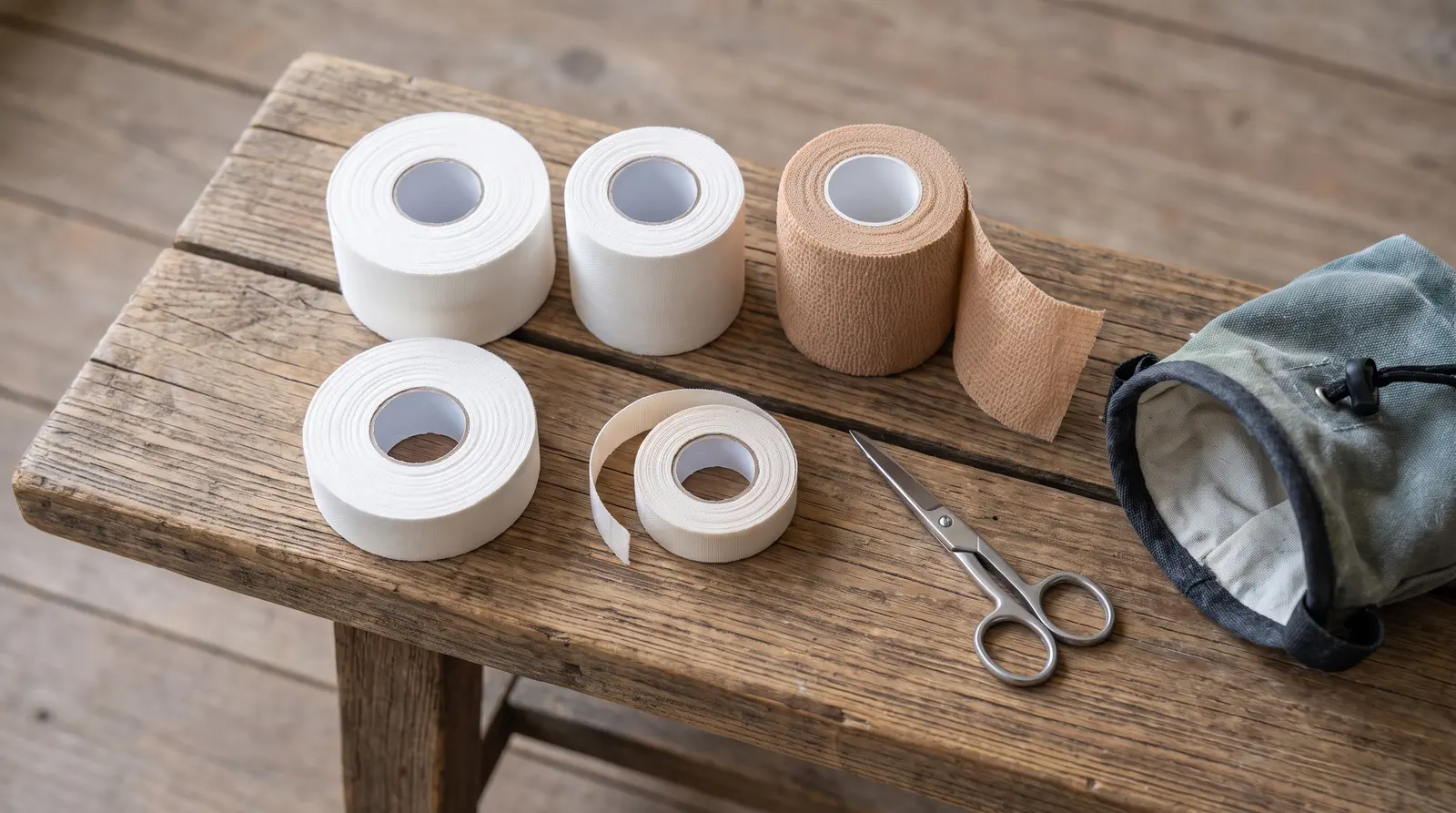
The best climbing tape for most people is a rigid, non-stretch cotton tape with a strong adhesive, such as Metolius Climbing Tape, bought as one wide roll you can tear down for fingers or use for crack tape gloves. If you mostly tape split tips and flappers, a narrow roll like the 0.5 in Tension Tape saves tearing, and cohesive tape like Evolv Magic is worth trying if ordinary tape slides off sweaty fingers.
I'm a strength and conditioning coach, not a physio, so I treat tape as a tool for skin and comfort, not as injury protection. If you want the method rather than the product, start with our step-by-step guide on how to tape fingers for climbing. For the rest of our kit advice, see the gear hub.
Prices and stock change often; the button opens the retailer or brand page so you can check today's price.
Best climbing tape at a glance
Specs come from each maker's or retailer's product page, checked in November 2026. Tape is cheap, so we only quote a price where we saw it on the page; otherwise, budget is under about $10 a roll and premium is above $15.
| Model | Best for | Type and width (per maker) | Main drawback |
|---|---|---|---|
| Metolius Climbing Tape | All-round use, crack gloves | Cotton-polyester, 3.8 cm x 10 m roll | Painful to rip off hairy skin |
| Tension Tape | Fingertips and pulley wraps | Tri-Pack of 0.3, 0.5 and 1 in rolls | Backing material not listed |
| Evolv Magic Finger Tape | Sweaty hands, re-wrapping | Cohesive cotton-latex, 0.75 in | Learning curve, contains latex |
| Leukotape P | Long crack days, maximum stick | Rigid, zinc oxide adhesive, 1.5 in x 15 yd | Hard on skin, priciest roll |
| Friction Labs Athletic Finger Tape | Latex-free option (Pro) | Zinc oxide 1.5 in, or latex-free stretch 0.5 in | Mixed early customer reviews |
| Lattice Dream Tape | UK and EU buyers | Non-stretch cotton, 2.5 or 4 cm | Contains latex, no reviews yet |
Types of climbing tape
Almost every "climbing tape" falls into one of three broad types, and the type matters more than the brand. The groups overlap: a cotton-backed tape can also use a zinc oxide adhesive, so check the backing, the adhesive and whether it stretches. (Stretchy kinesiology tape isn't one of them: the classic pulley methods use rigid tape.)

Rigid zinc oxide tape
Classic strapping tape: a non-stretch backing with a zinc oxide adhesive that grips hard and survives rough rock. Leukotape P, Friction Labs' Original and many pharmacy athletic tapes are in this group. The downside is removal. Vitality Medical's Leukotape listing even says the maker doesn't recommend sticking it straight onto skin because it can cause skin damage when you pull it off.
Cotton and cotton-blend climbing tape
Climbing-brand tapes such as Metolius and Lattice Dream Tape are also non-stretch and tear easily by hand. They are the default for most climbers, and the type our taping guide recommends for H-tape and ring tape.
Cohesive (self-adherent) tape
Cohesive tape sticks to itself rather than to your skin. Evolv says its Magic Finger Tape works this way, so sweat and water don't loosen it and it cuts off without leaving residue. The trade-off is that it has to wrap around itself to hold, so it suits rings around a finger better than patches on a palm. 99 Boulders' testers were split on it: some liked the support, others found wraps came loose and needed redoing.
Which width should you buy?
- Wide rolls (about 1.5 in / 3.8 cm): the most flexible choice. You can tear them into finger strips, and you need this width for hand-crack tape gloves.
- Medium (about 1 in / 2.5 cm): handy for wrists, thumbs and quick finger rings.
- Narrow (0.3–0.5 in / 0.8–1.3 cm): ready-made strips for split tips, flappers and H-tape, with no tearing at the crag.
KletterRetter, a German climbing skin-care brand, notes that for flappers narrow tape is enough in most cases, but a wide roll gives you more options because you can tear it down.
What climbers use tape for
Pulley support (H-tape and ring tape)
After a pulley injury, many climbers use an H-tape or ring tape during rehab. Use rigid, non-stretch tape torn into strips about 1.5 cm wide. Our A2 pulley injury guide covers when to see a professional. Be realistic: the research summarised in our taping guide found that tape only modestly reduces load on the pulley, so it's support during return to climbing, not protection for healthy fingers.
Skin: split tips and flappers
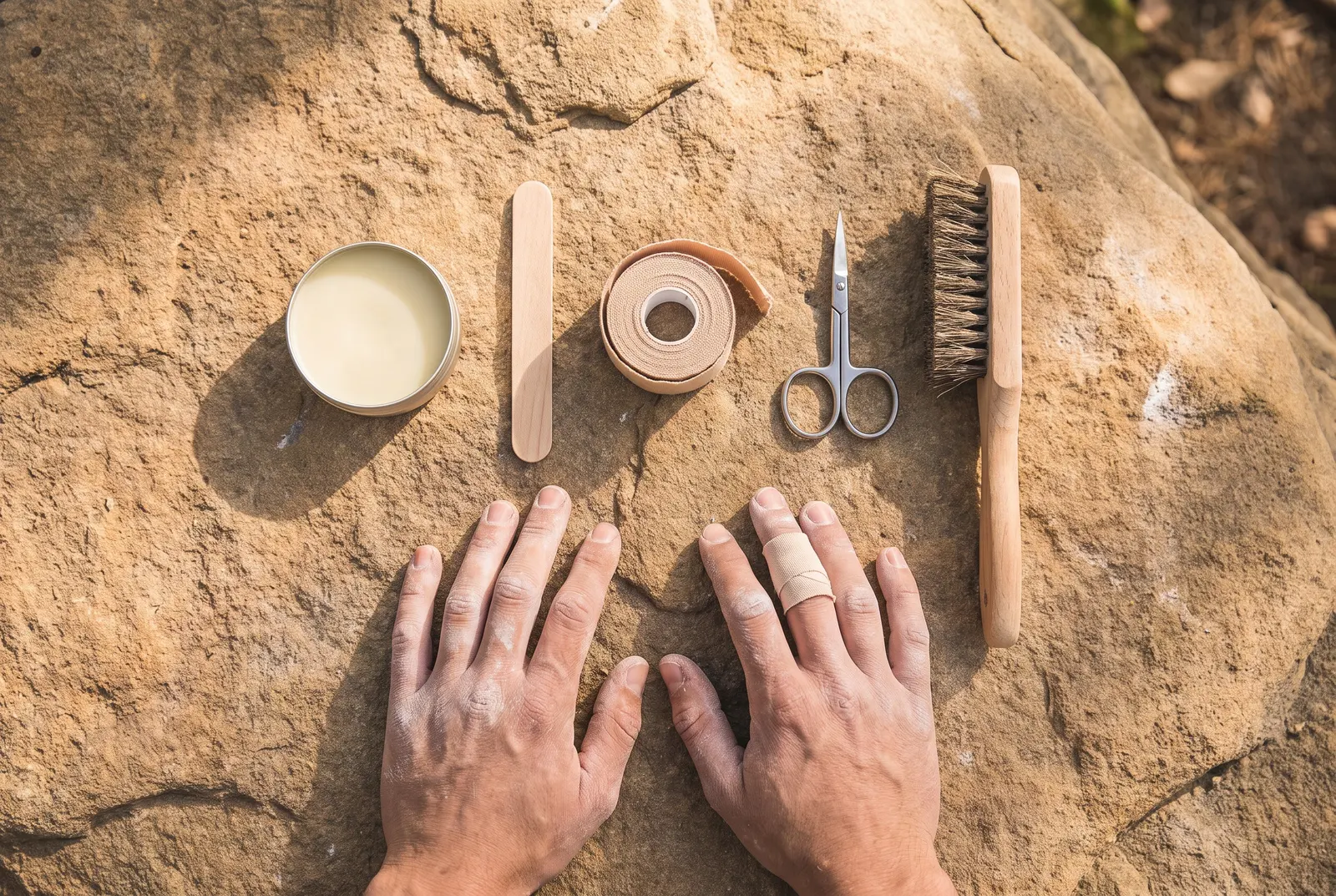
For a flapper, first stop any bleeding, rinse the wound with clean water and cover raw or dirty skin with a sterile dressing before you tape over it. For the taping itself, KletterRetter recommends washing the chalk off first, tearing a roughly 10 cm strip fully off the roll (so you don't wrap it too tightly), folding the first end back on itself so no glue touches the torn skin, wrapping twice and finishing on the back of the finger. Then look after the skin between sessions; our climbing skin care guide covers the day-to-day routine.
Crack climbing tape gloves
Tape gloves protect the back of your hands when you jam. You need a wide, very sticky roll. 99 Boulders liked Metolius for wrapping crack gloves and found Leukotape the stickiest tape they tried. If you jam often, reusable crack gloves such as the Outdoor Research Splitter II are the alternative; OR describes them as giving "rugged hand protection for jamming", though they were out of stock on OR's store when we checked.
The best climbing tape: our picks
These picks combine maker specs with 99 Boulders' field test (seven tapes on granite cracks, sandstone faces, gym plastic and a hangboard). That test didn't include Tension, Friction Labs or Lattice, so those picks rest on maker specs. We have not tested any of them ourselves.
Metolius Climbing Tape: best overall
Metolius Climbing Tape was 99 Boulders' top pick: sticky, easy to use, easy to split into narrower widths and their favourite for crack gloves. Metolius describes it as a cotton-polyester blend athletic tape and includes illustrated taping instructions. The page lists the roll as 33 ft (10 m) and gives the width as 3.8 cm (it also says 1 in, which doesn't match; 99 Boulders lists 1.5 in). It was around $8.95 on Metolius's US store.
- Best for: one roll that does everything, from finger strips to tape gloves.
- Main drawback: 99 Boulders found it painful to rip off, especially from hairy skin.
- Skip it if: you only tape fingertips and don't want to tear strips.
Tension Tape: best for fingers and flappers
The Tension Tape Tri-Pack gives you three widths at once: 0.3 in rolls that Tension says are sized for fingertips, a 0.5 in roll for larger blisters, and a 1 in roll for wrists, ankles, tape gloves or tearing down. Tension says the adhesive is very sticky and works in cold temperatures. It is also sold as packs of 0.3 in or 0.5 in rolls only.
- Best for: climbers who mostly tape split tips, flappers and pulley strips.
- Main drawback: Tension doesn't list the backing material or roll length, and the 1 in roll is narrow for full crack gloves.
- Skip it if: you do a lot of crack climbing and need wide rolls.
Evolv Magic Finger Tape: best cohesive tape
Evolv Magic Finger Tape is a 0.75 in cohesive cotton-latex tape that Evolv describes as medical-grade, water-resistant and breathable. Evolv says sweat and water won't loosen its cohesive bond, which is the main reason climbers with sweaty hands try it, though 99 Boulders found wraps can still come loose. 99 Boulders named it Best Finger Tape for breathability and traction but called it polarizing because it doesn't stick to skin.
- Best for: sweaty fingers and ring-style wraps you want to cut off cleanly.
- Main drawback: a learning curve, and wraps can loosen if you don't overlap them well.
- Skip it if: you have a latex allergy, or you want patches on palms. It was out of stock on Evolv's EU store when we checked.
Leukotape P: best for crack tape gloves
Leukotape P is a physio strapping tape, not a climbing brand. OPTP calls it a "rigid sports tape" that is extremely strong, and Vitality Medical lists it at 1.5 in x 15 yd with a zinc oxide adhesive. 99 Boulders found it the stickiest tape in their test, which is exactly what you want for a tape glove that has to survive a long day of jamming. A single roll was $15.95 on OPTP's store.
- Best for: long crack routes and anyone whose tape keeps peeling.
- Main drawback: very hard to remove, and Vitality Medical notes the maker doesn't recommend applying it directly to skin.
- Skip it if: you need latex-free tape (Vitality lists it as not latex-free) or you tape fingers every session.
Friction Labs Athletic Finger Tape: best latex-free option
Friction Labs Athletic Finger Tape comes in two versions. The Original is a 1.5 in x 10 yd zinc oxide tape with a non-stretch cotton backing. The Pro version is a latex-free tape with stretch fibres, sold as three 0.5 in x 10 yd rolls and made in the USA. On Friction Labs' US store the Original was listed at $9.99 and the Pro at $19.99.
- Best for: climbers who need latex-free tape for skin taping (Pro), or a standard zinc oxide roll (Original).
- Main drawback: customer reviews on Friction Labs' page were mixed, and the Original was on pre-order when we checked.
- Skip it if: you want rigid pulley support: the Pro version stretches, so use the Original or another non-stretch tape for H-tape.
Lattice Dream Tape: best for UK and EU climbers
Dream Tape, sold by Lattice Training, is a woven, non-stretch cotton tape with zig-zag edges for easy tearing. It comes in 2.5 cm and 4 cm widths, and Lattice lists it for fingertips, flappers, pulley strips, sweaty conditions and hand-crack wrapping. Prices on Lattice's store were about €7–10 depending on width.
- Best for: climbers in Europe who want a climbing-specific rigid tape without import costs.
- Main drawback: it contains latex, and it had no customer reviews yet.
- Skip it if: Metolius or Tension costs less delivered where you live. Lattice ships to the US and says taxes and duties are included for UK, EU and US customers, so compare delivered prices.
Tape to avoid
99 Boulders called the Mueller (Trango) MTape the only real disappointment of their test because it slid easily. Cheap pharmacy tape can work: they rated Johnson & Johnson sports tape as the best value, just less sticky than the top picks.
What tape can and can't do
Tape protects skin and can make a sore finger feel more secure, but it isn't proven injury prevention. Our taping guide summarises the research: circular taping only slightly reduced force on the A2 pulley in lab testing, and a review found no strength benefit in uninjured climbers. Don't use tape to climb through pulley pain; if a finger hurts, swells or you heard a pop, stop and get it checked.
Practical rules: tape clean, chalk-free skin; tear the strip off the roll before wrapping; and if a finger goes pale, purple, numb or tingly, take the tape off and redo it looser.
Heading outside? Tape belongs on every bouldering trip packing list, next to a skin file and balm.
Bottom line
Buy one roll of Metolius Climbing Tape (or Lattice Dream Tape in Europe) and you're covered for almost everything. Add Tension's narrow rolls if you tape fingertips often, Leukotape if you jam cracks, Friction Labs Pro if you need latex-free, and Evolv Magic if sweat beats every other tape. Whatever you buy, use it for skin and comfort, and let rest and proper rehab handle injuries.
FAQ
What kind of tape do climbers use?
Most climbers use rigid, non-stretch athletic tape with a cotton or cotton-blend backing and a strong adhesive, often zinc oxide. It tears by hand into narrow strips for fingers and stays wide for hand-crack tape gloves. Some climbers prefer cohesive tape, which sticks to itself instead of to skin.
What is the best tape for flappers?
A narrow, sticky tape torn fully off the roll before you wrap it. Stop any bleeding, rinse the wound and cover raw skin with a sterile dressing first. KletterRetter suggests about a 10 cm strip, with the first end folded back on itself so the adhesive doesn't touch the torn skin, wrapped twice and finished on the back of the finger. Cohesive tape such as Evolv Magic is an option if normal tape slides off sweaty fingers.
Can I use kinesiology tape for finger pulleys?
It isn't the usual choice. Stretchy kinesiology tape doesn't give the same support as rigid tape, which is why the H-tape and ring methods use non-stretch tape. Even rigid tape is no guarantee of protection, so treat any pulley pain as a reason to get it checked.
How wide should climbing tape be?
Buy one wide roll, around 1.5 in (3.8 cm), and tear it down for fingers, or add a 0.5 in (about 1.3 cm) roll for quick finger and pulley taping. Wide rolls are also what you need for crack tape gloves.
Sources
- Willis Kuelthau, 99 Boulders, 7 Best Climbing Tape Brands (2021, updated)
- Ralf, KletterRetter, Taping flappers: how to deal with skin injuries on your fingers (2018, updated 2022)
- Metolius Climbing, Climbing Tape (product page)
- Evolv, Magic Finger Tape (product page)
- Friction Labs, Athletic Finger Tape (product page)
- Vitality Medical, Leukotape P Sports Tape 1.5 in x 15 yd (product page)