Climbing Skin Care: Calluses, Flappers, Split Tips and Chalk
 Petr Hess, strength & conditioning coach
Updated 2 Nov 2026 · 9 min read
Key takeaways
Best for: Climbers dealing with flappers, split tips or sweaty hands
- File calluses smooth so ridges can't catch on holds, but never file down to fresh, sensitive skin.
- Moisturise after climbing and at night, and skip moisturiser for an hour or two before you climb.
- Stop or tape at the first hot spot; a callus that has started to lift will usually tear if you continue.
- Treat open wounds like any cut: clean, trim only mostly detached skin, cover, and see a doctor if infection signs appear.
- Research on chalk and friction is mixed; it seems to help climbers hang on, possibly by keeping skin dry.
Good climbing skin care is about keeping your skin thick enough to grip but smooth and supple enough not to tear. File calluses flat so they can't catch on holds, moisturise after climbing and at night (not just before), stop or tape up before a hot spot turns into a flapper, and treat open wounds like any other cut: clean, trim loose skin, cover and watch for infection. Chalk helps mainly by keeping sweat under control; the research on whether it actually increases friction is mixed.
I'm a strength and conditioning coach, not a doctor or dermatologist. This guide summarises first-aid guidance and climbing-specific advice from the sources listed at the bottom. Skin damage is usually minor, but a wound that looks infected or won't heal needs a professional.
How climbing skin adapts
Skin responds to repeated pressure and friction the way muscle responds to training: it gets tougher. The outer layer thickens into calluses that protect the more sensitive skin underneath. That's useful, but the adaptation has limits:
- Too thin and the rock wears through to the pink, sensitive layer, often after a long session on rough rock or volumes.
- Too thick and uneven and the callus becomes a lever. A raised edge can catch on a hold and shear away from the softer skin beneath it, which is how most flappers happen. KletterRetter notes that "too much build-up can lead to flappers or tears".
- Too dry and the hard skin cracks under load, especially at the fingertips and in cold, dry weather.
The goal isn't the thickest skin possible. It's even, flexible skin with no ridges.
Daily climbing skin care routine
| When | What to do | Why |
|---|---|---|
| Before climbing | Wash and dry hands; skip moisturiser for an hour or two before | Removes grease; moisturiser on the wall makes skin soft and slippery |
| During the session | Brush holds, chalk lightly, stop or tape at the first hot spot | Most flappers give warning signs first |
| Right after | Wash off chalk, check for torn edges, file any ridges flat | Chalk is very drying; ridges become tomorrow's flappers |
| Evening | Apply hand cream or climbing balm, especially to fingertips | Helps keep skin supple and has time to absorb before you climb |
| 2–3 times a week | Light sanding of calluses with a fine file or sandpaper | Keeps thickness even; never sand down to fresh skin |
Filing and sanding
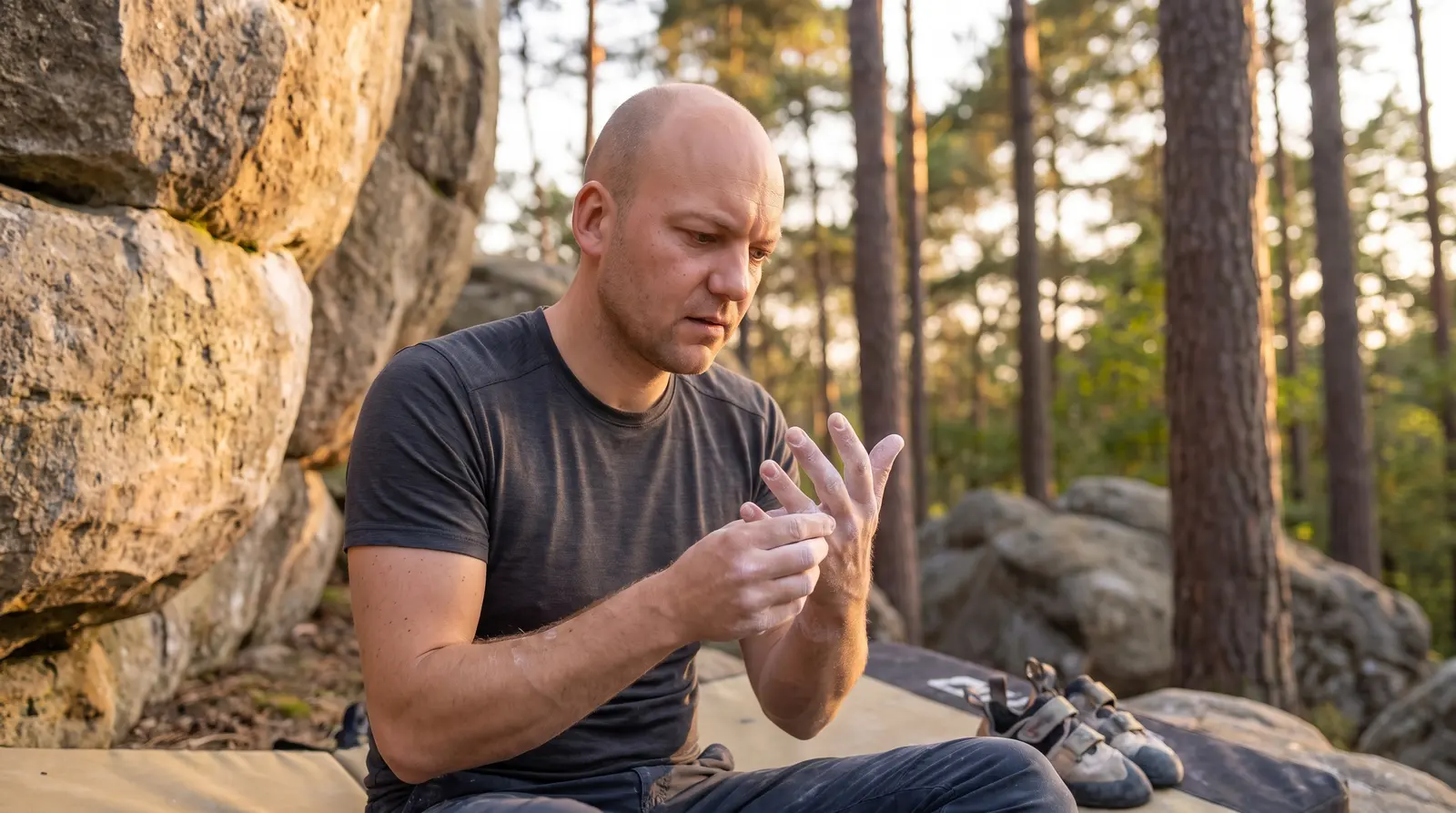
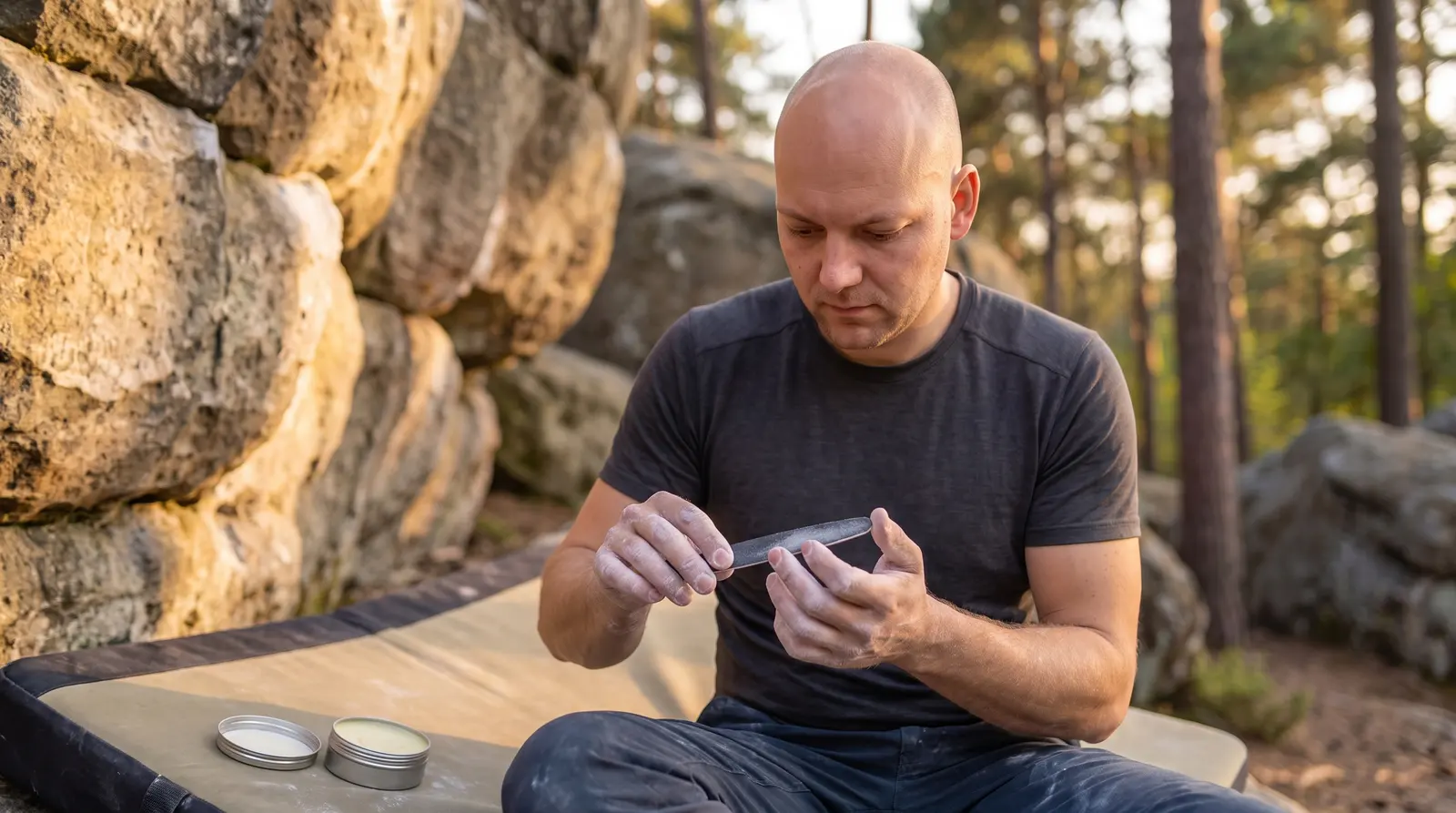
Use a fine nail file, a sanding block or fine-grit sandpaper on dry skin. Smooth the edges of calluses so they blend into the surrounding skin, and flatten any loose or raised bits. Stop before you reach shiny, sensitive skin: the aim is to remove ridges, not your protection. KletterRetter advises never filing fresh skin or removing calluses completely. Many climbers do a quick check after every session and a slightly longer one before a trip.
Moisturising timing
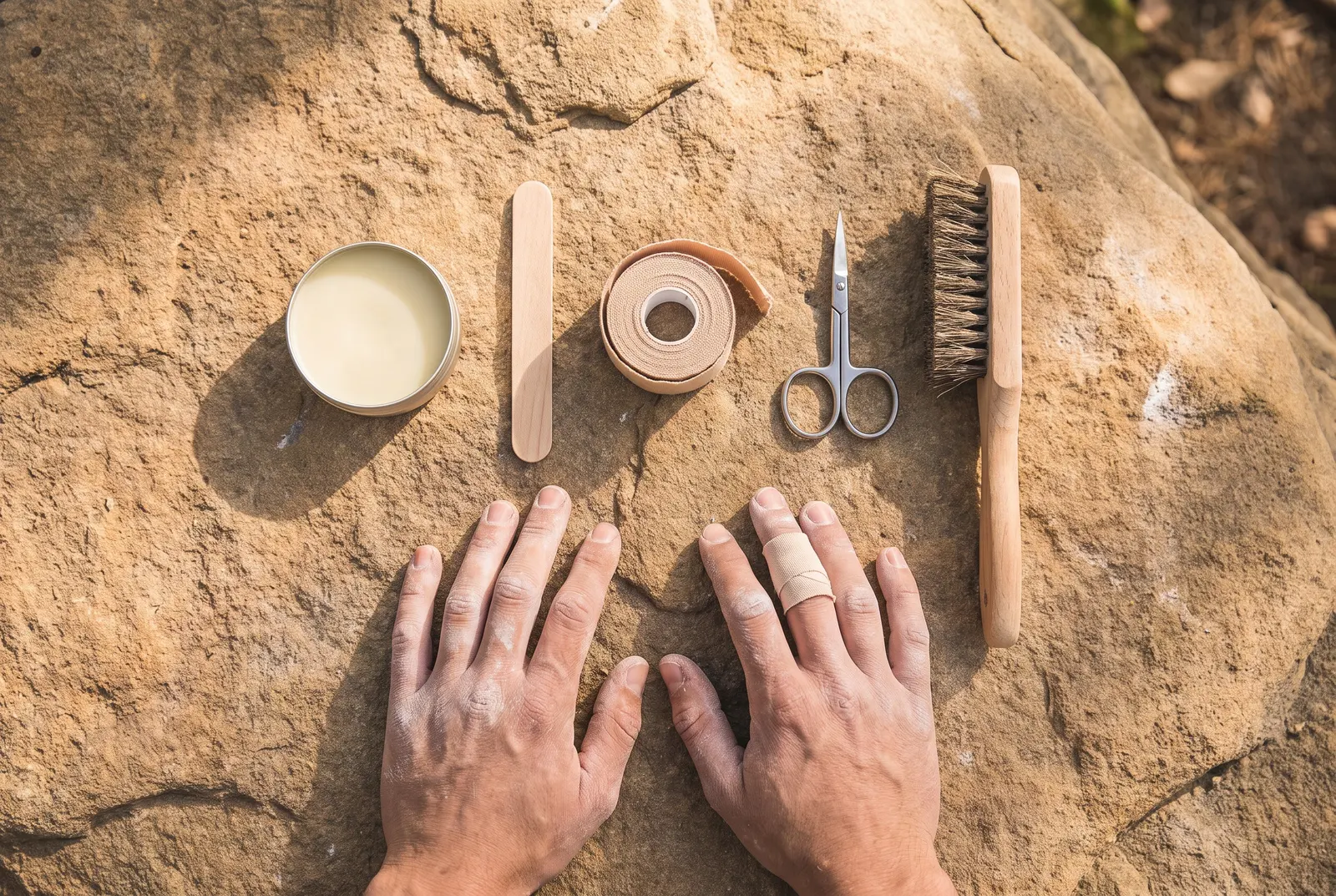
Moisturising is about timing, not avoiding it. Chalk and rough rock dry the skin, and dry skin splits. Applying balm or cream after climbing and before bed can help keep it supple, and gives it time to absorb before your next session. Adjust the product and amount to how your skin responds. If your skin is already very soft or sweaty, you may need less; if it's dry and cracking, use more.
Preventing flappers and split tips
Flappers
- File calluses, especially at the base of the fingers and on the palm side of the finger joints where they catch on jugs and pinches.
- Watch dynamic moves on sharp or rough holds, such as deadpoints and swings onto pockets or jugs. That sudden sliding load is a classic flapper moment.
- Stop at the warning sign. A hot, pink patch or a callus that has started to lift will usually tear if you keep going.
- Keep sweat under control, because wet, soft skin tears more easily (see below).
Split tips
- Moisturise fingertips every evening, more in winter. KletterRetter links splits to dry, brittle skin plus pressure, and notes they are more common in cold conditions and after lots of board training.
- File the hard edges around a small split flat once it has closed, so it doesn't reopen. Don't file an open crack.
- Keep nails short so the fingertip pad, not the nail edge, takes the load.
- Manage volume on small crimps and rough rock, especially on trips like Fontainebleau where sandstone circuits can mean dozens of problems a day.
First aid for flappers, splits and cuts
The NHS approach to cuts and grazes works for climbing wounds too: stop any bleeding with pressure, clean the wound, cover it and keep it clean while it heals.
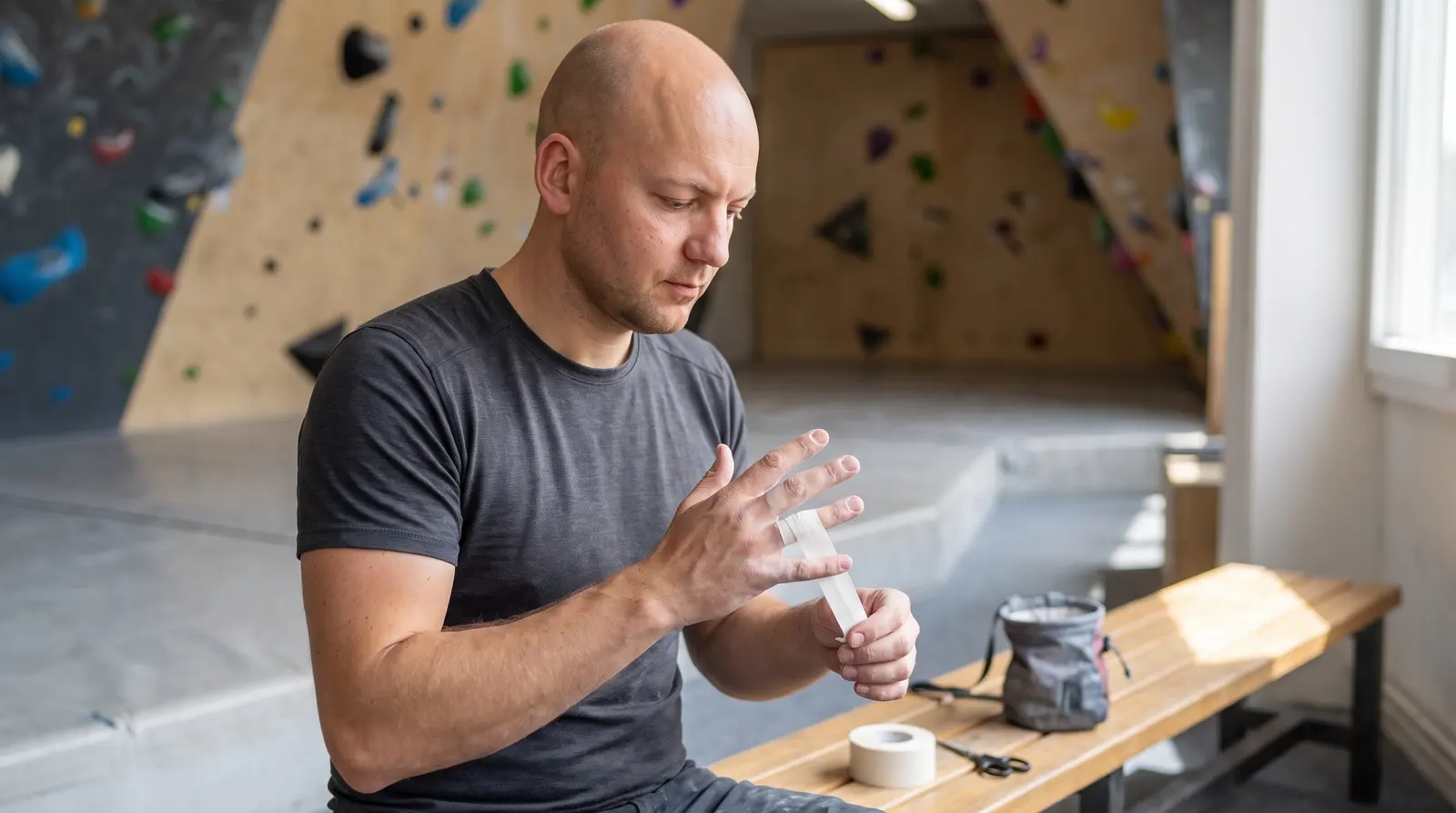
- Stop climbing on it. Chalk and dirt in an open wound slow healing.
- Control bleeding with a clean cloth or dressing and pressure.
- Clean it. Rinse with clean tap or bottled water, or use sterile wipes, then clean the skin around it with soap and water.
- Trim loose skin (flappers) only if it is mostly detached and dead, using clean nail clippers or small scissors. If the flap is still well attached, many climbers smooth it back down and cover it instead.
- Cover it with a plaster or sterile dressing. Put a thin layer of plain petroleum jelly on minor cuts and keep them covered; change the dressing daily, or sooner if it gets wet or dirty. For splits, file the hard edges flat only once the wound has closed.
- Climb again once it has closed and can take friction without pain or reopening. Tape then helps protect the healing skin; our guide on how to tape fingers for climbing shows how to tape over flappers and split tips.
When it needs medical care
The NHS advises an urgent GP appointment (or your local equivalent) if a wound shows signs of infection:
- swelling, redness or pain that is increasing
- pus coming from the wound, or dirt that remains after cleaning
- feeling generally unwell or having a high temperature
Seek emergency care if bleeding won't stop, if you lose feeling or movement near the wound, if the cut is very large or deep, if the cut is on the palm of your hand, or if something is stuck in it. If a wound could be infected, for example with soil, treatment may include a tetanus injection, so mention it if you see a doctor.
Skin damage is different from a deeper finger injury. If you felt a pop, see swelling or bruising, or have pain bending the finger, read our climbing finger injuries guide and get it assessed.
Sweaty hands vs dry hands
Your skin type changes your whole approach.
| Sweaty skin | Dry skin | |
|---|---|---|
| Typical problem | Slipping, soft skin, flappers, greasy holds | Split tips, cracks, low friction on glassy holds |
| Chalk | Liquid chalk base, then loose chalk; re-chalk often | Use less chalk; brush the hold rather than over-chalking |
| Moisturiser | Light, only at night if needed | Every evening, more in winter |
| Conditions | Climb in cool, dry, breezy weather; avoid peak heat | Avoid long, hot sessions that wear thin skin |
| Other | Rest longer between tries to cool down; wipe hands; climbing antiperspirant products exist | Brush holds well and avoid over-chalking |
If your hands sweat so much that it affects daily life, not just climbing, that may be hyperhidrosis, which is a medical condition. The American Academy of Dermatology lists treatments including prescription-strength antiperspirants (non-prescription ones help only mild cases on the hands), iontophoresis, botulinum toxin injections and oral medications. A dermatologist can advise.
Chalk: why climbers use it and which type
Climbers use chalk (magnesium carbonate) to dry sweat and get a consistent feel on holds. The research on whether it actually increases friction is surprisingly mixed:
For product picks by hand type, see our guide to the best climbing chalk.
- A 2001 lab study by Li and colleagues found that chalk decreased fingertip friction on sandstone, granite and slate. They suggested chalk dries the skin and makes it less compliant, and forms a slippery granular layer.
- A 2016 study by Kilgas and colleagues with 19 experienced climbers found no difference in friction with or without chalk, but climbers hung on a hold longer with chalk (about 63 s vs 49 s).
- A 2024 study by Clarke and colleagues on four UK rock types found chalk had a more positive effect on friction for dry fingertips than simulated sweaty ones, that its effect depended on the rock's roughness, and that it made friction more consistent.
The practical reading: chalk isn't magic grip powder, but it seems to help climbers hang on, possibly by keeping skin dry and making holds feel predictable. Use enough for a thin layer, and brush excess chalk off holds, because a thick layer may make them slicker.
Loose vs liquid vs chalk balls
| Type | Pros | Cons | Best for |
|---|---|---|---|
| Loose chalk | Quick to top up mid-climb, easy to control amount | Dusty, spills, more waste | Most outdoor bouldering |
| Chalk ball | Less dust and spillage than loose | Thinner coat, slower to apply | Gyms that limit dust |
| Liquid chalk | Thin, even base layer; little dust; lasts through several tries | Alcohol can dry skin further; takes time to dry | Base layer for sweaty hands; gyms that require it |
Many climbers combine them: liquid chalk as a base, then a quick dip in loose chalk. Some gyms restrict loose chalk to cut dust, so check your gym's rules. Outdoors, use as little as you need and brush off chalk and tick marks before you leave. If any of these terms are new, our bouldering terms glossary explains them. For what to carry, our bouldering trip packing list includes a skin kit, and the guide to outdoor bouldering for beginners covers chalk etiquette on rock.
Skin and rest days
Skin often limits your climbing before your muscles or fingers do, especially on trips and rough rock. From a training perspective, treat skin as part of your recovery plan:
- Plan rest days around skin as well as fatigue. Thin, pink, sensitive fingertips need a day or two to rebuild.
- Change the stimulus. If your tips are thin but you feel strong, choose a session with bigger holds, slabs, or strength work off the wall.
- Don't fight a split or flapper. Climbing on an open wound can reopen it and delay healing; how long it takes varies with how bad it is and how much you load it.
- Front-load skin care before a trip. File and moisturise for a week beforehand so you arrive with even, healthy skin.
Common skin care mistakes
- Ripping off a half-torn callus. Tearing it away usually takes healthy skin with it. If it's mostly detached, trim the loose skin cleanly with clippers instead; leave well-attached skin in place.
- Over-filing before a session. Sanding right before you climb leaves the skin thin and tender. File after climbing or on rest days.
- Moisturising just before climbing. Your skin softens and holds feel greasy, for you and for the next climber.
- Climbing on or chalking an open wound. Let it close first; once you're back on the wall, tape the healing skin and clean it again after the session.
- Taping too tightly. Tape over a split or flapper should protect it, not cut off circulation. If the fingertip goes pale, purple or numb, re-tape it looser.
- Ignoring slow healing. A small split that hasn't closed after a week or two of sensible care, or keeps getting redder, is worth showing to a doctor or pharmacist.
- Treating skin as unlimited. On trips, plan your hardest attempts for when your skin is fresh, early in the day and early in the trip, and keep easy volume for later.
A simple skin kit
- Nail clippers and small scissors
- Fine nail file or sandpaper
- Climbing balm or a plain hand cream
- Rigid finger tape
- Plasters, sterile dressings and wound wipes
- Liquid chalk if you sweat a lot
Need tape for your kit? Our best climbing tape guide compares widths and types.
FAQ
How do you treat a flapper from climbing?
Stop climbing on it, wash the wound with clean water, trim away loose dead skin only if it is mostly detached, and cover it with a plaster or tape. Keep it clean while it heals and watch for signs of infection such as spreading redness, swelling, increasing pain or pus.
Should I moisturise my hands before climbing?
Not right before. Moisturiser can make your skin slippery and softer for the session. Most climbers moisturise after climbing and before bed, so it has time to absorb before the next session.
Is liquid chalk better than powder chalk?
Neither is clearly better. Liquid chalk gives a thin, even base layer and makes less dust, which is why some gyms prefer it; loose powder is quicker to top up during a climb. Many climbers use liquid chalk first and loose chalk on top.
Does chalk actually improve grip?
The research is mixed. A 2001 lab study found chalk lowered fingertip friction, a 2016 study found no change in friction but longer hang times with chalk, and a 2024 study found chalk helped dry fingertips more than sweaty ones and made friction more consistent. It most likely helps by keeping your hands drier and more predictable.
Sources
- Li FX, Margetts S, Fowler I. Use of 'chalk' in rock climbing: sine qua non or myth? Journal of Sports Sciences (2001)
- Kilgas MA, Drum SN, Jensen RL, Phillips KC, Watts PB. The Effect of Magnesium Carbonate (Chalk) on Geometric Entropy, Force, and Electromyography during Rock Climbing. Journal of Applied Biomechanics (2016)
- Clarke B, et al. The effectiveness of chalk as a friction modifier for finger pad contact with rocks of varying roughness. Proc IMechE Part P (2024)
- NHS, Cuts and grazes
- American Academy of Dermatology, Hyperhidrosis: Diagnosis and treatment
- KletterRetter, Common climbing skin problems, part 1/3 (2025)
- American Academy of Dermatology, How to treat minor cuts (2022)