Best Climbing Harness (2026): How to Choose, Fit and Size One
 Petr Hess, strength & conditioning coach
Updated 2 Nov 2026 · 13 min read
Key takeaways
Best for: Choosing and sizing your first or next climbing harness
- Beginners do best with an adjustable all-rounder such as the Petzl Corax or Black Diamond Momentum; sport climbers who know their size can go for a fixed-leg harness like the Black Diamond Solution.
- Measure your waist just above the hip bones and your upper thighs, use the brand's own chart, and hang in the harness for several minutes before you buy.
- Buy only new harnesses marked EN 12277 and UIAA, inspect the belay loop and tie-in points before every session, and never clip into a gear loop.
- Black Diamond puts normal harness life at about three years and the maximum at ten years even unused; retire it sooner after a severe fall or any visible damage.
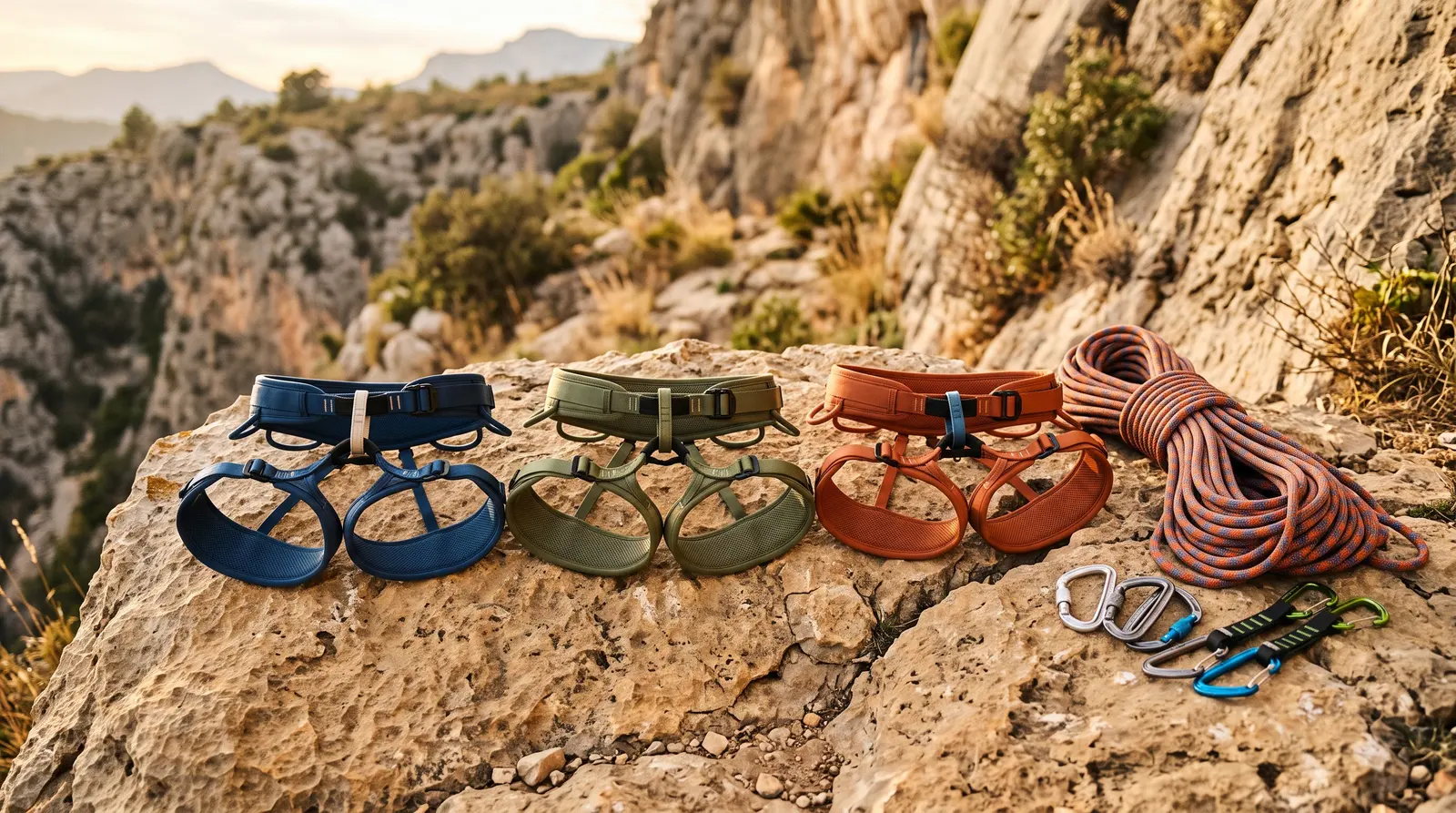
The best climbing harness for most people is a comfortable all-rounder with four gear loops that fits your waist and thighs without pinching. If you're starting out, choose one with adjustable leg loops, such as the Petzl Corax or Black Diamond Momentum. If you mostly clip bolts, the Black Diamond Solution is the independent testers' favourite. Fit beats features: a harness that fits well and has been hung in before you buy it is better than any spec sheet.
We haven't tested these harnesses ourselves. This guide is built from manufacturer specs (linked in each section), published independent tests from Treeline Review, GearJunkie and OutdoorGearLab, and the safety guidance of the UIAA and Black Diamond's quality-control lab. It's part of our climbing gear guides, and our affiliate disclosure explains how the shop links work. If you're building a whole first kit, start with climbing gear for beginners.
Prices and stock change often; the button opens the retailer or brand page so you can check today's price.
Best climbing harnesses at a glance
Weights are the manufacturer's figure for a medium (or the size stated). US list prices were checked on the official sites on 3 November 2026; EU prices and availability differ by country.
| Harness | Best for | Leg loops | Gear loops | Weight | Main drawback |
|---|---|---|---|---|---|
Black Diamond Solution | Sport, gym, all-round rock | Fixed (elastic) | 4 + rear fifth | 378 g / 13.3 oz (M) | Can't adjust the legs for layers |
Black Diamond Momentum | Budget, first harness | Adjustable (trakFIT) | 4 + haul loop | 350 g / 12.3 oz (M) | Padding runs warm; bulky |
Petzl Corax | Beginners, shared family harness | Adjustable | 4 | 470–520 g / 16.6–18.3 oz | Heavy; only two sizes |
Arc'teryx AR-395a | Trad, multi-pitch, all-season | Adjustable | 4 + haul loop, 4 ice clipper slots | 405 g / 14.3 oz | Premium price; thin padding |
Petzl Selena | Women's-specific sport and gym | Fixed (elastic) | 4 | 345 g / 12.2 oz (M) | Shorter rise than some brands |
Petzl Sitta | Alpine, ice, light multi-pitch | Fixed (wide-stretch elastic) | 5 + 2 ice clipper slots | 275 g / 9.7 oz (M) | Expensive; less comfy for long hangs |
Which type of harness do you need?
All the harnesses in this guide are sit harnesses certified to EN 12277 type C, the normal type for adult rock climbing. What changes between "gym", "sport", "trad" and "alpine" models is padding, adjustability, gear storage and weight. Find your main use in the table, then shortlist harnesses in that row.
| Main use | What matters most | Leg loops | Gear loops | Typical weight |
|---|---|---|---|---|
Gym (top rope, auto-belay, indoor lead) | Comfort, easy to put on, easy belay loop access | Either; adjustable if you share it or are between sizes | 2–4 (you carry little) | Not important |
Sport climbing outdoors | Freedom of movement, easy clipping, comfort when hanging on a route | Fixed is common and lighter | 4, stiff front loops for quickdraws | About 300–400 g |
Trad and multi-pitch | Hanging comfort at belays, gear capacity, a haul loop | Adjustable helps with layers | 4–5, large, plus haul loop | About 380–450 g |
Alpine and mountaineering | Low weight, packability, layers, putting it on with crampons or skis | Adjustable or drop-down | 4–5 plus ice clipper slots | Under 300 g |
Ice and mixed | Ice clipper slots for screw carriers, adjustability over thick layers | Adjustable | 4–5 plus ice clipper slots | About 280–420 g |
Big wall and aid | All-day hanging comfort, wide padding, extra belay and haul points | Adjustable | Many, often rated haul loop | 500 g and up |
For bouldering you don't need a harness at all: you climb low over pads. GearJunkie's big-wall pick, the Misty Mountain Titan, weighs 22.4 oz (635 g), which shows how much extra padding a wall harness carries. Children usually need a full-body or child-specific harness, which this guide doesn't cover. If you're still deciding between styles, our bouldering vs rock climbing guide helps.
How to choose a climbing harness
If you're a beginner climbing mostly in the gym
Buy comfort and adjustability, not low weight. A harness with adjustable leg loops forgives a sizing mistake, fits over gym trousers and winter layers, and lasts you into your first outdoor season. Treeline Review and GearJunkie both name the Petzl Corax their best beginner harness for this reason, and both name the Black Diamond Momentum as the best low-cost choice. Spend the money you save on a belay device and locking carabiner, and lessons.
If you're moving outside to sport climb
You hang on the rope while you work moves, so look at hanging comfort, stiff front gear loops for 12–15 quickdraws, and a slim fit that doesn't get in the way when you high-step. Fixed leg loops are common here: they're lighter and have no buckles to dig in, but you must get the size right.
If you climb trad or long multi-pitch routes
You'll stand or hang at belays for hours with a rack of cams and nuts. Prioritise a wider, supportive waist belt, large gear loops (a fifth rear loop helps), a haul loop for a second rope or approach shoes, and adjustable leg loops for cold mornings and warm afternoons.
If you go alpine or ice climbing
Weight and packability come first, then ice clipper slots and adjustability over layers. Expect less padding and less comfort when hanging for a long time. These harnesses are a trade-off, not an upgrade for gym climbers.
If you're on a budget
Every UIAA- and CE-certified harness meets the same minimum strength requirements, so you don't buy more safety by spending more. A cheaper harness is usually a little heavier, bulkier or warmer. Never save money by buying second-hand (see the safety section below).
Harness sizing guide: how to measure and how it should fit
A harness that fits badly is uncomfortable at best. At worst, a belt that's too big can slide over your hips if you end up upside down. Use this order.
1. Measure your waist and thighs
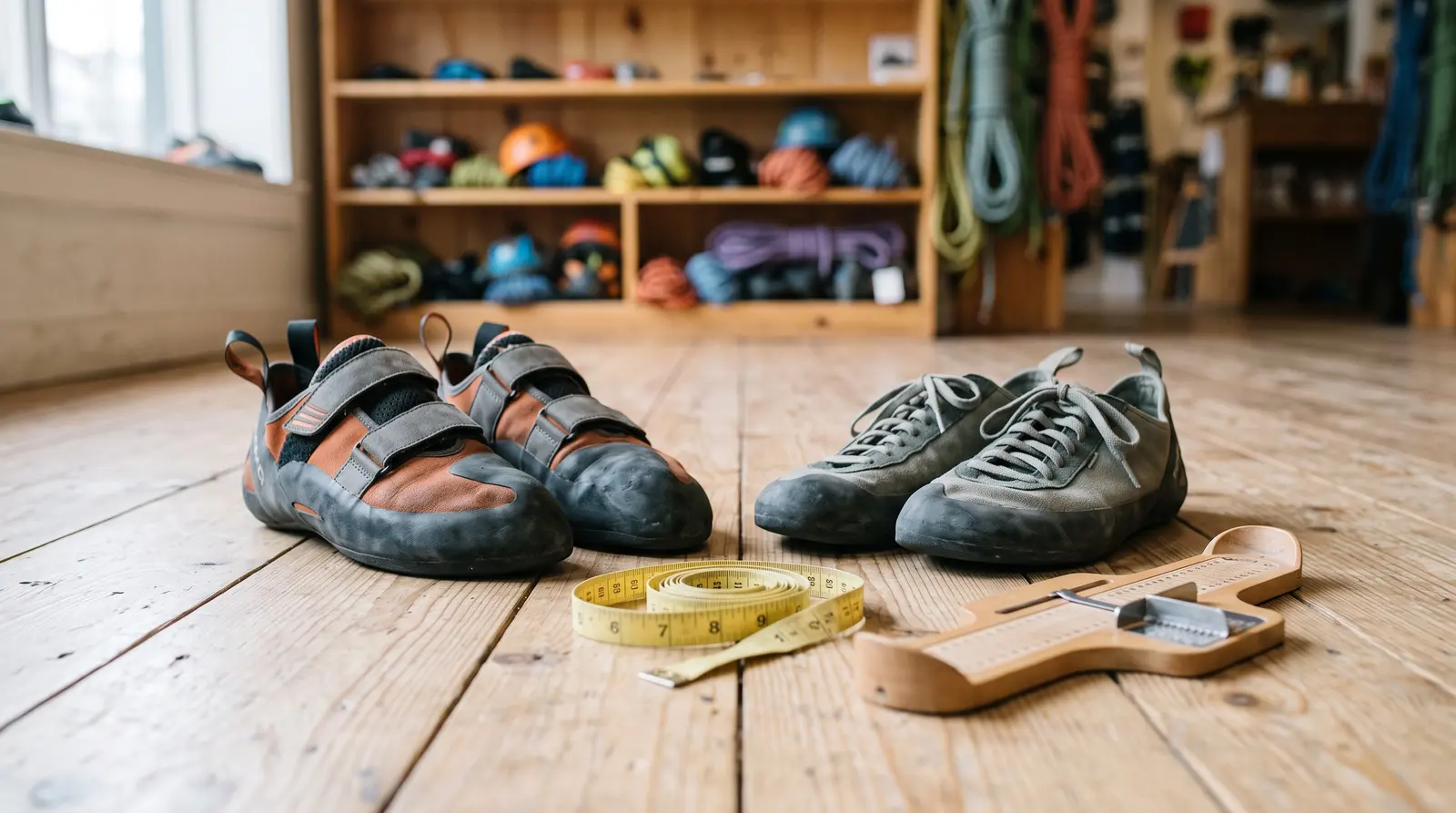
- Waist: measure around your body where the belt will sit, just above the top of your hip bones (usually the narrowest part between ribs and hips), not around your trouser waistband.
- Thighs: measure around the top of your thigh, just below the crotch, where the leg loops will sit.
- Rise (optional, useful for women): measure from where the leg loops sit, near the pubic bone, up to your natural waist. OutdoorGearLab found most women they measured had a rise of 7–8 in (18–20 cm) and about a quarter had around 6 in (15 cm).
- Measure over the clothing you'll climb in, and add a little if you climb outdoors in winter layers.
2. Match the numbers to the brand's chart
Every brand sizes differently, and the same letter size can fit differently between brands. Here are three official Petzl charts as an example of what to look for.
| Petzl model and size | Waist belt | Leg loops |
|---|---|---|
Corax size 1 | 65–96 cm (25.5–38 in) | 48–59 cm (19–23 in) |
Corax size 2 | 76–107 cm (30–42 in) | 54–67 cm (21–26.5 in) |
Selena XS / S | 65–71 / 71–77 cm (25.5–28 / 28–30 in) | 48–53 / 52–57 cm (19–21 / 20.5–22.5 in) |
Selena M / L | 77–84 / 84–92 cm (30–33 / 33–36 in) | 55–60 / 57–62 cm (21.5–23.5 / 22.5–24.5 in) |
Sitta M | 77–84 cm (30–33 in) | 52–57 cm (20.5–22.5 in) |
Notice the width of the ranges. The fully adjustable Corax covers about 31 cm of waist per size, while the Selena covers 6–8 cm. That's why adjustable harnesses come in two sizes and slim sport harnesses come in four to six. If your waist puts you in one size and your thighs in another, look for adjustable leg loops or a model with a different waist-to-leg ratio.
3. Check the fit when you try it on
- Waist belt: above the hip bones and snug. Try to pull it down over your hips: it shouldn't move. Treeline suggests tightening it if more than two fingers fit underneath.
- Adjustment left: choose a size where the buckle sits near the middle of its range, so you can loosen it for a jacket and tighten it for a T-shirt. Running out of strap means the size is wrong.
- Leg loops: snug at the top of the thigh with roughly a flat hand of room. Too tight cuts off circulation when you hang; too loose lets them slide toward your knees.
- Gear loops: centred on your hips. OutdoorGearLab notes that on a harness that's too small the gear loops sit off-centre and are hard to use.
- Belay loop: straight at the front, not twisted, with the tie-in points lined up over your navel.
4. Do a hang test before you buy
Most climbing shops have a rope or sling you can hang from. Put the harness on properly, clip in through the belay loop with the shop's help, and sit back with your feet off the ground. OutdoorGearLab suggests sitting in it for at least 10 minutes; Treeline's testers hung for five minutes in every model. While you hang, check:
- Do the leg loops dig into the back of your thighs or the waist belt into your lower back?
- Do you tip backwards (rise too short) or pitch forwards (rise too long)?
- Can you reach every gear loop with either hand, and lift your knee to your chest without the harness binding?
Buying online? Order your measured size, try it on at home on soft carpet with the tags on, and return it if it's wrong. Petzl and Black Diamond publish their charts on each product page.
Harness features explained
Fixed vs adjustable leg loops
Fixed leg loops (often elastic) are lighter, simpler and lower-profile, with no buckles to press into your thighs. You step into the harness and it's ready. The downside is that you can't change the fit for layers, and you can't put the harness on without stepping into it, which is awkward with crampons or skis. OutdoorGearLab notes that fixed loops vary: the Sitta's elastic stretches much more than most.
Adjustable leg loops have a buckle on each leg. They fit a wider range of bodies, work over winter clothing and are ideal if you share a harness or are between sizes. Some can be dropped or detached, so you can put the harness on while wearing skis or crampons. They weigh a little more and add buckles to check.
| Fixed leg loops | Adjustable leg loops | |
|---|---|---|
Best for | Sport and gym climbers with standard proportions | Beginners, trad, alpine, ice, shared harnesses |
Weight and bulk | Lower | Slightly higher |
Fit over layers | Limited | Good |
Sizing risk | High: try before you buy | Lower |
Examples here | BD Solution, Petzl Selena, Petzl Sitta | BD Momentum, Petzl Corax, Arc'teryx AR-395a |
Gear loops
Gear loops carry quickdraws, cams and your belay kit. They're not load-bearing: never clip into them for protection or an anchor. Four loops is standard. Stiff, moulded front loops make clipping easier on lead; softer rear loops are comfortable under a pack. Trad climbers benefit from a fifth rear loop. Treeline found the Corax's gear loops moved around, while it praised the Solution's stiff, easy-to-clip ones.
Belay loop and tie-in points
The belay loop connects the waist belt and leg loops at the front. You belay and abseil from it, so it's the most-used load-bearing part of the harness and has no backup. Black Diamond's quality-control lab describes the CE requirement as a belay loop that holds 15 kN for three minutes. Black Diamond's own production loops average over 5,000 lbf (about 22 kN). You tie the rope through both tie-in points (the reinforced loops on the waist belt and leg-loop bridge), following the same path as the belay loop. Some harnesses, like the Arc'teryx AR-395a, have coloured wear indicators on these parts.
Buckles
Most modern harnesses use pre-threaded "speed" or auto-locking buckles (Petzl calls them DOUBLEBACK). You don't need to thread them back yourself, but check every buckle before every climb: strap through, tail long enough, no twists. Older harnesses with buckles you must thread back by hand still turn up second-hand, which is one more reason not to buy one.
Haul loop and ice clipper slots
A haul loop at the back carries a second rope, a pack or approach shoes on multi-pitch routes. Many are not rated for body weight, so check the manual. Ice clipper slots are small sleeves that hold plastic carriers for ice screws, useful only for ice and alpine climbing.
Weight and padding
The harnesses here range from about 275 g to 520 g. On a gym night the difference doesn't matter; on a long alpine approach it does. More padding generally means more comfort when hanging and more warmth, but newer designs spread load with webbing structures instead of thick foam (Petzl's Sitta uses HMPE strands with no foam).
Men's vs women's harnesses
Women's models usually have a longer rise, larger leg loops relative to the waist and sometimes a more contoured belt. OutdoorGearLab's testers preferred women's harnesses mainly for the higher rise and wider legs, and found the rise differs by brand: Black Diamond, Mammut, Camp and Arc'teryx run longer, while Petzl, Mad Rock and Edelrid run shorter. A man with large thighs may fit a women's harness better, and a woman with a short rise may fit a unisex one. Ignore the label and fit your body.
The best climbing harnesses in 2026
Every model below is current on the manufacturer's website as of November 2026 and is UIAA- and CE-certified (for Arc'teryx, check the label and instructions; the product page doesn't list the certification). Black Diamond, Petzl and Arc'teryx also sell in Europe, but colours and stock vary.
Black Diamond Solution: best overall and best for sport climbing
GearJunkie names the Solution its best overall harness, calling it versatile, durable and good value. Treeline Review picks it as the best sport harness for its low weight, stiff, easy-to-clip gear loops and comfort when hanging. Black Diamond's page lists Contour Edge leg loops and waist belt (stiff in the middle, soft at the edges), four thermoformed gear loops with room for 15 quickdraws per side, a low-profile rear fifth loop, the seamless Infinity belay loop and weights from 316 g (XXS) to 440 g (XL). It costs around $100 in the US. The women's version has a women's-specific rise and comes in XXS–L.
- Best for: sport climbing, indoor lead and all-round rock climbing when you know your size.
- Main drawback: fixed leg loops. Treeline found they run large and rode up on one tester, and GearJunkie notes there are no ice clipper slots.
- Skip it if: your thighs are outside the size range for your waist, or you climb in winter layers.
Black Diamond Momentum: best budget harness
The Momentum is one of Black Diamond's best-selling all-rounders and costs around $75 in the US. It has trakFIT adjustable leg loops, a padded waist belt, four pressure-moulded gear loops, an adjustable rear elastic riser and a haul loop, and weighs 350 g in medium (sizes XS–XXL). GearJunkie names it the best budget harness and Treeline the best affordable one, praising the thick padding and sturdy gear loops. Black Diamond also sells it in a package with a belay device, carabiner and chalk bag, and there is a women's version.
- Best for: a first harness for gym and outdoor top roping, single-pitch sport and occasional trad.
- Main drawback: GearJunkie found the padding doesn't breathe well and the haul loop is small and not rated. Treeline found it bulky for experienced sport climbers.
- Skip it if: you already climb hard sport routes and want a slim, light harness.
Petzl Corax: best for beginners and shared harnesses
The Corax comes in just two sizes, but each covers a huge range: size 1 fits a 65–96 cm waist and size 2 a 76–107 cm waist. That's because it has two DOUBLEBACK waist buckles (which also let you centre the gear loops) and adjustable leg loops. Petzl lists two rigid front and two flexible rear gear loops, EN 12277 type C and UIAA certification, and weights of 470 g and 520 g. It costs around $80 in the US. Treeline calls it the most adjustable harness it tested and its best for beginners; GearJunkie also picks it for beginners and recommends it for bigger-framed climbers and people who want room for layers. Petzl also rates it for via ferrata.
- Best for: new climbers, people between sizes, larger bodies and harnesses shared between family members.
- Main drawback: heavy and bulky; Treeline also found the gear loops shift and the large buckles can pinch.
- Skip it if: you mainly sport climb and want low weight and a slim fit.
Arc'teryx AR-395a: best for trad and multi-pitch
Treeline Review rates the AR-395a its best trad harness and the most comfortable it tested, thanks to adjustable waist and leg loops and wear markers. Arc'teryx lists 405 g (14.3 oz), four gear loops, a rear haul loop, four ice clipper slots, adjustable leg loops and safety wear markers on the belay loop and tie-in points, and pitches it at sport, trad, alpine, mixed and ice climbing. It costs around $160 in the US. The women's version is the AR-385a.
A cheaper alternative from the same category is the Black Diamond Solution Guide (around $120 in the US, 443 g). The current version on Black Diamond's site has adjustable leg loops, a rear fifth gear loop and ice clipper slots. Some older retailer listings describe fixed leg loops, so check which version you're buying.
- Best for: trad and multi-pitch climbers who want one harness for all seasons.
- Main drawback: expensive. Treeline notes it has little padding even though testers found it comfortable.
- Skip it if: you only climb in the gym or on single-pitch sport routes.
Petzl Selena: best women's-specific harness
Petzl designed the Selena's waist belt shape, rise and waist-to-leg-loop ratio specifically for women. It has elasticated leg loops, tapered padding with smooth edges, four gear loops, EN 12277 type C and UIAA certification, and weights from 310 g (XS) to 365 g (L). It costs around $95 in the US. Treeline Review tested it with its men's twin, the Petzl Sama, and found both light, with good freedom of movement for sport climbing.
Rise is the deciding factor here. OutdoorGearLab found Petzl harnesses have a shorter rise than Black Diamond, Arc'teryx or Mammut. If your rise is around 6 in (15 cm) or less, the Selena is a strong match. If it's longer, try the women's Black Diamond Solution or Momentum first.
- Best for: women climbing gym and outdoor sport routes who want a light, slim harness.
- Main drawback: Treeline found the Selena and Sama slimmer and less comfortable when hanging than padded all-rounders.
- Skip it if: you have a long rise, need adjustable leg loops or spend hours at belays.
Petzl Sitta: best for alpine, ice and lightweight multi-pitch
OutdoorGearLab ranks the Sitta first of 14 harnesses and calls it the most versatile they have tested, for rock, alpine and mixed climbing. Petzl lists 275 g in medium, WIREFRAME construction (HMPE strands that spread load without foam), five gear loops including front loops with movable dividers, two CARITOOL slots for ice-screw carriers and EN 12277 type C and UIAA certification. It packs very small. It's also the most expensive here, at around $185 in the US.
- Best for: alpine routes, ice and mixed climbing, long approaches and experienced climbers who want one light harness.
- Main drawback: OutdoorGearLab found it less comfortable for long hanging belays. Its fixed leg loops also mean you can't put it on with both feet on the ground.
- Skip it if: you're a beginner or mainly climb in the gym; a padded harness costs less and feels better.
Harness safety: standards, inspection and retirement
Look for EN 12277 and UIAA 105
In Europe a climbing harness is personal protective equipment and must carry the CE mark with EN 12277; sit harnesses for adult climbing are type C. The UIAA's harness standard, UIAA 105, is based on EN 12277 and in some cases adds extra tests. EN 12277 itself sets static strength tests for the whole harness, limits how far buckles may slip under load, and requires stitching that contrasts with the webbing so damage is easy to see. Look for the EN 12277 and UIAA markings on the label. Avoid unbranded harnesses from marketplaces that don't show them.
Inspect it before every session
Black Diamond's QC lab recommends inspecting the harness before and after each use, paying special attention to the tie-in points and belay loop. Look for:
- cuts, holes or tears in the webbing;
- burnt, singed, glazed or melted areas (from rope friction or heat);
- torn threads, heavy fuzzing or abrasion, especially on the belay loop and tie-in points;
- worn bar tacks (the dense zig-zag stitching);
- cracked, corroded, bent or sharp-edged buckles;
- webbing faded by UV light;
- a wear indicator showing through, if your harness has one.
When to retire a harness
Black Diamond says that with normal use and proper care a harness lasts about three years, more or less depending on how often and how hard you use it. It should be retired after ten years even if it was stored properly and never used. Retire it immediately if you find any of the damage above, if it has held a severe fall even without visible damage, or if you have any doubt. Black Diamond's lab puts it simply: when in doubt, retire it. Also check for recalls. In March 2025 the US Consumer Product Safety Commission announced a recall of the Black Diamond Vision alpine harness because it could degrade over time.
Never buy a used harness
You can't see a harness's history: how old the webbing is, whether it held a big fall, sat in a hot car or got splashed with battery acid. Black Diamond lists heat, sunlight and corrosives among the things that shorten its life. Some of that damage is invisible. A new certified harness starts at around $75 in the US, so buy new from a shop or the brand.
Storage and care
Store your harness dry, out of sunlight and away from chemicals, heat and sharp objects. Don't leave it in a car boot or in a gear bag with a car battery or solvents. If it gets dirty or wet, follow the manufacturer's washing instructions and let it dry naturally, away from direct heat. Keep it in its own bag away from chalk bags and leaking liquid chalk.
Common mistakes when buying a harness
- Buying by letter size alone. A medium in one brand isn't a medium in another. Measure your waist and thighs and use the brand's own chart.
- Skipping the hang test. A harness that feels fine standing can pinch after two minutes on the rope.
- Buying an alpine harness for the gym. Ultralight harnesses trade comfort for weight. Beginners are better off with padding.
- Fixed leg loops when your proportions are unusual. If your thighs are large or small for your waist, choose adjustable legs or a different waist-to-leg ratio.
- Running out of adjustment. If the buckle is near the end of its strap with light clothing, the harness is too big or too small.
- Buying second-hand or unbranded gear. You can't check its history or certification.
- Clipping into a gear loop. Gear loops carry gear, not people.
- Keeping a harness too long. Write the purchase date on the bag or a note, inspect it regularly and retire it on time.
Our verdict
If you're new, get the Petzl Corax or Black Diamond Momentum and put the difference toward lessons and a good belay device. If you sport climb and know your size, the Black Diamond Solution is a top pick among independent testers (GearJunkie names it best overall). Trad climbers should look at the Arc'teryx AR-395a or the Black Diamond Solution Guide. Women should measure their rise and compare the Petzl Selena with the women's Solution. Alpinists should look at the Petzl Sitta. Whatever you choose, measure first, hang in it before you commit, and retire it on time.
Prices and stock change often; the button opens the retailer or brand page so you can check today's price.
FAQ
What is the best climbing harness for beginners?
A comfortable, adjustable all-rounder such as the Petzl Corax or Black Diamond Momentum. Both have adjustable leg loops and four gear loops and work in the gym and outdoors. GearJunkie names the Corax its best beginner harness and the Momentum its best budget pick. Fit matters more than the brand, so try it on and hang in it before you buy.
How should a climbing harness fit?
The waist belt should sit above your hip bones and stay there when you pull down on it, with room for a finger or two underneath. Leg loops should be snug at the upper thigh without pinching, with roughly a flat hand of space. Choose a size that leaves adjustment in both directions, and hang in it for several minutes before you decide.
Do women need a women's-specific harness?
Not always. Women's models usually have a longer rise and larger leg loops relative to the waist, which suits many women. OutdoorGearLab's testers preferred women's harnesses for that reason, but unisex or men's models fit women with a shorter rise. Measure your rise and try both.
How long does a climbing harness last?
Black Diamond says that with normal use and proper care a harness lasts about three years, and that one stored properly for ten years or more should be retired even if unused. Retire it sooner after a severe fall, if the webbing is cut, melted, faded or heavily worn, or if a wear indicator shows.
Sources
- Kai Burkhardt / Treeline Review, Best Climbing Harnesses (2025)
- GearJunkie, The Best Climbing Harnesses of 2026 (2026)
- GearJunkie, The Best Climbing Harnesses for Women (2026)
- Jane Jackson, Cam McKenzie Ring and Trish Matheny / OutdoorGearLab, How to Choose a Climbing Harness for Women (2025)
- Jeff Dobronyi / OutdoorGearLab, Petzl Sitta Review (2024)
- UIAA, UIAA 105 Harnesses standard, V4 (2018)
- Black Diamond, QC Lab: Worn Belay Loops and Retiring a Harness
- U.S. CPSC, Black Diamond Equipment Recalls BD Vision Climbing Harnesses (2025)
- Petzl, CORAX harness (manufacturer specs)
- Petzl, SELENA harness (manufacturer specs)
- Petzl, SITTA harness (manufacturer specs)
- Black Diamond, Men's Solution Harness (manufacturer specs)
- Black Diamond, Men's Momentum Harness (manufacturer specs)
- Arc'teryx, AR-395a Harness Men's (manufacturer specs)