Bouldering vs Rock Climbing: The Real Differences, and Which to Start With
 Petr Hess, strength & conditioning coach
Updated 2 Nov 2026 · 11 min read
Key takeaways
Best for: New climbers deciding between bouldering and roped climbing
- Bouldering is rope-free climbing on walls up to about 4.5 m (15 ft); roped climbing (top rope, lead, sport, trad) goes much higher and needs a harness, rope and belayer.
- Start with bouldering if you have no partner or want the cheapest start; start with top rope if you'd rather not fall onto mats.
- Bouldering mainly trains strength and power, roped climbing trains forearm endurance and pacing; boulderers tested 26–53% stronger and more explosive than lead climbers in one 2019 study.
- Learn to land before you boulder, and learn belaying from a qualified instructor and pass your gym's belay test before you belay anyone.
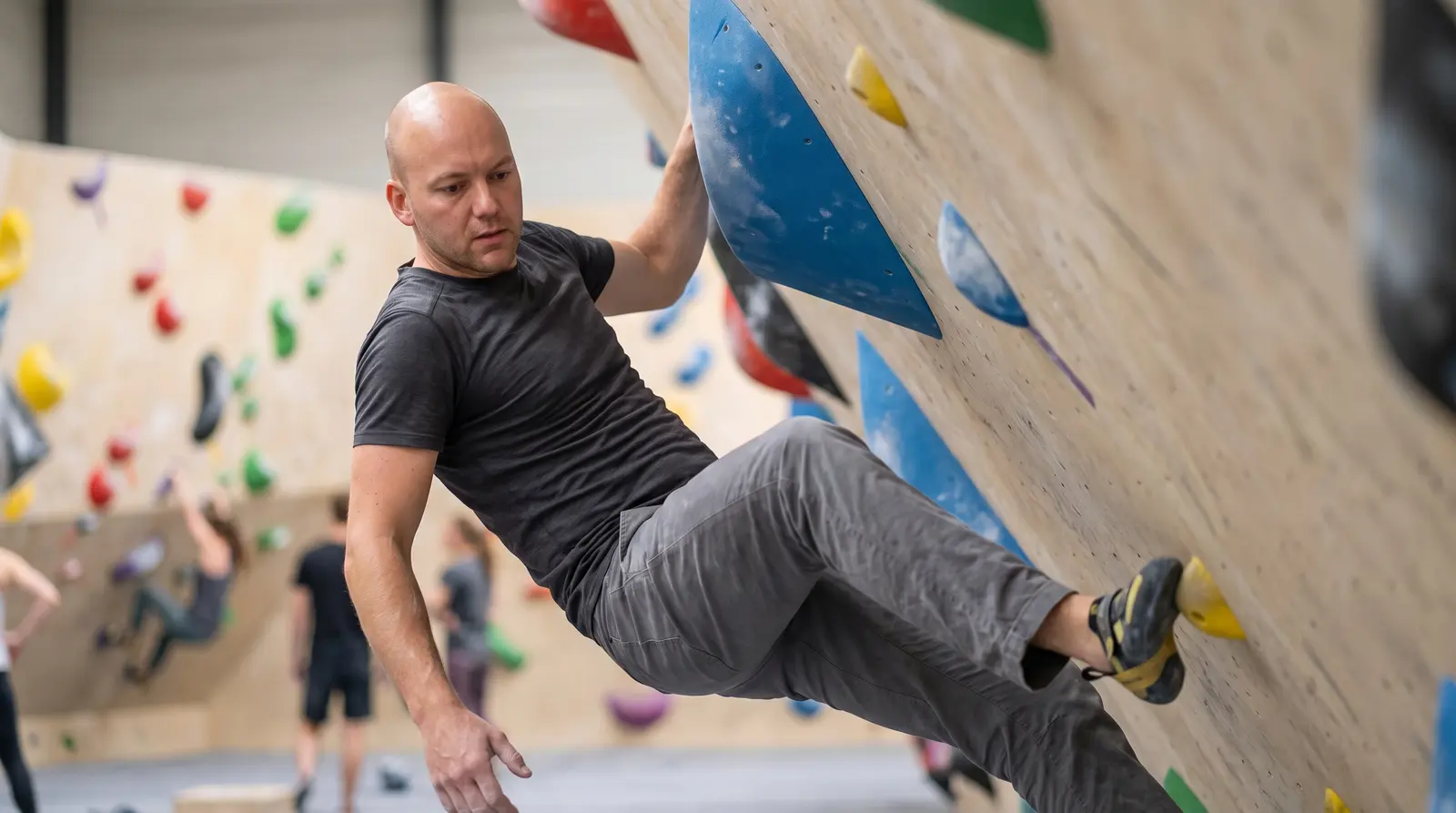
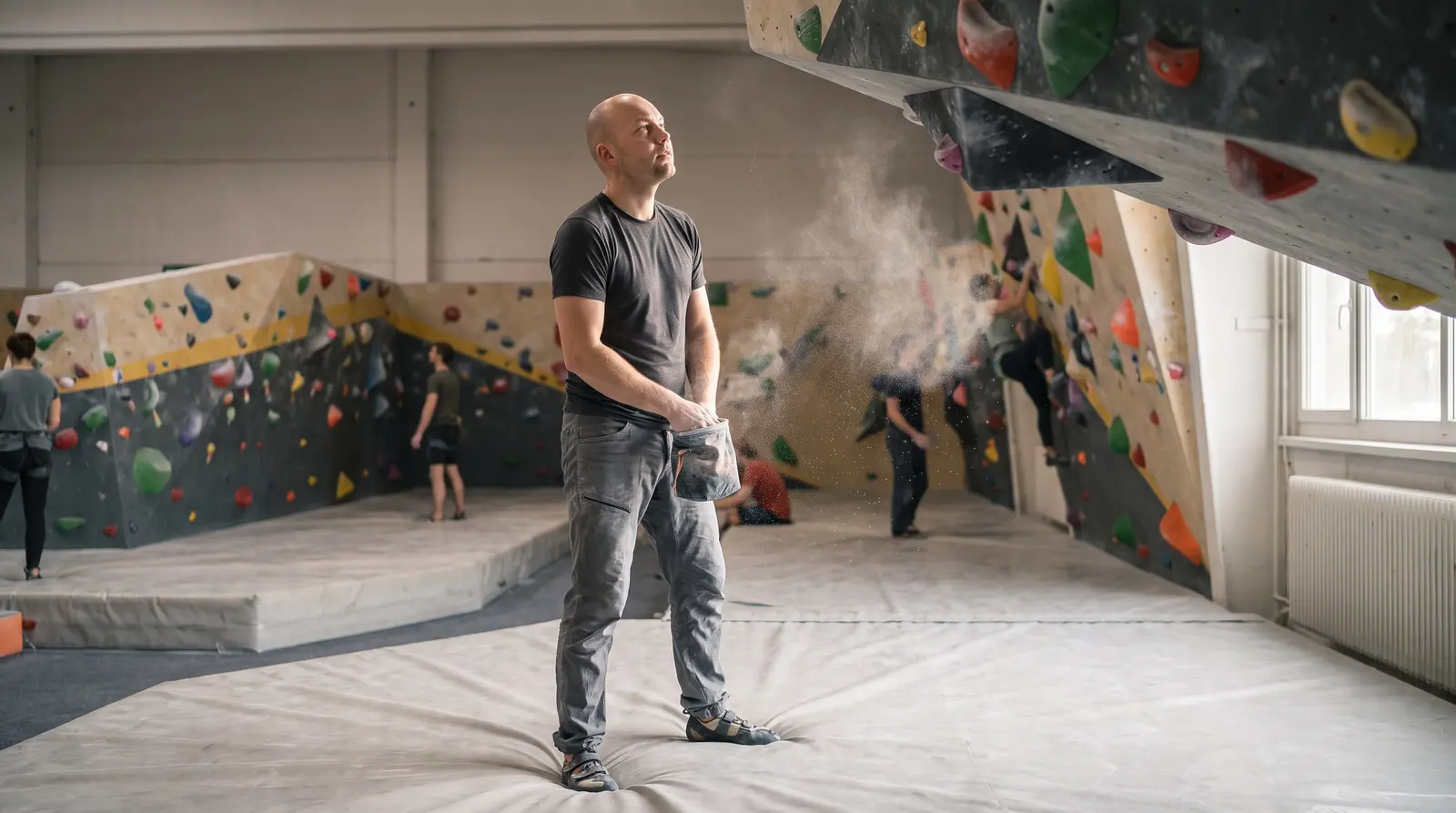
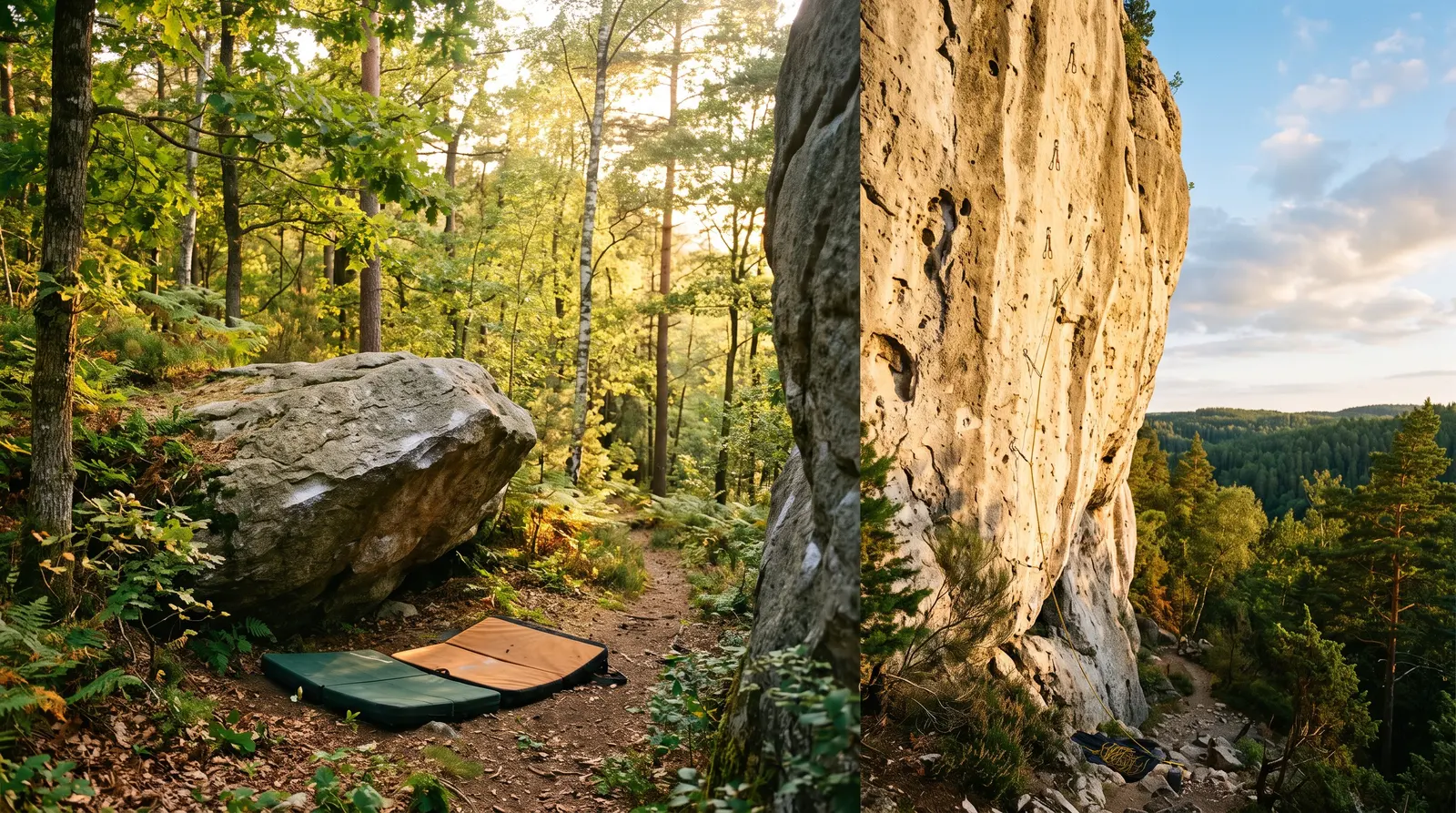
Bouldering is rock climbing without ropes: short walls or boulders, usually up to about 4.5 m (15 ft), with thick mats or crash pads underneath. "Rock climbing" in the everyday sense means roped climbing (top rope, lead, sport or trad) on walls many times higher, with a harness, a rope and a partner who belays you. Bouldering is quicker and cheaper to start and trains power; roped climbing takes more skill and gear to start and trains endurance and head game.
Both are great, and most climbers end up doing both. This guide puts every difference that matters side by side, then helps you decide where to start. I'm a strength and conditioning coach, not a climbing coach or instructor, so the fitness section looks at the two through an S&C lens, and the safety advice points you to qualified instructors for anything involving ropes. If you already know bouldering is for you, go straight to our guide on how to start bouldering.
The types of climbing in one minute
"Bouldering vs rock climbing" is really bouldering vs several roped styles. Quick definitions (our climbing terms glossary has more):
- Bouldering: no rope. Short "problems" of a few to a dozen-odd moves. You fall or jump onto mats (indoors) or crash pads (outdoors).
- Top rope: the rope already runs through an anchor at the top of the wall. Your belayer takes in slack as you climb, so a fall means dropping only a short distance before the rope holds you. The usual first roped style.
- Auto-belay: a gym device at the top of some walls that takes in the rope automatically, so you can top rope alone. A good taster, but always clip in and check the gym's rules.
- Lead: you climb with the rope tied to you from below and clip it into protection as you go. A fall drops you past your last clip, so falls are longer and both climber and belayer need extra skills.
- Sport climbing: lead climbing on routes with fixed bolts. What most people do on gym lead walls and at bolted crags.
- Trad climbing: lead climbing where you place removable protection (cams, nuts) in cracks yourself. The most gear-heavy and skill-heavy style.
Free solo (roped-style heights with no rope) is not a beginner style and isn't covered here.
Bouldering vs rope climbing: the big comparison table
| Bouldering | Top rope (gym) | Lead / sport | Trad | |
|---|---|---|---|---|
Height | Low: usually up to about 4.5 m (15 ft) | Full wall height, many times a boulder wall | Full wall or crag height; outdoors one or more rope lengths | Crag height, often multi-pitch |
Rope and partner | No rope; partner optional (spotters useful outdoors) | Rope; partner belays (or auto-belay) | Rope; trained lead belayer needed | Rope; experienced partner needed |
Gear to start | Shoes, chalk (rentable) | Shoes, harness, belay device + locking carabiner (rentable at most gyms) | As top rope; gyms usually have lead ropes and quickdraws in place, outdoors you add rope, quickdraws, helmet | All of the above plus a rack of cams, nuts, slings |
Cost to start | Lowest: entry + rental, then shoes | Low to mid: entry + rentals + a belay lesson | Mid: lead course; outdoors a rope and quickdraws | Highest: rack, rope, courses |
Skills checks at gyms | Usually just a safety intro | Belay test or course before belaying unsupervised | Separate lead test, usually after top-rope sign-off | Not a gym style; learn with an instructor outdoors |
Typical acute injuries | Falls onto the mat; lower limb, ankle sprains most common | Varied scenarios (belay and lowering errors among them) | Varied scenarios; longer falls, belay errors | Protection or anchor failure, long falls (outdoors) |
Main fitness demand | Strength and power, short maximal efforts | Forearm endurance, technique | Endurance plus power on cruxes, mental control | Endurance, efficiency, head game |
Social side | Group around the mats, sharing beta | Pairs (climber + belayer) | Pairs, high mutual trust | Pairs or small teams, long days |
Grades | V-scale (VB/V0 up) or Font (3, 4, 5, 6A...) | YDS (5.6, 5.10a...) or French (5, 6a, 6b+...) | YDS or French | YDS, French, or local systems (e.g. British E-grades) |
The injury row needs context. In a five-year prospective study of a large German gym with both bouldering and lead walls (515,337 visits), Schöffl and colleagues recorded only 30 acute injuries, about 0.02 per 1,000 hours of climbing: 6 while bouldering, 16 while lead climbing, 7 while top roping and 1 to a bystander. Bouldering injuries were mostly falls onto the mat, while roped injuries came from various scenarios. The study recorded total climbing time, not time per discipline, so these counts can't tell you which is "safer"; the main message is that indoor climbing carried a low acute-injury rate. A 2025 survey of 245 climbers injured in bouldering falls found 67% of injuries were to the lower limb, ankle sprains being the most common, and 85% of the falls were involuntary (Beurienne et al.).
Which is harder?
Neither, overall. The difficulty sits in different places:
- Bouldering concentrates difficulty into a few moves. One hard move can be at your physical limit, so it feels harder on strength, finger power and body tension. You'll also fall a lot, since trying moves you can't yet do is the whole game.
- Roped climbing spreads difficulty over dozens of moves. Each move is easier, but you have to keep going while your forearms fill with pump, find rests and manage fear of height. On lead, the mental side (clipping when tired, trusting falls) is often the real crux.
A strong boulderer who tries a long route will often get pumped well below their "level"; an experienced route climber often finds short powerful boulders surprisingly hard. That's specificity, not talent.
Which is a better workout? The S&C view
From a strength and conditioning perspective, the two styles sit at different points on the strength-endurance continuum.
Bouldering: strength and power
A boulder problem is a short, near-maximal effort followed by a long rest, much like a set of heavy lifts. A 2026 review of competition climbing physiology by Brewer, Fryer and Romana describes bouldering as repeated short maximal efforts relying mainly on anaerobic energy production. In practice, that means bouldering trains:
- finger and grip strength on small holds;
- pulling power and rate of force development (how fast you can produce force) for dynamic moves;
- body tension through the trunk, especially on overhangs;
- hip mobility and leg drive for high steps and heel hooks.
Roped climbing: endurance with power on top
The same review describes lead climbing as sustained intermittent work, mixing anaerobic efforts on hard sections with aerobic metabolism supporting the sustained effort. Long routes therefore train forearm endurance (resisting forearm pump), recovery on the move, pacing, and movement economy: climbing smoothly enough that you don't waste energy.
What the research comparing climbers shows
In a 2019 PLoS ONE study, Stien and colleagues compared 16 advanced recreational boulderers with 15 lead climbers. The boulderers were 26–53% stronger or more explosive across the climbing-specific tests, with the biggest gap in rate of force development, while finger-flexor endurance did not differ significantly between the groups. The authors suggest bouldering may be the better stimulus for maximal and explosive strength, and note that self-selection may explain part of the difference: stronger people may simply choose bouldering.
| Quality | Bouldering | Roped climbing |
|---|---|---|
Maximal finger and pulling strength | High stimulus | Moderate |
Power / rate of force development | High | Low to moderate |
Forearm endurance | Moderate (unless you do circuits) | High |
Aerobic conditioning | Low to moderate | Moderate |
Mobility and body tension | High | Moderate to high |
Mental skills | Problem solving, commitment to moves | Fear management, pacing, focus |
Neither replaces a full training programme. Both are pull-dominant, so a little antagonist training (pushing and shoulder work) and general weight training balance things out. If you want the muscle-by-muscle breakdown, see what muscles bouldering works.
Cost to start
Prices vary hugely by country and city, so here are tiers rather than numbers:
- Cheapest: gym bouldering. Day entry plus shoe and chalk rental. After a month or so of regular climbing, your own shoes and a chalk bag. Many gyms sell intro offers and multi-visit cards.
- Low to mid: gym top rope. Entry plus harness and shoe rental, and usually an intro or belay course (often the biggest single cost). Later you buy a harness, belay device and locking carabiner.
- Mid: lead and outdoor sport. A lead course, then a dynamic rope, quickdraws and a helmet for crags.
- Highest: trad. A full rack of cams and nuts plus slings and instruction.
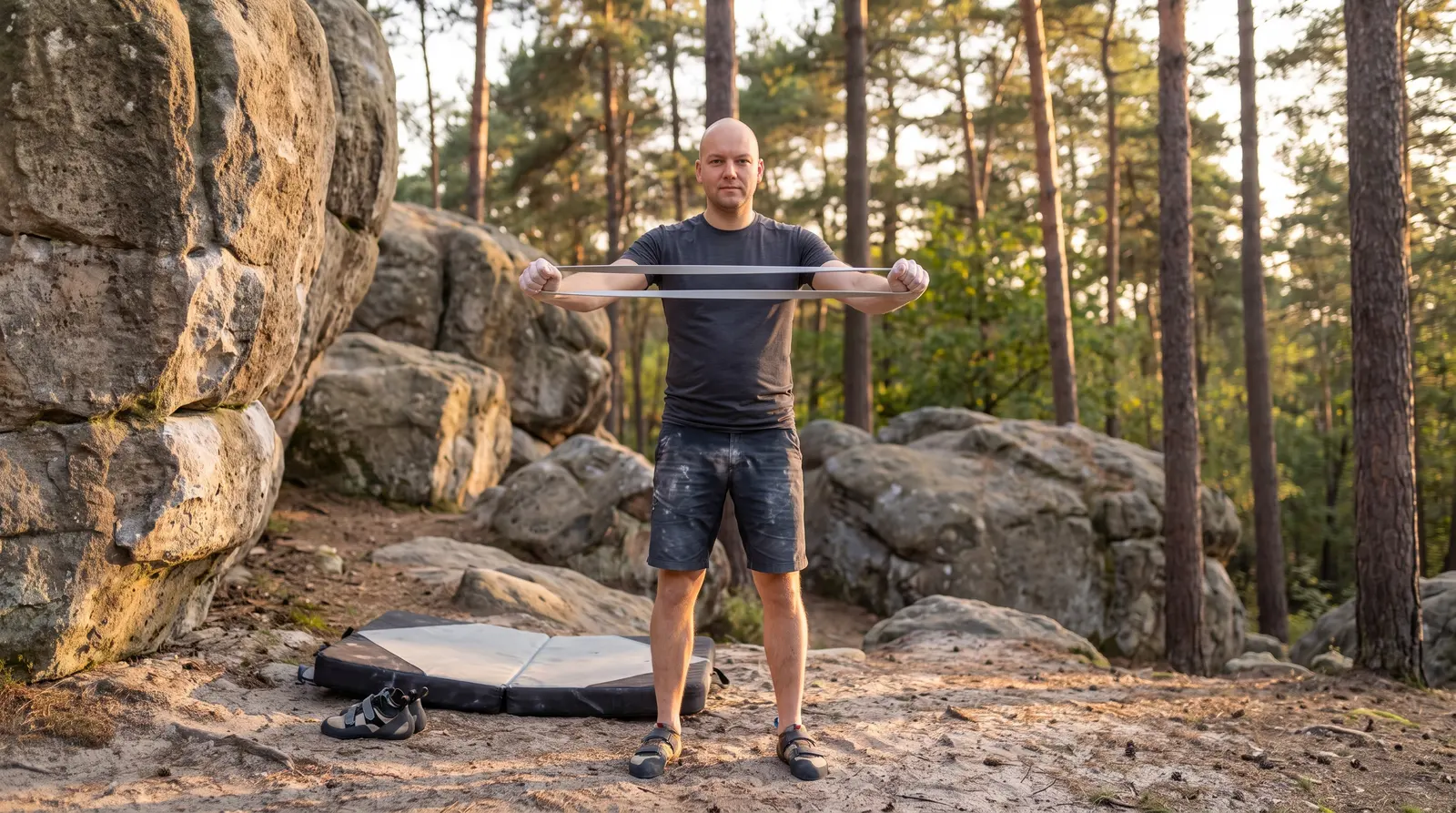
- Outdoor bouldering adds crash pads, which are a real expense; one or two is a common start (see how many crash pads you need).
For the full shopping list by stage, see climbing gear for beginners, and when you're ready for roped kit, our guides to the best climbing harness and best belay device.
Safety: what each style asks of you
Bouldering: falls and landings
In bouldering every fall ends on the ground, so the main risks are bad landings, landing on someone, and the occasional awkward fall from the top. The basics:
- Check the landing zone before you climb, and never stand under someone.
- Climb down when you can instead of jumping from the top.
- Land on both feet with knees bent, then roll back. Keep your arms in.
- Practise small controlled falls early; most bouldering falls are unplanned.
The full technique is in how to fall when bouldering. Outdoors, add crash pads, spotters and careful pad placement.
Roped climbing: belay skills and checks
On a rope, you rely on your knot, your harness, the gear and your belayer. Gyms take this seriously. At Sportrock in the US, for example, the top-rope belay test requires a correctly fitted harness, a retraced figure-eight knot with at least 6 inches (15 cm) of tail, the device loaded correctly, the brake hand kept on the brake strand, catching simulated falls and lowering the climber. Their lead test, which requires top-rope certification first, adds leading a route without clipping errors and catching an unannounced lead fall. Other gyms run their own versions; check yours.
Before every climb, climber and belayer check each other (often called a partner check):
- harness on correctly, buckles secured, nothing twisted;
- tie-in knot finished, through the correct tie-in points, tail long enough;
- belay device loaded correctly, carabiner through the right harness point and locked;
- a stopper knot in the end of the rope where needed (lead and outdoors);
- clear communication: agree on calls before leaving the ground.
Overuse injuries, mainly fingers, elbows and shoulders, happen in both styles. Build up volume gradually; our guide to climbing finger injuries covers warning signs.
Which should you start with?
Match the style to your situation:
| If you... | Start with | Why |
|---|---|---|
Have no climbing partner | Bouldering (or auto-belays) | No belayer needed |
Want the cheapest, quickest start | Bouldering | Rent shoes, listen to the intro, climb |
Have limited time (under 90 minutes) | Bouldering | No setup, lots of climbing per minute |
Dislike falling or jumping down | Top rope | The rope holds you; lowering is gentle |
Have knee or ankle issues | Top rope (ask your doctor or physio first) | Avoids repeated drops onto the mat |
Come from running, cycling or other endurance sport | Top rope, plus some bouldering | Longer efforts suit you; bouldering fills the strength gap |
Come from lifting or power sports | Bouldering, plus some top rope | Power transfers; routes teach pacing and footwork |
Dream of outdoor routes and mountains | Top rope course, then lead | Rope skills are the long-term bottleneck |
Are bringing kids | Either, under the gym's age rules | Many gyms set minimum ages for belaying |
For most adults with no partner, bouldering is the easiest first step. If you prefer height to falling, book a beginner top-rope session; many gyms combine both in one intro. In our beginner's guide to bouldering you'll find the first-session walkthrough.
How bouldering and roped climbing help each other
- Bouldering for route climbers: raises your maximum strength and power, so the hardest move on a route takes a smaller share of your capacity. It also improves movement on steep and technical terrain.
- Routes for boulderers: build forearm endurance and work capacity, teach efficient footwork and resting, and help you recover between hard problems in long sessions.
- Shared skills: footwork, reading sequences, body positioning and grip types transfer directly (see types of climbing holds).
A simple mixed week for a beginner: one bouldering session and one rope session, with a rest day between. Keep total climbing days within what your fingers recover from; how often should you climb explains how to judge that.
Common mistakes
- Comparing grades across disciplines. A Font 6A boulder and a 6a route are not the same.
- Treating bouldering as safe because it's low. Falls onto the mat are where most bouldering injuries happen; learn to land.
- Learning to belay from a video or a friend only. Take a course and pass the gym's test.
- Skipping the partner check once you feel experienced. It's quick; do it every time.
- Jumping straight to lead without solid top-rope belaying and climbing.
- Only bouldering at your limit. Mixing easier volume or routes builds the base your fingers need.
The short version: bouldering is low, rope-free, cheap to start and builds strength and power; roped climbing is high, needs a partner, a belay course and more gear, and builds endurance and mental control. Start with bouldering if you're alone or on a budget, with top rope if you'd rather not fall onto mats, and expect to enjoy both sooner or later.
FAQ
Is bouldering harder than rock climbing?
Neither is harder overall; they are hard in different ways. Bouldering packs the difficulty into a few powerful moves, so it feels harder on strength and finger power. Roped climbing spreads the difficulty over dozens of moves, so it feels harder on forearm endurance, pacing and nerves, especially on lead. The grade scales are separate, so a V-grade can't be compared directly with a 5.x or French route grade.
Is bouldering a type of rock climbing?
Yes. Bouldering is a form of rock climbing done without ropes on short walls or boulders, landing on mats or crash pads. When people say "rock climbing" in contrast to bouldering, they usually mean roped climbing: top rope, lead, sport or trad.
Which is better for beginners, bouldering or top rope?
Bouldering is the easiest to start because you need no partner and no belay skills: rent shoes, listen to the gym's intro and climb. Top rope is the gentler start if you dislike falling or jumping down, or want longer climbs, but you need a partner and a belay lesson or a gym's belay test first. Many gyms also have auto-belays, which let you try rope walls before you learn to belay.
Which is a better workout, bouldering or rope climbing?
They train different qualities. Bouldering is mainly short, near-maximal efforts that favour strength and power; roped climbing involves longer periods of continuous work that train forearm endurance and aerobic capacity more. In a 2019 study, boulderers were clearly stronger and more explosive than lead climbers, while forearm endurance was similar. For all-round fitness, doing some of both works well.
Sources
- Schöffl VR, Hoffmann G, Küpper T. Acute injury risk and severity in indoor climbing: a prospective analysis of 515,337 indoor climbing wall visits in 5 years. Wilderness Environ Med (2013)
- Beurienne E et al. The art of falling: identifying the falls scenarios associated with bouldering injuries. Front Sports Act Living (2025)
- Stien N et al. Comparison of climbing-specific strength and endurance between lead and boulder climbers. PLoS ONE (2019)
- Brewer J, Fryer SM, Romana V. Physiology of Performance in Competitive Lead, Boulder, and Speed Climbing. Research in Strength and Performance (2026)
- Sportrock Climbing Centers, Top rope and lead tests
- Mammut, Bouldering vs rock climbing: what you need to know