Climbing Gear for Beginners: The Complete Starter List
 Petr Hess, strength & conditioning coach
Updated 3 Nov 2026 · 13 min read
Key takeaways
Best for: New climbers deciding what to rent, what to buy first and what to skip
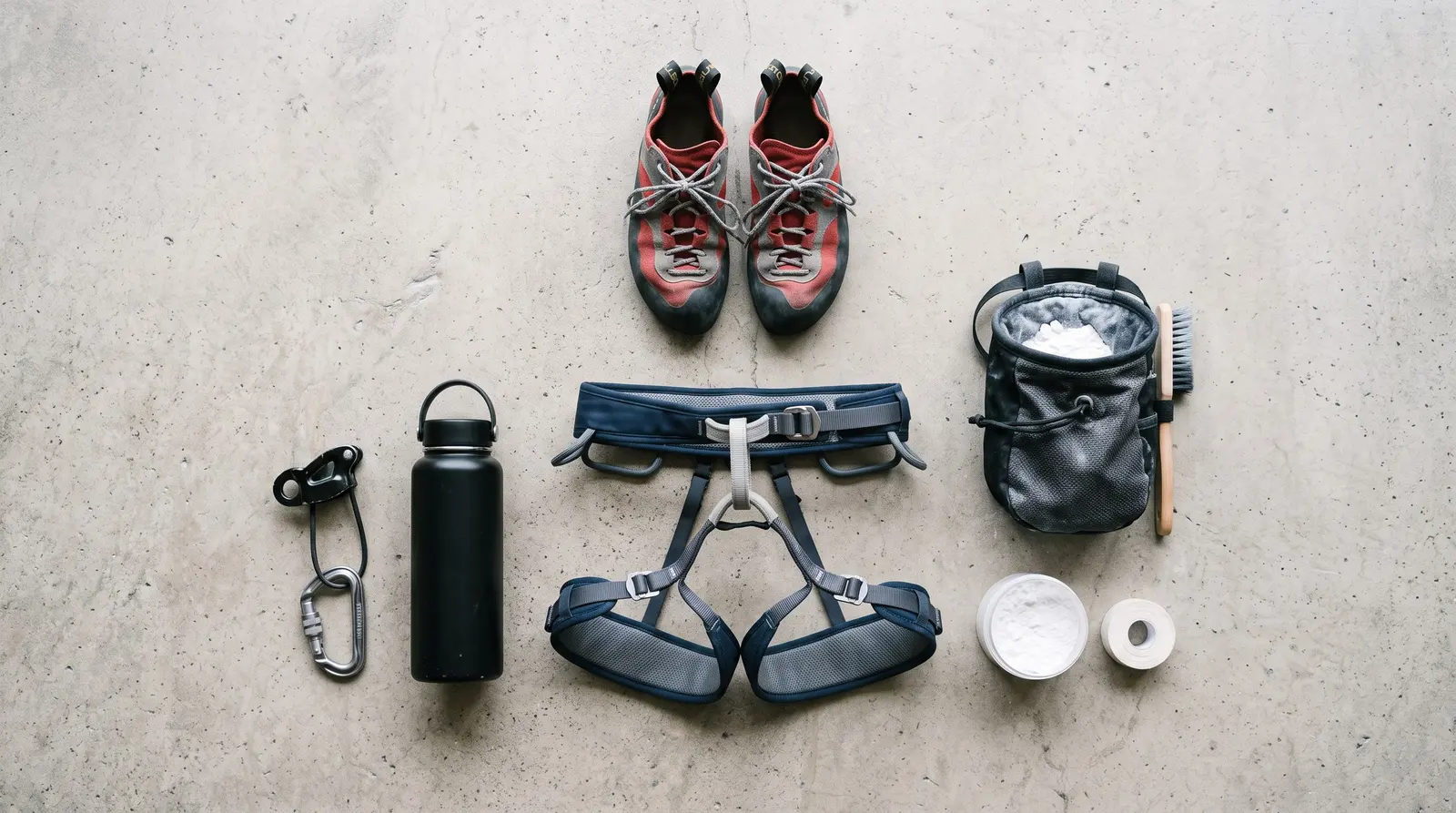
- Gym bouldering needs only shoes and chalk; roped climbing adds a harness, belay device and locking carabiner; outdoor sport adds a helmet, rope and quickdraws.
- Buy climbing shoes first, after a few rental sessions, and take a belay course before buying any rope gear.
- Never buy used harnesses, ropes, slings or helmets: the UIAA does not endorse second-hand climbing gear.
- Check for the CE mark or UIAA Safety Label, and learn belaying and outdoor rope skills from a qualified instructor.
Climbing gear for beginners depends on the style you start with. Gym bouldering needs only climbing shoes and chalk. Roped climbing in a gym adds a harness, a belay device and a locking carabiner. Your first outdoor sport day adds a helmet, a dynamic rope and quickdraws. Buy shoes first, rent the rest until you have done a proper course, and never buy used safety gear.
Most beginner gear lists are one long shopping list with no order and no context. This guide splits the gear into three starter kits, tells you what to rent and what to buy, explains every piece by name, and links to our detailed climbing gear guides for each item. We have not tested these products ourselves. The picks are built from manufacturer specs, independent tests such as OutdoorGearLab, and climber consensus.
Prices and stock change often; the button opens the retailer or brand page so you can check today's price.
What you need, by type of climbing
Start with the style you will actually do in the next few months. If you are not sure which one suits you, read bouldering vs rock climbing first. Most people start in a gym, where you can rent nearly everything.
| Item | Gym bouldering | Gym top-rope / lead | First outdoor sport |
|---|---|---|---|
Climbing shoes | Yes | Yes | Yes |
Chalk and chalk bag | Yes | Yes | Yes |
Harness | No | Yes | Yes |
Belay device + locking carabiner | No | Yes | Yes |
Dynamic rope | No | Lead only (top ropes are usually provided) | Yes |
Quickdraws | No | No (gym walls have them fixed) | Yes, enough for the route |
Helmet | No | Usually no (gym rules decide) | Yes |
Crash pad | No (the gym floor is padded) | No | Only for outdoor bouldering |
Our core picks at a glance
These are the core items most beginners end up buying. Each pick is a long-running model from an established brand, checked against the manufacturer's current product page.
| Item | Our research pick | Best for | Key specs (official) | Main drawback |
|---|---|---|---|---|
Shoes | La Sportiva Tarantulace | First pair, gym and easy outdoor routes | Laces, neutral last, 4 mm FriXion Black rubber, resoleable | Too flat for steep, technical climbing later on |
Harness | Black Diamond Momentum | Gym and sport climbing | Pre-threaded waist buckle, 4 gear loops, adjustable leg loops | Some climbers find it bulky |
Harness | Petzl Corax | Changing body shape, layers, shared use | Two waist buckles, adjustable leg loops, EN 12277 type C | Heavier than simpler harnesses |
Belay device | Petzl GRIGRI | Gym and sport belaying | Assisted braking, single ropes 8.5 to 11 mm, EN 15151-1 | Needs proper training; easy to misuse when feeding slack |
Belay device | Black Diamond ATC-XP | Learning on a budget, rappelling | Tube style, standard and high-friction modes | No assisted braking, no guide mode |
Locking carabiner | Petzl Attache | Pairing with any belay device | Pear shape, screw-lock, 21 kN major axis, about 58 g | Screw gate is slower than auto-locking gates |
Chalk bag | Black Diamond Mojo | Gym and crag | Cinch closure, webbing belt, about 75 g | No zip pocket on the basic version |
Helmet | Petzl Boreo | First outdoor climbs | ABS shell, EPP and EPS foam, 330 g (M/L) | Heavier and less adjustable than premium helmets |
Kit 1: gym bouldering
This is the cheapest way into climbing. Bouldering means climbing short walls without a rope, over thick padded flooring. Climbing House notes that gyms typically rent shoes and other basics with your entry, so you can try it before you spend anything. Our guide to how to start bouldering covers your first sessions.
| Item | What it does | Rent or buy first? | Our detailed guide |
|---|---|---|---|
Climbing shoes | Sticky rubber and a snug fit let you stand on small footholds | Rent for 2–4 sessions, then buy. This is your first purchase. | |
Chalk | Dries sweat so your hands grip better | Buy. Cheap, and gyms often sell it at the desk. | |
Chalk bag or bucket | Holds chalk; buckets stand on the floor, bags clip to your waist | Buy (a gym may rent or lend one) | |
Brush | Cleans chalk and grease off holds | Optional. Buy later. | |
Comfortable clothes | Lets you move freely without catching on holds | Use what you have |
Some gyms prefer liquid chalk or chalk balls to keep dust down, so check the house rules. If you are unsure which type to use, see liquid chalk vs regular chalk. Before you climb, learn how to fall safely. It matters more than any piece of gear.
Kit 2: gym top-rope and lead
Roped climbing adds belay gear, and with it a real safety responsibility. Most gyms require you to pass a belay check before you belay without staff supervision, and Climbing House notes that some gyms require an assisted-braking device such as a GRIGRI. Ask your gym before you buy a belay device.
| Item | What it does | Rent or buy first? | Our detailed guide |
|---|---|---|---|
Climbing shoes | Same as for bouldering. A comfortable fit matters more on longer routes. | Buy first | |
Harness | Connects you to the rope at your waist and thighs | Rent during your course, buy once you climb with a rope weekly | |
Belay device | Creates friction on the rope so the belayer can hold a fall and lower the climber | Rent or borrow during the course; buy the type your gym approves | |
Locking carabiner | Connects the belay device to your harness; the gate locks shut | Buy with the belay device | |
Rope | Dynamic (stretchy) rope that absorbs the force of a fall | Top-rope: gym provides it. Lead: some gyms ask you to bring your own. | |
Chalk and chalk bag | A bag on a belt is easier than a bucket on a wall | Buy |
Kit 3: your first outdoor sport climbing day
Sport climbing outdoors uses bolts drilled into the rock, which you clip with quickdraws as you lead. It is a big step up in responsibility: nobody checks your knots, the anchors vary, and you have to lower off or clean the route yourself. Climbing House strongly recommends going with a guide or an experienced climber, and notes that outdoor climbing adds techniques, such as cleaning and rappelling, that you need to learn first.
| Item | What it does | Rent or buy first? | Our detailed guide |
|---|---|---|---|
Helmet | Protects your head from falling rock, dropped gear and hitting the wall | Buy (some guides lend them) | |
Harness, belay device, locker | Same as in the gym | Buy (you should own these by now) | |
Dynamic single rope | Must be long enough to lower the climber back to the ground | Borrow from your partner or guide at first, buy later | |
Quickdraws | Two carabiners joined by a sewn sling; clip the bolts and the rope | Borrow at first. Climbing House notes a full rack is often 12. | |
Sling + extra lockers | Used to attach yourself to the anchor while you clean a route | Buy once you have learned the system from an instructor | See the glossary below |
Shoes and chalk bag | Same as indoors | Already owned | |
Backpack, water, first-aid kit | Approaches can be long, and help is further away | Use what you have | - |
Two simple outdoor rules: the rope must be more than twice as long as the route, with some to spare, because it goes up to the anchor and back down to the ground. And always tie a knot in the free end of the rope so it can't slip through the belay device. Common single-rope lengths are 60 m (about 200 ft) and 70 m (about 230 ft). Check your local guidebook for route lengths before you buy. Prefer bouldering outside? Read outdoor bouldering for beginners and our guide to the best crash pads.
Names of climbing gear: a quick glossary
If you are new, the gear names alone can be confusing. Here is each one in a line. For the moves and slang you'll hear in the gym, see our bouldering terms glossary.
- Climbing shoes: tight, flat-soled shoes with sticky rubber for standing on small holds.
- Chalk: magnesium carbonate powder (or liquid) that dries your hands.
- Chalk bag: a small pouch worn on a belt or harness that holds chalk while you climb.
- Chalk bucket: a larger, free-standing chalk bag for bouldering.
- Harness: a waist belt and two leg loops that connect you to the rope; the belay loop is its strongest point.
- Belay device: a metal device that creates friction on the rope so the belayer can catch falls and lower the climber.
- Tube device (ATC): a simple belay device with no moving parts; the belayer's brake hand does all the work.
- Assisted-braking device: a belay device that helps lock the rope in a fall, such as the Petzl GRIGRI. Not hands-free.
- Carabiner: a metal clip with a spring-loaded gate.
- Locking carabiner (locker, screwgate): a carabiner whose gate can be locked shut; used wherever a gate opening would be dangerous, such as on the belay device.
- Dynamic rope: a stretchy climbing rope that absorbs fall energy. Not the same as static rope, which barely stretches and is not made to catch lead falls.
- Quickdraw: two non-locking carabiners joined by a short sewn sling; one clips the bolt, the other clips the rope.
- Sling: a sewn loop of strong webbing used for anchors, extending protection or attaching yourself to an anchor.
- Personal anchor system (PAS): a sling or tether that clips you to an anchor while you clean a route.
- Bolt / hanger: the fixed metal anchor point drilled into the rock (or wall) that you clip.
- Anchor: the fixed point at the top of a route where the rope is clipped for lowering.
- Helmet: a climbing-certified helmet that protects against falling objects and impacts.
- Crash pad: a thick foam mat you carry outdoors to land on when bouldering.
- Stick clip: a pole that lets you clip the first bolt from the ground.
- Brush: a small stiff brush for cleaning holds.
- Finger tape: cotton tape for protecting skin and supporting fingers; see best climbing tape.
What to buy first, and in what order
- Climbing shoes, after a few rental sessions. Rental shoes are made to fit many feet and to last, not to fit yours, so your own pair is the biggest upgrade. Read our climbing shoe sizing guide before you order.
- Chalk and a chalk bag. Cheap, and you'll use them every session.
- A belay course, before any rope gear. The course tells you which belay device your gym allows, and you can rent a harness during it.
- Harness, belay device and locking carabiner, once you climb with a rope regularly. Buy them together so they match.
- Helmet, before your first outdoor climbing day.
- Rope and quickdraws, last. Climb outside with experienced partners or a guide first; you'll learn which rope length and how many draws your local crags need.
- Crash pad, only if you want to boulder outdoors. Our guide to how many crash pads you need helps with that decision.
The core picks in detail
Climbing shoes: La Sportiva Tarantulace
La Sportiva describes the Tarantulace as a multipurpose shoe for people new to climbing and for gym use. It has a neutral (flat) shape, laces for fine-tuning the fit, a 4 mm FriXion Black rubber sole, a 1.8 mm midsole and a suede upper, and it can be resoled. The thick rubber and flat last are what you want while your footwork is still developing. Shoe fit is personal, so compare several models; our beginner shoe guide has alternatives, including Velcro options and models for wide feet.
Best for: a first pair for the gym and easy outdoor routes. Main drawback: laces take longer to get on and off between boulder attempts. Skip it if you already climb steep, hard boulders: a downturned shoe will help more.
Harness: Black Diamond Momentum or Petzl Corax
The Black Diamond Momentum is one of the most common beginner harnesses. Black Diamond lists a pre-threaded Speed Adjust waist buckle, four gear loops and adjustable leg loops, in men's and women's versions. The Petzl Corax is a good choice if your size changes with the seasons or the harness will be shared: it has two adjustable buckles on the waist belt to keep the belay loop centred, plus adjustable leg loops, and is certified to EN 12277 type C. OutdoorGearLab lists the Corax among its top women's picks. For a budget alternative, OutdoorGearLab gave the Petzl Sama its Best Buy award. All the options are compared in our best climbing harness guide.
Best for: gym and single-pitch sport climbing. Main drawback: both are heavier than lightweight sport harnesses. Skip them if you plan long alpine days, where lighter harnesses make more sense.
Belay device: Petzl GRIGRI or Black Diamond ATC-XP
The Petzl GRIGRI is an assisted-braking device: its cam helps lock the rope when the climber falls. Petzl rates it for single ropes from 8.5 to 11 mm, optimised for 8.9 to 10.5 mm. OutdoorGearLab calls it the most popular active assisted-braking device, and it named the GRIGRI+ (which adds an anti-panic handle and a top-rope mode) its best pick for new climbers. OutdoorGearLab also flags the main risk: belayers can be tempted to hold the cam open to pay out slack quickly, which disables the braking assist.
A tube device such as the Black Diamond ATC-XP is simpler, lighter and much cheaper, and OutdoorGearLab says it can't be beaten on price. It has no assisted braking, so your brake hand does all the work. Some gyms teach beginners on a tube device for exactly that reason, and GearJunkie also suggests a tube-style device to start. Ask your gym which one it teaches. See our best belay device guide for the full comparison.
Important: no belay device is hands-free. Keep your brake hand on the rope at all times, and learn to belay from a qualified instructor before you belay anyone.
Locking carabiner: Petzl Attache
A belay carabiner should be pear-shaped (HMS), with a smooth, rounded top for the rope to run over. Petzl's Attache is exactly that: a screw-lock gate with a visual indicator that shows whether it's locked, a rounded basket, a keylock nose that doesn't snag, and ratings of 21 kN on the major axis, 7 kN on the minor axis and 6 kN gate open, at about 58 g. It is certified to EN 12275 type H. Buy it together with your belay device.
Best for: pairing with any belay device. Main drawback: you have to remember to screw the gate shut every time. Skip it if you want a carabiner that locks automatically.
Chalk bag: Black Diamond Mojo
The Mojo is a plain, durable chalk bag with a cinch closure and a webbing belt, weighing about 75 g. That's all a beginner needs. If you want a zip pocket for keys, Black Diamond also sells the Mojo Zip. More options, including buckets for bouldering, are in our best chalk bag guide.
Best for: gym and crag. Main drawback: a small opening compared with buckets. Skip it if you only boulder: a chalk bucket is easier to share and harder to spill.
Helmet: Petzl Boreo
The Boreo is a hard-wearing hybrid helmet: a thick ABS shell over EPP and EPS foam, a fully adjustable chinstrap, headlamp clips and two sizes (S/M 48–58 cm, about 19–23 in; M/L 53–61 cm, about 21–24 in). OutdoorGearLab describes it as durable, very protective and affordable, but heavier and less adjustable than some rivals. The Black Diamond Half Dome is a similar classic that OutdoorGearLab calls many climbers' first helmet. Whatever you choose, look for EN 12492 or UIAA 106 certification. Compare more models in our best climbing helmet guide.
Best for: first outdoor climbs and belaying at the crag. Main drawback: weight, at about 330 g. Skip it if you do long alpine routes, where a lighter foam helmet is worth the extra cost.
Buy new or used?
The rule is simple: soft goods and safety gear always new. The UIAA (the international climbing federation) says it does not endorse second-hand climbing gear because its integrity can't be guaranteed, and names harnesses, helmets and ropes as especially risky because damage can be hidden. A used rope may have caught huge falls, been stepped on with crampons or touched battery acid, and nothing on the outside will tell you.
| Item | Used OK? | Why |
|---|---|---|
Harness, rope, slings, quickdraws | No | Textiles degrade with age, UV, chemicals and loading; history unknown |
Helmet | No | Retire after any major impact, which you can't see on a used one |
Belay device, locking carabiners | No for beginners | Cheap new; drops and sharp wear grooves can damage the rope |
Climbing shoes | Yes, with care | Check the rubber and fit; resoled shoes can be good value |
Chalk bag, bucket, brush | Yes | Not safety gear |
Crash pad | Yes, with care | Check the foam for soft spots, and the straps and zips |
Even new gear doesn't last for ever. Glisshop's summary of manufacturer guidance gives a maximum of about 10 years for textile items such as harnesses, slings and helmets, counted from the date of manufacture and including storage time. Ropes may last up to 10 years with occasional personal use and in perfect condition, but much less if you climb a lot. Always follow the manual that comes with the product.
Budget: honest tiers
Prices change too often to quote reliably, and they differ a lot between the US, Europe and Japan, so here is the relative cost rather than invented numbers.
- Lowest cost: gym bouldering. Your own shoes plus chalk and a bag. Shoes are the only real spend. Rent everything else.
- Moderate: gym roped climbing. Add a harness, belay device and locker. Many brands sell these as a harness package, which is often cheaper than buying the three separately. Black Diamond and Petzl both offer harness kits.
- Bigger step: outdoor sport climbing. A rope and a set of quickdraws together cost more than everything else on this list combined. That's why it makes sense to climb with partners who own them before you buy your own.
- Outdoor bouldering: a crash pad is a significant purchase; sharing pads with friends works well at first.
Ways to save without cutting safety: buy last season's colours, look at budget lines from established brands (our guide to Decathlon climbing gear covers one option), and spend your money on shoes that fit rather than on premium extras. Don't buy unbranded "climbing" carabiners from marketplaces: the UIAA warns that unusually low prices on supposedly certified gear are a warning sign of counterfeits.
Safety: standards, inspection and instruction
The UIAA advises buying only equipment that carries the UIAA Safety Label and/or the CE mark, from well-known brands and reputable retailers. Here are the standards to look for:
| Item | EN standard | UIAA standard |
|---|---|---|
Dynamic rope | EN 892 | UIAA 101 |
Harness | EN 12277 | UIAA 105 |
Helmet | EN 12492 | UIAA 106 |
Carabiner | EN 12275 | UIAA 121 |
Belay device | EN 15151-1 (assisted braking) / EN 15151-2 (manual) | UIAA 129 (some models) |
Sling | EN 566 | UIAA 104 |
Inspect your gear before each session: look for fraying, cuts, glazed or stiff spots on the rope and harness, deep grooves or sharp edges on belay devices and carabiners, and cracks in a helmet shell. When in doubt, retire it.
Common beginner mistakes
- Buying aggressive shoes too early. Downturned, painfully tight shoes don't help on beginner routes. Start comfortable and flat.
- Buying rope gear before the course. Your gym may only allow certain belay devices. Learn first, then buy.
- Using a non-locking or non-climbing carabiner for belaying. Belay carabiners must lock and be rated for climbing (EN 12275 / UIAA 121).
- Treating an assisted-braking device as automatic. It still needs a brake hand on the rope at all times.
- Buying a used harness or rope "to save money". This is the one place not to save.
- Going outside without the know-how. Outdoor sport climbing adds anchors, lowering and cleaning. Learn them from an instructor first.
- Buying everything at once. Most people change their mind about style and fit in the first months. Buy as you go.
Once your kit is sorted, the next step is getting better at climbing itself. Our beginner bouldering guide, gym etiquette and climbing warm-up are good places to start, and the climbing grades explained page will help you read the route labels.
Prices and stock change often; the button opens the retailer or brand page so you can check today's price.
FAQ
What do you need to start climbing?
For gym bouldering you only need climbing shoes and chalk, and most gyms rent shoes. For roped climbing in a gym you add a harness, a belay device and a locking carabiner, and the gym usually provides the ropes for top-roping. Outdoors you add a helmet, a dynamic rope and quickdraws, and you should go with a qualified instructor or an experienced climber.
What climbing gear should a beginner buy first?
Climbing shoes, then chalk and a chalk bag. Shoes make the biggest difference to how climbing feels and rental pairs are rarely a good fit. Buy a harness, belay device and locking carabiner once you have done a belay course and climb with a rope at least weekly.
Can I buy used climbing gear?
Shoes, chalk bags, brushes and crash pads can be fine second-hand if you inspect them. Do not buy used harnesses, ropes, slings, helmets or belay gear: the UIAA does not endorse second-hand climbing gear because you cannot know how it was used, stored or loaded.
Do I need a helmet for indoor climbing?
Helmets are not standard in climbing gyms, and gym rules decide this. Outdoors, a helmet certified to EN 12492 or UIAA 106 is strongly recommended for climbers and belayers, because rock and dropped gear can fall from above.
Sources
- UIAA Safety Commission, Ten things to consider when buying climbing gear (2026)
- Glisshop, Standards and lifespan of climbing and mountaineering equipment
- Climbing House, How to Start Rock Climbing: The Ultimate Beginner's Guide (2024)
- Climbing House, Sport Climbing: The Ultimate Gear List (2026)
- OutdoorGearLab, The Best Belay Devices (2025)
- OutdoorGearLab, The Best Climbing Helmets (2025)
- OutdoorGearLab, The Best Climbing Harnesses (2025)
- GearJunkie, Beginner Rock Climbing Gear: The 5 Essentials