Decathlon Climbing Gear: Is Simond Good Value? Buyer's Guide
 Petr Hess, strength & conditioning coach
Updated 2 Nov 2026 · 12 min read
Key takeaways
Best for: Climbers deciding whether Decathlon's Simond gear is good enough
- Simond's Klimb V2 shoe has a 4 mm Vibram XS Grip sole and can be resoled, so it's the best-value Simond shoe for weekly beginners.
- Simond harnesses and helmets list the same EN standards as branded gear (EN 12277, EN 12492); the Klimb harness also carries UIAA 105.
- Pay more for a belay device your gym teaches on, such as the Petzl GRIGRI, and for performance shoes once fit and shape limit you.
- Simond is easy to buy in Europe and Canada, but decathlon.com in the US showed no Simond climbing shoes, harnesses or helmets in November 2026.
Yes, Simond climbing gear is good, and some of it is excellent value. Simond is Decathlon's climbing brand. Its beginner shoes, chalk, chalk bags, entry-level harnesses, helmets and kids' gear cost less than branded equivalents and are certified to the same European safety standards. Branded gear is worth more in two areas: performance shoes, where the big brands offer far more shapes and independent test data, and belay devices, where an assisted-braking device like the Petzl GRIGRI is easier to learn on and only slightly more expensive.
This guide covers the current 2026 Simond range, not the Rock and Rock+ shoes that older reviews still describe. Product names change between countries ("Kletterschuhe Decathlon", "pies de gato Decathlon" and "scarpette arrampicata Decathlon" all lead to the same Simond line). We haven't tested Simond gear. Everything below comes from Simond's and Decathlon's product pages, published independent reviews and climber discussion on UKClimbing. You'll find our other guides in the gear section, and our affiliate disclosure explains how links work. Our Simond links go to simond.com and are not affiliate links.
Prices and stock change often; the button opens the retailer or brand page so you can check today's price.
The short verdict: Simond item by item
Use this table to decide quickly. Simond specs come from simond.com and Decathlon product pages; prices and names can differ between countries.
| Simond item | What it's good for | When to pay more | Branded alternative |
|---|---|---|---|
Klimb V2 shoe (Vibram XS Grip, flat, two straps) | First pair for the gym and easy rock; resoleable | Hard steep bouldering, or your foot doesn't fit the Simond last | La Sportiva Tarantulace, see beginner shoes |
First Klimb shoe (resin rubber, one strap) | Occasional climbers and tight budgets | You climb every week: the Klimb's Vibram sole is the better buy | Simond Klimb or a branded beginner shoe |
Vertika / Vertika Soft / Edge Soft | Second pair for grade 6 gym routes and bouldering | Steep projects, very narrow or wide feet, or you want proven test results | Scarpa Veloce, see bouldering shoes |
Kids First Klimb shoe and Spider Kid harness | Growing feet and young children | Rarely; kids outgrow gear fast | Little need to switch |
Klimb harness (EN 12277, UIAA 105) | Gym, single-pitch sport, via ferrata | Long multi-pitch days or light alpine use | Black Diamond Momentum, see best climbing harness |
First Klimb harness (single tie-in point) | Gym and club sessions only | You start leading or climbing outside | Simond Klimb or a branded all-round harness |
Rock and Edge helmets (EN 12492) | Cragging and via ferrata on a budget | You want side and rear protection or a lighter helmet | Petzl Boreo, see best climbing helmet |
Crunch chalk and Vertika chalk bags | Everyone: chalk is chalk, bags are simple | You want a specific texture or brand | See best climbing chalk and best chalk bag |
Tubik ABS belay device | Belayers who already know how to use brake-assist tubes | Learning to belay, or your gym teaches on a GRIGRI | Petzl GRIGRI, see best belay device |
Block V2 and Bigblocker crash pads | A starter or second pad bought in a store | Highballs and rocky landings | Metolius Session II, see best crash pads |
What Simond is (and why it's cheaper)
Simond started in Chamonix and has made mountain gear since the 19th century; its website still promotes a factory and design center there. Decathlon has owned the brand since 2008, a point UKClimbing members also make in a long-running thread about the brand. Today, Decathlon stores and websites sell Simond gear and handle its returns, warranty and repairs.
Decathlon designs its own brands and sells them in its own stores, which helps keep prices low. Outside's 2019 test of Simond's gym kit made a useful observation that still holds: the savings are biggest on shoes, harnesses and soft goods, while Simond's hardware (belay devices, carabiners) costs only slightly less than the big brands. That's the first clue about where Simond makes the most sense.
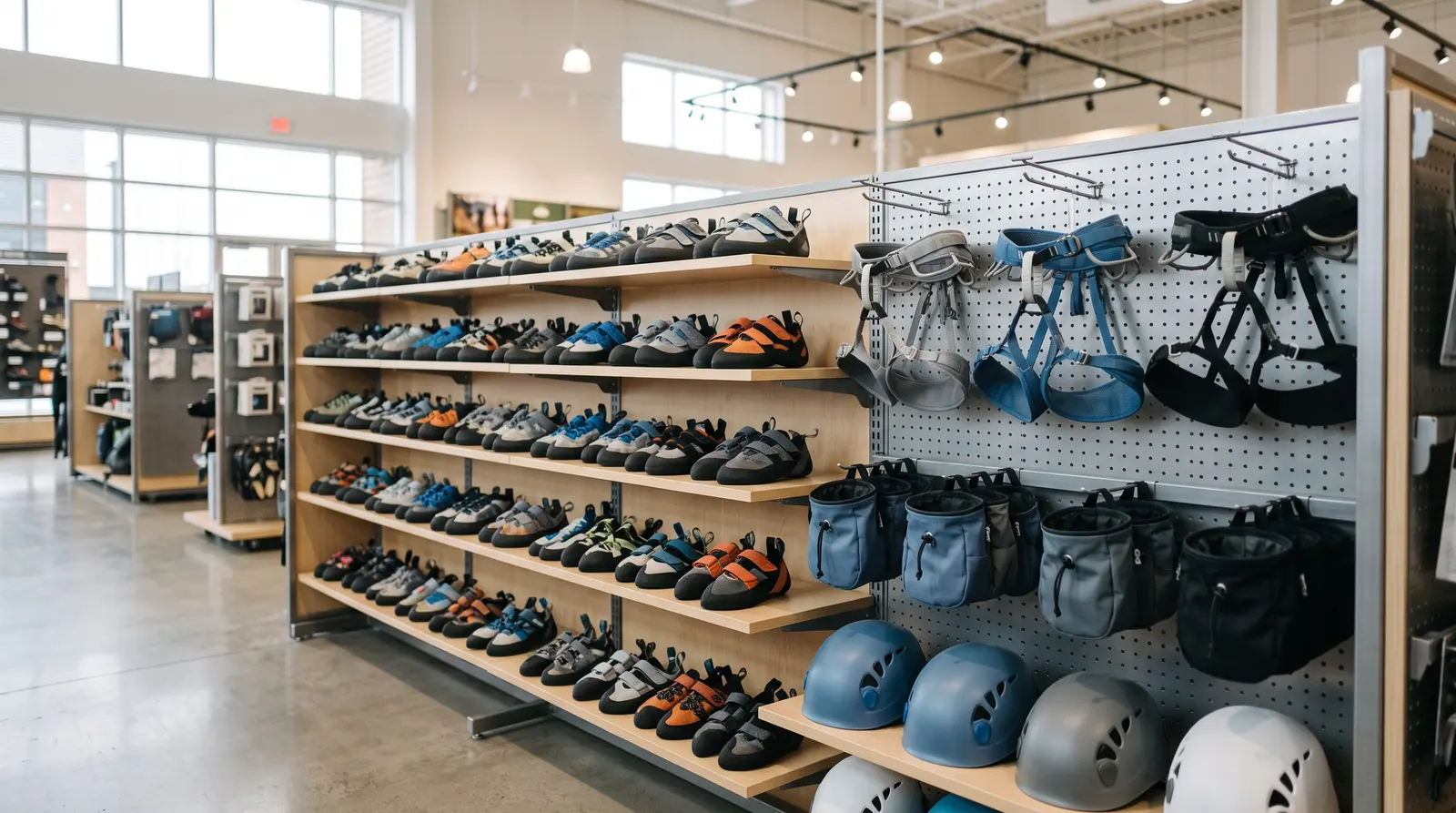
Simond climbing shoes: the current range
Most competing pages still review the Simond Rock+ or the lace-up Rock. Those are older models. In November 2026, simond.com lists these climbing shoes:
| Model | Level (per Simond) | Rubber and sole | Shape and closure | Sizing advice from Simond |
|---|---|---|---|---|
First Klimb | Beginner, occasional climbing | Resin rubber, rigid sole | Straight, flat; one Z-shaped strap | See size guide; comfort first |
Klimb V2 | Beginner to all levels | 4 mm Vibram XS Grip, medium stiffness; wear indicator, resoleable | Flat, low downturn; two opposing straps; 478 g (17 oz) in EU 41 | Beginners: street size, toes touching the end |
Vertika V2 | Indoor routes from grade 6 | 4 mm Vibram XS Grip, full-length insert | Slightly asymmetric, pointed toe; two straps; narrower than Vertika Soft | Half to one size down, without pain |
Vertika Soft V2 | Bouldering, volumes | 4 mm Vibram XS Grip, softer build; toe and heel rubber for hooks | Slightly asymmetric and arched; slipper-style upper with strap | Half to one size down, without pain |
Edge Soft | Advanced, inspired by Simond's athlete shoe | 4 mm Vibram XS Grip, thin midsole, stiffened edges | Asymmetric, arched, pointed; wide Velcro | Advanced: try 1 to 2 sizes down |
Kids First Klimb | Children | Resin rubber, moderately stiff | Elasticated heel adapts to growing feet; wide strap | Same size as the child's normal shoe |
Simond Klimb: the best Simond buy for most beginners
The Klimb V2 is the shoe we'd look at first. Simond specifies a 4 mm Vibram XS Grip sole, a flat shape with low downturn, padded heel and tongue, and two opposing straps. Two details matter more than the price. First, XS Grip is the same Vibram rubber family used on many branded shoes. Second, Simond builds in a wear indicator in the lining and says the shoe can be resoled, which few budget shoes offer. On Decathlon Canada, the Klimb V2 shows a 4.6 out of 5 rating from more than 1,300 customer reviews, which is a large sample for a climbing shoe, even if store ratings are not independent tests.
Best for: new gym climbers who will climb weekly and want one comfortable shoe. Main drawback: the flat, padded build won't help much on steep terrain or tiny edges once you push past beginner grades. Skip it if the Simond last doesn't suit your foot; a better-fitting branded shoe beats a cheaper one that hurts. Our climbing shoe sizing guide explains how tight a first shoe should be.
Simond First Klimb: fine for occasional climbing
The First Klimb is cheaper again. Simond describes it for beginners who climb occasionally, with a flat shape, one strap and a resin rubber outsole rather than Vibram. That's the key trade-off: you save money on the rubber. If you climb once or twice a month, it's a sensible step up from rental shoes. If you already know you'll climb every week, the Klimb's Vibram sole and resoleable build make it the better long-term buy.
Vertika, Vertika Soft and Edge Soft: good second shoes, with limits
Simond's intermediate and advanced shoes also use 4 mm Vibram XS Grip. The Vertika targets indoor routes from about grade 6 and small holds; the Vertika Soft is softer and aimed at bouldering and volumes; the Edge Soft is Simond's most technical model and is inspired by the shoe it built for its sponsored athletes. Simond says both Vertika models were reshaped in their second version with a slightly wider forefoot and more room over the toes after customer feedback.
Independent evidence here is thin. Outside's 2019 tester found the older Simond shoes started to hold her back around V4 to V5 on awkward heel hooks. On UKClimbing in 2024, one climber climbing around 6b/6c wrote that he liked Decathlon's "Expert" Velcro shoes, found them durable and comfortable on long routes, and rated them a little behind his Scarpa Vapour Lace on small edges. Another climber in the same thread replaced his first Decathlon pair with La Sportiva Barracudas after a few months. That's the honest summary: the intermediate Simond shoes work for many climbers, but you get far fewer shapes, sizes and published tests than you do from La Sportiva, Scarpa or Evolv. When you're choosing a performance shoe, fit and shape matter more than price, so a wider choice is worth paying for. Our best bouldering shoes guide compares the branded options by terrain.
Kids' climbing shoes: Simond's strongest category
Children's feet grow quickly, so expensive kids' shoes rarely make sense. Simond's Kids First Klimb has an elasticated heel designed to adapt as feet grow and a wide strap that's easy to close. Simond advises buying the child's normal shoe size and not buying tight, so feet can develop strength and mobility. On Decathlon Canada it shows 4.7 out of 5 from about 160 reviews. For most families, this is the obvious choice.
Harnesses: same standard, simpler features
This is where Simond's value is strongest. The Klimb harness has four buckles, four gear loops and 6 mm EVA foam padding, and weighs 420 g (14.8 oz) in S/M. Simond's product page states that it is CE certified to EN 12277+A1 2018 and UIAA 105 certified. EN 12277 is the European standard for climbing harnesses, and UIAA 105 is the UIAA's harness standard. Outside's tester recommended the earlier version of this harness over Simond's cheapest model because of its two tie-in points and four gear loops, and found nothing that dug in while hanging in it.
The First Klimb harness is a different design: a single tie-in point, one buckle on the waist and leg loops, and sizing from XS to XL. Simond itself recommends it mainly for indoor climbing and top-roping, because a single tie-in point gets crowded with rope and belay gear on longer routes and abseils. It's a good club or gym harness and a poor choice if you plan to climb outside.
Klimb harness best for: gym climbing, single-pitch sport climbing and via ferrata. Main drawback: heavier and less refined than premium harnesses, and only two sizes (S–M and L–XXL), so check the fit. Skip it if you climb long multi-pitch routes, where a lighter, more padded harness pays off. See our best climbing harness guide for branded options.
For young children, Simond's Spider Kid full-body harness is designed for ages 4 to 9 and children under 30 kg (66 lb), must be adjusted by an adult, and is certified to EN 12277+A1 2018.
Helmets: certified, but read the specs
Simond sells two main climbing helmets. The Rock has an ABS shell and polystyrene foam, weighs 350 g (12.3 oz) in size M and has four headlamp clips. The Edge uses in-mold construction (EPS foam under a polycarbonate shell) and weighs 270 to 295 g (9.5 to 10.4 oz). Both product pages state CE certification to EN 12492:2012, the European standard for mountaineering helmets. Decathlon Canada shows 4.8 out of 5 from more than 1,200 reviews for the Rock.
Compare that with the Petzl Boreo, which Petzl lists as CE EN 12492, UKCA and UIAA certified, with an ABS shell, EPP and EPS foam, and extended side and rear protection. Both brands meet the same EN impact standard. The Simond pages we read don't mention UIAA 106 certification, which is the UIAA's own helmet standard. The UIAA says it sometimes asks for extra tests, making its standard stricter than the CEN version. If you want that extra label or more side protection, the branded helmet is worth paying for. If you want a certified helmet for cragging or via ferrata, the Rock is hard to beat on value. Our best climbing helmet guide covers shell types in detail.
Chalk and chalk bags: buy Simond and save
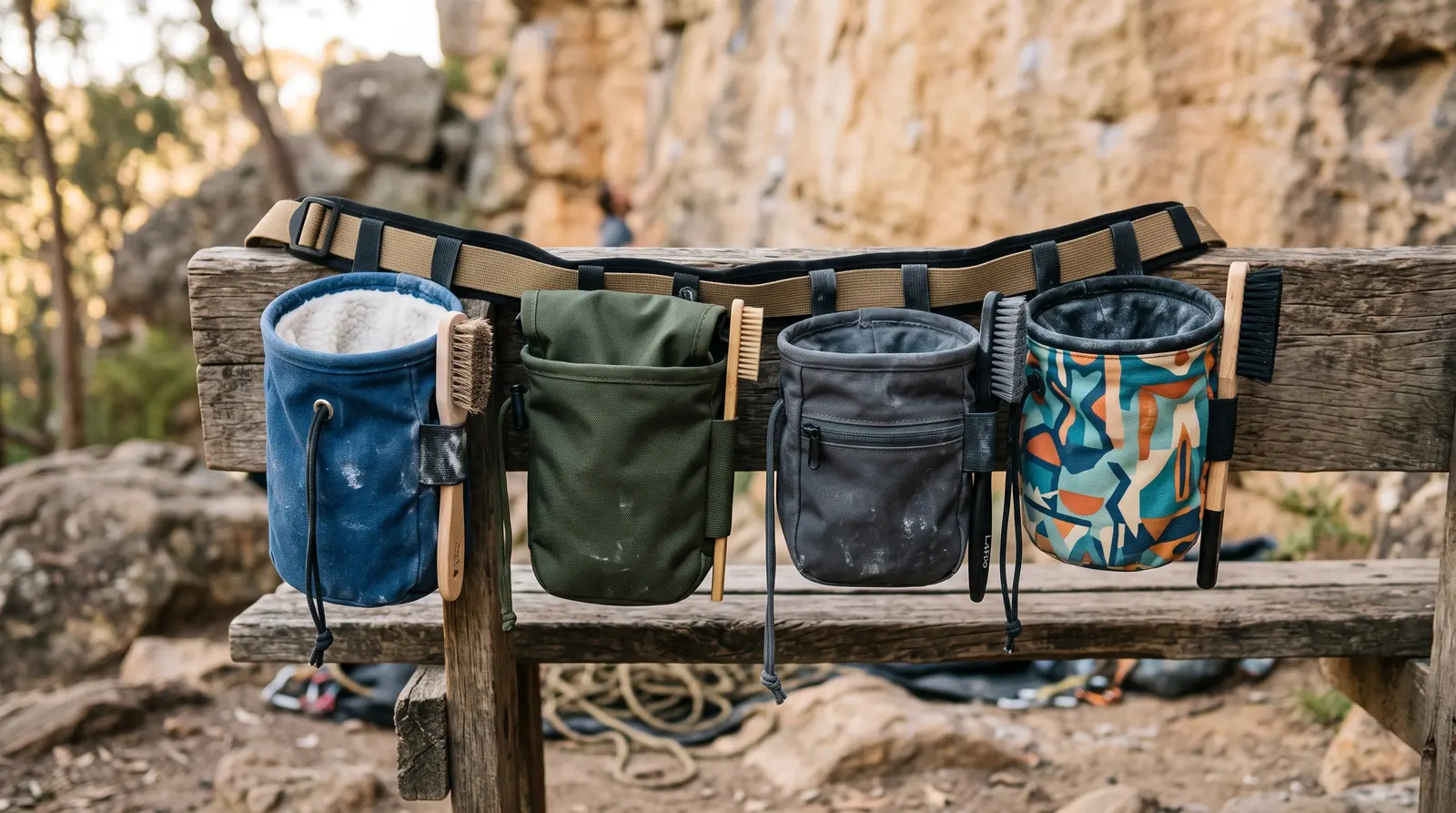
Chalk is mostly magnesium carbonate, and brand matters far less than texture and how much you spill. Simond's Crunch Chalk is listed as 99.7% magnesium carbonate and 0.3% calcium carbonate, comes in a resealable 200 g bag, and is sourced from French quarries. The Vertika chalk bag has a drawstring closure, a brush loop, a fleece lining and an adjustable belt; Decathlon Canada shows 4.8 out of 5 from more than 370 reviews. For bouldering, Simond's Bigblocker Stopchalk bucket adds a double membrane to cut chalk dust and a full-length zip for refilling.
Outside's tester called Simond's older Diamond chalk bag a good deal and liked its stiff rim and one-handed drawstring. There's little reason to pay more here unless you prefer a specific chalk texture. Our guides to the best climbing chalk and the best chalk bag explain when premium chalk makes a difference.
Where branded gear is worth more
Belay devices: get what your gym teaches
Simond's Tubik ABS is a brake-assist tube for belaying only (Simond doesn't recommend it for abseiling). Decathlon warns that the brake assist won't work properly with ropes thinner than 8.9 mm, and that it should only be used with an H or HMS screwgate carabiner. It needs practice: read the manual, practise somewhere safe first, and keep a hand on the brake rope. That's a capable device for experienced belayers. The page we read didn't state the device's standard number, so check the marking and the instructions.
For a new belayer, we'd still pay more for the Petzl GRIGRI. Petzl lists it as a cam-assisted device for 8.5 to 11 mm single ropes, 175 g, certified to CE EN 15151-1, UKCA and UIAA. Cam-assisted devices like it are common in gyms; if your gym teaches on a GRIGRI, owning the same device means instructors can check your technique and you won't have to learn a second system. As Outside noted, Simond's hardware isn't dramatically cheaper anyway. Compare options in our best belay device guide.
Performance shoes: pay for fit and choice
Once you climb steep problems or small edges regularly, a shoe's shape matters more than its price. La Sportiva, Scarpa and Evolv make many lasts, low- and high-volume versions and very aggressive models that Simond doesn't. They're also covered by independent tests, so you can compare them before you buy. A well-fitting Simond Vertika is a better shoe for you than an expensive branded shoe that doesn't fit, but you'll usually find that fit sooner in a wider range. If you have broad feet, start with our climbing shoes for wide feet guide.
Beginner shoes: Simond or branded?
For a first pair, the gap is small. The La Sportiva Tarantulace is a classic lace-up beginner shoe with a leather upper and neutral fit, and it's one of the shoes in our best climbing shoes for beginners guide. Buy whichever fits your foot better. If you can try both, that's the right test.
Crash pads: Simond is fine for a starter pad
Simond's Block V2 opens to 1 x 1 m (39 x 39 in) with 8 cm (3.1 in) of foam and weighs 3 kg (6.6 lb). The Bigblocker 2.0 opens to 1.4 x 1.1 m (55 x 43 in) with 12 cm (4.7 in) of PE/PU/PE foam and weighs 6.5 kg (14.3 lb). The Bigblocker is a full-size pad; the Block V2 is thin and better as a second pad or for low problems. A branded pad like the Metolius Session II, which Metolius calls the best-selling crash pad in the USA, is the alternative if you want a well-known design that's easy to find in North America. Our guides to the best crash pads and how many crash pads you need help you size your setup.
Ropes: certified, but think about handling
Simond ropes are certified like any other. The 10 mm Klimb rope lists EN 892 and UIAA 101 certification, eight standard falls, a 9.4 kN impact force and 65 g/m. A thick, durable 10 mm rope is a sensible first gym or sport rope. Lighter, thinner, dry-treated ropes are where premium brands justify their price. See our climbing rope guide before you choose.
Is Simond safety gear as safe as branded gear?
On certification, yes. In Europe, harnesses, helmets, ropes and belay devices sold as climbing protective equipment must meet EN standards and carry CE marking. Simond lists those standards on its product pages: EN 12277 for harnesses, EN 12492 for helmets and EN 892 for ropes. Some Simond products, such as the Klimb harness and Klimb rope, also carry the UIAA label, which is a voluntary extra standard. In a 2015 UKClimbing thread about Simond, experienced climbers made the same point: if the gear has the right ratings, the brand doesn't change whether it's safe.
Certification doesn't cover how you use the gear. That's where most accidents happen. Keep these habits whatever brand you buy:
- Read the instructions that come with harnesses, helmets and belay devices, and keep them.
- Check the marking on the item itself. Older stock or other variants can differ from the page you read.
- Inspect harness webbing, buckles and belay loops before every session; retire gear after a big fall or if it's cut, frayed, or the manufacturer's lifespan has passed.
- Learn to tie in, belay and lead from a qualified instructor or a gym course, not from a video alone.
- Don't buy used safety gear when you can't know its history. That includes second-hand Simond gear on Decathlon's used marketplace.
Where you can buy Simond gear: availability by country
| Country | Where to buy | What to expect |
|---|---|---|
France, Germany, Spain, Italy and most of Europe | Decathlon stores and national websites | Full Simond range; try shoes and harnesses on in store. Decathlon announced 25 new stores in Germany and 10 in Spain for 2026. |
UK and Ireland | Decathlon stores and websites | Full range; simond.com links UK support to Decathlon UK |
Canada | decathlon.ca and stores | Shoes, harnesses, helmets, chalk and bags available online |
United States | decathlon.com (online only) | Limited: in November 2026 our search showed Simond packs and clothing but no climbing shoes, harnesses, helmets or chalk |
Japan and other markets | Varies by country | Check your national Decathlon site; ranges differ |
Decathlon closed its last two US stores, both in the San Francisco Bay Area, in 2022 and said it would focus on online sales and retail partners. If you live in the US, the branded alternatives in this guide are easier to find. In Europe, the big advantage of Decathlon is trying shoes and harnesses in a store at no extra cost.
How to choose: Simond or branded, by situation
- Total beginner, gym only, tight budget: Simond Klimb shoes, chalk and a Vertika chalk bag. Rent a harness at first if your gym allows it. Our climbing gear for beginners guide lists what you actually need.
- Starting to top-rope and lead in the gym: Simond Klimb harness plus a branded assisted-braking belay device your gym teaches on.
- First trips to the crag: Simond Klimb harness and Rock helmet are good value. Spend extra on proper instruction, not on premium gear.
- Bouldering two or three times a week, V3 and up: a branded performance shoe that fits you, plus Simond chalk and a chalk bucket. See how to start bouldering if you're newer.
- Kids: Simond's kids' shoes and harnesses are the easy choice, as long as an adult checks the fit and the harness setup.
Common mistakes when buying Decathlon climbing gear
- Reading reviews of discontinued models. Most reviews you'll find, including Climbing House's, cover the Rock and Rock+. Check the current model name and spec before you trust a verdict.
- Buying the cheapest shoe when you'll climb weekly. The First Klimb's resin rubber saves money up front; the Klimb's Vibram sole and resoleable build usually pay back if you climb often.
- Downsizing a beginner shoe. Simond recommends your street size in the Klimb for beginners. Painful shoes slow your learning. See our sizing guide.
- Taking a single tie-in harness outside. The First Klimb harness is designed mainly for indoor and club use.
- Assuming a brake-assist tube works like a GRIGRI. Simond's Tubik ABS needs the right carabiner, rope diameter and technique.
- Ignoring resoling. Decathlon says the Klimb V2's rubber wears away in about six months on average, based on its own tests. Resole before the rand wears through; our shoe care and resoling guide explains when.
The bottom line
Simond is good gear at a fair price, especially for beginners, kids and anyone who wants certified basics without paying for a brand name. Buy Simond shoes for your first pair, plus Simond chalk, chalk bags, entry-level harnesses and helmets. Pay more for a belay device your gym teaches on and for performance shoes once fit and shape start to limit you. Whatever you buy, check the certification on the item and learn the safety skills from a qualified instructor.
Prices and stock change often; the button opens the retailer or brand page so you can check today's price.
FAQ
Are Decathlon climbing shoes good for beginners?
Yes, for most beginners. The Simond Klimb has a flat shape, two Velcro straps and a 4 mm Vibram XS Grip sole, and Simond says it can be resoled. The cheaper First Klimb uses Simond's own resin rubber and suits occasional gym climbers. Fit matters more than brand, so try both on in a store if you can.
Is Simond climbing gear safe?
Simond's protective gear is certified to the same European standards as branded gear. The Klimb harness lists EN 12277 and UIAA 105, the Rock and Edge helmets list EN 12492, and the Klimb rope lists EN 892 and UIAA 101. Check the marking on the item you buy, read the instructions, and learn to use it from a qualified instructor.
Can you buy Simond climbing gear in the US?
Not easily. Decathlon closed its last two US stores in 2022 and moved to online sales. When we searched decathlon.com in November 2026, it showed Simond packs and clothing but no Simond climbing shoes, harnesses, helmets or chalk. Decathlon Canada does sell the climbing range.
Is Simond made by Decathlon?
Simond is a climbing and mountaineering brand founded in Chamonix, France, and owned by Decathlon since 2008. Decathlon stores and websites sell and support the gear. Simond's site says it still has a factory and design center in Chamonix.
Sources
- Simond, Climbing shoes, harnesses, helmets and crash pads (official product pages, 2026)
- Decathlon Canada, Climbing Shoes Klimb V2 (product page, 2026)
- Decathlon Canada, Climbing and Mountaineering Harness Klimb (product page, 2026)
- Johanna Flashman / Outside, We Got This Gym Climbing Kit for Under $150 (2019)
- Climbing House, Simond Rock+ Review (2022, updated 2025)
- UKClimbing forums, Are Decathlon rock climbing shoes any good? (2024)
- UKClimbing forums, Simond: what is wrong with it? (2015)
- UIAA, Safety Standards
- Petzl, GRIGRI (manufacturer specs)
- Petzl, BOREO helmet (manufacturer specs)
- SGI Europe, Decathlon closes its US stores but remains in the country (2022)
- FashionUnited, Decathlon reports a 4.0 percent increase in turnover for 2025 (2026)