How to Fall Bouldering: Land Safely, Downclimb and Practise
 Petr Hess, strength & conditioning coach
Updated 2 Nov 2026 · 8 min read
Key takeaways
Best for: Boulderers who want to land safely and avoid injuries
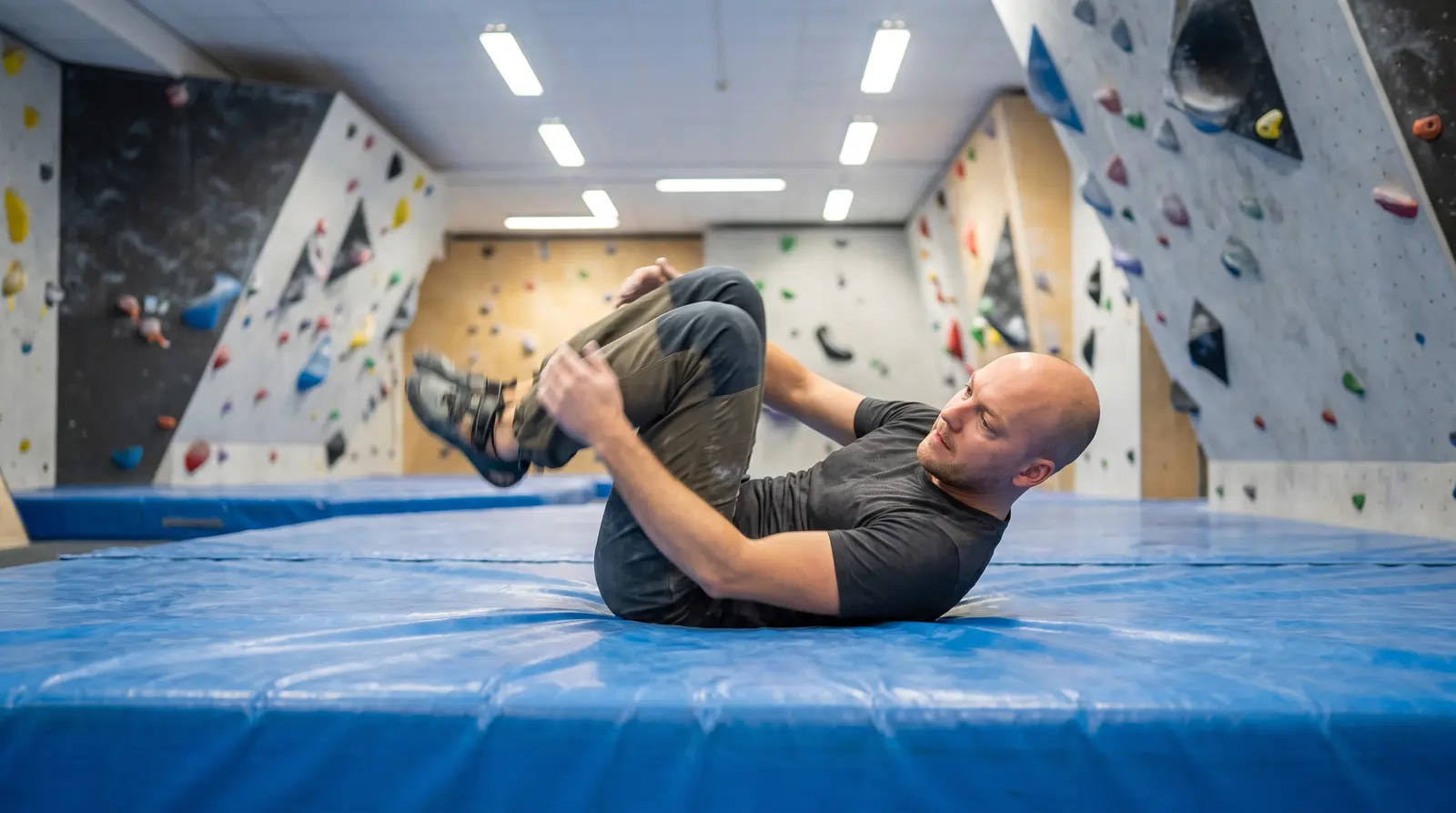
- Land on both feet with soft, bent knees, sit and roll back, keep your arms in and your chin tucked.
- In a 2025 survey of 245 injured boulderers, 67% of injuries were to the lower limb; ankle sprains were most common.
- Most of those injured climbers landed feet first on a pad, so what happens after touchdown matters too.
- Downclimb when you can, or drop off on purpose from the lowest sensible point after checking the landing.
- Practise a staged drill from sit-and-roll up to mid-wall falls; you don't need to drill falls from the top.
To fall safely when bouldering, land on both feet with soft, bent knees, let your hips drop toward the mat and roll back onto your back, with your arms tucked in and your chin down. Don't try to stick the landing and never catch yourself with a straight arm. Better still, avoid unnecessary falls: downclimb when you can, drop off on purpose from lower down, and practise falling from low heights until it becomes automatic.
Falling is the first real skill in bouldering, and most beginners never practise it. If you're new to the sport, read this alongside our guide on how to start bouldering. I'm a strength and conditioning coach, and landing is something we teach athletes in many sports before we let them jump high. The same logic applies here.
What a survey of fall injuries shows
Bouldering has no rope, so every fall ends on the ground. Finger and shoulder strains get more attention online, but the acute injuries that send boulderers to a clinic are often about landing.
The most detailed data on bouldering falls comes from a 2025 study by Beurienne and colleagues in Frontiers in Sports and Active Living. They surveyed 245 French-speaking climbers who had been injured in a bouldering fall, covering 301 injuries. It only included fall injuries, so it can't tell you what share of all bouldering injuries come from falls, but it shows how those falls happen:
| Finding | Result |
|---|---|
| Injuries to the lower limb | 67% |
| Most injured site | Ankle (40%), then elbow (16%) and knee (15%) |
| Most common single injury | Ankle sprain (28%) |
| Falls that were involuntary | 85% |
| Falls from the top of the wall | 47% |
| Landed on a pad | 94% |
| Landed feet first | About 73% |
| Landed head first | 12% |
Two lessons stand out. First, most injured climbers did land feet first on a pad, so "land on your feet" is not enough on its own. What happens after your feet touch the mat (stiff legs, a rolled ankle, an arm thrown out) matters. Second, height matters: falls from the bottom section of the wall were linked to a much lower chance of severe injury than falls from the top. The survey only included injured climbers, so it can't prove that planned drops are safer than unplanned falls, but the authors recommend that coaches teach voluntary falling, with arms crossed in front and a roll onto the back.
Elbows are the other weak point. Doctors at a German trauma centre identified 30 elbow dislocations from bouldering falls over ten years (2011–2020). Of the 20 who answered their follow-up questionnaire, 90% returned to bouldering after an average of 4.7 months, but only two-thirds got back to their previous level. Keeping your arms in when you land is not a style point.
A little physics explains why. A fall from 3 m (about 10 ft) lasts under a second and you hit the mat at around 7–8 m/s, roughly 27 km/h (17 mph). There is no time to think, so a safe landing has to be a habit you've already trained.
Landing technique, step by step
- Look down before you let go (when you can). Check that the landing zone is clear of people, bags and gaps between mats.
- Feet first, both feet together, roughly hip-width, landing on the whole foot rather than just toes or heels.
- Soft knees and hips. Keep them slightly bent and relaxed before impact, then let them keep bending. Stiff legs pass the force straight into your ankles, knees and back.
- Sit and roll back. Let your bottom drop toward the mat close to your heels, then roll onto your back. Don't try to stick the landing like a gymnast.
- Arms in. Keep your hands in front of your chest or crossed, elbows bent. Never reach back or down to catch yourself with a straight arm.
- Chin tucked so the back of your head doesn't whip into the mat as you roll.
Adjust for the wall angle
- Slab and vertical walls: push away from the wall slightly as you let go, so your knees and face don't scrape down it.
- Overhangs and roofs: your feet may swing out or cut loose. Try to get your feet back under you before you land; if you're horizontal, tuck and land on your back and bottom rather than reaching for the floor.
- Traverses and corners: know where the mat edges, walls and volumes are. Fall zones are often bigger than people expect.
Common mistakes
- Landing with straight legs to "stick it".
- Throwing a hand back to break the fall.
- Landing on one foot, often after a twisting fall.
- Letting go without looking, onto a mat gap or another climber.
- Jumping off the top of every problem instead of climbing down.
Downclimbing and jumping off on purpose
The safest fall is the one you don't take. Most gym problems can be partly or fully downclimbed, using the problem's own holds or nearby easy jugs. Downclimbing:
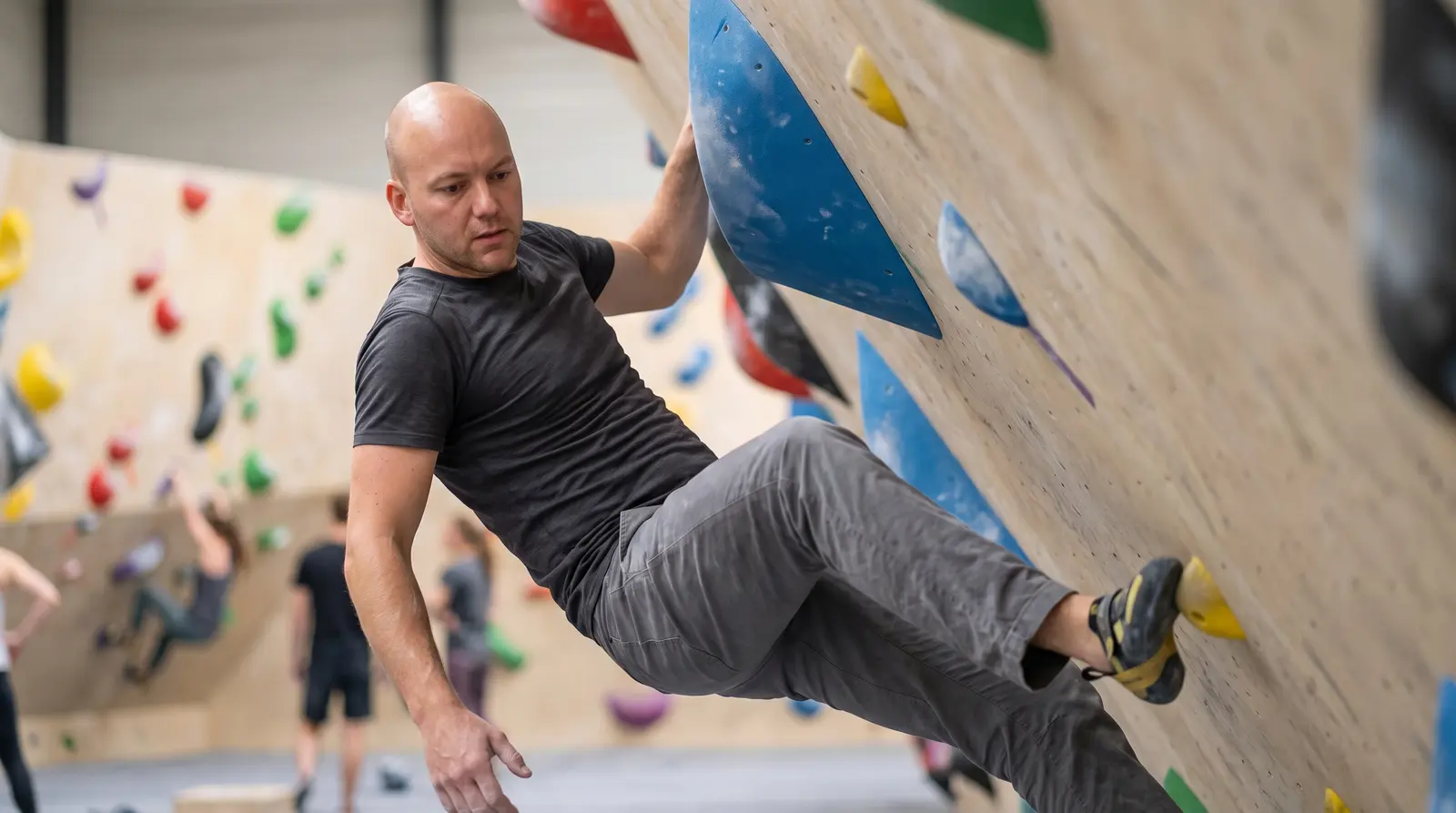
- Reduces the number of high impacts your ankles and knees take each session.
- Gives you extra easy climbing volume and movement practice.
- Is an essential skill outside, where you often have to climb down or walk off rather than jump.
When downclimbing isn't possible, drop off on purpose from the lowest sensible point: climb down a few moves, look at your landing, then let go with both hands at once and land as above. A controlled, planned drop gives you the best chance of landing well, because you choose the moment and your body position.
Before you try a hard move, ask yourself: if I come off here, where will I land and in what position? If the answer is "twisting, head first or off the mat", reposition, rethink the move or get a spotter.
A progressive falling drill
Practise falling the way you'd practise any skill: low and easy first, then gradually higher, with good technique on every rep. Do it at the end of your warm-up on a well-padded part of the gym, when you're fresh. How long it takes to feel natural varies from person to person, so move on only when each stage feels controlled, and repeat a few easy reps now and then. If your gym runs a falling or induction session, feedback from an instructor is the best way to learn.
| Stage | What to do | Reps | Move on when |
|---|---|---|---|
| 1. Sit-and-roll | Stand on the mat, squat down, sit toward your heels and roll onto your back with arms crossed and chin tucked. | 5 | The roll feels smooth and your arms stay in. |
| 2. Step-off | Hang from the starting holds, feet just off the mat, let go and land, sit and roll. | 5 | You land on both feet every time. |
| 3. Knee height | Climb so your feet are at about knee height, look down, let go. | 5 | Knees bend softly, no hand reaching back. |
| 4. Hip to chest height | Same drill from a little higher, on vertical then slightly overhanging wall. | 3–5 | Landings are quiet and controlled. |
| 5. Mid-wall, turned | Check the landing again, then let go from a side-on or slightly turned position, at a height you've already practised. | 3 | You land on both feet and roll, even from an awkward position. |
| 6. Real falls | On a project, fall off moves you genuinely can't do, at heights you've already practised. | As they happen | Ongoing. |
You don't need to drill falls from the very top of the wall; stage 4 or 5 builds the habit. From an S&C point of view, strong legs also help you absorb landings, so general lower-body strength work (squats, lunges, step-downs) is a sensible addition for climbers who mostly train their upper body.
Indoor mats vs outdoor pads and spotting
| Indoor gym | Outdoors | |
|---|---|---|
| Landing surface | Continuous, thick matting across the whole wall. | Portable crash pads, often thinner, with rocks, roots and slopes around them. |
| Main hazards | Gaps between mats and the wall, other climbers, bags and bottles on the mats. | Pad edges and gaps, uneven ground, falling off a pad, sloping landings. |
| Spotter | Follow your gym's rules, as some discourage spotting. Where it's allowed and you've learned how, useful on traverses, near mat edges and on awkward overhangs. | On most problems that aren't trivial. |
| Your job | Keep the fall zone clear and don't stand under other climbers. | Place and move pads to cover the likely fall line, not just the start. |
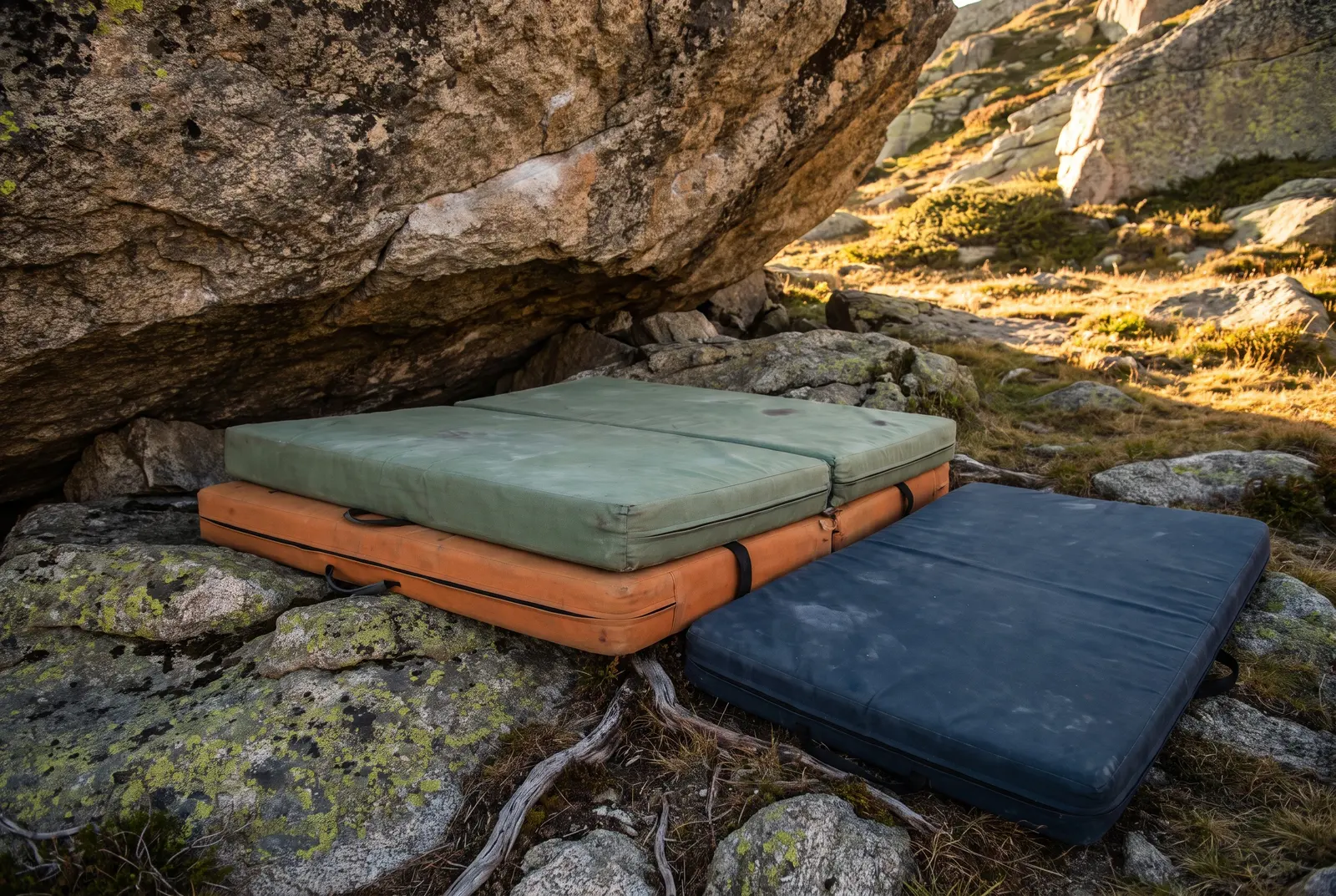
Outdoors you'll want more than one pad on many problems. Our guide on how many crash pads you need covers this, and the best crash pads explains how pad size and foam affect landings.
How to spot
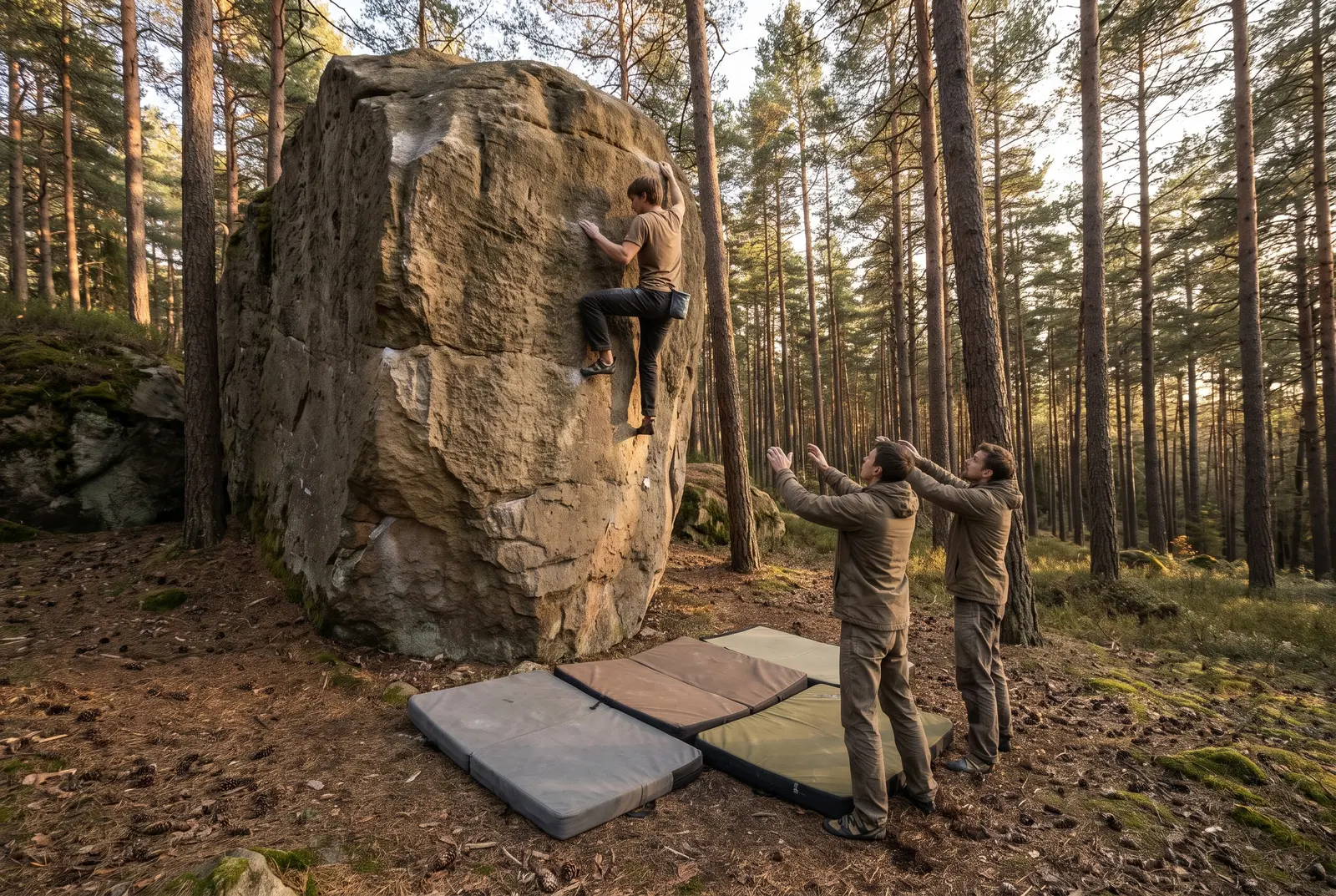
- The goal is to guide, not catch. You're steering the climber onto the pad so they land upright, and making sure their head hits the ground last, if at all.
- Hands up, slightly cupped, fingers together ("spoons not forks"), aimed at the climber's hips or upper back. Keep your arms slightly bent.
- Stay close and ready to move, and follow the climber as they traverse.
- Watch the ground too: know where the pad edges and obstacles are so you don't trip.
- Agree beforehand what the climber wants: moving pads, a spot only on the top moves, or a call when they're about to fall.
Pads and spotting also involve a lot of gym and crag manners, from not walking under climbers to moving pads for others. Our bouldering etiquette guide covers them.
When not to commit
Good boulderers fall a lot, but they choose where. Be more conservative in these situations:
- Top-outs. Mantling over the top is where a slip can send you backwards, head first, from the highest point. Before you start, check whether the top is easy to stand on and how you'll get down, and if a top-out feels insecure, back off while you can still downclimb or drop off safely.
- Highballs. On tall problems, the impact speed and injury risk rise quickly, so leave them until you have solid experience. Even then, pads and spotters can't prevent every serious injury. Climb them only with enough pads and spotters, downclimb the lower moves first to rehearse, and back off if you're not sure you can climb, not fall, the top section.
- Twisting or swinging moves near the top or near the mat edge, where you might land sideways or head first.
- When you're tired. Late in a session, grip and attention fade and landings get sloppy. That's a good time to downclimb more and jump less.
- Outdoors, early on. Start on low problems with flat landings. Our outdoor bouldering for beginners guide covers choosing first problems and pad placement.
Falls are also when people tweak fingers and shoulders, for example when a foot cuts and one hand takes the whole load. If a fall leaves a finger sore, our climbing finger injuries guide explains what to look out for.
Fall practice takes ten minutes and protects your whole climbing life. Do the drill this week, downclimb whenever you can, and keep your arms in.
FAQ
How do you fall safely when bouldering?
Land on both feet at once with your knees soft and bent, then let your hips drop and roll onto your back to spread the impact. Keep your arms tucked in front of your chest and your chin tucked. Never reach back to catch yourself with a straight arm.
Should you jump off or downclimb in bouldering?
Downclimb whenever you can. It saves your ankles and knees from repeated impacts and is a useful skill outdoors. Jump or drop off on purpose from a lower point when downclimbing isn't possible, and look at your landing before you let go.
Is it bad to fall from the top of a bouldering wall?
An occasional controlled drop onto a good indoor mat is part of bouldering, but falls from the top of the wall are the highest and hardest. In a 2025 survey of injured boulderers, 47% of injuries happened in falls from the top of the wall. Downclimb or step down to a lower hold first when you can.
Do crash pads prevent injuries?
They reduce the impact but don't remove the risk. In the same survey, 94% of injured climbers landed on a pad, and most landed feet first. How you land and where the pads are placed matter as much as the pad itself.
Sources
- Beurienne E. et al., The art of falling: identifying the falls scenarios associated with bouldering injuries, Frontiers in Sports and Active Living (2025)
- Müller M. et al., Mid- to long-term functional outcome and return to sport after elbow dislocation in bouldering: a clinical retrospective cohort study, Archives of Orthopaedic and Trauma Surgery (2024)
- Movement Climbing Gyms, How to Fall When Bouldering: Landing Techniques & Downclimbing Tips
- Gripped, Tips to be a Better Spotter for Bouldering (2021)