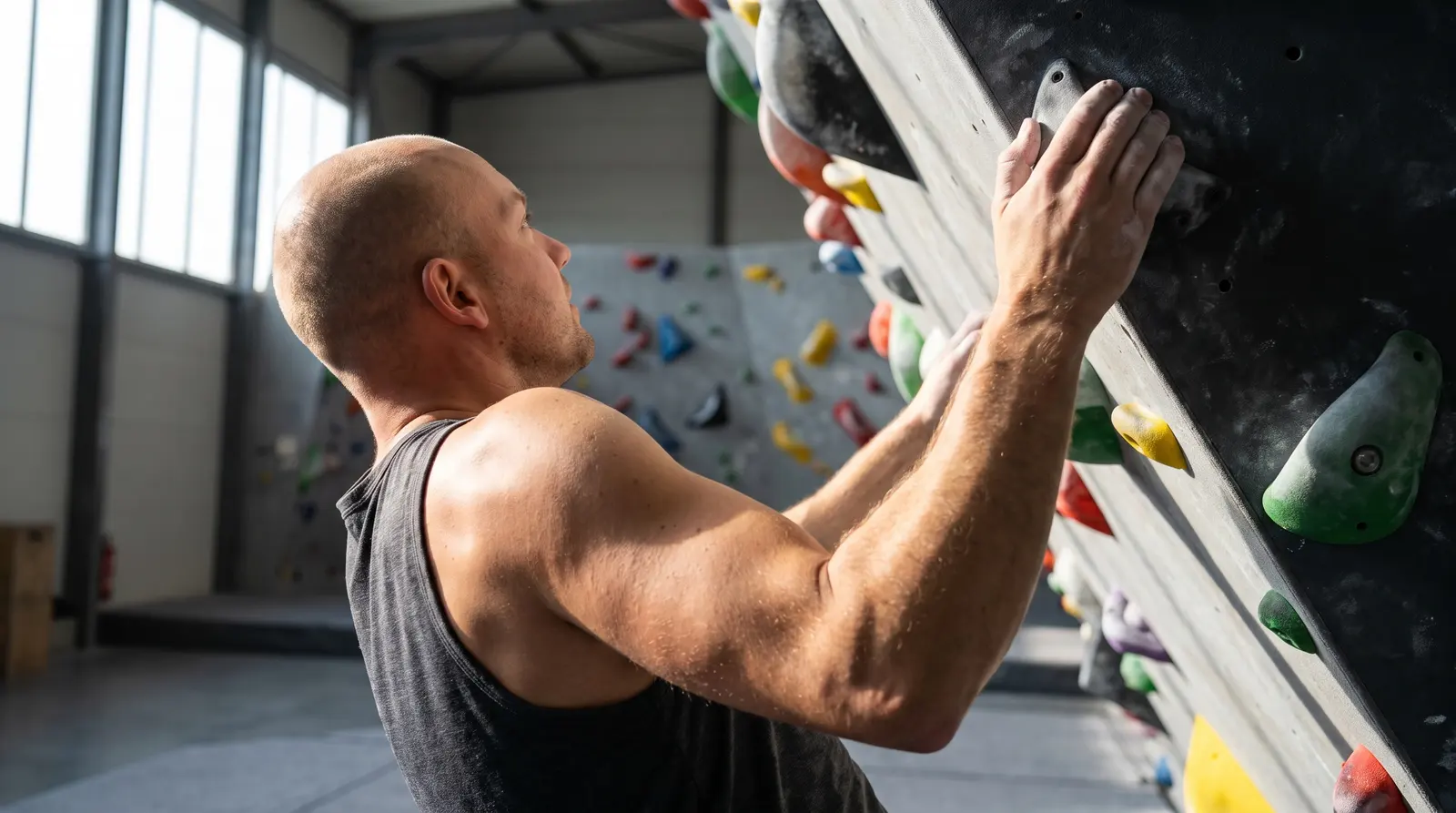
How Many Times a Week Should You Go Bouldering?
 Petr Hess, strength & conditioning coach
Updated 2 Nov 2026 · 8 min read
Key takeaways
Best for: Boulderers deciding how many sessions and rest days to take
- Treat 2–4 sessions a week as a starting range: beginners 2–3, intermediates 3–4, advanced often 4 or more.
- Take at least two full rest days a week, because tendons and pulleys adapt more slowly than muscles.
- Keep sessions to roughly 60–90 minutes of climbing, and end them when attempts get sloppy or fingers feel tweaky.
- Rest 3–5 minutes between hard attempts, and longer for long problems or send attempts.
- Finger or elbow pain that lasts into the next day is a reason to drop a session and avoid crimping.
For most climbers, 2–4 bouldering sessions a week is a practical starting range rather than a fixed rule; adjust it to how hard you climb, your other training and how well you recover. Beginners do best with 2–3 sessions and a rest day after each; intermediate climbers can handle 3–4; advanced climbers often climb 4 or more days but make some of them light. Keep sessions to roughly 60–90 minutes of climbing, take at least two full rest days a week, and rest 3–5 minutes between hard attempts.
The reason for the caution is your fingers. Muscles get stronger quickly, but the tendons and pulleys that hold your fingers together adapt more slowly, so frequency is mostly about giving them time. This article covers how often to climb; for full weekly plans, see our bouldering training program. I'm a strength and conditioning coach, not a climbing coach, so the advice below leans on general training principles plus what climbing coaches and data show.
How many times a week to go bouldering, by level
| Level | Sessions per week | Hard sessions | Rest days | Notes |
|---|---|---|---|---|
| Beginner (first 6–12 months, up to about V2–V3) | 2–3 | All sessions are "learning" sessions | At least 1 between sessions | Fingers, skin and shoulders are new to the load. Consistency beats volume. |
| Intermediate (about V3–V6, 1–3 years in) | 3–4 | 2–3 | 2–3 full days | Two days in a row is fine if the second is easier or different. |
| Advanced (V7+, several years of training) | 3–5 | 2–3 | At least 2 full days | Extra days are lighter: technique, volume, mobility or strength work. |
Real-world data roughly fits these ranges. In a 2026 analysis of about 2,250 Lattice Training app users, climbers around V4 logged training on about 3 days a week and V12+ climbers on about 4, with the middle grades mostly in between. That counts all logged training days, not just bouldering. The number of exercises per week was roughly the same (about 22) at every grade, but stronger climbers spread them over more days with fewer, more focused exercises per session, and their prescribed weekly training load was about 1.6 times higher at V12+ than at V1–V4. Lattice's advice for plateaued climbers is to add a lighter, focused fourth session rather than making existing sessions longer.
If you're brand new, start with two sessions a week for the first month and add a third once your fingers and skin feel fine the day after. Our guide on how to start bouldering covers those first weeks.
Rest days and why tendons need them
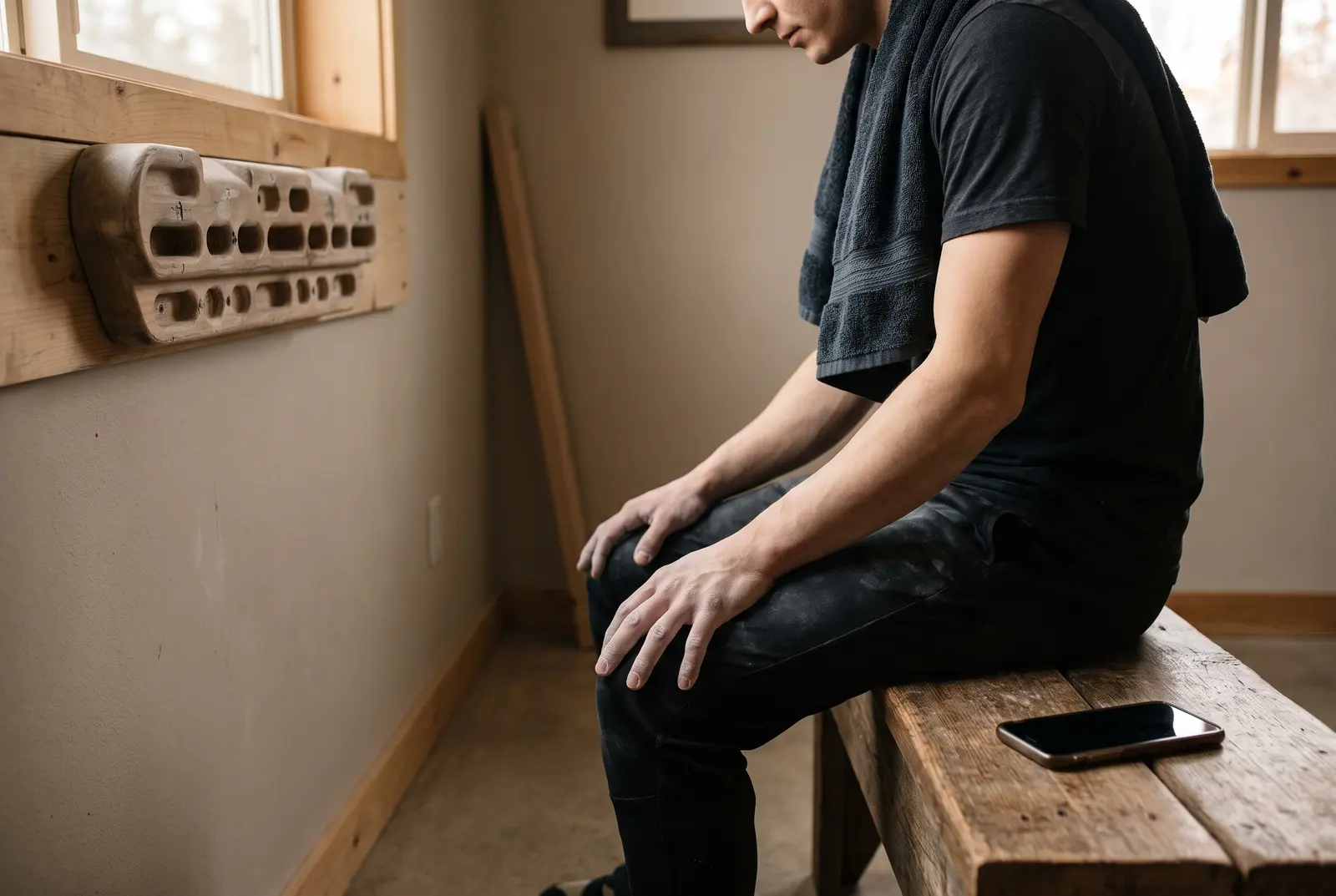
Training doesn't make you stronger during the session; it makes you stronger during recovery. For climbers, the key issue is that different tissues recover and adapt at different speeds:
| Tissue | How it responds | What it means for you |
|---|---|---|
| Muscles (forearms, back, shoulders) | Adapt relatively quickly; strength rises in weeks. | You'll feel stronger before your fingers are ready for harder holds. |
| Tendons and pulleys | Adapt more slowly. After loading, collagen synthesis peaks about 24 hours later and stays raised for about 3 days, while breakdown also rises and peaks earlier. | Hard finger sessions need space between them; don't progress grip load just because your arms feel strong. |
| Skin | Wears and repairs within days. | Thin tips are a sign to rest or climb on bigger holds; stop for bleeding or split skin, as even big holds can aggravate it. |
| Nervous system and general fatigue | Builds up across a hard week, not just one session. | Max-effort climbing needs freshness; don't put limit bouldering at the end of a tiring week. |
The tendon numbers come from a review by Magnusson, Langberg and Kjaer in Nature Reviews Rheumatology (2010). They come from studies of other tendons, not climbers' finger pulleys, so treat them as a general picture rather than a recovery timetable for your fingers. They describe tendinopathy as what happens when repeated loading outpaces the tendon's ability to adapt. A 2017 review by Mersmann, Bohm and Arampatzis adds that muscle and tendon differ in how quickly they adapt to loading, and that an imbalance between fast-growing muscle strength and slower tendon adaptation may raise the risk of tendon problems.
That's exactly the trap many climbers fall into in their first two years: forearms and back get strong fast, they pull harder on small holds, and the finger tissues haven't caught up. Spacing hard sessions and building up gradually is the simplest protection. If you already have finger pain, our climbing finger injuries guide explains common problems and red flags.
Climbing on consecutive days
- Beginners: avoid it at first. A day of rest after each session is a simple rule that works.
- Intermediate and advanced: two days in a row is common and fine. Put the harder session first, when you're fresh, and make day two easier, shorter or different (volume on moderate problems, technique, or a non-finger strength session). Then rest.
- Three or more days in a row: usually a bad idea for recreational climbers. Quality drops, and fingers get no break. Climbing trips are the exception; plan rest days into them anyway.
Common weekly rhythms: on-off-on-off-on-off-off for 3 days, or on-on-off-on-on-off-off for 4 days.
What to do on rest days
A rest day from climbing doesn't have to mean the sofa. What matters is that your fingers get a break. Good options:
- Full rest after a very hard session, or when you feel run down.
- Easy aerobic activity: walking, easy cycling, swimming. It keeps you moving without loading your fingers.
- Leg, push and core strength work, which overlaps less with climbing than grip and pulling work, though it still adds fatigue (and climbing uses your core and some pushing too).
- Mobility and stretching for hips and shoulders.
What doesn't count as rest: hangboarding, campus board sessions, "just a few easy problems" that turn into an hour, or heavy grip work at the gym. If it loads your fingers hard, it's a climbing day.
Coming back after a break
Climbers returning after a few weeks off (illness, travel, injury) often go straight back to their old frequency and their old projects. You may feel nearly as strong as before, but your fingers are no longer used to the load. A sensible return looks like this:
- Week 1: 2 sessions, easy to moderate problems only, short sessions.
- Week 2: 2–3 sessions, a few harder problems at the end of each.
- Week 3 onward: build back toward your normal frequency and difficulty step by step, as long as your fingers feel fine during and after sessions.
The longer the break, the more gradually you should build back up. After an injury, follow your clinician's return plan rather than a generic one.
How long should a bouldering session be?
| Level | Warm-up | Climbing time | Typical total |
|---|---|---|---|
| Beginner | 10–15 min | 45–75 min | About 1–1.5 hours |
| Intermediate | 15–20 min | 60–90 min | About 1.5–2 hours |
| Advanced, limit session | 20–30 min | 60–90 min of focused attempts | About 2 hours |
Adam Ondra suggests an ideal bouldering session of about 30 minutes of warm-up and 90 minutes of climbing, picking 5–10 boulders rather than spending the whole session on one problem. Most recreational climbers can use a shorter warm-up; our 15-minute climbing warm-up is a good default.
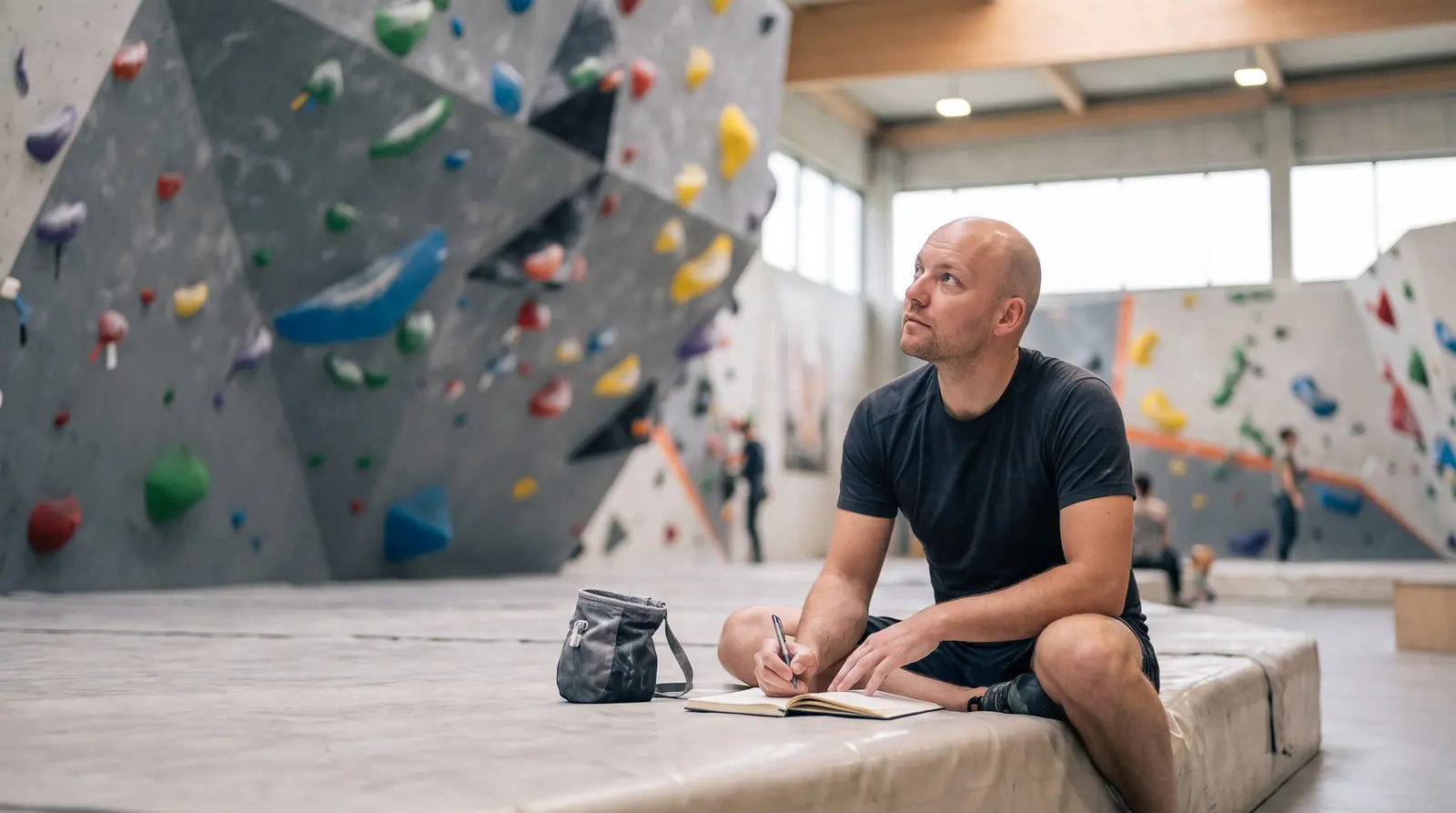
Longer isn't better. There's no proven cut-off time, but as you tire, your attempts get sloppier. Let fatigue, not the clock, decide, and end the session when:
- You fail on problems you normally climb.
- Your skin is thin, bleeding or very sore.
- Your fingers feel "tweaky" or a joint starts to hurt.
- You stop resting properly between attempts because you're frustrated.
How long to rest between bouldering attempts
Rest depends on how hard and how long the attempt was. Short maximal efforts rely heavily on phosphocreatine (PCr), the fast energy store in muscle. In Bogdanis and colleagues' classic 1995 study of 30-second all-out sprints, PCr had recovered to only about 65% of resting levels after 1.5 minutes and about 85% after 6 minutes, with a half-time of roughly a minute, and power output had still not fully recovered after 6 minutes. That's cycling, not climbing, but the principle carries over: short rests between maximal efforts mean the next effort is weaker.
Climbing coaches arrive at similar numbers. KAYA coach Juliet Hammer recommends resting 20–50 times as long as the effort on limit boulders: about 2.5 minutes after a 3-second attempt at a single hard move, and 10–15 minutes after a 30-second send attempt. Adam Ondra advises long breaks, at least a few minutes, between tries.
| Type of climbing | Rest between attempts | Goal |
|---|---|---|
| Limit problems, single hard moves | 3–5 min | Full effort on each try |
| Hard full problems near your max | 4–5 min, up to 10+ for long problems or send attempts | Maximal strength and power |
| Moderate problems (2–3 grades below max) | 1–3 min | Technique and volume |
| Easy problems, warm-up, circuits | 30 s–1 min, or as needed | Movement, endurance |
| Power endurance (4x4s, linked problems) | About 1–3 times the work time | Training to hold on while pumped |
A simple rule: if you're not ready to give the next attempt 100%, you haven't rested enough. Use a timer; most people underestimate how short their rests are.
Combining climbing with lifting and other sports
From an S&C point of view, the question isn't whether to add other training, but where to put it so it doesn't steal from your climbing.
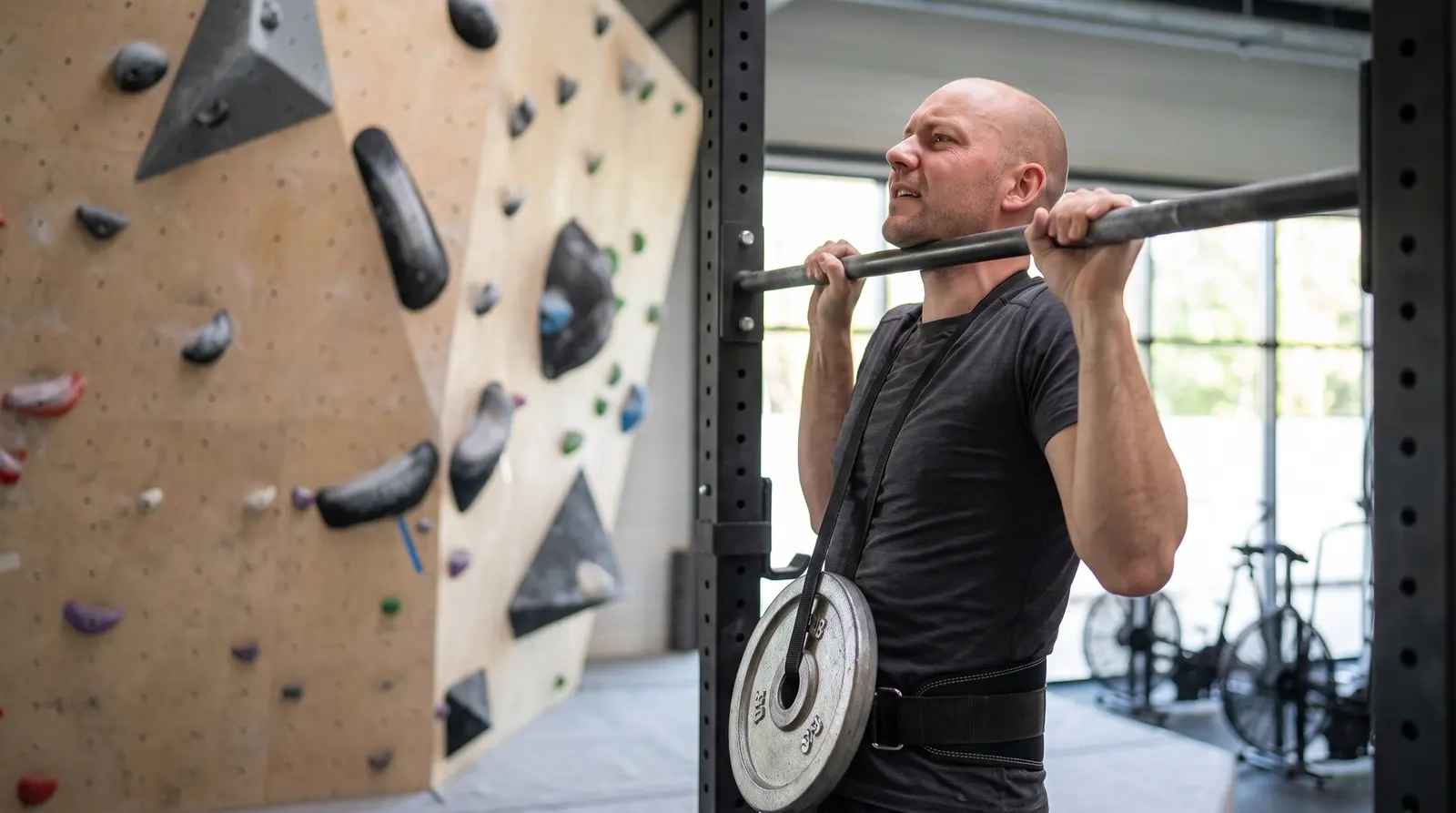
- Climbing comes first. If you lift on a climbing day, climb first and lift afterwards, or lift on a separate day.
- Keep hard pulling away from the day before a limit session. Heavy pull-ups or rows the day before limit bouldering will blunt your attempts.
- Legs, pushing and core fit easily on climbing rest days or after easier sessions, because they overlap less with climbing fatigue than extra pulling does; they still add to your total load, so keep them moderate. Our weight training for climbers guide has a full plan.
- Antagonist and shoulder work (push-ups, presses, external rotations) is low-fatigue and can go at the end of 2–3 sessions a week. See antagonist training for climbers.
- Running, cycling and team sports mostly stress the legs and can sit alongside climbing, but they still add to total fatigue. If you play a hard team sport twice a week, 2–3 climbing sessions is probably your ceiling.
Count everything when you plan the week. A climber who boulders three times, lifts twice and runs twice is training seven times, and recovery has to cover all of it.
Signs you should back off
| Sign | What to do |
|---|---|
| Finger or elbow pain that lasts into the next day | Drop a session this week, avoid small holds and crimping; see a professional if it persists or follows a pop. |
| Performance drops for a week or more | Take 3–5 easy or rest days, then rebuild. |
| Constantly sore forearms, stiff fingers in the morning | Cut volume, add a rest day. |
| Poor sleep, low motivation, irritability | Reduce total training load, not just climbing. |
| Thin, split or bleeding skin | Stop climbing if it bleeds or splits open, then rest a day or two. With thin but intact skin, bigger holds may be fine. |
Every 4–8 weeks, a lighter week with fewer or easier sessions helps you absorb training. If you feel stuck rather than tired, our bouldering plateau guide covers what to change.
The bottom line
Climb 2–3 times a week as a beginner and 3–4 as you progress, with at least two rest days. Keep sessions to about 90 minutes of real climbing, rest properly between hard attempts and space out your hardest finger sessions. Doing that consistently for months will take you further than any short burst of climbing every day. When you're ready for structure, the weekly bouldering plans put all of this together.
FAQ
Is it OK to boulder every day?
For most people, no. Hard bouldering loads finger tendons and pulleys that adapt more slowly than muscle and need time between sessions. Climbing two days in a row is fine once you have a base, but follow it with a rest day and keep at least two full rest days a week.
How long should a bouldering session be?
Around 60–90 minutes of climbing after a 15–30 minute warm-up suits most climbers. Beginners often do best with 45–75 minutes. If the quality of your attempts drops or your fingers feel tweaky, end the session.
How long should you rest between bouldering attempts?
On hard problems near your limit, rest about 3–5 minutes between attempts, and longer for long problems. On easy or moderate problems, 1–2 minutes is usually enough. Rest until you can give the next attempt full effort.
Should I take rest days from climbing?
Yes. Rest days are when tendons, muscles and skin recover and adapt. Most recreational climbers need at least two full rest days a week, and beginners usually do best with a rest day after every session.
Sources
- Lattice Training, How many days should I train per week for climbing? (2026)
- Magnusson SP, Langberg H, Kjaer M., The pathogenesis of tendinopathy: balancing the response to loading, Nature Reviews Rheumatology (2010)
- Mersmann F, Bohm S, Arampatzis A., Imbalances in the Development of Muscle and Tendon as Risk Factor for Tendinopathies in Youth Athletes, Frontiers in Physiology (2017)
- Bogdanis GC. et al., Recovery of power output and muscle metabolites following 30 s of maximal sprint cycling in man, Journal of Physiology (1995)
- Hammer J., KAYA, Using the Attempt Timer: Endurance, Power Endurance & Limit Sessions (2021)
- Adam Ondra, Tips & Tricks Episode 1 – Climb Smart: Boulder training efficiency (2023)