What to Wear Bouldering: A Simple Guide for the Gym and Outdoors
 Petr Hess, strength & conditioning coach
Updated 2 Nov 2026 · 7 min read
Key takeaways
Best for: First-timers wondering what to wear and bring to the gym
- Wear stretchy sports clothes you can pull your knee to your chest in; stiff jeans restrict high steps.
- Rent climbing shoes that fit snugly without pain, and bring thin socks, which some gyms require with rentals.
- Take off all rings, since a caught ring can cause a ring avulsion; silicone rings aren't established as safe.
- Keep nails short, tie long hair back and bring a warm layer to pull on between attempts.
- Outdoors, add tougher trousers, a proper jacket and clean shoe soles, and don't climb on wet rock.
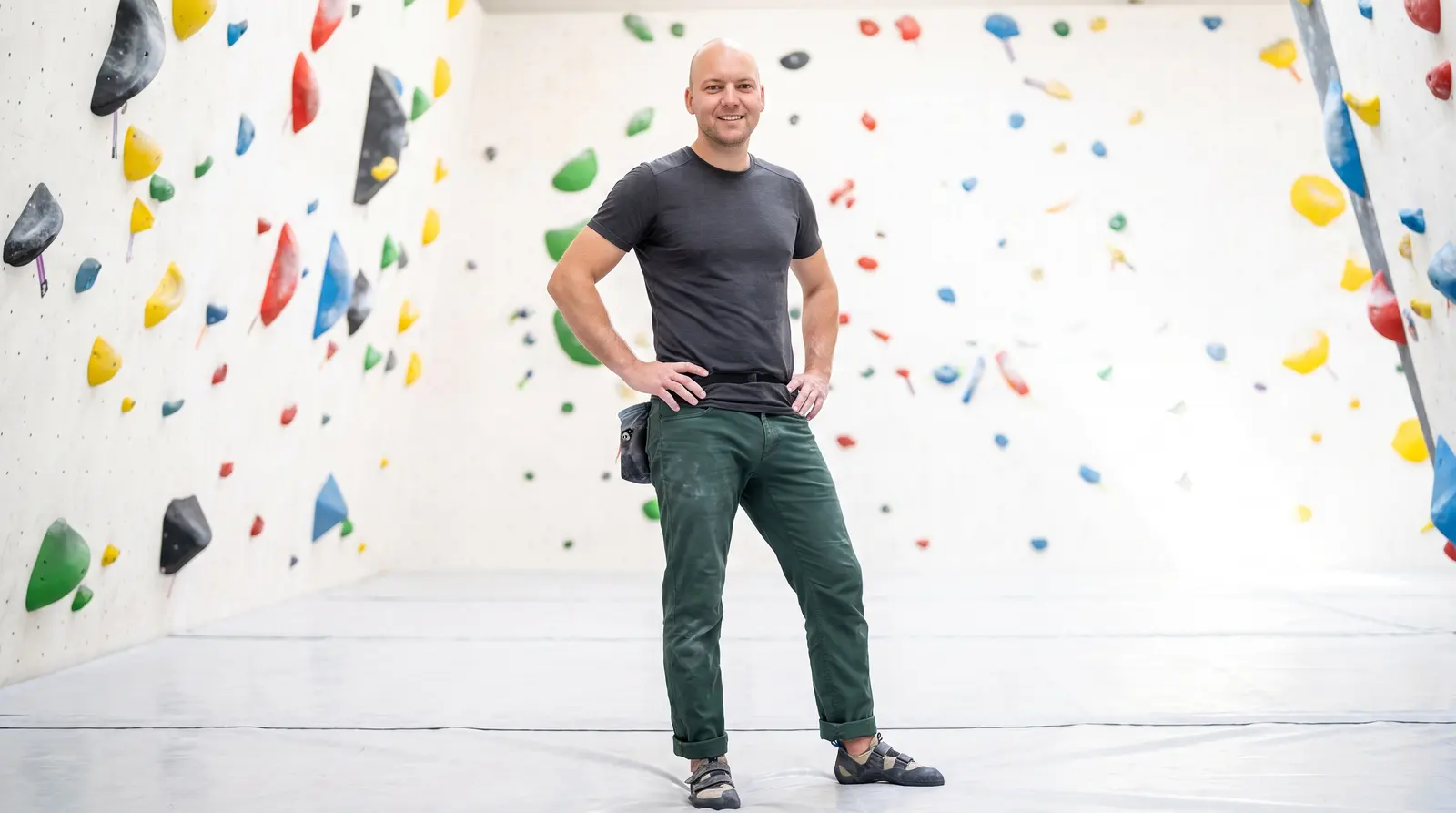
Wear stretchy, comfortable sports clothes you could do a deep lunge in: a T-shirt or tank top, plus sports trousers, joggers, leggings or longer shorts. Rent climbing shoes that fit snugly without pain (ask staff to swap a pair that hurts) and bring thin socks to wear with them. Take off rings and watches, trim your nails, tie back long hair, and bring a warm layer for rest breaks. That's all you need.
You don't need climbing brands. Everything below is about what actually affects your climbing and comfort. If this is your first visit, our guide on how to start bouldering walks through the whole first session.
Quick checklist
| Item | Gym | Outdoors |
|---|---|---|
| Top | T-shirt or tank top, not too baggy | Durable T-shirt plus a warm layer |
| Bottoms | Stretchy trousers, joggers, leggings or longer shorts | Tough, stretchy trousers (rock scrapes) |
| Shoes | Rental climbing shoes | Your own climbing shoes plus approach shoes |
| Socks | Thin socks for rentals | Warm socks for between attempts |
| Warm layer | Hoodie or light fleece for rests | Insulated jacket, hat in cold months |
| Jewellery | Rings, watches, bracelets off | Same |
| Hands | Short nails, chalk | Short nails, chalk, skin care kit |
| Hair | Tied back | Tied back, cap or beanie |
Tops
Any T-shirt or tank top that lets you lift your arms fully overhead works. Gyms generally expect you to keep a top on; Bouldering Project, for example, requires everyone to wear a shirt or tank top.
- Fit: close-ish but not tight. Very baggy shirts ride up when you reach and can catch on holds or your own knee on steep walls.
- Material: technical fabrics dry faster; cotton feels nicer between attempts. Both work.
- Sleeves: short sleeves or tank tops for warm gyms. A long-sleeve top protects forearms and elbows on problems where you rub against the wall.
Trousers, shorts or leggings?
Bouldering involves high steps, wide stems, knee bars and the occasional scraped knee, so the main question is stretch. Session Climbing's FAQ puts it simply: "Your clothing should have enough stretch so that you can reach those far-away holds!" A quick test: if you can't comfortably pull your knee to your chest in them, choose something else.
Shopping for a pair? See our best bouldering pants, including short-inseam and women's options.
| Option | Pros | Cons |
|---|---|---|
| Sports trousers / joggers | Protect knees and shins; warm in cool gyms | Can be hot; loose cuffs hide your feet |
| Climbing trousers | Stretchy, durable, often with ankle cuffs | Costlier; not needed to start |
| Leggings | Maximum freedom of movement; you can see your feet | Little protection on knee bars and rough volumes; thin ones wear quickly |
| Shorts | Cool in hot gyms; full movement | Bare knees get scraped; short shorts can ride up on high steps |
| Stiff jeans | None for climbing | Restrict high steps and wide moves |
Gyms tend to lean towards covered legs. River Rock Climbing suggests "loose fitting athletic clothing" and adds: "Pants or longer shorts are recommended as they protect your legs." Session recommends longer shorts or trousers if you'll be wearing a harness for roped climbing.
A practical tip from a coaching angle: pick trousers that let you see your feet. Wide-leg trousers that flap over your shoes make it harder to place your feet precisely, and footwork is the single biggest skill you'll learn early on.
Shoes, rentals and socks
Climbing shoes are required in most bouldering gyms. Session, for example, requires climbing shoes for all climbers and doesn't allow athletic shoes or barefoot climbing, which keeps outside dirt off the holds. Rentals are available almost everywhere, so you don't need to buy a pair for your first sessions.
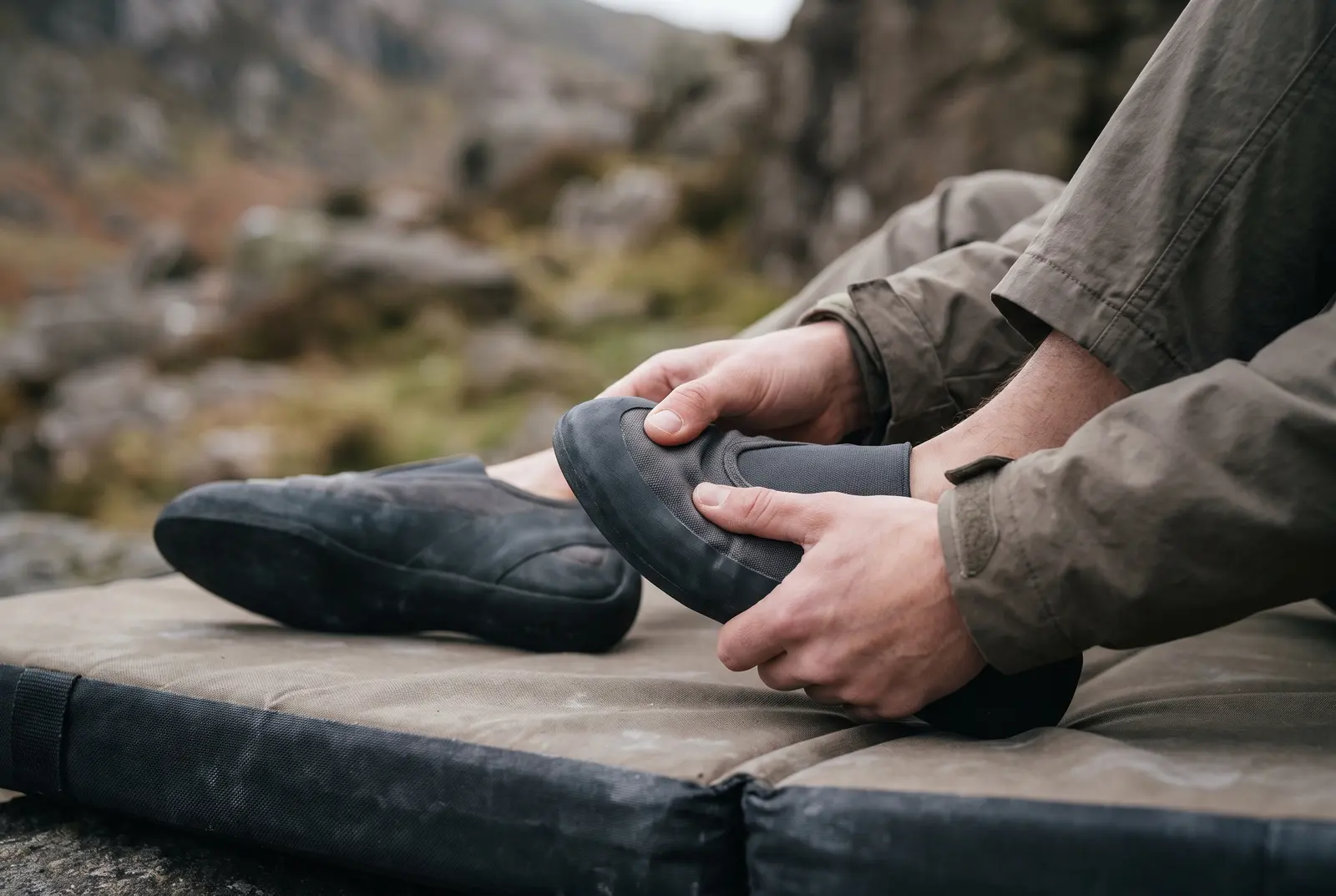
If rental shoes always pinch at the sides, our guide to climbing shoes for wide feet lists roomier models.
Socks with rental shoes: bring a pair of thin, low socks. Sock rules vary by gym:
- River Rock says it disinfects rental shoes after each use but still suggests wearing socks with them.
- Session's FAQ recommends bringing socks.
- Some gyms require socks with rentals. Check your gym's website or ask at the desk.
Thin socks are the hygiene compromise: you may lose a little feel on small footholds, so make sure the rental shoes still fit comfortably with them on. Once you buy your own shoes, most climbers wear them barefoot for a closer fit and better feel. If you're getting close to buying, read our guide to the best climbing shoes for beginners, and try shoes on with whatever you plan to climb in.
Also bring easy slip-on shoes or sandals for walking around. Gyms often don't want street shoes on the mats, and climbing shoes shouldn't go into the toilets.
Jewellery, watches, nails and hair
Rings
Take them off. A ring can catch on a hold when you fall, causing a ring avulsion: an orthopaedic surgeon at Ohio State Wexner Medical Center describes it as an injury "where the skin, nerves, tendons and even bone of the finger is pulled and torn by the ring", and recommends removing rings for gym workouts. Fingers also swell during climbing, which can make tight rings hard to get off afterwards. Silicone rings aren't established as safe for climbing either (the same surgeon says he has limited experience with them), so the simple rule is to take all rings off.
Watches, bracelets and necklaces
Watches and bracelets scratch on the wall, get damaged and can catch on holds. Long necklaces swing into your face or snag. Leave them in a locker. If you want to track your session, a slim fitness band is better than a chunky watch, and many climbers take even those off.
Nails
Keep fingernails short. Long nails catch on holds, bend back or tear, and stop your fingertips from pressing flat on small crimps. If you trim them just before a session, file any sharp edges smooth. Toenails matter too: long toenails are painful in snug climbing shoes.
Hair
Tie long hair back. Loose hair blocks your view of footholds, gets caught under your hand on a hold, and collects chalk. A simple ponytail or bun is enough; a headband helps in warm gyms.
Layers for cold gyms
Bouldering is stop-start: a minute of hard effort, then several minutes of rest. Large gyms can be cool in winter, and you cool down quickly between attempts. Cold fingers and shoulders don't perform well.
- Bring a hoodie or light fleece to pull on between attempts.
- Keep it on during your warm-up, then take it off when you start climbing harder.
- Thin trousers over leggings work well in winter; strip down as you warm up.
In hot gyms, it's the opposite problem: sweaty hands. Wear a tank top, keep chalk handy, and rest in the coolest part of the gym.
What to pack in your gym bag
Clothing is only part of it. A small bag with the following covers almost every session:
- Thin socks if you'll rent shoes, plus slip-ons or sandals for walking around.
- A warm layer for rests, as above.
- Water bottle, kept off the mats.
- A small snack for longer sessions; bouldering is more tiring than it looks.
- Hair tie and nail clippers, because it's easy to forget either until you're at the wall.
- Hand cream or balm for after the session, not before; greasy hands slip on holds.
- A padlock if your gym's lockers need one.
Chalk is usually available to rent or buy at the desk. Once you're climbing regularly, your own chalk bag is a cheap, useful purchase. Loose chalk or a chalk ball both work; check your gym's house rules on chalk.
From a training point of view, the warm layer and the water bottle matter more than they seem. Warm muscles and tissues tolerate load better, and a short session done with good movement is worth more than a long one where you get cold and sloppy between attempts.
Outdoor bouldering: what changes
Rock is rougher than plastic, the weather changes, and you'll spend a lot of time sitting around between attempts. Clothing priorities shift accordingly:
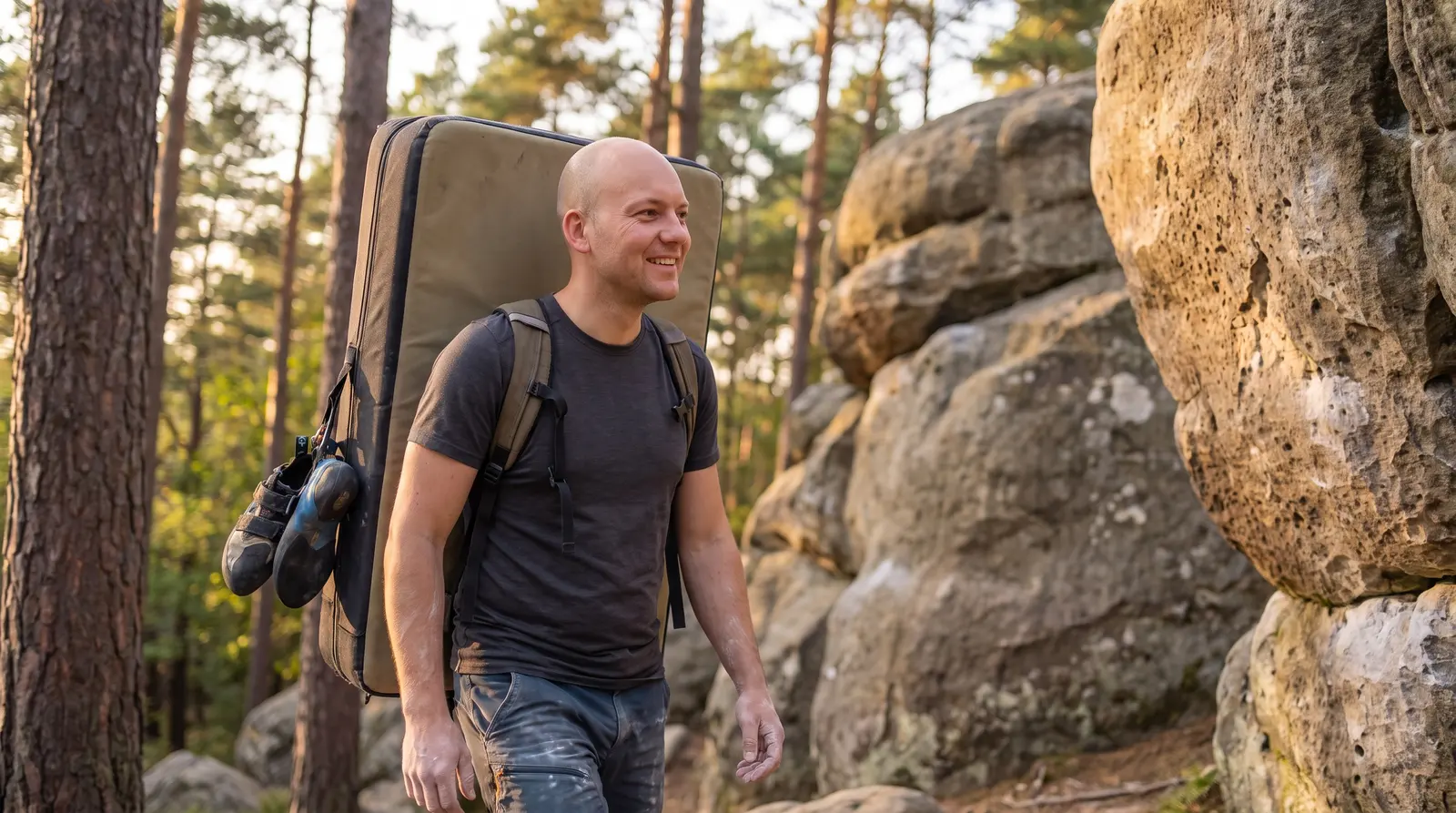
- Durability: real rock shreds thin leggings and cheap fabric. Tougher stretchy trousers are worth it for knee bars, mantles and scrambling to the top of boulders.
- Warm layers: a down or synthetic jacket for rests. Many climbers prefer cool, dry days because friction is better, so you'll often be climbing in cold conditions.
- Rain shell: for getting to and from the boulders. Don't climb on wet or damp rock, though, especially sandstone, and that includes after the rain stops: Bleau.info asks climbers not to climb wet problems because damp sandstone is very weak, and the BMC notes drying can take 24 hours or more. Wait until it's thoroughly dry and follow local guidance rather than counting hours.
- Approach shoes: sturdy shoes for the walk in and for moving pads around.
- Clean soles: on sandstone, wipe your climbing shoes before each attempt. Sand on your soles polishes the rock (Bleau.info), and the BMC recommends cleaning your shoes before starting a new problem. A small doormat or towel at the base of the boulder helps.
For the full gear list for a trip, see our bouldering trip packing list. If you're heading outside for the first time, start with outdoor bouldering for beginners.
What not to worry about
You don't need climbing-brand clothing, special chalk or a full kit to start. You also don't need to look the part; gyms are full of people in old T-shirts and joggers. Spend your money on a well-fitting pair of shoes when you're ready, and look after your hands. Rough rock and lots of sessions are hard on skin, and our guide to climbing skin care explains how to keep calluses healthy and avoid splits.
The short version: stretchy sports clothes, thin socks for rental shoes, no rings or watches, short nails, hair tied back and a warm layer for rests. Outdoors, add tougher trousers, a proper jacket and clean shoe soles.
FAQ
Can I wear jeans to go bouldering?
You can, if they're stretchy enough to lift your knee to your chest. Stiff denim limits high steps and wide moves. Sports trousers, joggers, leggings or shorts are easier, and you don't need anything climbing-specific.
Do you wear socks with rental climbing shoes?
Usually yes. Many gyms recommend thin socks with rental shoes for hygiene even though they disinfect them after each use, and some require socks. With your own shoes most climbers go sockless for better feel.
Should I take off my wedding ring to boulder?
Yes. A ring can catch on a hold during a fall and cause a ring avulsion, a serious injury where the ring pulls and tears the finger's tissue. Leave rings at home or in your locker. Silicone rings aren't established as safe for climbing, so take those off too.
Can I boulder in leggings or shorts?
Both are fine. Leggings move well but give little protection on knee bars and scrapes; shorts are cool but leave knees bare. Many gyms recommend trousers or longer shorts as they protect your legs.
Sources
- River Rock Climbing, New climbers: first-visit guide
- Session Climbing, What should I wear? (FAQ)
- Bouldering Project, FAQs
- Awan H, Ohio State Wexner Medical Center, Avoid a painful wedding ring injury with these 4 tips (2020)
- Bleau.info, Ethics
- BMC, Olympic detox: best practice for bouldering on sandstone in Font