Liquid Chalk vs Chalk: Loose, Chalk Ball, Block or Liquid?
 Petr Hess, strength & conditioning coach
Updated 2 Nov 2026 · 11 min read
Key takeaways
Best for: Choosing between liquid chalk, loose chalk and chalk balls for gym or rock
- Liquid and loose chalk use the same magnesium carbonate; liquid gives a thin, long-lasting, low-dust base layer, loose chalk is faster to top up.
- Best combo for most climbers: a rosin-free liquid base at the start of a session, then loose chalk or a ball on top.
- A 2012 gym study found liquid chalk cut airborne dust to near no-chalk levels, while chalk balls did not reduce dust significantly.
- Keep rosin products off rock, use less chalk outdoors, brush gently with a soft brush and check local rules on chalk colour or bans.
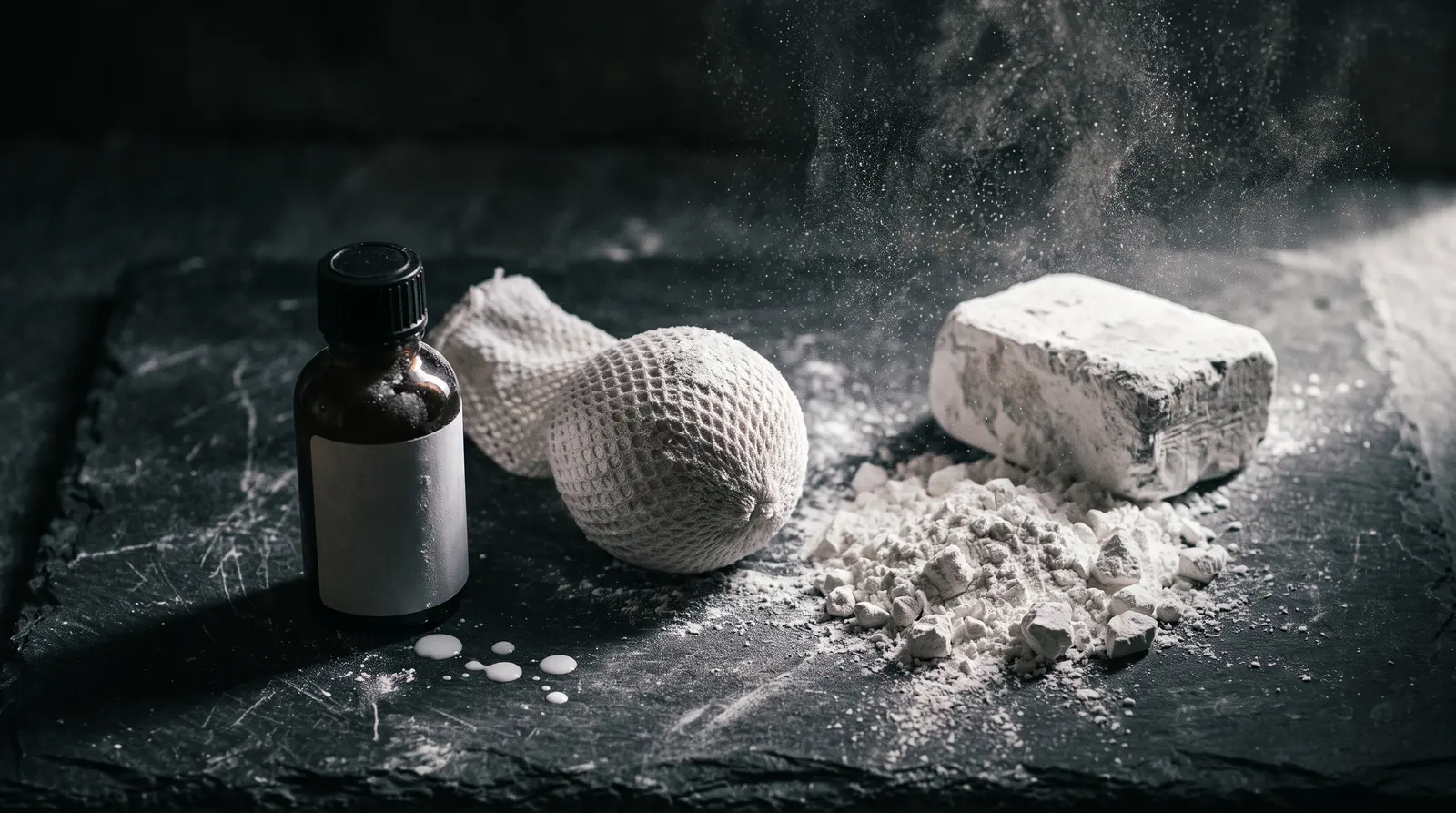
Liquid chalk and regular chalk do the same job with the same ingredient: magnesium carbonate that soaks up sweat. Liquid chalk suspends it in alcohol, so you get a thin, even, nearly dust-free coat that lasts several attempts. Loose chalk (or a chalk ball) is quicker to top up in the middle of a climb. For most climbers the best answer isn't either/or: put liquid chalk on as a base layer at the start of a session and add loose chalk on top as needed.
Three things decide which you should reach for: your gym's rules (some ban loose chalk, some ban rosin), how sweaty or dry your skin is, and whether you climb on rock. This guide covers all three, plus what the research actually says. It is a comparison and how-to; for a full shortlist of powders, see our best climbing chalk buyer's guide. We haven't tested the products below ourselves. Picks are built from brand specs and published independent tests by 99Boulders and OutdoorGearLab. See our affiliate disclosure.
Prices and stock change often; the button opens the retailer or brand page so you can check today's price.
Liquid chalk vs chalk at a glance
| Type | What it is | Strengths | Weaknesses | Best for |
|---|---|---|---|---|
Loose chalk | Powder, chunks or a mix in a bag or bucket | Fastest to top up mid-climb; you choose the texture and amount | Dusty, spills, easy to over-chalk | Outdoor bouldering, routes, most climbers |
Chalk ball | Fine loose chalk sealed in a porous fabric sock | Less spilling and mess; controlled, thin coat; refillable | Thin coverage; slower; in one study did not cut airborne dust | Gyms that require balls, kids, tidy chalk bags |
Block | Pressed chalk you crush yourself | Usually cheap; crush to your own texture | Uneven until broken up; no less dust once crushed | Budget buyers who like chunky chalk |
Liquid, rosin-free | Chalk in alcohol (or a gel) that evaporates | Very low dust; even, long-lasting base layer | Takes seconds to dry; alcohol dries skin and stings cuts; awkward on the wall | Gyms, sweaty hands, start of a session; OK outdoors |
Liquid with rosin | As above plus rosin (colophony) for tack | Tackier, often longer-lasting feel | Can build up on holds; banned by some gyms; a known skin allergen | Gyms that allow it; not for rock |
Whatever type you use, you still need somewhere to keep the top-up chalk: see our guides to the best chalk bag for routes and the best chalk bucket for bouldering.
What climbing chalk is and why it helps
Climbing chalk is magnesium carbonate, usually the hydrated basic form that scientists call magnesia alba (magnesium carbonate hydroxide). It is not the calcium-based rock of the same name. Depending on where you climb you'll also see it called magnesio (Spanish), magnesite (Italian, as in magnesite liquida), magnésie (French) or Magnesia (German). It's the same powder.
Its job is moisture control. Sweaty fingertips feel greasy and unpredictable, and chalk absorbs the sweat. Whether it actually raises friction is less settled than most climbers assume:
- A 2001 lab study by Li and colleagues found chalk lowered fingertip friction on sandstone, granite and slate, and suggested it makes the skin less compliant and forms a slippery granular layer.
- A 2012 study by Amca and colleagues, with 11 experienced climbers hanging from real rock on a tilting board, found the opposite: chalk raised friction by about 19% on limestone and 22% on sandstone.
- A 2016 study by Kilgas and colleagues with 19 climbers found no difference in friction, but climbers hung on about 63 seconds with chalk versus 49 seconds without.
- A 2024 lab study by Clarke and colleagues on four UK rock types found chalk helped dry fingertips more than simulated sweaty ones, that its effect depended on the rock's roughness, and that it made friction more consistent.
The practical reading: chalk is not magic grip powder. It keeps skin dry and holds predictable, and a thin layer probably works better than a thick, caked one. That applies equally to liquid and loose chalk. Our climbing skin care guide covers this research in the context of looking after your hands.
Does liquid chalk work?
Yes. It is ordinary climbing chalk mixed into a liquid, usually isopropyl or ethyl alcohol, sometimes with water, thickeners or rosin. You rub it in, the alcohol evaporates, and a thin white layer stays behind. FrictionLabs, for example, sells its Secret Stuff in three formulas: 45% isopropyl alcohol, 80% ethyl alcohol and an alcohol-free gel for dry conditions and sensitive skin.
What independent testers report:
- It lasts longer than powder. 99Boulders says a properly applied coat of liquid lasts longer than a coat of powdered chalk and recommends a liquid base under powder, which it says makes both go further.
- It helps loose chalk stick. OutdoorGearLab found a liquid base meant they needed to chalk up less often, but that waiting for liquid to dry between attempts was impractical, so its testers also carried loose chalk or a ball.
- Brand differences are small. OutdoorGearLab saw little performance difference between a cheap and an expensive liquid chalk and recommends the cheaper one.
Two research findings go beyond grip. A 2012 study in German climbing gyms found that liquid chalk kept dust levels about as low as banning chalk altogether. And a 2021 University of Melbourne study found that liquid chalk applied before or after contact with virus in lab dishes significantly reduced recovery of infectious SARS-CoV-2 and influenza virus, though it had little effect on norovirus. That is a nice side effect, not a reason to skip hand washing.
Chalk ball vs loose chalk
A chalk ball is fine chalk sealed in a porous fabric sock. You squeeze or pat it and a little chalk comes through. The case for it is mess control: less spilling in your bag, a thinner and more controlled coat, and no puffs of powder when you dip.
The surprise is dust. The same 2012 study measured seven chalk scenarios under controlled climbing and found that blocks, powder, sieved chunks and chalk balls did not significantly reduce airborne dust. The authors wrote that promoting chalk balls to cut exposure, as many gyms do, was not supported by their results. Only liquid chalk worked. That matters because the researchers' earlier survey of nine climbing halls measured average PM10 dust of about 200 to 500 µg/m³, rising to 1,000 to 4,000 µg/m³ in busy periods. Both studies were done in German gyms, and ventilation varies, but if you care about breathing less chalk, liquid is the option with evidence behind it.
Chalk balls also give thin coverage. OutdoorGearLab rated Metolius's Super Chalk Sock nearly mess-free but found it left only a thin layer that may not suit sweaty hands, while Black Diamond's more porous ball gave more coverage and more mess. Refill tips from 99Boulders and OutdoorGearLab: use fine powder, because chunks won't pass through the fabric, and crush chunky chalk first.
Which should you use? A decision table
| Your situation | Start with | Top up with | Why |
|---|---|---|---|
Gym that bans loose chalk | Liquid chalk | Chalk ball, if allowed | Follow the rules; liquid is the low-dust option |
Gym with no restrictions | Liquid base (optional) | Loose chalk or ball | Base layer means fewer dips and less dust |
Outdoor bouldering | Rosin-free liquid base (optional) | Loose chalk from a bucket | Fast, generous top-ups between attempts |
Sport or trad routes | Rosin-free liquid base | Loose chalk in a bag on your waist | You can't wait for liquid to dry on lead |
Very sweaty hands | Liquid base | Loose chalk, re-chalk often | Base layer lasts longer between dips |
Dry, splitting skin | Skip liquid, or try alcohol-free | A little loose chalk or a ball | Alcohol dries skin further |
Kids or a tidy bag | Chalk ball | None needed | Least spilling and mess |
How to use liquid chalk as a base layer
- Start with clean, dry hands. Wash off hand cream and grime first. Liquid chalk won't fix greasy skin.
- Shake the bottle well. OutdoorGearLab warns that an unshaken tube dispenses mostly alcohol.
- Use a small amount. FrictionLabs suggests a dime-sized amount (a US dime is about 1.8 cm or 0.7 in across); OutdoorGearLab found about a teaspoon covers both hands. Start small and add if needed.
- Rub it in thoroughly over your fingertips, between your fingers and across your palms.
- Let it dry completely. FrictionLabs says about 10 seconds for its alcohol formulas. Spread your fingers and don't touch anything until it turns matte white.
- Climb, then top up with loose chalk or a ball on the spots that get sweaty. Reapply the liquid after a long rest, after washing your hands, or when the coat looks patchy.
Keep the cap closed between uses so the alcohol doesn't evaporate in the bottle, and don't put liquid chalk on open cuts or flappers; OutdoorGearLab notes that it stings, and chalk in a wound doesn't help it heal.
Gym rules: dust, chalk balls and rosin
Chalk rules vary a lot, so check before you pack. Two real examples show the range:
- Dartmouth's climbing gym in the US allows no loose chalk and provides chalk socks and liquid chalk for free, citing dust and air quality.
- Arkose, a large French bouldering gym chain, prohibits loose powder chalk for bouldering in its house rules but permits liquid chalk.
Rosin is the other common restriction. Rosin, also listed as colophony, colophonium or resin, is a sticky pine resin that some brands add for tack. 99Boulders found rosin in most of the liquid chalks it tested in 2022 and reports that some gyms have banned it entirely because it builds up into a polish on holds. Ingredient lists aren't always clear: Petzl, for example, lists only magnesium hydroxide carbonate and isopropyl alcohol for its Power Liquid, while 99Boulders lists it among the rosin formulas. If your gym bans rosin, buy a liquid chalk that is clearly sold as rosin-free, or ask the staff which brands they accept.
Skin: does chalk dry out your hands?
Yes, and that's the point. But too much drying causes problems of its own: stiff skin that splits at the fingertip creases. Liquid chalk adds a second drying agent, the alcohol. Some practical rules:
- Dry skin: use less chalk, skip the liquid base or try an alcohol-free formula, and moisturize after sessions and before bed, not right before you climb.
- Sweaty skin: a liquid base plus regular top-ups is the usual fix. Our climbing skin care guide covers other options for sweaty hands.
- Rash or itching: rosin is a known contact allergen. DermNet describes rosin allergy as a red, itchy rash at the contact site, usually appearing one to three days after exposure, that can blister and become chronic with repeated contact. Avoiding rosin is the only long-term fix. If a liquid chalk gives you a rash, stop using it, check the label for colophony or colophonium, switch to a rosin-free product, and see a doctor or dermatologist if it doesn't settle.
- Cuts and flappers: keep liquid chalk off open skin and cover wounds with tape (see how to tape fingers for climbing).
- After climbing: wash chalk off your hands, then moisturize.
Outdoors: chalk ethics on rock
Plastic holds get scrubbed; rock doesn't. Chalk that builds up on holds makes them slicker and leaves white streaks that bother other visitors and land managers. Good practice:
- No rosin on rock. The British Mountaineering Council's bouldering code says simply "No resin (pof)". Use rosin-free liquid chalk, or none, outdoors.
- Use less chalk. The BMC says to minimize chalk use and brush away excessive build-up. Bleau.info asks Fontainebleau climbers to use chalk sparingly and clean off their marks before leaving.
- Brush gently. Use a soft nylon or natural-bristle brush, never a wire brush: the BMC bans wire brushing, and bleau.info warns that metal permanently damages the sandstone's surface. See our best climbing brush guide.
- Remove tick marks before you leave.
- Check local chalk rules. Some areas restrict chalk colour or ban it outright. Arches National Park prohibits white chalk and chalk substitutes; chalk must blend with the native rock. At Garden of the Gods in Colorado Springs, chalk or chalk substitutes of any kind or colour are banned. Rules change, so check the current regulations for the area you're visiting.
New to climbing outside? Our guide to outdoor bouldering for beginners covers crag etiquette in more detail.
Liquid chalks and chalk balls worth a look
These picks focus on liquid chalk and chalk balls. Loose chalk picks live in our best climbing chalk guide.
| Product | Type | Best for | Key specs (brand) | Rosin | Main drawback |
|---|---|---|---|---|---|
FrictionLabs Secret Stuff | Liquid | Rosin-free, gym and rock | 45%, 80% alcohol or alcohol-free gel | No (99Boulders) | Expensive per ml |
Petzl Power Liquid | Liquid | Value, long-lasting coat | 200 ml; isopropyl alcohol base | Yes (99Boulders) | Rosin; slower to dry |
Mammut Liquid Chalk | Liquid | Budget base layer | 100 or 200 ml; low dust for gyms | Check label | Stings on cuts |
FrictionLabs Magic | Chalk ball | Gyms that require a ball | Refillable cotton ball, prefilled | n/a (powder) | Pricier than generic balls |
Metolius Super Chalk Sock | Chalk ball | Least mess, low price | Refillable, Metolius Super Chalk | n/a (powder) | Thin coverage |
FrictionLabs Secret Stuff: best rosin-free liquid chalk
Secret Stuff was 99Boulders' upgrade pick, praised as silky and quick-drying, and it was the only rosin-free liquid in that test. FrictionLabs sells it in three formulas: Original (45% isopropyl alcohol), Hygienic (80% ethyl alcohol) and an alcohol-free gel aimed at arid conditions and sensitive skin. That range is its real advantage: you can choose how much alcohol your skin gets.
Best for: gyms that ban rosin, climbers who want one liquid for gym and rock, and sensitive skin (alcohol-free version). Main drawback: 99Boulders found it the most expensive per ml and no longer-lasting than cheaper options; OutdoorGearLab saw little performance difference and recommends a cheaper liquid. Skip it if: you only climb indoors where rosin is allowed and want the lowest cost per session.
Petzl Power Liquid: best value liquid chalk (contains rosin)
99Boulders made Power Liquid both its top pick and its budget pick, finding it lasted longer than the others and was the cheapest per ml. Petzl sells it in a 200 ml bottle with a screw top. Petzl's own material list shows magnesium hydroxide carbonate and isopropyl alcohol, but 99Boulders lists it as a rosin formula, so treat it as a gym-only chalk unless the bottle you buy says otherwise.
Best for: gym climbers who want a long-lasting base layer and whose gym allows rosin. Main drawback: 99Boulders found it slower to dry than Secret Stuff, and the screw top is slower to open. Skip it if: your gym bans rosin, you climb mainly on rock, or rosin irritates your skin.
Mammut Liquid Chalk: budget base layer, with a smaller trial size
OutdoorGearLab rated it better value than the other liquid chalk it tested, and 99Boulders called it a strong, reasonably priced option. Mammut markets it as "ideal as an extra-dry base layer" with low dust for climbing gyms and sells it in 100 ml and 200 ml bottles; the 200 ml is listed at around $17.95 on Mammut's US site. The 100 ml size is a cheap way to find out whether you like liquid chalk at all. Mammut's page lists only magnesium carbonate hydroxide, while 99Boulders' 2022 test listed it among the rosin formulas, so read the bottle if rosin matters to you.
Best for: trying liquid chalk without spending much. Main drawback: 99Boulders found it less smooth than Secret Stuff and not quite as long-lasting as Petzl's, and OutdoorGearLab warns that liquid chalk stings on cuts. Skip it if: you need a guaranteed rosin-free formula.
FrictionLabs Magic: best chalk ball
The Magic was 99Boulders' top chalk ball, mainly because of its porous cotton fabric and the quality of the FrictionLabs chalk inside. It comes prefilled and is refillable: loosen the drawstring, pour in fine powder and close it again. FrictionLabs also sells a Magic Pro version with a different refill design, so check which one you're buying.
Best for: gyms that require chalk balls, and climbers who want a refillable ball that releases chalk easily. Main drawback: 99Boulders admits most chalk balls are much alike, and this one costs a few dollars more than generic balls. Skip it if: you mainly want to cut dust; the evidence says liquid chalk does that and chalk balls don't.
Metolius Super Chalk Sock: least mess for the money
OutdoorGearLab found the Super Chalk Sock nearly mess-free, cheap and easy to refill thanks to a wider opening than Black Diamond's ball. Because it releases less chalk at a time, a fill lasts longer. It's filled with Metolius Super Chalk.
Best for: indoor climbers, kids and anyone who hates a chalk-caked bag. Main drawback: OutdoorGearLab found it leaves only a thin coat, which may not suit sweaty hands, and 99Boulders' author had the drawstring break on refill. Skip it if: you have very sweaty hands and want heavy coverage.
Common mistakes
- Too much liquid. A thick blob takes longer to dry and feels slick until it does. Start with a small amount.
- Grabbing holds before it's dry. Wait until your hands are matte white.
- Using rosin products on rock. Keep them for gyms that allow them.
- Assuming a chalk ball means less dust. It means less spilling. For less dust, use liquid chalk.
- Caking on loose chalk. More isn't better; tap off the excess and brush chalked-up holds.
- Ignoring your skin. If your fingertips split, cut back on drying products and moisturize after climbing.
- Not checking the rules. Gyms and crags differ on loose chalk, rosin and chalk colour.
Prices and stock change often; the button opens the retailer or brand page so you can check today's price.
FAQ
Does liquid chalk work better than regular chalk?
It works differently rather than better. The drying ingredient is the same magnesium carbonate; liquid chalk just delivers it in alcohol that evaporates, leaving a thin, even coat that lasts longer and makes far less dust. Loose chalk is faster to top up mid-route. Most climbers use liquid chalk as a base layer and loose chalk on top.
Is a chalk ball better than loose chalk?
A chalk ball spills less and gives a thinner, more controlled coat, and some gyms require one. But a 2012 study in German climbing gyms found chalk balls did not significantly reduce airborne dust compared with loose powder; only liquid chalk brought dust down to near no-chalk levels. Choose a ball for less mess, liquid chalk for less dust.
Can you use liquid chalk outdoors?
Yes, but choose a rosin-free formula. Rosin (colophony or pof) is a sticky pine resin that can build up on holds, and the BMC's bouldering code says simply 'No resin (pof)'. Use a thin coat, brush off excess chalk and tick marks, and check local rules, because some areas restrict chalk colour or ban chalk entirely.
Does chalk dry out your skin?
Yes, that is its job. Chalk absorbs moisture, and the alcohol in liquid chalk dries skin further. Wash chalk off after climbing, moisturize after sessions and before bed, and if a liquid chalk leaves your hands red, itchy or blistered, stop using it and try a rosin-free or alcohol-free formula; see a doctor if the rash doesn't settle.
Sources
- Weinbruch S, et al. Reducing dust exposure in indoor climbing gyms. J Environ Monit (2012)
- Amca AM, Vigouroux L, Aritan S, Berton E. The effect of chalk on the finger-hold friction coefficient in rock climbing. Sports Biomechanics (2012)
- Li FX, Margetts S, Fowler I. Use of 'chalk' in rock climbing: sine qua non or myth? Journal of Sports Sciences (2001)
- Kilgas MA, et al. The Effect of Magnesium Carbonate (Chalk) on Geometric Entropy, Force, and Electromyography during Rock Climbing. Journal of Applied Biomechanics (2016)
- Clarke B, et al. The effectiveness of chalk as a friction modifier for finger pad contact with rocks of varying roughness. Proc IMechE Part P (2024)
- McAuley JL, et al. Liquid Chalk Is an Antiseptic against SARS-CoV-2 and Influenza A Respiratory Viruses. mSphere (2021)
- Willis Kuelthau / 99Boulders, 5 Best Liquid Chalks for Climbing (2022)
- Matt Bento / OutdoorGearLab, The Best Climbing Chalk (2025)
- DermNet, Rosin allergy
- British Mountaineering Council, Bouldering 10 Commandments