Climbing Shoe Care and Resoling: When to Resole, Cost, Cleaning and Smell
 Petr Hess, strength & conditioning coach
Updated 2 Nov 2026 · 10 min read
Key takeaways
Best for: Climbers whose shoes are wearing thin, smelling or falling apart too soon
- Resole when about 1 mm of toe rubber is left, before the rand wears through, so a standard half sole is enough.
- Published prices vary widely: about $30–$107 per pair in the US and roughly €30–€80 in Germany, plus rand repairs and shipping; turnaround is usually 2–5 weeks.
- Hand wash in cold to lukewarm water, never in the machine, and air dry in the shade away from heaters and sun.
- Air shoes after every session and keep them out of hot cars: heat reactivates the glue and sealed-in sweat causes the smell.
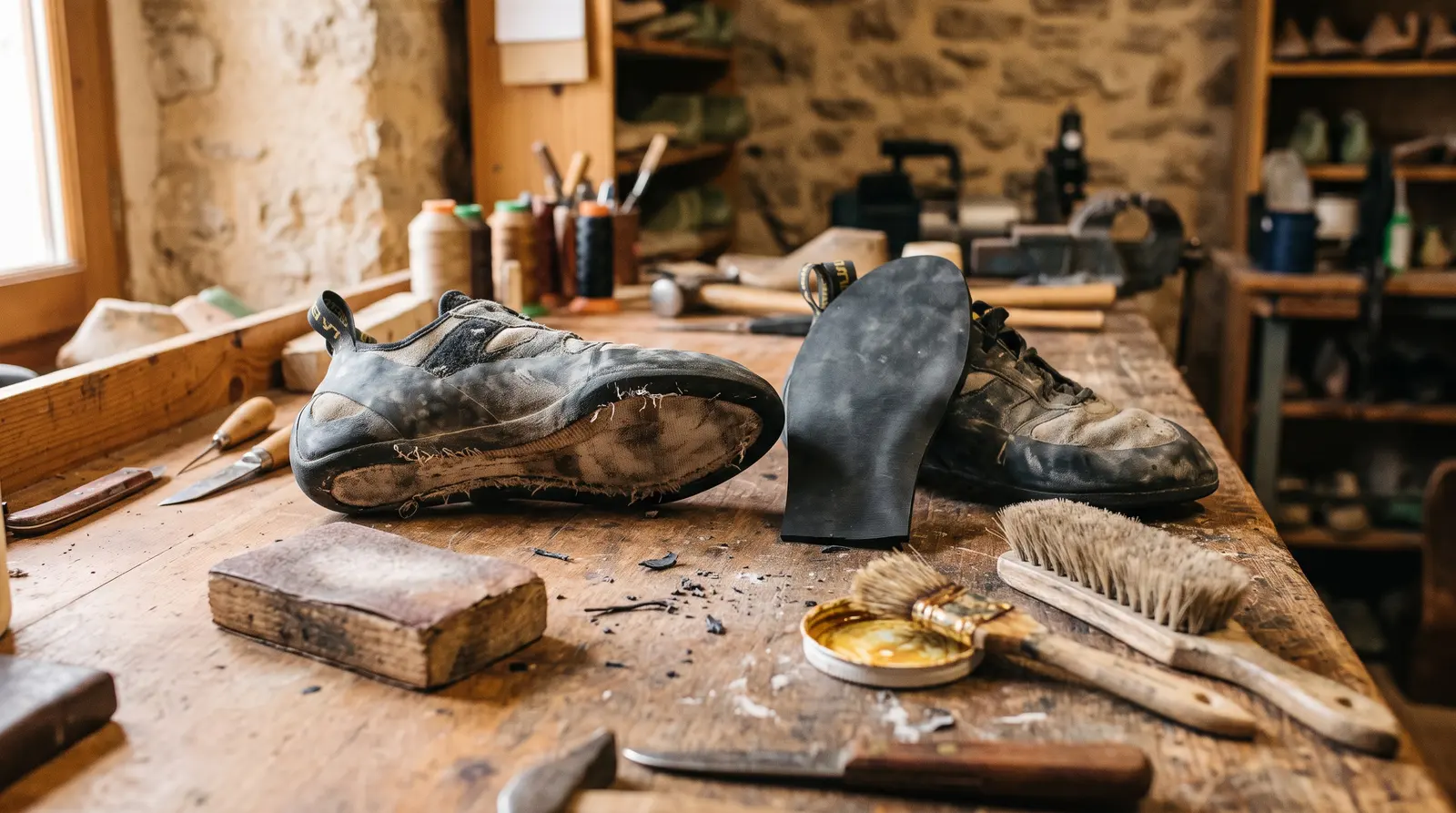
Resole your climbing shoes when the toe rubber is thin, roughly 1 mm left or the edge starting to round off, but before the rand underneath wears through. At that point a standard half resole replaces the front of the sole and the shoe comes back with fresh rubber and the fit you've already broken in. Wait until there's a hole in the toe and you'll pay for a rand repair too, or need a new pair.
The rest is care: hand wash rather than machine wash, dry in the shade, air the shoes after every session and never leave them in a hot car. This guide covers the whole cycle, from spotting the right moment for a climbing shoe resole to keeping the smell under control. It's built on manufacturer guidance from SCARPA, La Sportiva and Evolv and on resolers' own service pages, not on our own repairs.
If you're replacing worn-out shoes rather than fixing them, start with our climbing shoe sizing guide, then see the best bouldering shoes or, for a first pair, the best climbing shoes for beginners.
Resole now or too late? A quick check
A climbing shoe wears in a set order. Lacrux, the German climbing magazine, puts it simply: first the sole goes, then the rand, then the upper, and the repair bill rises at each step. The big toe is where it starts on almost every shoe.
| What you see at the toe | Verdict | Typical repair |
|---|---|---|
Edge slightly rounded, rubber still thick, no change in the sole line | Keep climbing | None yet; check again in a few weeks |
Sole thin (around 1 mm), feels soft when pressed, the seam between sole and rand starting to dip at the big toe | Resole now | Half sole |
Sole worn through at a spot, the rand rubber under it showing or flattening | Resole urgently | Half sole plus rand repair or toe cap |
Hole through the rand, fabric or leather of the upper visible | Late, still often fixable | Half sole, rand repair, possibly stitching or a patch |
Big hole through the toe or upper, toe poking out, shoe lost its shape | Too late for most shops | Ask a resoler for a quote; often cheaper to replace |
Two resolers give a usable rule. bolting.eu, a shop in Innsbruck that sends shoes to an official La Sportiva and SCARPA resoler, says to bring shoes in when the original sole is about 1 mm thick and the sole edge isn't yet visible from underneath, and warns that resole quality drops once the sole is completely worn. K2 Base Camp in Australia, which works with official resolers, says the same thing in plain terms: bring them in before there's any rand damage, and stop climbing on the rand to keep the cost and time down.
Half sole, full resole and rand repair
| Repair | What gets replaced | When you need it |
|---|---|---|
Half sole (standard resole) | The front part of the sole, from the toe back past the ball of the foot | Sole thin at the toe, rand intact. The most common job. |
Full resole | The whole sole, heel to toe | Wear along the full length, or the shop's method for a particular shoe |
Rand repair / toe cap | A patch or a new piece of rand rubber over the toe | The rand has worn thin or through. Usually done together with a half sole. |
Edgeless (No Edge) repair | The front sole section wrapping the toe | Edgeless shoes such as La Sportiva's No Edge models. Rock and Resole lists the Skwama and Ondra Comp under its pricier "full pad" repair. |
Straps, loops, stitching | Velcro, pull loops, small tears in the upper | Often added to a resole; bolting.eu only repairs rands when at least a third of the sole is replaced at the same time |
Many resolers let you choose the rubber. Climbing House notes that softer compounds smear better but wear faster, while harder ones last longer. If you're unsure, ask for the rubber the shoe came with. Lacrux gives the same advice: you already know how the shoe behaves, and the repair only changes the thickness.
How resoling works, and how long it takes
- Clean the shoes first. bolting.eu asks customers to hand wash shoes with a little detergent, rinse them and let them dry fully before handing them in.
- Send or drop them off with an order form. Most resolers work by post; some gyms and shops collect shoes and send them in batches.
- The old rubber comes off. SCARPA describes its factory process as removing the worn sole unit, cleaning and preparing the shoe, then putting it back on the original last (the foot-shaped form the shoe was built on) before fitting the new sole.
- New rubber is glued, shaped and trimmed, plus any rand, toe cap or strap repairs.
- The shoes come back by post. Uppers can feel slightly tighter at first, Climbing House notes.
Turnaround depends on the shop and the season. When we checked their sites in November 2026:
- Rock and Resole (Boulder, Colorado) showed an estimated 5 weeks for climbing shoes, excluding shipping, with a paid rush option.
- Yosemite Bum Resoles, run by Evolv, showed an estimated 4.5 weeks.
- Llanberis Resoles (North Wales) said its current turnaround was about 3 weeks.
- bolting.eu (Innsbruck) says shoes come back after about 2 weeks.
- SCARPA's own factory service in Italy asks UK customers to allow at least 8 weeks.
Climbing House says shops are often quicker in the off-season. If you climb several times a week, a second pair makes the wait much easier, and a resole is a good job for a trip break or a rest week.
Does a resole change the fit?
A little. Lacrux reports that flat shoes often come back almost like new after the first resole, while strongly downturned shoes are more likely to feel different underfoot even when the work is good. The reason is the last: authorised resolers for brands such as La Sportiva and SCARPA work on the original lasts and use original parts, which helps keep the shape. If you resole an aggressive shoe, an authorised resoler for that brand is the safer bet.
One more catch. La Sportiva's FAQ states that its warranty doesn't cover products that have been resoled, repaired or modified. If a shoe still has a manufacturing fault, sort out the warranty claim before you send it for a resole.
How much does resoling cost?
Prices vary a lot by country, shop and how worn the shoe is, so treat these as published examples, not quotes:
| Source | What it lists |
|---|---|
Rock and Resole (US) | $62 deposit; total $62–$107 per pair depending on repairs; edgeless shoes $77–$107; toe caps $15 each; shipping extra |
Evolv FAQ, for Yosemite Bum (US) | About $30 for a half sole, about $45 for a half sole and rands |
Bergzeit (Germany) | Simple resole roughly €30–€50; a rand about €20 extra; shipping may be added |
Lacrux (German-speaking market) | Most providers €50–€80, depending on whether original lasts are used |
Two takeaways. First, rand damage reliably adds to the bill, which is the main money reason to resole on time. Second, Lacrux puts a resole at roughly a third of the price of a new pair. Climbing House suggests that once a repair heads toward the price of new shoes, replacing them usually makes more sense.
How to find a resoler
- Check your brand's list first. La Sportiva North America publishes a list of authorised resolers on its warranty page, including Rock and Resole (Colorado) and The Rubber Room (Bishop, California), and says they're qualified for its No Edge models. SCARPA UK lists official climbing shoe partners trained at its Italian headquarters, including Llanberis Resoles, Rockworx, GripType, ReUP and Chida, and also offers a factory service.
- Look for "any brand" resolers. Yosemite Bum by Evolv says it resoles any brand of climbing shoe. Llanberis Resoles uses factory parts for La Sportiva and SCARPA and Vibram rubber for other brands.
- Ask your gym or climbing shop. Many collect shoes for a resoler. In Austria, bolting.eu does exactly this; in Germany, Bergzeit points readers to the Allgäu company Ofriction, with prices of about €37–€60 and around three weeks' turnaround. In Australia, K2 Base Camp sends shoes to Sticky Rubber Resoles, which it describes as the official La Sportiva and SCARPA resoler there.
- Send a photo. Evolv asks customers to email pictures if they're unsure whether a shoe needs a resole, and Climbing House notes that Pro Deal Resoles quotes from emailed photos, so you can know the cost before you post anything.
- Batch your pairs. Shipping is a big share of the cost, and Rock and Resole and Climbing House both mention savings on multi-pair orders.
How to clean climbing shoes
Manufacturers don't fully agree, so follow the brand of your shoe where you can. Here's what they say:
| Brand | Washing advice | Drying |
|---|---|---|
SCARPA | Clean them regularly. Soft brush, water and mild soap; never the washing machine. SCARPA UK also suggests a soap-free option: flush with water and brush the inside until the water runs clear. | Air dry away from heat and direct sun |
Evolv | Doesn't recommend washing; if you do, hand wash in cold water with a light detergent, wiping the inside. Dyed leather may bleed colour. | Air dry only, not in the sun |
La Sportiva | Keep out of extreme temperatures; clean footwear after use. 99Boulders reports that La Sportiva suggests a damp cloth. | Air dry, no heat source |
Step by step
- Knock off dirt and chalk from the outside first, then the inside, as SCARPA advises.
- Wash by hand in cold to lukewarm water. Use a soft brush or an old toothbrush and, if needed, a small amount of mild soap. Avoid hot water: 99Boulders notes that heat and frequent washing can weaken the adhesive.
- Rinse well until no soap is left.
- Stuff and squeeze. Pack each shoe with a microfibre cloth or newspaper and squeeze gently. SCARPA UK says this pulls out a lot of water and cuts drying time; it also helps the shoe keep its shape.
- Air dry in the shade. Expect a day or more.
How often? Not every week. 99Boulders reports Butora's suggestion of every couple of months, adjusted to how much you climb. Leather shoes deserve extra caution, since Evolv notes that dyed leather shoes bleed colour when washed.
How to dry climbing shoes
- No dryer, radiator, hair dryer or sunny windowsill. SCARPA UK warns that direct sun can overheat the rubber and cause delamination; La Sportiva says not to use a heat source.
- Open them up. Loosen the Velcro or laces and pull the tongue open so air can move through.
- Swap the stuffing once it's wet if the shoes are still soaked.
- Dry between sessions too. Even unwashed shoes are damp with sweat after a session. Evolv says not to leave them in a closed backpack or bag while wet, because moisture breeds the bacteria that cause the smell.
How to stop climbing shoes smelling
Smell comes from sweat and the bacteria living in it, so prevention beats perfume. SCARPA's list is a good routine:
- Take the shoes out of your pack straight after climbing.
- Don't leave them in the car or anywhere hot.
- Dry your feet before putting the shoes on; SCARPA UK suggests bringing a small towel to wipe dirt and sweat off your feet.
- Let the shoes air between uses, even between sessions on the same day.
- For long training sessions, consider very thin socks you can wash after each use.
Deodorising inserts help with what's left. Evolv recommends charcoal inserts to absorb moisture and odour, and SCARPA UK mentions Boot Bananas, which make scented moisture-absorbing inserts plus fragrance-free charcoal and silica versions. Put them in after the session, not on top of soaking-wet shoes that still need air. A wash, done as above, resets a pair that's past saving by airing alone. Climbing House points out that a resole may not fix the smell, because the upper isn't replaced.
Rubber care for better grip
- Wipe the soles often. SCARPA UK recommends a clean, damp microfibre towel to bring back friction.
- Alcohol for slick rubber. If a damp cloth doesn't work, 99Boulders reports that La Sportiva suggests a small amount of rubbing alcohol on the rubber.
- Don't chalk your soles. SCARPA explains that grip comes from the rubber's pores. Chalk fills them and over time builds a hard, glassy layer.
- Clean your feet, not just the shoes. SCARPA suggests wiping your feet before putting shoes on during long sessions, and outdoors it's worth wiping the soles before each attempt.
Storage: heat is the enemy
SCARPA UK explains that rock shoes are built with heat-activated glue, and a car in summer sun can reactivate it and make the shoe come apart. La Sportiva's FAQ says the same: no hot car boots, no direct sunlight, and store footwear somewhere cool and dry. SCARPA adds a dry place at a constant temperature.
A breathable shoe bag keeps rubber clean in your pack, but don't zip damp shoes into it for days. At home, store them open, dry and out of the sun. Don't walk around, belay or leave the heels trodden down in climbing shoes; both SCARPA and Climbing House say this damages them over time.
How long do climbing shoes last?
Evolv's FAQ says a pair can last anything from 3–5 months to 2 years, depending on the brand, the model and the rock or plastic you climb on. Climbing House quotes 3–9 months between resoles as typical for regular climbers. Soft, thin rubber wears faster: K2 Base Camp singles out softer shoes such as the La Sportiva Theory and Skwama as ones to watch.
Three habits stretch the life of a pair the most:
- Precise footwork. Dragging toes up the wall or skating off holds grinds rubber away. Quiet, placed feet are a skill worth learning anyway; see how to get better at bouldering.
- A second, cheaper pair for warm-ups, volume sessions and the gym, keeping the performance pair for projects.
- Resoling on time, before the rand goes. A rand that's been ground through is often the end of a shoe.
Common mistakes
- Waiting for a hole. By then you pay for rand repairs and the shoe may lose its shape.
- Machine washing or tumble drying. Heat and tumbling attack the glue and shape.
- Leaving shoes in the car or in the sun. Heat can delaminate rubber.
- Sealing sweaty shoes in a bag. That's how the smell starts.
- Chalking the soles. It reduces grip over time.
- Picking any cobbler for an aggressive shoe. Downturned and edgeless models are best left to resolers that work with the brand's lasts and parts.
- Ignoring your feet. Shoes that are painful even after break-in aren't a care problem. If you also get split tips and cracked skin from climbing, see our climbing skin care guide.
FAQ
How much does it cost to resole climbing shoes?
It depends on the shop, the country and the repair. Rock and Resole in Colorado lists $62 to $107 per pair, Evolv's FAQ lists about $30 for a half sole at Yosemite Bum, and German sources quote roughly €30 to €80. Rand repairs, toe caps and shipping are usually extra, so ask for a quote first.
How often do climbing shoes need to be resoled?
There's no fixed interval. Evolv says a pair can last anywhere from 3–5 months to 2 years depending on the brand, the model and the rock or plastic you climb on. Check the toe every few weeks and resole when roughly 1 mm of sole is left, before the rand wears through.
Can I put climbing shoes in the washing machine?
Most manufacturers say no. Scarpa's first rule is never to machine-wash climbing shoes, and Evolv recommends a gentle hand wash in cold water at most. Hand wash with water and a little mild soap, then air dry in the shade.
How many times can you resole climbing shoes?
As long as the upper and rand are sound, shoes can usually be resoled more than once. Each resole changes the shoe slightly, and Lacrux notes that strongly downturned shoes lose more of their original feel than flat ones. A hole through the upper or a big hole in the toe often makes a new pair the better buy.
Sources
- SCARPA, How to Take Care of Your Climbing Shoes
- SCARPA UK, Summer Rock Shoe Care
- SCARPA UK, Boot Repairs and Resole Service
- La Sportiva North America, Frequently Asked Questions
- La Sportiva North America, Returns and Warranty (Authorized Resolers)
- Evolv, FAQ
- Rock and Resole, Climbing Shoe Resole
- 99Boulders, How to Clean Climbing Shoes
- Climbing House, How to Resole Climbing Shoes
- Lacrux, Neue Sohle statt neuer Schuh: der Zeitpunkt zum Resolen
- Bergzeit Magazin, Kletterschuhe besohlen und reparieren
- bolting.eu, Kletterschuhe neu besohlen – Innsbruck
- Llanberis Resoles