Climbing Travel Insurance: Rescue Cover, Club Memberships and What to Check
 Petr Hess, strength & conditioning coach
Updated 2 Nov 2026 · 14 min read
Key takeaways
Best for: Climbers and boulderers travelling abroad who need rescue and medical cover
- Find your exact discipline (indoor, outdoor bouldering, sport, multi-pitch) in the policy wording; some insurers put outdoor bouldering in a higher tier than outdoor rock climbing.
- The EHIC and GHIC never pay for mountain rescue or the flight home, so you need separate rescue and repatriation cover.
- Alpine Club schemes (DAV, ÖAV, FFCAM option, FEDME licences, CAI, AAC) mainly fill the rescue gap; most lack cancellation, theft and gear cover and some have low medical limits.
- Call the insurer's or club's assistance line before arranging transport or private treatment, or payment can be capped or refused.
Climbing travel insurance is any cover that will pay for search and rescue, emergency medical treatment and getting you home after a climbing accident abroad. Many standard travel policies exclude climbing or only cover some kinds of it, and a European health card never pays for a rescue. The usual fix is either a travel policy that names your exact type of climbing or an Alpine Club membership with rescue cover, often both together.
This guide explains what to check in any policy, compares what the main climbing clubs include (DAV, ÖAV, BMC, FFCAM, FEDME, CAI, JMSCA and the American Alpine Club), adds notes for readers in the US, Germany, France, Spain, Italy and Japan, and ends with a decision table by trip type. It is one part of our climbing trips section; if you are still choosing a destination, start with how to plan a climbing trip.
Does travel insurance cover climbing?
Only if the policy says so. The UK government's travel insurance guidance tells travellers to check that a policy covers "all activities you may undertake on holiday, such as sports or adventure tourism", and warns that some sports are not usually included in standard policies (GOV.UK).
Where insurers do cover climbing, they often split it into tiers. One example, checked in November 2026: World Nomads' plans for US residents list indoor rock climbing and bouldering, plus outdoor rock and ice climbing up to 3,000 m (9,842 ft), in the base plan. Outdoor bouldering and soloing appear only in the most expensive plan, which goes up to 8,000 m (World Nomads). That is not a criticism of one company; it shows why the exact activity name matters. A Fontainebleau trip is "outdoor bouldering", not "rock climbing", and the difference can decide whether a claim is paid.
What to check in a policy
Go through the wording with this list. If any answer is "not mentioned", ask the insurer.
1. Activities covered, in exact words
- Is your discipline named: indoor climbing, outdoor bouldering, sport climbing, trad, multi-pitch, via ferrata, ice climbing, scrambling?
- Is it covered at amateur level only? Paid work and competitions are often excluded. The ÖAV scheme, for example, excludes work-related activity, and the DAV scheme excludes competitions it does not organise.
- Are there conditions such as "roped and with a qualified guide or instructor"? If the wording says that, climbing on your own or with friends is not covered.
- Free soloing is often excluded; in the World Nomads example above it appears only in the top plan. If you climb deep-water solos or tall highballs, check how "soloing" is defined.
2. Altitude limits
Most rock trips stay low, but alpine rock and approach treks can cross a limit without you noticing. Limits vary a lot: the ÖAV scheme excludes trips with planned ascents of summits over 6,000 m, the DAV scheme excludes expeditions with destinations over 7,000 m, and the BMC's Rock policy covers rock climbing, bouldering and graded scrambling up to 5,000 m (BMC Insurance). Check whether the limit refers to the summit height or the highest point you sleep or climb.
3. Search and rescue
- Is there a separate rescue limit, apart from the medical limit? Club schemes usually state one (25,000 to 50,000 euros in the schemes below).
- Does it include helicopter rescue and search without injury? A German outdoor magazine notes that when uninjured people are recovered, they are often left with the bill unless they have special rescue or accident cover (Outdoor Magazin, 2026).
- Does it pay the rescue organisation directly, or do you pay and claim later?
4. Medical treatment and repatriation
- Medical limit abroad, and whether it covers illness as well as accidents. The DAV scheme covers accident-related medical costs abroad, not illness.
- Repatriation: who decides it is medically necessary, and is it capped? The ÖAV scheme pays medically justified repatriation without a cost limit, but only under set conditions.
- Call-first rules. Many schemes only pay in full if their assistance centre organises transport. If not, the ÖAV scheme pays a maximum of 750 euros, and the FFCAM assistance contract says arrangements made without their prior agreement are not reimbursed.
- Trip length: the ÖAV medical and repatriation cover applies during the first eight weeks of any trip abroad.
5. Gear cover
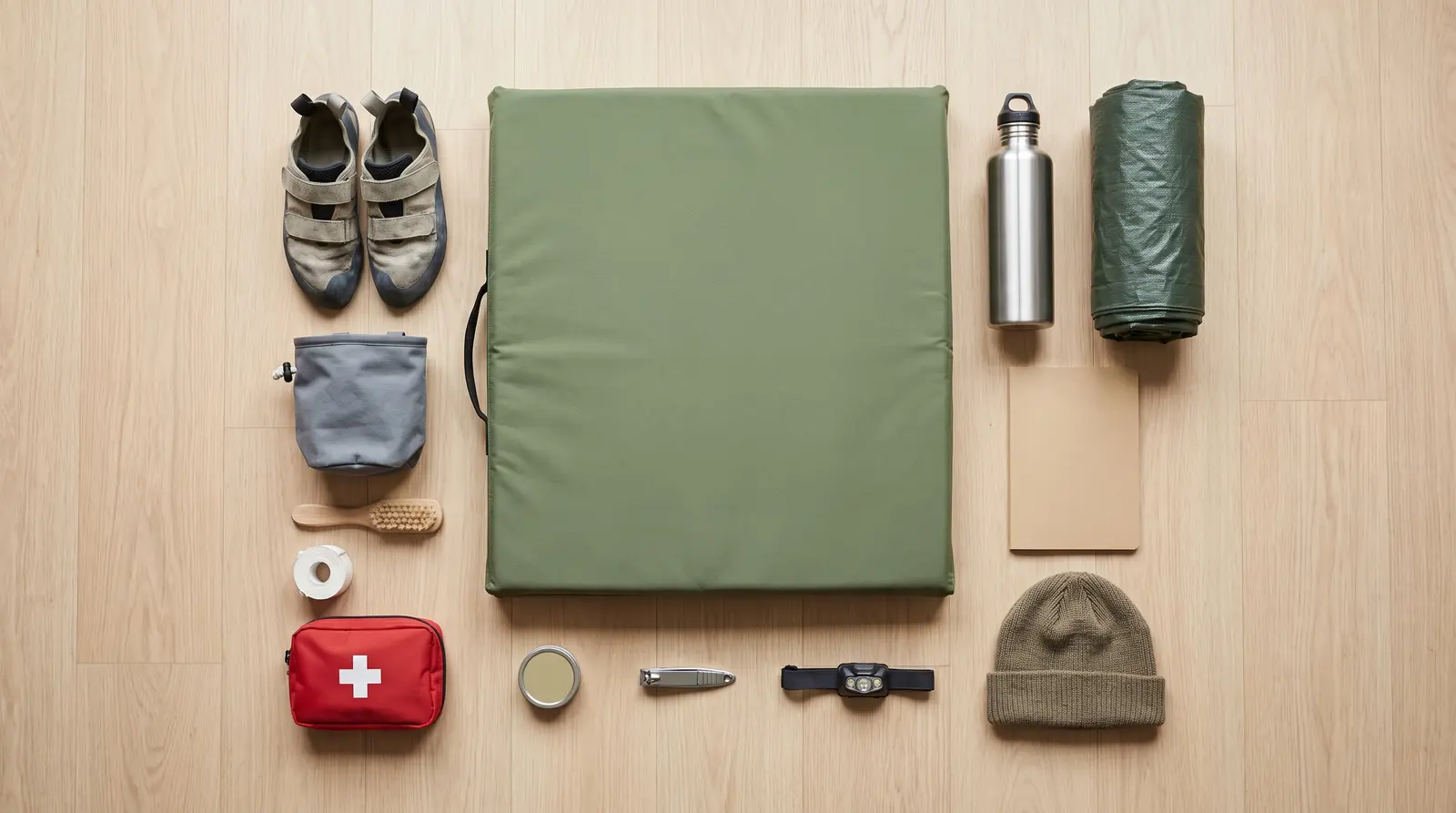
Ropes, quickdraws and crash pads are expensive, and baggage cover is often small or capped per item. Check the single-item limit, whether theft from a car or at the crag counts, and whether "sports equipment" is excluded. The FFCAM sports equipment extension, for instance, pays for accidental damage up to 15,000 euros with a 150 euro excess, but excludes theft and loss. Most club rescue schemes include no gear cover at all.
6. The small print that sinks claims
- Residency: many policies only sell to residents of one country.
- Subsidiarity: club schemes (DAV, ÖAV) pay only after other insurance and state health cover have paid.
- Negligence clauses: the DAV excludes damage caused by gross negligence, especially ignoring generally accepted mountaineering rules. FFCAM excludes rescue costs caused by ignoring the site operator's safety rules.
- Package tours: the DAV scheme does not cover alpine sport on package tours outside Europe, with exceptions.
- Travel warnings: several schemes exclude countries under an official travel warning.
- Pre-existing injuries: a finger or shoulder injury you are already treating may be excluded. See our medical disclaimer and, if relevant, our guide to climbing finger injuries.
Why rescue cover matters: what a helicopter costs
Rescue is the gap that surprises climbers most, because state health insurance and health cards do not pay for it. The EU's own guidance is blunt: search and rescue costs are not covered by the European Health Insurance Card, and the card "will not help you with rescue and repatriation" (Your Europe). UK guidance says the GHIC and EHIC do not cover repatriation or "additional costs such as mountain rescue in ski resorts" (GOV.UK).
How big is the bill? Outdoor Magazin reported in January 2026 that average helicopter mission costs in the Alps are often between 3,000 and 6,000 euros, with per-minute rates in the double to low triple digits, depending on country. It also notes big national differences: in Austria the health insurer usually pays only a small flat amount, state mountain rescue in France outside ski areas is mostly free, and in Italy costs are passed on fully or partly depending on the region (Outdoor Magazin).
Switzerland has its own system. Anyone can become a Rega patron for CHF 40 a year, and Rega "can waive all or part of the mission costs" that insurance does not cover. It is a donation, not insurance, the waiver is discretionary, and for people who don't live in Switzerland it applies to air rescue inside Switzerland only (Rega).
Alpine Club memberships compared
Several climbing clubs and federations include rescue cover in membership or sell it as an add-on. The table summarises the published terms on 3 November 2026. Membership benefits change, so open the linked document for your year before you travel.
| Club (country) | Rescue/search cover | Medical abroad and repatriation | Where and limits | Terms checked |
|---|---|---|---|---|
DAV (Germany), included in membership | Up to 50,000 euros per person and event | Accident-related medical costs abroad and repatriation (no illness); 24 h hotline | Worldwide; not package tours outside Europe; expeditions over 7,000 m excluded | Flyer 01/2025, web page Nov 2026 |
ÖAV "Alpenverein Weltweit Service" (Austria), included in membership | Up to 25,000 euros per person and event, worldwide, leisure time | Medical treatment abroad up to 10,000 euros (accident and illness); repatriation unlimited if conditions are met; first 8 weeks of each trip | Excludes planned ascents over 6,000 m, polar regions, Greenland; covers climbing at UIAA 5 and up | Folder valid to 31/12/2027 |
FFCAM (France), rescue only with paid option | 30,000 euros per person and event, helicopter included, with the "Assurance de Personnes et Assistance Secours" option (25 euros, 20 euros under 24) | Medical abroad up to 100,000 euros (Europe/Morocco zone) or 350,000 euros with a world extension; medical repatriation at actual cost | World extension 147 euros (excluding Himalaya) or 287 euros (including Himalaya) | Season 2026-2027 |
FEDME (Spain), via your regional federation licence | Depends on regional licence. Example, FEMECV 2026: 5,000 euros (regional licence) to 15,000 euros (world licences) | FEMECV example: medical abroad 15,000 to 18,000 euros, repatriation 3,000 to 6,000 euros, by licence type | FEMECV: "C" world up to 7,000 m, "D" above 7,000 m | 2026 policy |
CAI (Italy), included in membership | Membership automatically includes cover for Soccorso Alpino (mountain rescue) costs; check the current limit with your section | Not a travel medical policy; optional personal-activity accident policy (see Italy notes) | Optional accident policy has no difficulty or territory limits | Circular of 28/10/2025, for 2026 |
BMC (UK), separate purchase for members | Membership itself includes liability insurance, not rescue. Rescue comes with BMC Travel Insurance, bought on top | In the travel policy you buy | Rock up to 5,000 m; Alpine & Ski up to 6,500 m peaks; High Alt & Remote above that | Insurance page Nov 2026 |
American Alpine Club (US), included in membership | Partner level: up to 7,500 dollars of rescue services via Redpoint (not insurance) | Up to 5,000 dollars per incident (10,000 dollars a year) for emergency stabilisation; Leader level (250 dollars a year) adds up to 300,000 dollars of medical transport home | Worldwide including the US; not above the Arctic Circle or below 60° south | Web page Nov 2026 |
JMSCA mountain mutual aid society (Japan), separate membership | Mountain insurance for society members, with a "mountaineering and climbing" course | See the course documents | Courses: mountaineering/climbing, hiking/trail running, sport climbing | 2026 page |
DAV (Deutscher Alpenverein)
The Alpiner Sicherheits-Service is part of every DAV membership. It pays up to 50,000 euros for search, recovery and rescue per person and event, plus transport to the nearest hospital, accident-related medical costs abroad, repatriation and a 24-hour emergency line (+49 89 30657091). It also includes accident and sports liability insurance. Climbing outdoors, on indoor walls, bouldering and competition climbing are all named. The catches: it is subsidiary (other insurers pay first), it excludes alpine sport on package tours outside Europe and expeditions with destinations over 7,000 m, and it does not cover illness abroad. The DAV itself recommends adding travel health insurance.
ÖAV Alpenverein Weltweit Service
The Austrian Alpine Club scheme is worth a look for non-Austrians because its terms state that members living outside Austria or with foreign nationality are fully insured, with "abroad" meaning outside their own country of residence. It pays rescue up to 25,000 euros worldwide, repatriation without a cost limit (if medically justified and organised through Europ Assistance), and medical treatment abroad up to 10,000 euros during the first eight weeks of a trip, for accidents and illness. It explicitly covers climbing at UIAA 5 and above and icefall climbing, but not planned ascents over 6,000 m. Note the 10,000 euro medical cap: that is thin for a hospital stay in some countries, which is why many members add a travel medical policy for long-haul trips.
FFCAM (Club Alpin Français)
A plain FFCAM licence includes only civil liability and legal defence. Search and rescue (30,000 euros, helicopter included), medical repatriation and medical costs abroad come only with the "Assurance de Personnes et Assistance Secours" option. For 2026-2027 the old single world extension was split in two: 147 euros for the world excluding the Himalaya and 287 euros including Nepal, India, Pakistan, China and Bhutan. The terms also treat acute mountain sickness, frostbite and accidental sprains or tendon ruptures as accidents for the rescue and repatriation guarantees. Members who live outside the Europe/Morocco zone are covered abroad only during FFCAM-supervised activities.
FEDME (Spain)
In Spain the insurance sits in your regional federation licence. The national FEDME "habilitación" (14.82 euros for adults in 2026) is an add-on that brings refuge discounts and other benefits on top of the regional licence. Cover therefore depends on your region and licence letter. As one example, the 2026 Valencian (FEMECV) policy with Generali gives 5,000 euros of rescue on the basic regional licence (and only covers climbing with an extra complement), 12,000 euros for licences A (Spain) and B (Spain, Pyrenees, Andorra, Portugal), and 15,000 euros for C (world up to 7,000 m) and D (above 7,000 m). Rescue abroad is also capped at 30,000 euros for everyone involved in the same accident (FEMECV 2026 policy). Other regions publish their own tables.
CAI (Club Alpino Italiano)
The CAI's 2026 circular says membership automatically includes insurance for Soccorso Alpino costs, plus accident and liability cover during official club activities. For your own climbing outside club trips you can add a personal accident policy: combination A costs 126.50 euros a year (55,000 euros death, 80,000 euros permanent disability, 2,500 euros medical costs with a 200 euro excess); combination B costs 252.90 euros. A personal liability policy costs 12.50 euros. The circular page we opened does not state the rescue limit, so ask your section for the current figure.
BMC (British Mountaineering Council)
BMC membership includes liability insurance, and from April 2026 members living in the EU (except Switzerland) have that liability cover worldwide (BMC, 2026). Rescue and medical cover are not included in membership; they come from BMC Travel Insurance, which members buy per trip or year in levels by activity and altitude.
American Alpine Club
AAC membership includes a rescue benefit delivered by Redpoint Travel Protection. You must call Redpoint first (+1 628-251-1510). If you couldn't, because you were unconscious or had no signal, you can ask for reimbursement afterwards, but Redpoint decides what it pays and the AAC says payment is not guaranteed. The AAC states clearly that this is not insurance and is not meant to replace health insurance. It applies to any outdoor activity except flying, anywhere in the world including the US, apart from polar regions.
JMSCA (Japan)
The Japan Mountaineering and Sport Climbing Association runs a mountain mutual aid society. Its insurance is available to society members, with separate courses for mountaineering and climbing, hiking and trail running, and sport climbing. Members also get access to the cocoHeli locator service and transmitter and beacon rentals. Details and premiums are in the course documents on the society's pages.
Country notes for our readers
United States
- Check whether your US health plan pays for treatment abroad, and for how much. If the answer is unclear, assume you need travel medical cover with evacuation.
- The AAC benefit is useful for rescue, including on trips away from home within the US, but its medical part only covers emergency stabilisation. For a trip to Fontainebleau or Kalymnos, pair it with a travel policy that names your discipline.
- If you consider joining a European club, read its residency rules first. The ÖAV terms cover members living outside Austria; FFCAM covers members living outside its Europe/Morocco zone abroad only on FFCAM-supervised activities.
Germany
- DAV membership covers rescue up to 50,000 euros and accident medical costs abroad, but not illness, so add travel health insurance (Auslandsreisekrankenversicherung) as the DAV recommends.
- Statutory health insurance generally pays a helicopter mission only when it is medically necessary; recovery of uninjured people is often not paid.
- For the Frankenjura at home, rescue is the main gap; for long-haul trips, the DAV package-tour exclusion and 7,000 m expedition limit matter.
France
- The basic FFCAM licence does not pay for rescue. You need the "Assurance de Personnes et Assistance Secours" option, and a world extension for trips outside the Europe/Morocco zone, such as a US road trip.
- Mountain rescue by the state outside ski areas is mostly free in France, but that does not help you abroad.
- FFCAM advises CPAM members to carry the European Health Insurance Card in the EU.
Spain
- Read your regional federation's table, not just the FEDME page. The licence letter decides whether you are covered in France, Portugal or worldwide.
- Check that "escalada" is included in your licence; in the FEMECV example the cheapest regional licence covers climbing only with a paid complement.
- Federation rescue and medical limits are modest (15,000 to 18,000 euros at world level in the example), so consider a travel medical policy for long-haul trips.
Italy
- CAI membership includes Soccorso Alpino cover; the personal accident policy for your own climbing is optional and must be activated through your section.
- Some Italian regions charge part or all of a rescue to the person rescued, so rescue cover matters even at home, for example on Arco multi-pitches.
Japan
- JMSCA's mutual aid society offers mountain and climbing insurance to its members; check the course document for search and rescue limits and overseas cover.
- Visitors to Japan cannot use an EHIC or GHIC there. If you're heading to our Japan bouldering guide spots, choose a travel policy that names outdoor bouldering and includes search and rescue.
Decision table: what cover fits your trip
| Trip type | Main risk to cover | Typical approach | Watch out for |
|---|---|---|---|
Gym climbing or bouldering on a city break | Medical costs, cancellation | Standard travel insurance that lists indoor climbing; EHIC/GHIC as an extra in Europe | Indoor climbing missing from the activity list |
Outdoor bouldering trip (Font, Albarracín, Magic Wood) | Ankle and wrist injuries, carry-out from the forest, medical abroad | Travel policy that names outdoor bouldering, or club cover plus travel medical | Bouldering sold only in a higher tier; crash pad not covered as baggage |
Single-pitch sport climbing in Europe (Kalymnos, Siurana, El Chorro) | Rescue from the crag, medical abroad, repatriation | Alpine Club scheme with rescue, plus travel insurance for medical, cancellation and gear | Rescue limit separate from medical; call-first rules |
Multi-pitch and alpine rock (Arco, Dolomites, Swiss Alps) | Helicopter rescue, search without injury | Club scheme with a clear rescue limit; Rega patronage in Switzerland as an extra | Altitude limits, glacier or mountaineering exclusions, negligence clauses |
US road trip from Europe (Bishop, Joshua Tree, Red River Gorge) | High medical bills, evacuation | Travel medical policy with a high limit that includes the USA; club rescue as a backup | ÖAV medical cap of 10,000 euros; FFCAM needs a world extension |
European trip from the US | Medical abroad, rescue | Travel medical with evacuation, naming your discipline; AAC benefit for rescue | AAC medical covers stabilisation only |
Long trip over 8 weeks | Cover ending mid-trip | Annual or long-stay policy | ÖAV medical and repatriation cover only the first 8 weeks of each trip |
Expedition or peaks over 5,000 to 6,000 m | Remote rescue, altitude illness | Specialist high-altitude policy or club expedition add-on | ÖAV excludes over 6,000 m; DAV over 7,000 m; FFCAM charges extra for the Himalaya |
For destination details see our best climbing destinations in Europe, the Bishop, Joshua Tree and Red River Gorge guides, and winter climbing destinations.
Common mistakes
- Relying on the EHIC or GHIC. It gives access to state healthcare only. It pays nothing for rescue, private clinics or the flight home.
- Buying "adventure" cover without reading the activity list. "Rock climbing" may not include outdoor bouldering, deep-water soloing or via ferrata.
- Thinking club membership is complete travel insurance. Most club schemes have no cancellation, theft or baggage cover, and medical limits can be low.
- Organising transport yourself. If you book a flight home or a private clinic without calling the assistance line, schemes can cap or refuse payment.
- Letting membership lapse. ÖAV cover depends on the fee being paid before the event (with a January grace rule). FFCAM cover runs from 1 October to 31 October of the following year.
- Not carrying the numbers. Save your insurer's or club's emergency line and policy number on your phone and on paper in your pack, next to the local emergency number (112 in the EU, 911 in the US).
A simple pre-trip checklist
- Write down every discipline you'll do and find each one in the wording.
- Note the rescue limit, medical limit, repatriation terms and altitude limit.
- Check your country of residence is allowed and your trip length is covered.
- Save the assistance number and the "call first" rule.
- List gear values and check the single-item limit. Our bouldering trip packing list helps here.
- Bring your health card if you have one, as an extra, not a replacement.
Insurance doesn't make climbing safer. A helmet on multi-pitch (see climbing helmets), good spotting and pad placement on boulders (see outdoor bouldering for beginners) and turning back in bad weather do that. Insurance just makes sure an accident doesn't also become a financial disaster.
FAQ
Does normal travel insurance cover rock climbing?
Sometimes, but never assume it. UK government travel advice warns that some sports are not usually included in standard policies, and insurers that do cover climbing often split it into tiers by discipline and altitude. One large US-facing insurer's base plan, for example, lists indoor bouldering and outdoor rock climbing up to 3,000 m, but puts outdoor bouldering and soloing only in its top plan. Find the exact activity name in the wording before you buy.
Does the EHIC or GHIC pay for mountain rescue?
No. The EU's Your Europe page says search and rescue costs are not covered by the European Health Insurance Card and that it will not help with rescue and repatriation. UK government guidance says the same for the GHIC, naming mountain rescue in ski resorts. The cards give access to state healthcare only, so you still need rescue and repatriation cover.
Is Alpine Club membership enough on its own?
For a short European rock trip it can cover the biggest gap, rescue, but it is rarely a complete travel policy. The DAV scheme pays medical costs abroad only after accidents, the ÖAV scheme caps medical treatment abroad at 10,000 euros for the first eight weeks of a trip, and most club schemes have no cancellation, theft or baggage cover. Many climbers combine a club membership with ordinary travel insurance.
Is the American Alpine Club rescue benefit insurance?
No. The AAC says its rescue service, delivered by Redpoint Travel Protection, is not insurance. Partner members get up to 7,500 dollars of rescue services and up to 5,000 dollars of emergency stabilisation medical costs per incident, and you are expected to call Redpoint first. After-the-fact reimbursement is discretionary.
Sources
- Deutscher Alpenverein, Alpiner Sicherheits-Service (ASS): coverage page and flyer 01/2025
- Österreichischer Alpenverein, Alpenverein Weltweit Service (English folder, valid to 31/12/2027)
- FFCAM, Licence assurance: récapitulatif des garanties, saison 2026-2027 (via Club Alpin Île-de-France)
- American Alpine Club, AAC Member Rescue Benefit
- European Union, Your Europe: Unplanned healthcare on temporary stays (EHIC)
- Club Alpino Italiano, Circolare 14bis/2025: Coperture assicurative, massimali e costi 2026