The Best Climbing Destinations in Europe: 17 Areas by Style and Season
 Petr Hess, strength & conditioning coach
Updated 2 Nov 2026 · 14 min read
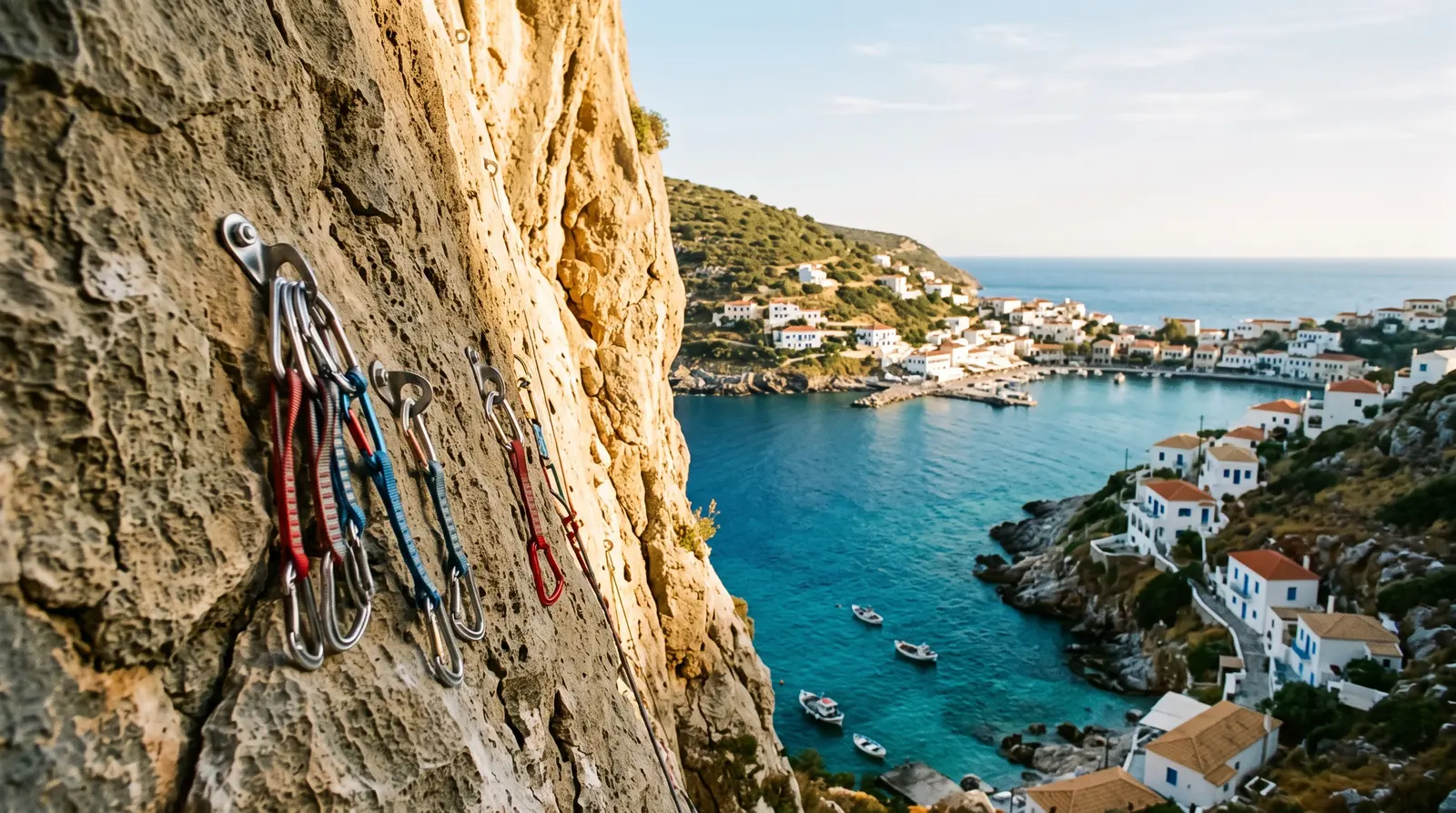
Key takeaways
Best for: Climbers choosing a European climbing trip by style, grade and month
- Pick the month first: go south (Greece, southern Spain, Liguria) in winter and high or north (Céüse, Dolomites, Magic Wood, Frankenjura) in summer.
- For a first sport trip, Kalymnos, Arco, Finale Ligure and El Chorro have the widest spread of moderate routes.
- On Kalymnos in 2026, avoid unrenovated routes bolted before 2005 and check Rebolt Kalymnos before climbing.
- Check seasonal bird closures and reserve rules before every trip, and make sure your insurance covers climbing and rescue.
The best climbing destinations in Europe depend on two things: your style and the month you can travel. For sport climbing, Kalymnos, Siurana and Margalef, El Chorro, Finale Ligure, Arco, Céüse and the Frankenjura are the classics. For bouldering, start with Fontainebleau, then Albarracín, Magic Wood and Ticino. For long routes, go to the Dolomites, the Verdon Gorge or Paklenica, and for deep water soloing, Mallorca. In winter head south (Greece, southern Spain, the Ligurian coast); in summer go high or north.
Below you'll find all 17 areas in one comparison table, then the best picks by style and by season, and a simple way to choose. Most "best of Europe" lists just rank ten crags. This one is built to help you decide where to go in your month at your grade, and it links to our detailed guide for each area. It is the hub of our climbing trips section.
A note on who's writing: I'm a strength and conditioning coach in Prague, not a mountain guide or a local at any of these crags. Everything here comes from published sources (cited at the bottom), the local climbing associations and the area guides. Rules and conditions change, so always check the current local information before you travel.
The 17 best climbing destinations in Europe at a glance
Grades are French sport grades or Font bouldering grades unless stated. If you think in YDS or V grades, use our grade converter or read climbing grades explained. "Best season" is the main window; many areas are climbable outside it on the right days.
| Area | Country | Rock | Main style | Grades | Best season | Fly to | Our guide |
|---|---|---|---|---|---|---|---|
Kalymnos | Greece | Limestone (tufas, caves) | Sport, single-pitch | 2a–9a+ | Spring, autumn, winter | Kos, then ferry | |
Leonidio | Greece | Red and grey limestone | Sport, some multi-pitch | Most quality routes 5c–7b | October–April | Athens, then drive | |
Siurana | Spain | Limestone | Sport, technical and steep | 3c+–9b+ | Autumn to spring | Barcelona (about 2 h drive) | |
Margalef | Spain | Conglomerate (pockets) | Sport | 3a–9b+ | Spring, autumn, winter | Barcelona | |
El Chorro | Spain | Limestone | Sport, some long and trad routes | All levels | October–April | Málaga (about 1 h) | |
Rodellar | Spain | Limestone (caves, tufas) | Steep sport | Mostly mid to hard | Late April–mid June, Sept–Nov | Zaragoza or Barcelona | In this article |
Albarracín | Spain | Red sandstone | Bouldering | Thousands of problems, all levels | September–May | Valencia, Madrid or Barcelona | |
Mallorca | Spain | Limestone sea cliffs | Deep water solo, sport | All levels | DWS: September–October | Palma | In this article |
Céüse | France | Limestone | Sport, long single pitches | 4–9c (best from 6c up) | Late spring to autumn | Grenoble or Marseille region, base Gap | In this article |
Verdon Gorge | France | Limestone | Multi-pitch, abseil in | 3a–9c | April–May, Sept–Oct | Nice or Marseille | In this article |
Fontainebleau | France | Sandstone | Bouldering (colour circuits) | Font 2–8C+ | Spring and autumn | Paris (about 70 km) | |
Finale Ligure | Italy | Limestone | Sport, some multi-pitch | 2a–8c+ | Spring, autumn, winter | Genoa or Nice | |
Arco | Italy | Limestone | Sport and multi-pitch | 4a–9b+ | Spring and autumn | Verona | |
Dolomites | Italy | Dolomite | Alpine multi-pitch, via ferrata | 3a–8b | Summer (roughly June–September) | Venice, Innsbruck or Munich | In this article |
Frankenjura | Germany | Limestone (pockets) | Short, powerful sport | 4–9b | Spring to autumn | Nuremberg | |
Osp / Mišja Peč | Slovenia | Limestone | Sport, steep | 4a–9a+ | Autumn to spring | Trieste or Ljubljana | |
Paklenica | Croatia | Karst limestone | Multi-pitch (to 350 m) and sport | Up to about 8a | April–October | Zadar | In this article |
Magic Wood and Ticino | Switzerland | Gneiss and granite | Bouldering | Font 6A–8C | Magic Wood: summer. Ticino: autumn to spring | Zurich (Magic Wood), Milan or Zurich (Ticino) |
Grade ranges come from Lacrux's European ranking, the local guide sites and 27 Crags. They show what exists, not what is common: Céüse, for example, lists routes from grade 4 but only around 120 of its 600+ lines are 6a+ or easier.
How to choose: four questions
Most climbers pick a destination from a photo. A better way is to answer four questions in this order:
- When can you go? This rules out half the list straight away. A July trip to El Chorro or a January trip to Céüse won't work. Use the season section below.
- What do you want to climb? Single-pitch sport, bouldering, long multi-pitch routes or deep water solo. Mixed groups (a boulderer and a sport climber) do best in areas with both, such as Ticino, Albarracín's surroundings or Fontainebleau plus a nearby sport crag.
- What's your grade, honestly, outdoors? If you climb 6a–6c, you want an area with hundreds of routes in that band: Kalymnos, Leonidio, Finale, Arco and El Chorro are deep at those grades. Céüse, Rodellar, Margalef and Mišja Peč reward climbers at 7a and above far more. If you've never climbed outside, read outdoor bouldering for beginners or the bouldering vs rock climbing guide first.
- Car or no car? El Chorro works without one (the train from Málaga stops in the gorge area). Siurana, Margalef, Céüse, the Frankenjura, Albarracín and Rodellar are much easier with a car. Fontainebleau is possible by train and bike.
For the full planning checklist (budget, flights, accommodation, partner logistics) see how to plan a climbing trip.
Best sport climbing in Europe
Sport climbing is what most people mean by a European climbing holiday: bolted single-pitch routes, short approaches, warm rock. Lacrux's 2026 ranking of Europe's top ten sport climbing areas puts Céüse first, then Margalef, Finale Ligure, Kalymnos, Arco, Verdon, Siurana, the Dolomites, Osp and the Frankenjura. Here's how they differ in practice.
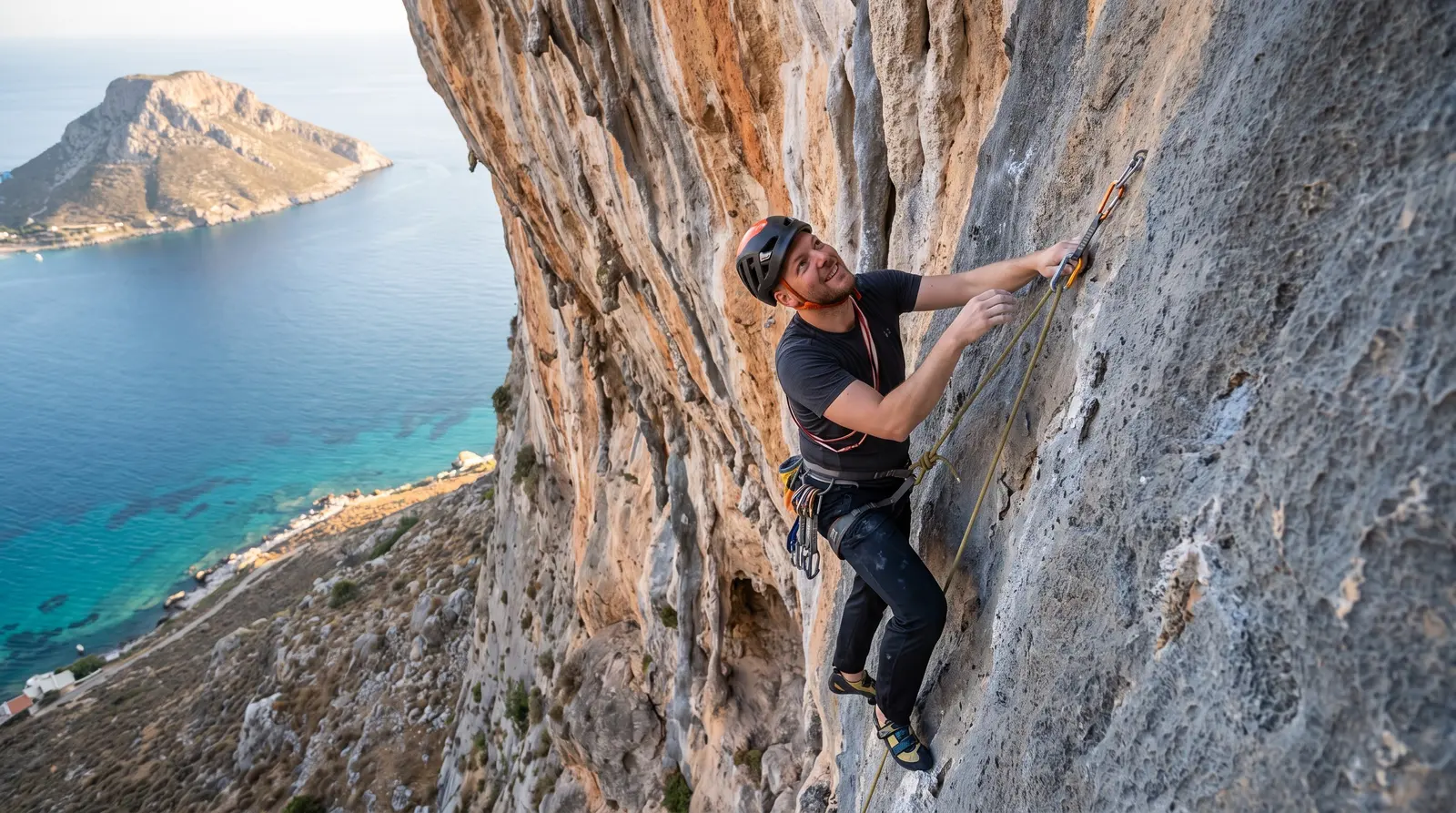
Kalymnos, Greece
A small Greek island with thousands of routes (Lacrux counts around 4,600 across more than 80 cliffs), famous for tufas, stalactites and caves above the sea. Its infrastructure is well developed, with climbing schools, gear shops and guide services. You fly to Kos and take the ferry. Best in spring and autumn; Lacrux lists winter too.
Leonidio, Greece
On the Peloponnese coast, Leonidio and neighbouring Kyparissi have grown into a major winter destination with more than 2,000 bolted routes on red and grey limestone. Most of the quality climbing is between 5c and 7b, which makes it one of the best areas in Europe for intermediate climbers. The season runs roughly October to April; after early spring many sectors get too hot. Guidebook profits go partly to bolting.
Siurana and Margalef, Spain
Two villages in Catalonia, about two hours' drive from Barcelona and close to each other. Siurana is a limestone ridge with over 1,700 routes, known for technical, steep climbing. Margalef is very different: conglomerate rock full of small pockets, about 1,500 routes in more than 80 sectors, and some of the hardest routes in the world. Both are best from autumn to spring. See our Siurana and Margalef climbing guide.
El Chorro, Spain
A limestone gorge in Andalusia, about an hour from Málaga airport and reachable by train. It mixes grey, crimpy, slabby rock with steeper orange walls, plus some long multi-pitch and trad lines. The prime months are usually March–April and October–November; December and January can be wet, and summer is too hot. The Caminito del Rey walkway through the gorge is the classic rest-day walk. Full details in our El Chorro climbing guide.
Rodellar, Spain
A canyon in the Sierra de Guara (Huesca) with huge caves and arches of steep, tufa-lined limestone. It suits strong climbers who like overhangs; there is less for beginners. The cooler shade of the canyon makes it a late-spring and early-autumn venue. Some multi-pitch routes deeper in the gorge have bird nesting restrictions in winter and spring (sources give different end dates, so check locally), while most single-pitch routes are unaffected. Tufas seep after long rain.
Céüse, France
Lacrux ranks it the number one sport climbing area in Europe: a band of limestone at about 2,000 m above the village of Sigoyer near Gap, roughly 100 km south of Grenoble. Routes are long, sustained and technical. The approach is a steep walk of about 40 minutes, and the altitude means it is a summer crag: too cold in winter, excellent from late spring to autumn. Only about 120 of the 600+ lines are 6a+ or easier, so most visitors climb 7a and above.
Finale Ligure, Italy
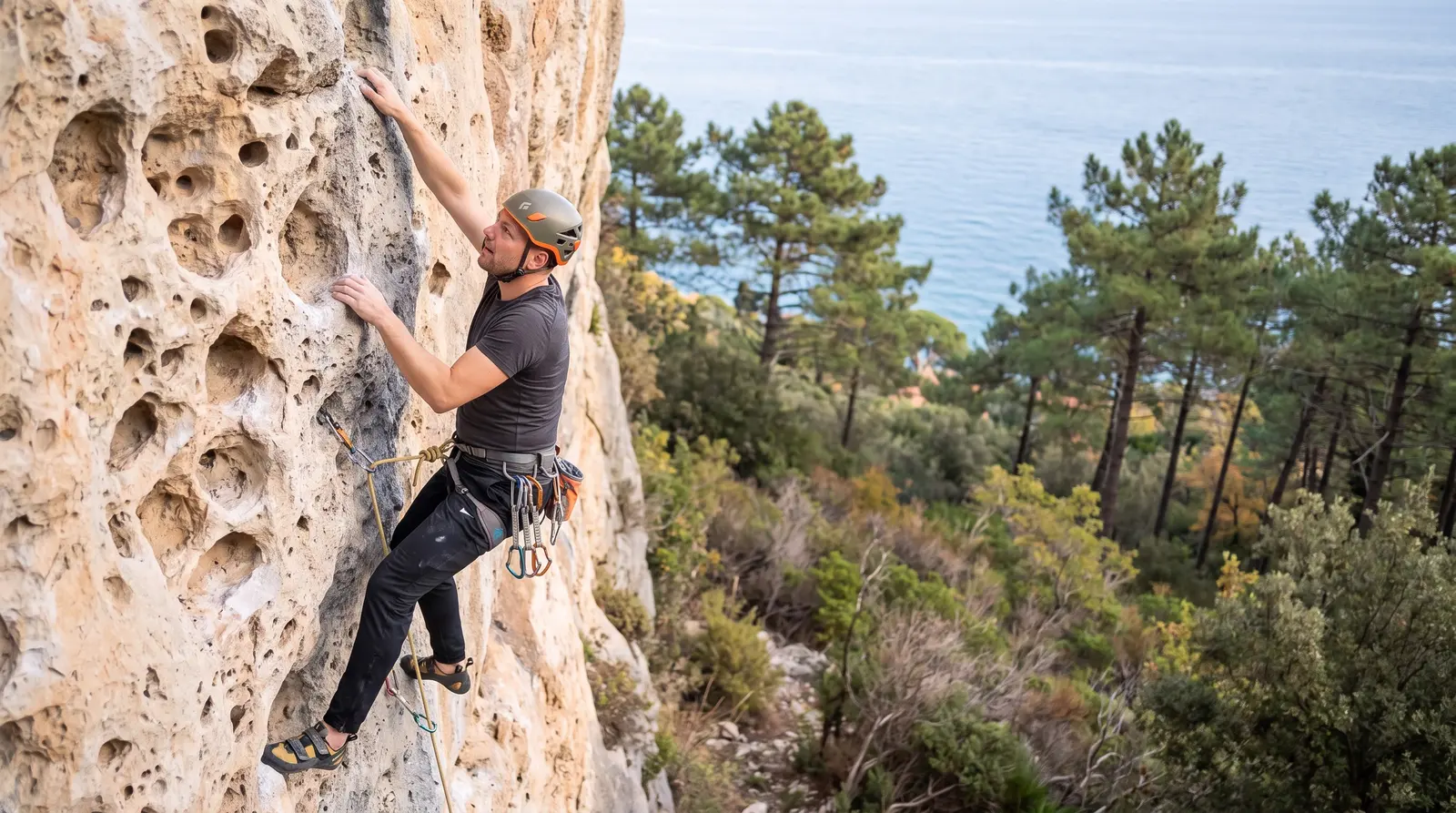
Over 4,000 routes in the hills above the Ligurian coast, from grade 2a to 8c+, with a lot of quality in the 5s and 6s. It's a good choice for spring, autumn and even winter, but gets too hot in midsummer. Many crags have seasonal closures for nesting raptors (often January to July), so check before you go. See our Finale Ligure climbing guide.
Arco, Italy
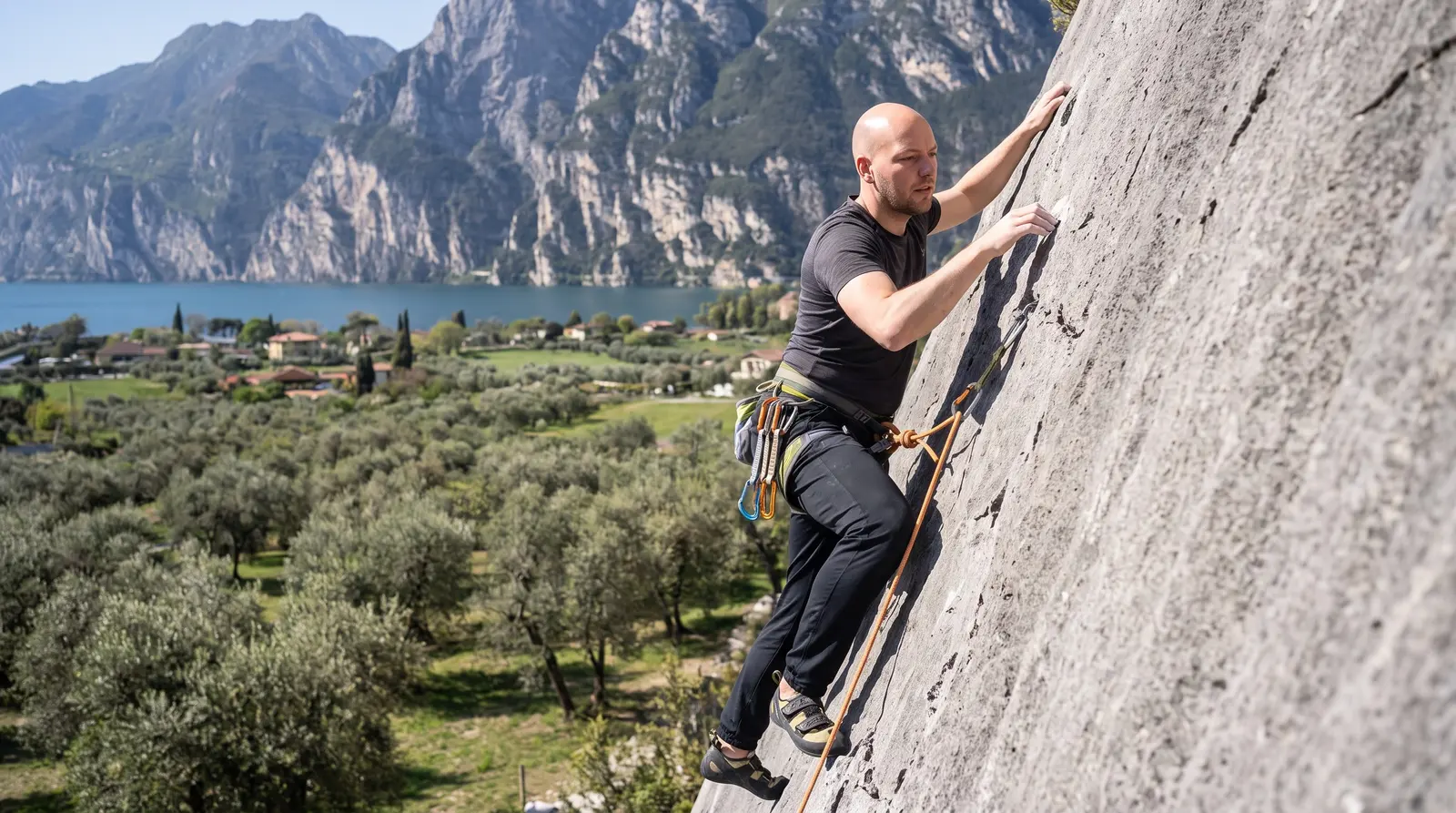
At the northern tip of Lake Garda, Arco has limestone crags at every level (4a to 9b+), long multi-pitch routes on the valley walls, via ferratas and plenty to do on rest days. Spring and autumn are the main seasons. It is an excellent destination for mixed groups and families. Read our Arco climbing guide.
Frankenjura, Germany
About 1,000 crags in the hills north-east of Nuremberg, with thousands of short, steep, pocketed limestone routes from grade 4 to 9b. It's where the idea of the "redpoint" was born, and its short powerful routes favour strong fingers (our finger strength benchmarks explain why). Climb from spring to autumn. Access is tightly managed: crags are zoned, and IG Klettern publishes a yearly list of bird and bat protection closures. In 2026 the list covers well over 100 closures, which start on 1 January or 1 February and usually end between April and July; they also ban bouldering at the listed crags and are legally enforceable. See our Frankenjura climbing guide.
Osp and Mišja Peč, Slovenia
Next to the Italian border near Trieste, the village of Osp has two amphitheatre-shaped limestone crags plus the long Črni Kal edge nearby. Mišja Peč is famous for steep, hard single-pitch routes (up to 9a+). The south-facing walls make it a popular winter crag, though it can be cold and wet. Respect parking and nesting restrictions; access has been a problem in the past.
Best bouldering in Europe
Fontainebleau, France
The birthplace of bouldering as a sport and still the best bouldering area in Europe for most people: a sandstone forest about 70 km south of Paris with tens of thousands of problems and colour-coded circuits for every level. Spring and autumn are best. (One popular list names summer as Font's season; in practice summer is often hot and humid in the forest.) Start with our Fontainebleau bouldering guide and Font grades and circuits.
Albarracín, Spain
Red sandstone boulders in pine forest at about 1,200 m, a few kilometres from the medieval town of Albarracín near Teruel. 27 Crags lists around 3,500 problems. The season is September to May. It sits in a protected landscape with strict rules: some sectors may be closed (check current rules locally), no climbing at night, no camping, no fires and no tick marks. Most visitors fly to Valencia, Madrid or Barcelona and rent a car. See our Albarracín bouldering guide.
Magic Wood and Ticino, Switzerland
Magic Wood is a forest of gneiss boulders in the Averstal (Graubünden), the summer bouldering venue of Europe, with problems from about 6A to 8C. The postbus stops at Schmelzi next to the parking and campsite; wild camping is banned. Ticino, south of the Alps, is the opposite season: Cresciano, Chironico and Brione are best from autumn to spring, with sunny winter days possible at Cresciano. Each of the big Ticino areas has well over a thousand problems. Our Magic Wood and Ticino bouldering guide covers both.
For any bouldering trip, plan the pads first: see how many crash pads you need and the bouldering trip packing list.
Best multi-pitch and long routes
The Dolomites, Italy
Huge dolomite walls with classic alpine multi-pitch routes, old-school grades and the birthplace of the via ferrata. Venice is the closest major airport; Innsbruck and Munich are a few hours away. The main season is summer, roughly June to September, with shoulder months possible lower down. Expect loose rock, afternoon storms and long descents. If you're new to long routes, hire a guide or start on via ferratas (see our via ferrata set guide).
Verdon Gorge, France
One of Europe's most spectacular climbing areas: more than 1,600 routes on limestone walls up to several hundred metres high. Many routes start mid-wall or at the bottom, so you abseil in and climb out. That means no easy retreat: you need solid abseil and rope skills before you go. The plateau sits near 1,000 m; April–May and September–October are the prime months, and midsummer can be very hot. Fly to Nice or Marseille; a car is needed.
Paklenica, Croatia
A national park outside Starigrad near Zadar with compact, sometimes sharp karst limestone: single pitches, well-bolted slabs and ridges, and multi-pitch routes up to 350 m on Anića Kuk, with difficulties up to about 8a. The season runs from April to the end of October; winter brings strong winds. You pay a park entry fee (multi-day tickets exist), climbing is banned in some parts of the park, and new routes or re-bolting need park permission.
Arco, Finale Ligure and El Chorro also have good multi-pitch routes at friendlier grades, which makes them the better first step. Check our climbing rope guide for single vs half ropes on long routes.
Best deep water solo: Mallorca
Deep water soloing (DWS) means climbing sea cliffs without a rope, with the sea as your landing. Mallorca is Europe's most famous DWS destination, with venues such as Cala Barques and Porto Cristo, plus inland sport crags. Fly to Palma. September and October are the classic months: the sea is still warm and the cliffs are drier and cooler than in midsummer.
DWS is not a casual activity. Falls from height into the water can injure you, depth changes with tide and swell, and you need to be able to swim and exit the water. Check the depth before every route, never climb above shallow water or rocks, go with experienced climbers and don't climb alone.
Best trad climbing: the Peak District, UK
If you want traditional climbing, the Peak District between Manchester and Sheffield is a world reference: gritstone edges such as Stanage, plus limestone dales and bouldering. Protection is placed by the climber, so you need trad skills or a qualified instructor. It's climbable year-round on dry days, with spring to autumn best, and popular edges are crowded in summer.
Where to climb in Europe by season
| Season | Go to | Avoid |
|---|---|---|
Winter (Dec–Feb) | Kalymnos, Leonidio, El Chorro, Siurana, Margalef, Finale Ligure, Osp/Mišja Peč, Ticino on sunny days | Céüse, Dolomites, Magic Wood, Paklenica (wind) |
Spring (Mar–May) | Almost everywhere: Fontainebleau, Arco, Finale, Albarracín, Verdon (Apr–May), Rodellar (from late April), Siurana, Kalymnos, Paklenica | Frankenjura and Finale crags under nesting closures (check lists) |
Summer (Jun–Aug) | Céüse, Dolomites, Magic Wood, Frankenjura, Rodellar (early summer, shady canyon) | El Chorro, Leonidio, Kalymnos, Siurana, Finale (heat) |
Autumn (Sep–Nov) | Almost everywhere again; Mallorca DWS in Sept–Oct; Verdon in Sept–Oct; Kalymnos, Arco, Fontainebleau, Ticino from October | Céüse and Dolomites late in the season (cold) |
For a closer look at the cold months, see our guide to winter climbing destinations. A practical tip: around Christmas, Easter and the autumn holidays the popular southern areas are busy, and accommodation books out early.
Best destinations for beginners
If you're new to outdoor climbing, choose an area with many easy, well-bolted routes, short approaches and climbing schools. From the sources above, the strongest candidates are:
- Kalymnos: thousands of routes, climbing schools and guide services on the island (stick to renovated routes).
- Leonidio: most of the quality routes are between 5c and 7b, ideal once you lead comfortably.
- Arco and Finale Ligure: grade ranges that start at 4a and 2a respectively, plus via ferratas and multi-pitch routes to grow into.
- Fontainebleau: the easiest place in the world to start bouldering outdoors, thanks to its circuits.
Less suited to a first trip: Céüse, Rodellar, Mišja Peč and Margalef (hard grades), the Verdon and Dolomites (committing terrain). Whatever you pick, learn lead climbing, belaying and lowering with a qualified instructor before you go, and see our climbing gear for beginners.
Gear, rules and safety for any European trip
- Rope and quickdraws. Route lengths differ a lot (Céüse and Kalymnos have long pitches, the Frankenjura short ones). Check the guidebook for the longest pitch and bring a rope long enough to lower off with a knot in the end. Our rope guide explains lengths.
- Helmet. Useful everywhere and essential in the Dolomites, Verdon and on busy limestone crags with loose rock (see climbing helmets).
- Old bolts. Coastal limestone (Greece, Mallorca, parts of Italy and Spain) can corrode bolts. Inspect anchors, back them up when in doubt and report suspect gear to the local rebolting group.
- Access rules. Seasonal bird closures (Frankenjura, Finale, Rodellar, Osp and many others), nature-reserve rules (Albarracín, Paklenica, Magic Wood) and parking rules are common. Check the local association site or app before every climbing day.
- Apps and guidebooks. 27 Crags, theCrag and Vertical-Life cover most of these areas. Buying the local guidebook often funds bolting.
- Emergencies and insurance. The EU emergency number is 112. Rescue in remote areas can be slow, and helicopter rescue can be expensive. Check that your cover includes roped climbing and mountain rescue: read our guide to climbing travel insurance.
From a conditioning point of view, the most common way to ruin a climbing holiday is doing too much in the first three days. Warm up properly (see the climbing warm-up), plan a rest day every two or three days, and look after your skin on sharp limestone and sandstone (climbing skin care). If you're training for a specific trip, our forearm pump guide helps with long sport routes and the hangboard program with finger strength.
Our picks in one line each
- Best first sport climbing trip: Kalymnos (renovated routes) or Arco.
- Best winter sport climbing: Leonidio, El Chorro or Siurana.
- Best for hard sport climbing: Céüse in summer, Margalef or Siurana in winter.
- Best bouldering: Fontainebleau; Magic Wood in summer; Ticino or Albarracín in the cooler months.
- Best long routes: Dolomites in summer; Verdon or Paklenica in spring and autumn.
- Best deep water solo: Mallorca in September–October.
- Best without a car: El Chorro (train from Málaga) or Fontainebleau (train and bike).
FAQ
What is the best climbing destination in Europe?
There is no single best one; it depends on your style and the month. For a first sport climbing trip, Kalymnos, Finale Ligure, Arco and El Chorro are easy to organise and have lots of mid-grade routes. For bouldering, Fontainebleau is the classic. For hard sport climbing, Céüse, Siurana, Margalef and the Frankenjura are the big names. For long routes, look at the Dolomites, the Verdon Gorge or Paklenica.
Where can you climb in Europe in winter?
The south: Kalymnos and Leonidio in Greece, Siurana, Margalef and El Chorro in Spain, Finale Ligure in Italy, Osp in Slovenia and the Ticino bouldering areas on sunny days. Expect short days and some rain, and pick sun-facing crags. High areas such as Céüse and Magic Wood are summer venues.
Where is the best sport climbing in Europe?
Spain, Greece, Italy and France have the highest concentration. Lacrux's ranking of Europe's top sport climbing areas puts Céüse, Margalef, Finale Ligure, Kalymnos and Arco at the top, followed by the Verdon, Siurana, the Dolomites, Osp and the Frankenjura. Spain's Catalonia region (Siurana, Margalef) is the densest cluster of hard routes.
What is the best time of year for a climbing holiday in Europe?
Spring (March to May) and autumn (September to November) work for most areas. In summer, go high or north (Céüse, the Dolomites, Magic Wood, the Frankenjura) or go deep water soloing in Mallorca in September and October. In winter, go south to Greece, southern Spain or the Italian coast.
Sources
- Lacrux, The 10 best sport climbing areas in Europe
- Lacrux, Following a fatal climbing accident on Kalymnos: route renovations announced (2026)
- IG Klettern Frankenjura, Current closures (2026 list)
- Owen Clarke, 11 Top Climbing Spots in Europe, Climbing House (updated 2025)
- Explorersweb, Off the Beaten Track: Rock Climbing in Croatia's Paklenica National Park
- theTopo (27 Crags), Albarracín bouldering area