Magic Wood and Ticino Bouldering Guide: Switzerland's Two Seasons
 Petr Hess, strength & conditioning coach
Updated 2 Nov 2026 · 12 min read
Key takeaways
Best for: Boulderers around 6B+ and up planning a Swiss trip in summer or the cold season
- Go to Magic Wood from May to October and to Ticino from October to April; September and October let you combine both.
- At Magic Wood, climb only in the marked blue zone: Never Ending Story and Supernova are outside it.
- Wild camping is banned in the Averstal, with fines reported up to CHF 1,000; use Bodhi Camping or the signposted Park and Sleep sites.
- In Ticino, park in Cresciano village and walk up, and buy the Verzasca Parking Card for Brione, whose meadows are closed from 31 March to 15 October.
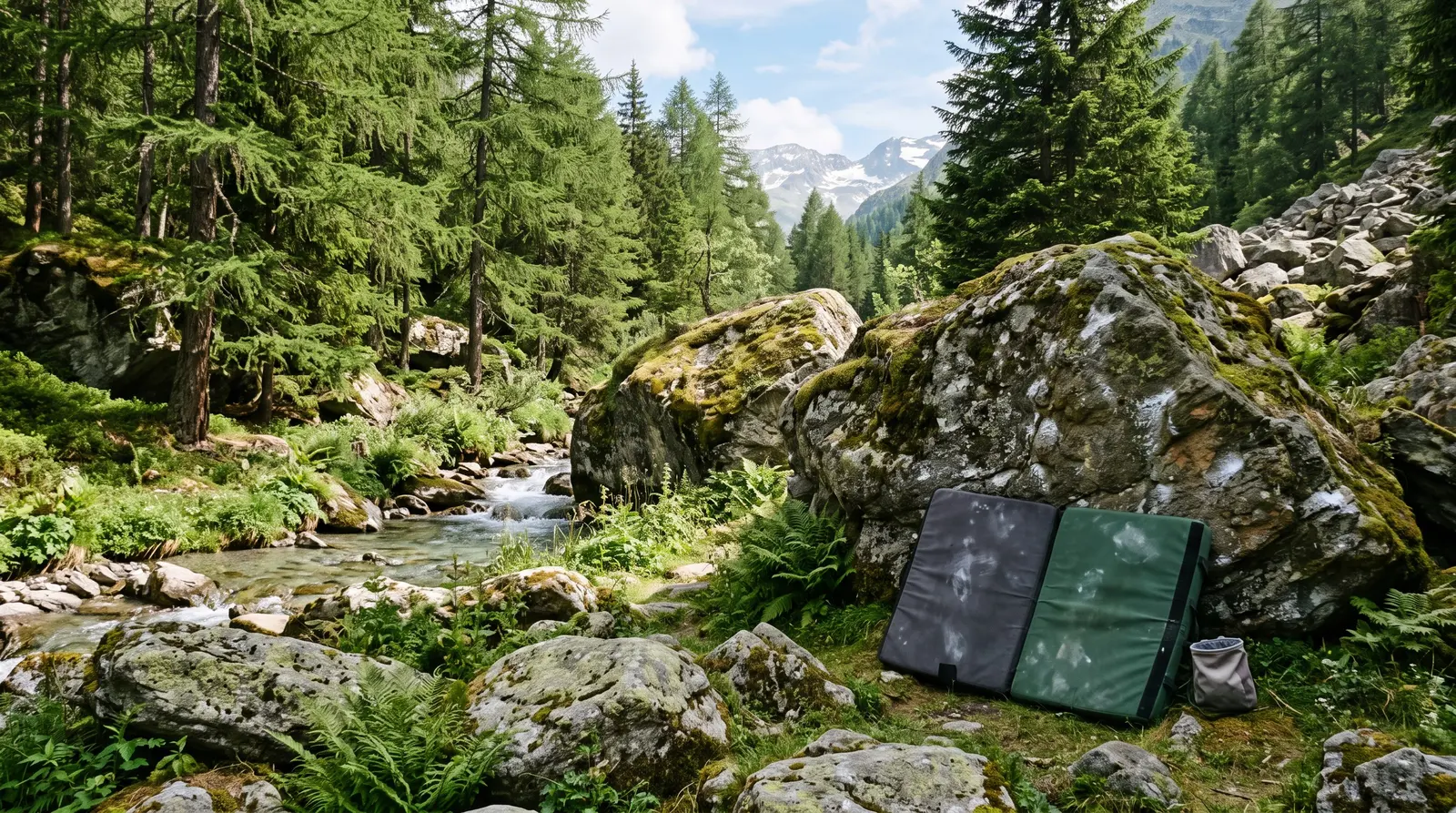
Swiss bouldering runs on two seasons. In summer you go up to Magic Wood, a mossy forest of gneiss boulders at about 1,300 m in the Averstal (Val Ferrera, canton Graubünden), where the shade and altitude keep friction usable from roughly May to October. From autumn to spring you go south to Ticino, where Cresciano, Chironico and Brione offer thousands of granite and gneiss problems in the lowland valleys, with the best friction in winter. Both are mainly for intermediate and strong boulderers (around 6B and up), both are access-sensitive, and both have strict rules on camping and parking that this guide covers in detail.
I'm a strength and conditioning coach based in Prague, not a local or a guide, so everything below is built from the local operators' own rules pages, the online topo databases and climbing media (all cited at the bottom). Rules here change; check the linked official pages the week you travel.
At a glance
| Magic Wood (Averstal) | Ticino (Cresciano, Chironico, Brione) | |
|---|---|---|
Rock | Gneiss; crimps and many slopers, steep problems dominate | Granite at Cresciano, gneiss at Chironico; crimps, slopers, roofs, highballs |
Size | About 1,250 problems listed on The Topo, in a forest roughly 300 m wide and 500 m long | About 1,100 problems at Cresciano, over 2,000 at Chironico, about 660 at Brione (The Topo listings) |
Grade spread | Worthwhile from about 6B; focus 7A to 8A; world-class 8B to 8C | All levels; Chironico is mostly 6A to 7B; hard classics up to 8C |
Best months | May to October (peak), shoulder months risk rain and wet snow | October to April; winter has the best friction |
Nearest big airport | Zurich | Milan Malpensa or Zurich |
Base | Ausserferrera (campsite and guesthouse); shops in Andeer and Thusis | The Riviera and Leventina valleys around Biasca and Faido; Verzasca valley for Brione |
Public transport | PostBus stop next to the campsite | Swiss rail and PostBus in the valleys, but a car makes multi-area trips much easier |
Guidebook | Magic Wood Bloc (Röker, Gebro Verlag); Alpen en Bloc vol. 1 (Panico) | Swiss Select: Ticino's Best Bouldering (Eliot Stephens, 2025) |
Key rules | Climb only in the marked (blue) zone; no wild camping; no fires in the forest | Cresciano: no driving or parking up the hill; Brione: paid parking, meadows closed 31 March to 15 October |
If you are still choosing where to go, our bouldering trips hub and the guide to the best climbing destinations in Europe put Switzerland next to Fontainebleau, Albarracín and the rest. For a winter-only plan, see our winter climbing destinations.
Summer vs winter: which Swiss area when?
The simple rule: Magic Wood when it's hot, Ticino when it's cold. Magic Wood sits in a south-east-facing forest at around 1,300 m. Bergzeit's guide notes that January to March are normally too snowy, while late autumn and early winter can occasionally work. The local operator describes May to October as peak season and warns of rain or wet snow in the months either side.
Ticino is the opposite. The Topo describes Cresciano as climbable year-round, with winter giving the best friction, spring and autumn as the middle ground, and summer warm enough that it suits moderate grades rather than limit attempts. Chironico follows the same pattern: spring and autumn are most popular, winter has the best friction but less predictable weather, and summer is possible but hot.
| Months | Magic Wood | Ticino lowland areas |
|---|---|---|
December to February | Usually snowed in | Best friction; short days; snow possible on higher approaches such as Brione |
March to April | Mostly too snowy or wet; possible late in a dry spring | Good season |
May to June | Season opens; the river can rise quickly | Getting warm; early mornings and shade |
July to August | Peak season, busiest campsite | Hot; moderates only |
September to October | Often the best conditions of the year | Season starts again; good link-up month with Magic Wood |
November | Risk of snow; occasionally good | Good season |
September and October are the natural months to combine both. Bergzeit puts Cresciano at about 83 km, or roughly an hour by car, from Magic Wood.
Magic Wood bouldering
What it's like
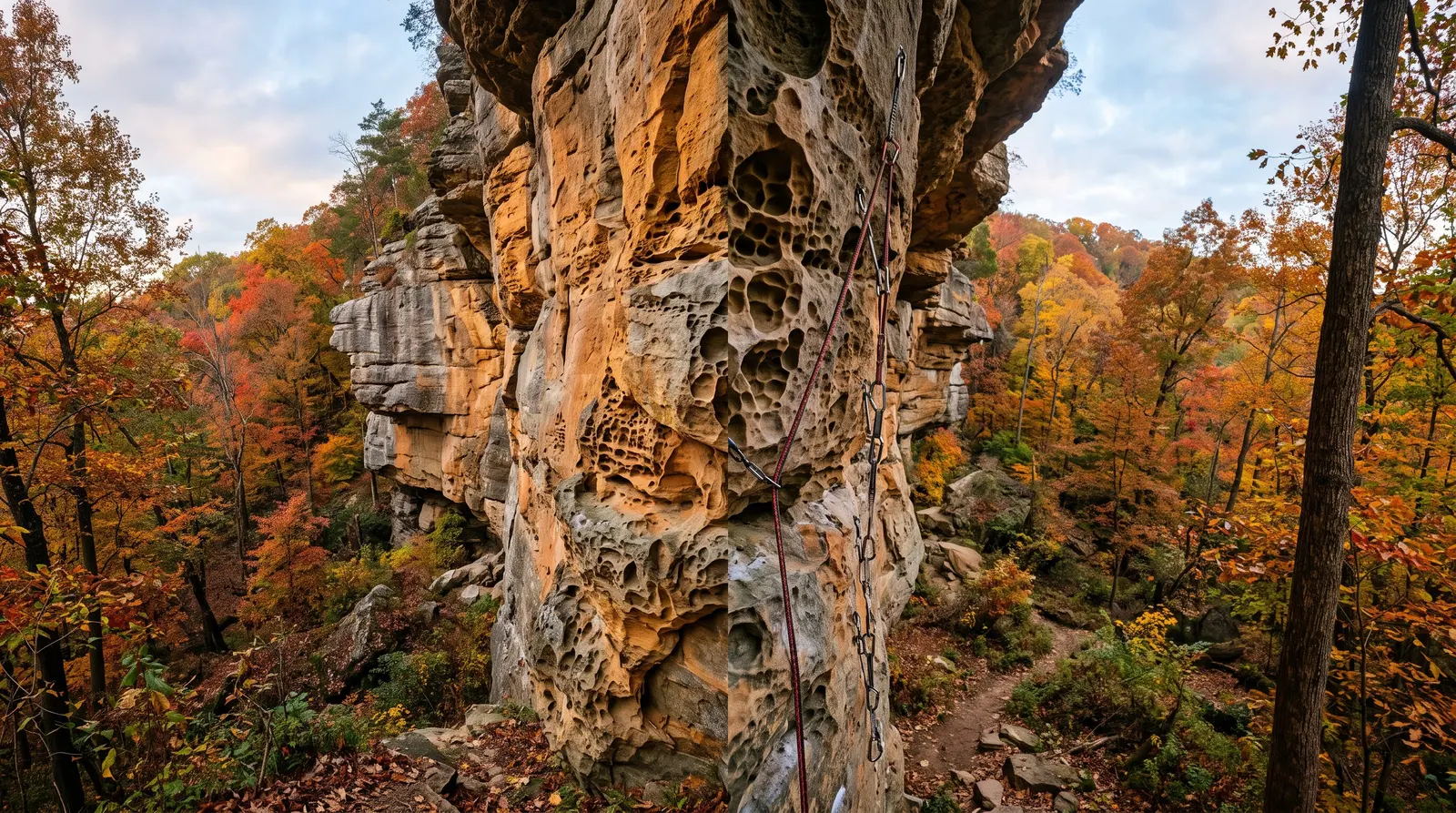
Magic Wood is a boulder field in a moss-covered forest beside the Ragn da Ferrera stream, just before the village of Ausserferrera. The rock is gneiss, with mostly crimps and many slopers, and steep problems dominate. Bergzeit's guide says beginners will find little here: the area becomes worthwhile from about 6B (Font), with most of the focus between 7A and 8A. Many landings are rough, on roots, rocks and slopes, so The Topo recommends several pads and spotters for most problems.
It's also one of the most famous hard-bouldering venues in the world. Climbing History lists Bernd Zangerl's New Base Line (8B+, 2002), Dave Graham's The Riverbed (8B, 2004) and Chris Sharma's Practice of the Wild (8B+ to 8C depending on the source, 2004) among its landmark problems, plus a growing list of 8Cs such as Daniel Woods' In Search of Time Lost in the Darkness Roof sector.
Sectors and classics for mortals
The Alpen en Bloc guide splits the forest into sectors A to F. Bergzeit's summary, in short:
- A: the northernmost sector, by the stream.
- B: in the forest just south of A.
- C: the highest sector at the southern end, with fewer classics.
- D: the big forest sector on the slope, about 15 minutes in, and the most rewarding.
- E: below D, by the stream.
- F: along the stream, further up-valley from A.
Moderate classics that appear both in Bergzeit's selection and with plenty of logged ascents on The Topo include Bosna Genial (7A) and Super Bosna (6C) in the Bosna sector, and the stand start of Right Hand of Darkness (7A+) in the Darkness Roof sector. Bergzeit also recommends U-Boot (6C), Blue Sky of Mine (6A+), Chiquita (7A), Enterprise (7A), Blindfish (7B) and Dinos don't dyno (7B), among others. Grades here are Font grades and feel stiff to most visitors; our grade converter translates them to the V-scale.
Rules, camping and parking
Magic Wood has a long history of tension between visiting climbers, the village and the municipality of Ferrera, which owns the land. The municipality moved to end the campsite lease with the Saluz family, which a petition and an appeal delayed in 2021, and in 2024 LACRUX reported that the cash-strapped municipality was asking for donations to keep the area going while the climbers' interest group, IG Magic Wood, pushed a different funding plan. The practical result is a short list of rules that are actually enforced. According to the operator's Magic Wood page and the current park-and-camp map:
- Climb only in the blue zone. Boulders in the rest of the valley are off-limits.
- No wild camping. That includes sleeping in a van or camper outside the campsite. The Topo reports fines of up to CHF 1,000 for overnight stays elsewhere in the valley, and Bergzeit notes that it is often checked.
- Camp at Bodhi Camping on the north side of the forest. It works on a first-come, first-served basis with no reservations. If it is full, use the signposted Park and Sleep sites in the valley shown on the map; one roadside lot is marked as usable for camping when the campsite is full.
- Park only in signposted spaces. The map shows several day-visitor lots along the road and in Ausserferrera village, where camping is not allowed. Park at least half a metre from the white line, don't park at unsignposted roadside spots, and avoid walking along the cantonal road. The Topo also lists a small parking fee for non-guests at the campsite car park, and spaces at the Edelweiss guesthouse are for guests and restaurant customers only.
- No fires in the forest. Fires are allowed only at the official fireplace on the campsite.
- Brush your tick marks using natural-bristle brushes only, clean your shoes before climbing, take your rubbish, and use headphones for music.
- Stay on the main paths and keep out of areas marked for renaturation.
The operator also flags real hazards: the forest is a rockfall and slide zone, and the river level can rise quickly. Don't leave pads or kids by the water during rain or snowmelt.
Getting there and staying there
By car, follow the A13 from Zurich towards Chur, Thusis and Andeer, then take the exit for Rofla / Ferrera / Avers-Juf just after the tunnel at Andeer, as the operator describes, and follow the road up the valley to Ausserferrera. Without a car, take the train to Thusis via Chur, then the PostBus via Andeer towards Juf; the operator gives the stop at the campsite parking as "Alte Schmelze". Check times on the SBB timetable before you rely on the bus.
Accommodation is simple: Bodhi Camping (toilets, coin showers, a small shop at reception and a fireplace), the Gasthaus Edelweiss at the south end of the forest with the Generoso backpacker rooms, and a chalet for rent. The operator, Bodhi Climbing, also rents crash pads. For supermarkets, Bergzeit points to Andeer (about 6 km) and Thusis (about 19 km). Switzerland is expensive, so most climbers self-cater and treat camping as the budget option.
Ticino bouldering: Cresciano, Chironico and Brione
Ticino, the Italian-speaking canton south of the Gotthard, has three headline areas that a new guidebook, Swiss Select, groups together: Cresciano, Chironico and Brione. Chironico alone draws thousands of boulderers a year, so expect company on winter weekends.
Cresciano
A long stretch of forested hillside above the village of Cresciano in the Riviera valley, north of Bellinzona. The Topo describes excellent grey granite with crimps, slopers and incuts, lots of roofs and overhangs, some slabs and a number of highballs, and recommends several pads because some landings are tricky. Its landmark problem is Fred Nicole's Dreamtime, first graded 8C (the first problem of that grade in the world) and later downgraded to 8B+. The middle of the area has wider paths and flatter ground, which makes it the best part for families or climbers with only one pad.
Access: this is the rule people break. Driving and parking are banned on the Alpstrasse and at the upper lots by the old quarry. Park at the signposted boulderers' parking in the village and walk up; The Topo puts the walk to the nearest boulders at about 25 minutes. LACRUX reported in 2021 that the Patriziato (the local landowning corporation) asked visitors to respect the ban after complaints about crowds, and rejected ideas such as road charges or a toilet.
Chironico
Chironico, in the Leventina valley near Faido, sits on boulders brought down by a prehistoric landslide. The Topo describes high-quality gneiss with good friction, technical footholds and overhangs, over 2,000 problems in total, and most grades between 6A and 7B. That makes it the most suitable Swiss area for climbers working in the 6s. Approaches are short and flat (about 1 to 25 minutes), and The Topo calls the Centrale zone and most of Nivo the best for families.
Popular problems by logged ascents on The Topo include Hopper (6C+) at Nivo, Globetrotter (7A) and Komilator (7C). The zones are spread out (Nivo, Centrale, Altirolo and the forest zone of Schattental), so drive or walk between them and use the marked car parks. The Topo lists no special access issues, mentions toilets at the Nivo parking and says overnight van stays there are tolerated, which can change quickly, so check for signs. From the north, leave the motorway at exit 43 (Faido) after the Gotthard.
Brione (Verzasca)
Brione is a maze of boulders in the Verzasca valley, in forest by the river and in meadows near old stone houses, with about 660 problems on The Topo. It has the strictest local rules of the three:
- Park only in designated car parks; parking on agricultural land or along the road is not allowed.
- Public car parks charge all year. The Topo lists the Verzasca Parking Card at CHF 12 a day or CHF 40 a week.
- Access to the meadows is prohibited from 31 March to 15 October; you may walk through on the path only.
- Camping is not allowed anywhere in the region, open fires are strictly forbidden, dogs must be on a lead and littering can be fined.
- The Verzasca river is beautiful and dangerous. Don't swim in it after rain.
Gear to bring
Both regions are pad-hungry. Plan on at least two pads per person or three or more per small group for Magic Wood's sloping, rooty landings and Cresciano's highballs; our guide to how many crash pads you need explains the logic, and best crash pads compares current models. If you fly, rent pads from Bodhi at Magic Wood rather than paying airline fees.
If you drive and want to buy, the big-pad category suits these landings best. The Metolius Magnum is a large tri-fold, 47 x 70 x 4 in (120 x 178 x 10 cm) at 18.7 lb (8.5 kg) per Metolius, that covers roots and rocks under steep starts; the drawback is its bulk on the longer walks at Cresciano. Skip it if you'll mostly carry pads by bike or train.
Organic's 5-inch Big Pad (45 x 58 in landing, 5 in foam, 20 lb per Organic) is a thicker option for highballs and roofs, made in the USA; the drawback is its weight. Skip it if you already own a big pad and need a lighter second one.
- A natural-bristle brush is required at Magic Wood; see our climbing brushes guide.
- Shoes for small edges and steep terrain (best bouldering shoes) and a skin kit, because gneiss and granite crimps are sharp (climbing skin care).
- Warm layers and a down jacket for Ticino winter and Magic Wood evenings, plus a rain shell for summer storms.
- Headphones (Magic Wood rule), rubbish bags and cash or card for parking and showers.
The full checklist is in our bouldering trip packing list.
Guidebooks and apps
- Magic Wood Bloc by Ulrich and Harald Röker (Gebro Verlag): the most detailed topo of the forest. Several editions exist, so check you buy the current one, since the allowed zone has changed.
- Alpen en Bloc, volume 1 (Panico Verlag): fewer problems, but enough for a visit, and it is the source of the A to F sector system.
- Swiss Select: Ticino's Best Bouldering by Eliot Stephens (2025): over 1,200 problems across Brione, Cresciano and Chironico, including over 600 up to 6C+, in English. It is sold direct by the publisher.
- Apps: The Topo (27 Crags now redirects there) has topos for all four areas, and theCrag also covers Cresciano and Magic Wood. Download offline topos before you go, since signal in the forest is patchy.
Safety, rescue and insurance
- Emergency: Rega, the Swiss air rescue service, is on 1414 from a Swiss phone or +41 333 333 333 from a foreign one. The European emergency number 112 also works.
- Insurance: mountain and helicopter rescue may not be covered by your home health insurance. Read our climbing travel insurance guide before you book.
- Falls: uneven landings cause more injuries than hard moves. Brief your spotters and move pads for every problem; see how to fall when bouldering.
- Water and rock: high rivers after rain or snowmelt, rockfall in the Magic Wood slide zone, and wet or icy approaches in the Ticino winter.
Rest days
From Magic Wood, Andeer and Thusis are close by, and the Valle di Lei dam is up the valley. In Ticino, the rest-day options are the old towns of Bellinzona and Locarno, the Verzasca valley and Lake Maggiore. When it rains, Ticino's tourism board points to indoor walls in Giubiasco and Taverne. From an S&C point of view, a full rest day after two or three days on is usually smarter than a fourth day on sore skin and tired fingers.
A sample 7-day split trip (late September or October)
- Day 1: arrive at Magic Wood, pitch at Bodhi, warm up on the Bosna sector moderates.
- Day 2: sector D in the forest; pick two or three projects at your level.
- Day 3: rest day in Andeer or Thusis.
- Day 4: last Magic Wood day, then drive about an hour south to Ticino (book a hotel, apartment or campsite in advance; camping is banned in the whole Brione region).
- Day 5: Chironico, Centrale or Nivo, for mileage in the 6s and 7s.
- Day 6: Cresciano; park in the village and walk up.
- Day 7: Brione if you have the Verzasca Parking Card and the meadows are open after 15 October, or a second Chironico day.
Common mistakes
- Going to Magic Wood in April or Ticino in July and blaming yourself for the conditions.
- Climbing famous lines outside Magic Wood's blue zone because an old video showed them.
- Sleeping in a van in a lay-by in the Averstal or the Verzasca valley.
- Driving up the hill at Cresciano.
- Bringing one pad for a group of three to an area of rough, sloping landings.
- Expecting gym grades. Swiss Font grades feel stiff; read climbing grades explained and climb a few grades below your indoor level for the first day.
If this is your first outdoor trip of any kind, start with our outdoor bouldering for beginners guide and the Fontainebleau bouldering guide, then come to Switzerland once you're comfortable in the 6s. Read up on bouldering etiquette too: in both regions, access depends on visitors behaving well.
FAQ
When is the best time to boulder in Magic Wood?
May to October is the peak season, according to the local campsite operator. Magic Wood sits at about 1,300 m in a shaded forest, so it stays climbable when the lowland areas are too hot. The months either side can be good but carry a real risk of rain or wet snow, and January to March is normally too snowy.
Can you wild camp or sleep in your van at Magic Wood?
No. Wild camping is prohibited in the valley, including overnight stays in vans or campers outside the campsite, and The Topo (formerly 27 Crags) reports fines of up to CHF 1,000. Stay at Bodhi Camping, which works first come, first served, or in the guesthouses. If the campsite is full, the current park-and-camp map points you to the signposted Park and Sleep sites in the valley.
When is the best time to boulder in Ticino?
Autumn, winter and spring. Winter gives the best friction at Cresciano and Chironico, while spring and autumn are a good compromise between friction and comfort. Summer is possible but hot, which is why many climbers head up to Magic Wood or the Alpine passes then.
Is Magic Wood good for beginners?
Not really. Most problems that are worth the trip start around 6B and the focus is 7A to 8A, with rough landings that need several pads and good spotting. Beginners will find more to do in Chironico, which has many problems from 6A to 7B and short, flat approaches, or in Fontainebleau.
Sources
- Val Ferrera / Bodhi, Magic Wood: rules, zone and directions
- Val Ferrera / Bodhi, Park and camp Magic Wood (parking map, PDF)
- The Topo (formerly 27 Crags), Magic Wood, Cresciano, Chironico and Brione area and access pages
- Bene Hirschmann, Bouldern im Magic Wood in der Schweiz, Bergzeit Magazin (2018)
- LACRUX, Crack in the Magic Wood: municipality and IG Magic Wood in dispute (2024)
- LACRUX, Cresciano: territory or just closed parking? (2021)
- Climbing History, Magic Wood notable ascents