El Chorro Climbing Guide: Sectors, Season, Caminito del Rey Rules
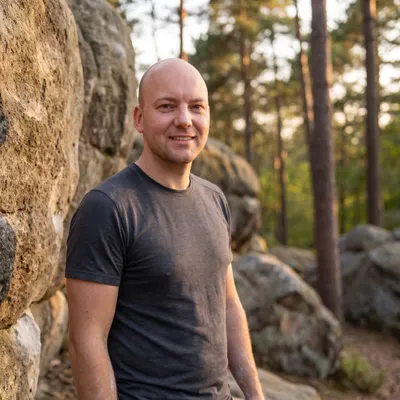 Petr Hess, strength & conditioning coach
Updated 2 Nov 2026 · 12 min read
Key takeaways
Best for: Lead climbers planning a winter sport and multi-pitch trip from Málaga
- Go between mid-October and early May; in summer only shady Desplomilandia or El Torcal make sense, early in the day.
- Climbing above the Caminito del Rey is banned; climbers get free walkway access only with a valid federation card, registration and an early entry.
- Las Encantadas, El Corral, Rocabella and parts of Placas de Atrás are private land that needs the owner's permission, and El Corral is open only 1 October to 28 February.
- Beginners who already lead outdoors should start at Escalera Árabe, Serena or Desplomilandia, not Las Encantadas or Makinodromo.
El Chorro is a limestone sport climbing area about 50 km (30 miles) inland from Málaga, in southern Spain. It has well over 1,500 bolted routes from easy slabs to 9a, long multi-pitch lines on the Frontales ridge, and a reliable winter climate. Go between mid-October and early May, fly into Málaga, and plan around the local rules: some walls are closed for wildlife or because they sit above the Caminito del Rey walkway, and some crags are on private land.
This guide is for climbers who already lead outdoors, or who will hire a qualified guide. It's one of the classic winter-sun trips in our list of the best climbing destinations in Europe. I'm a strength and conditioning coach from Prague, not a local or a mountain guide, so everything below is built from the official rules, the current guidebooks and the main topo sites, all cited at the bottom.
El Chorro at a glance
| Topic | The short answer |
|---|---|
Rock | Limestone: pocketed slabs and vertical walls, tufas on the steep crags |
Style | Bolted sport routes, single and multi-pitch; a little trad |
Grades | French sport grades from about 4 to 9a; the main crags are strongest from 6a to 7b |
Best months | Mid-October to early May; avoid June to mid-September |
Nearest airport | Málaga (AGP), roughly 45–60 minutes by car |
Train | Renfe from Málaga María Zambrano to El Chorro station, a handful of trains a day |
Base | El Chorro village; Álora and Ardales for shops and more beds |
Rest days | Caminito del Rey, El Torcal, Málaga city |
Guidebooks | Rockfax El Chorro (2018); a newer local guide to El Chorro, Desplomilandia and Valle de Abdalajís (2024) |
Emergency | 112 |
Why climbers go to El Chorro
The Guadalhorce river cuts a deep gorge, the Desfiladero de los Gaitanes, through the limestone just above the village. The gorge and the long ridges around it hold several hundred routes within walking distance of the village. More crags are a short drive away. Explorersweb's 2025 guide lists Frontales (231 routes), Makinodromo (155), Escalera Árabe (143) and Desplomilandia (183) among the biggest.
Three things make it special:
- Winter sun. Most walls catch the sun, so you can climb in a T-shirt in January while central Europe is wet.
- Long routes. The Frontales ridge has bolted multi-pitch lines of eight to ten pitches. Few winter destinations have that.
- Range. One trip can mix slabby 5s, pocketed 6s and steep tufa test-pieces like Lourdes (8a) at Makinodromo.
Mountain Project's area page warns that the rock is pocketed and not always perfect: most popular routes are clean, but you'll find hollow flakes. Test holds, and wear a helmet.
When to go, month by month
| Months | Conditions | Where to climb |
|---|---|---|
Mid-October to November | Good season. Can still be hot in the sun | Everything; shady crags on warm afternoons |
December to February | Short days, cold mornings (bring a warm jacket), warm sunny walls by midday | Sunny crags such as Escalera Árabe, Serena and Las Encantadas. El Corral is only open until 28 February |
March to early May | Excellent, getting warmer. Busy around Easter | Everything open; move to shade as it warms. Some Desplomilandia sectors are closed until 31 July (see below) |
Mid-May to mid-September | Inland temperatures can reach 40 °C (104 °F) | Only shady or high crags early in the day: Desplomilandia, El Torcal |
Explorersweb puts the season at mid-October to early May and recommends avoiding June to mid-September. Mountain Project agrees: autumn, winter and spring are best, and summers are hot with little shade. If you are hunting for other places to escape a northern winter, see our guide to winter climbing destinations.
Two seasonal closures matter for planning:
- El Corral may only be climbed from 1 October to 28 February. It is closed the rest of the year under the 2018 regional resolution.
- Desplomilandia: theTopo's crag page lists the Tajo del Cabrero and Metecaña sectors as closed from 15 January to 31 July. Check the signs and the crag page before you go.
Getting there and around
Flying in
Málaga airport has year-round flights from most of Europe, and travellers from further away often connect through Madrid or another European hub. Mountain Project also mentions flying into Madrid and taking the high-speed train to Málaga María Zambrano.
Train
El Chorro has its own station on the Málaga–Bobadilla line. Trainline lists around eight connections a day from Málaga María Zambrano, with the fastest direct trains taking about 51 minutes. Some connections involve a change. Schedules change, so check Renfe for your travel date and note the last train back. Mountain Project adds that trains to Álora are more frequent, and you can take a taxi from there.
Car or no car?
Many crags (Frontales, Escalera Árabe, the gorge side) are walkable from the village, so a car-free trip is realistic if you stay in El Chorro. A car opens up Desplomilandia, Valle de Abdalajís, El Torcal and the supermarkets in Álora. The village shop is small.
If you drive, read the parking rules for each crag. The 2018 resolution bans motor vehicles all year on the Haza del Río dirt track that leads up towards Paredes Frontales. Park only in designated places.
Where to stay
- El Chorro village: Several climber-focused hostels and lodges are within walking distance of the crags. Explorersweb's 2025 guide names The Olive Branch, Finca La Campana and the Climbing Lodge. Check that they're open for your dates.
- Apartments and village houses in El Chorro, Álora, Ardales and the Abdalajís valley. They're cheaper for groups, and the towns have better shops and restaurants.
- Campsites: Use official campsites. The regional environment office's climbing leaflet is clear: you can't camp in car parks, and bivouac camping is not allowed in the Natural Area. Some travel blogs say wild camping is "tolerated". In the protected area, it isn't.
The climbing: sectors by level
El Chorro uses French sport grades. If you think in YDS, use our grade converter or read climbing grades explained. Expect older, popular routes to be polished and the grades to feel stiff for the first days.
| Sector | Best for | Sun or shade | Notes |
|---|---|---|---|
Escalera Árabe | Lower grades, first multi-pitches | Sun almost all day (Sombra sector is the shady exception) | 145 routes on theTopo. Sergio sector covers about 4 to 6c; Escalera Suiza has entry-level multi-pitches. Fenced plant areas and some banned routes on El Navegador |
Frontales (Paredes Frontales) | All grades, the classic multi-pitches | Varies by sector; check the guidebook | The ridge right above the village; free climbing zone. Some routes polished |
Serena, Los Olivitos, Cocina Caliente, Bedees | Lower and mid grades, short days | Serena sunny; others check the guidebook | Small, easy-access buttresses that Explorersweb recommends for quick visits |
Rocabella | Mostly lower grades | Mix of sun and shade | Private land: climbing needs the landowner's permission |
Las Encantadas | Strong climbers around 7a–7b | South-facing; a good afternoon crag that dries fast | Private land, no dogs, keep quiet; limited parking. Not a beginner crag |
Desplomilandia | Many 5–6c routes, plus 7s and 8s | Faces north, higher and cooler | A short drive north of the village; the summer and hot-day option. Two sectors closed 15 January–31 July |
Makinodromo | 7b and up, steep tufas | Check the guidebook | Classics include Life is Sweet (6c) and Lourdes (8a); hardest is Suspiro (9a, 2020). Many old lines rebolted in 2022 |
Los Cotos | Remote slabs | Check the guidebook | Long approach; quiet |
Beginner-friendly sectors
If you've only climbed in a gym, take a course or hire a qualified guide first, and read our climbing gear for beginners guide. If you already lead outdoors at grade 5 or 6, these are the best places to start:
- Escalera Árabe is the best-known option for lower grades. The Sergio sector covers roughly 4 to 6c, and theTopo calls the Escalera Suiza multi-pitches a good entry to longer routes. It sits high above the valley in full sun, so go early or late on warm days and take more water than you think.
- Serena is small and well bolted, with lower and mid grades and a big view.
- Rocabella has mostly lower grades and some shade, but it's in a zone where climbing needs the landowner's permission (see the rules below).
- Desplomilandia has lots of grade 5 and 6 routes in the shade, which makes it ideal for warmer days.
One competitor guide calls Las Encantadas a beginner crag. It isn't: the topo describes it as most enjoyable for climbers around 7a–7b, with long, technical routes.
Multi-pitch
Multi-pitch is the main reason many people pick El Chorro over other Spanish winter crags. Mountain Project lists Frontales classics such as Lluvia de Asteroides (5.10a, 8 pitches), Amptrax (5.10-, 8 pitches), Estrella Polar (5.10c/d, 10 pitches) and Poema de Roca (5.11d). Check pitch grades, lengths and descents in the current guidebook, because the topo sites don't always agree. Before your first long route:
- Be fluent with belay changeovers, abseiling and retreating from a route before you go up.
- Wear a helmet. theTopo warns about rockfall from parties above and from ibex on Escalera Árabe.
- Start early in the sun. The ridges get hot, and there's little water.
- Don't climb in fenced areas or on banned routes. They protect endangered cliff plants.
Hard climbing
Makinodromo is the steep tufa cliff behind Frontales. theTopo describes the approach via "the notch" above the scree behind Frontales. Don't walk along the railway: it's prohibited, and you can be fined. Many of the area's harder lines are also at Desplomilandia (theTopo singles out Sandokan, 7c) and in the gorge zones below the walkway.
Caminito del Rey: what climbers need to know
The Caminito del Rey is the famous walkway pinned to the walls of the gorge. It was built between 1901 and 1905 for hydroelectric workers, partly closed in 2000 and reopened as a managed, ticketed path in 2015. Climbers once used it to reach the gorge walls. Today it's run by the Diputación de Málaga under rules updated in September 2024.
As a visitor (rest day)
- Book on the official website. You can also buy at the north entrance ticket office if tickets are left. You enter from the north access.
- The official site lists general entry at €10 and an official guided visit at €18, plus an optional shuttle bus seat and paid parking at the visitor centre. Check current prices when you book.
- No children under 8, no dogs, no swimming in the river. The walkway can be closed at short notice for weather or safety.
As a climber
The 2024 rules give climbers free access to the walkway when they go to climb. You must:
- show a valid federation card at the control point, register and accept the walkway's rules. The rules don't say which federations count, so ask before you rely on a foreign club card;
- enter first thing in the morning and leave before closing time;
- climb only on walls the regional environment office allows.
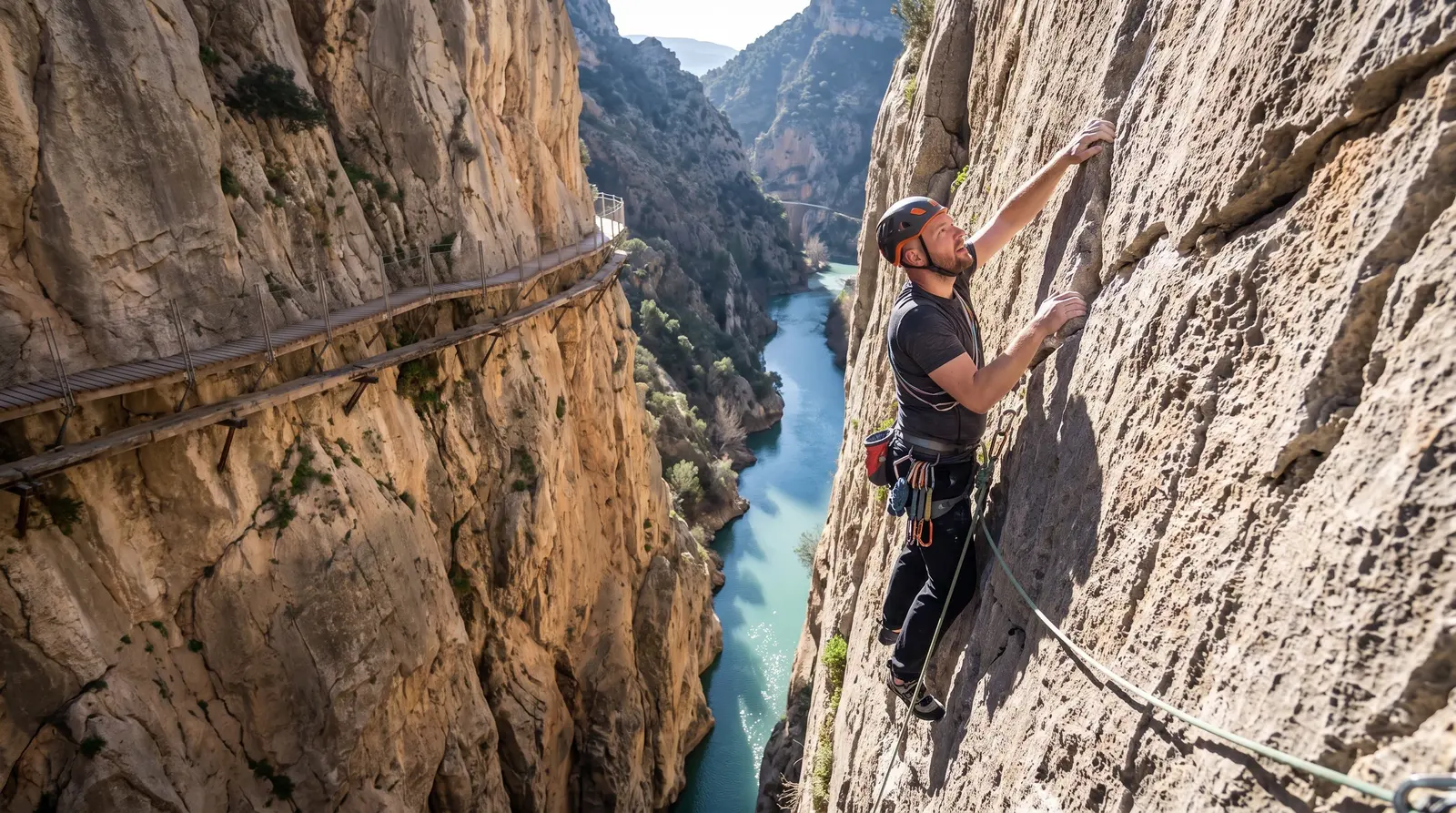
It's forbidden to climb over the walkway railings to reach routes below, or to use the walkway as an anchor. On top of that, the 2018 climbing resolution bans all climbing above the walkway (falling stones could hit walkers), and several gorge walls are closed entirely. Climbing below the walkway in the northern and southern gorge is in the free zone, but Explorersweb notes that the walkway restrictions now make many older gorge routes impossible to reach. Plan gorge days with the current guidebook and the official zone list.
Access, ethics and rules
El Chorro sits inside the Desfiladero de los Gaitanes Natural Area, a Natura 2000 site with nesting griffon vultures, peregrine falcons, golden eagles and the threatened Bonelli's eagle, plus rare cliff plants. In July 2018 the regional environment office in Málaga split the area into three kinds of zone. The rules are in the official BOJA resolution, and there's an English summary in the Sustainable Rock Climbing leaflet.
| Zone | Sectors |
|---|---|
Free climbing | Paredes Frontales, Los Albercones Bajos, Placas de Atrás (centre), Los Cotos, Makinódromo; the northern gorge below the walkway (Bañeras and Bufones); the southern gorge, Placa de los Venenos and the south face of Cerro Cristo, except above the walkway and the existing routes on the vertical flakes of Cerro Cristo's south face |
Landowner permission needed (private land) | Las Encantadas, El Corral (only 1 October–28 February), Donde and Rocabella, Placas de Atrás west and east |
Climbing prohibited | All walls above the Caminito del Rey, the east wall of the southern gorge, Cerro Cristo north face, Tajos del Almorchón, Petit Desfiladero, Belladona, Tajo de Ballesteros, Los Albercones Medios |
Climbing anywhere outside the listed zones also needs an authorisation. The same resolution and the leaflet add:
- No new routes or bolting without permission from the Natural Area.
- Don't walk along the Málaga–Bobadilla railway to reach crags. ADIF (Spain's rail infrastructure company) doesn't allow it.
- Keep out of fenced plant-protection plots and don't climb above them, even in free zones.
- No driving on the Haza del Río track to Frontales; park only in designated places.
- Stay on existing paths, keep noise down, keep dogs on a lead, and close gates on private land.
- Drones and professional filming need a permit.
- Don't leave quick links or other gear on routes, don't paint route names, and take all rubbish home, including toilet paper. Don't light fires.
Montaña Regulada, a volunteer database of Spanish climbing rules, keeps a current summary. It isn't an official source, though, so check the BOJA text if you're unsure.
Gear to bring
- Rope: Check route lengths in your topo. A 70 m (230 ft) rope gives you margin on longer single pitches. For multi-pitch, bring whatever rope system the descents in the guidebook need. Always tie a knot in the rope end. See our climbing rope guide.
- Quickdraws: Take enough for the longest pitch you plan to climb. Count the bolts in the topo and add a couple spare, plus slings and lockers for multi-pitch belays.
- Helmet: Essential under multi-pitch parties and on the ridges. See our climbing helmet guide.
- Harness and belay device: For multi-pitch, a device that can belay a second from above is useful. See our guides to the best climbing harness and best belay device.
- Sun and water: Sun hat, sunscreen and at least 2 litres (half a gallon) of water per person for the sunny ridges.
- Skin: Sharp pockets and limestone eat skin over a week. Our climbing skin care and climbing tape guides help.
For a full checklist, start from our trip packing list and add your rope kit.
Guidebooks and apps
- Rockfax El Chorro (December 2018, 360 pages): over 1,500 bolted routes across Frontales, the central gorge, Los Cotos, Makinodromo, Desplomilandia, Valle de Abdalajís, El Torcal, Turón, Poza de la Mona and other crags around Málaga. Some shops list it as sold out, so check stock before you travel.
- The 2024 local guide to El Chorro, Desplomilandia and Valle de Abdalajís (February 2024, 336 pages, Spanish and English): more than 1,500 sport routes, plus mixed sport and trad multi-pitch lines. This is the newest printed guide, and it's sold by Climb Europe and local shops.
- Apps: theTopo (27crags.com now redirects there) and theCrag both cover the area. Topos and route counts differ between sources, so cross-check with the book.
Rest days, costs and safety
Rest days
- Caminito del Rey: Book ahead, see above.
- El Torcal de Antequera: A spectacular limestone karst landscape a drive away. It also has climbing, under its own zones in the same 2018 resolution, and Explorersweb rates it as a hot-weather option thanks to its altitude.
- Málaga: Museums, beach and food, and an easy trip by train.
From a coaching point of view, plan a rest day every two or three climbing days. Long multi-pitch days and pocket-pulling add up, and finger tweaks on trips usually come from fatigue. A proper climbing warm-up on cold winter mornings helps too.
Costs
Expect mid-range Spanish prices. Hostels and apartments are good value outside Easter, and a rental car is the biggest variable cost. The Caminito del Rey ticket, parking and shuttle are small extras.
Safety
- The emergency number in Spain is 112.
- Check that your insurance covers rock climbing and mountain rescue. Many standard travel policies don't. See climbing travel insurance.
- Test holds on less-travelled routes. Mountain Project and theTopo both mention hollow flakes and loose rock.
- Don't climb on hot afternoons in full sun. Heat exhaustion is the classic El Chorro problem outside midwinter.
- Never use the railway line as a path, and don't cross the Guadalhorce river to reach routes. The 2018 resolution notes that dam releases make the river dangerous.
A sample 7-day plan
This is a starting point for a lead climber operating around 6a–6c, built from the sectors above. Adapt it to the weather and to which zones are open.
- Arrive: Train or drive from Málaga, buy the guidebook, an afternoon on a short, easy-access buttress such as Serena or Los Olivitos.
- Escalera Árabe: Single pitches in the lower grades to get used to the rock.
- Frontales: Single pitches in the morning, check out the approach for a multi-pitch.
- Rest: Caminito del Rey (booked in advance).
- Multi-pitch: An easier Frontales or Escalera Suiza multi-pitch, with an early start.
- Desplomilandia: Shady, steeper climbing, and good if it's warm.
- Short last day: Repeat your favourite sector, then head home.
Need a planning template for flights, partners and budget? Read how to plan a climbing trip. And if you're comparing Spanish sport areas, our Siurana and Margalef guide covers the Catalan alternatives.
FAQ
When is the best time to climb in El Chorro?
Roughly mid-October to early May. Autumn and spring can still be hot in the sun, winter mornings are cold, and June to mid-September is usually too hot except at shaded crags such as Desplomilandia or very early in the day.
Can you get to El Chorro by train?
Yes. Renfe trains run from Málaga María Zambrano to El Chorro station in under an hour on the fastest services, but there are only a handful a day and some need a change. Many crags are walkable from the village, but a car gives you far more options.
Can you climb from the Caminito del Rey?
Only in the zones the regional environment office allows, which are below the walkway, never above it. Under the walkway's 2024 rules, climbers with a valid federation card get free access if they register at the control point, enter first thing and leave before closing. Climbing over the railings or anchoring to the walkway is forbidden.
Is El Chorro good for beginners?
Yes, if you already climb outdoors on lead or go with a qualified guide. Escalera Árabe, Serena, Rocabella and Desplomilandia have plenty of lower-grade routes. Avoid the gorge and Makinodromo, which are mostly hard.
Sources
- Junta de Andalucía, Resolución de 11 de julio de 2018 regulating climbing in the Desfiladero de los Gaitanes and Torcal de Antequera Natural Areas, BOJA no. 136 (2018)
- Junta de Andalucía, Sustainable Rock Climbing: El Chorro, Desfiladero de los Gaitanes Natural Area (leaflet)
- Diputación Provincial de Málaga, Caminito del Rey public-use rules, Decree 2024/6095 (2024)
- Monica Malfatti, A Climbers' Guide to El Chorro, Spain, Explorersweb (2025)
- Mountain Project, El Chorro area page
- theTopo (formerly 27 Crags), Escalera Árabe crag description