Siurana and Margalef Climbing Guide: Catalonia's Sport Climbing Heartland
 Petr Hess, strength & conditioning coach
Updated 2 Nov 2026 · 13 min read
Key takeaways
Best for: Sport climbers planning an autumn-to-spring trip to Catalonia
- Siurana is technical, stiffly graded limestone; Margalef is pocketed conglomerate with far more easy and moderate routes.
- Go October to May: Siurana's south faces are a winter sun trap, Margalef peaks in autumn and spring.
- Since 14 October 2025, driving into Margalef's Sant Salvador and reservoir zones needs an online booking at 5 euros per vehicle per day; walking in is free.
- Bring a 70 m rope or longer and check Montsant nesting closures (some crags shut 1 January to 15 July).
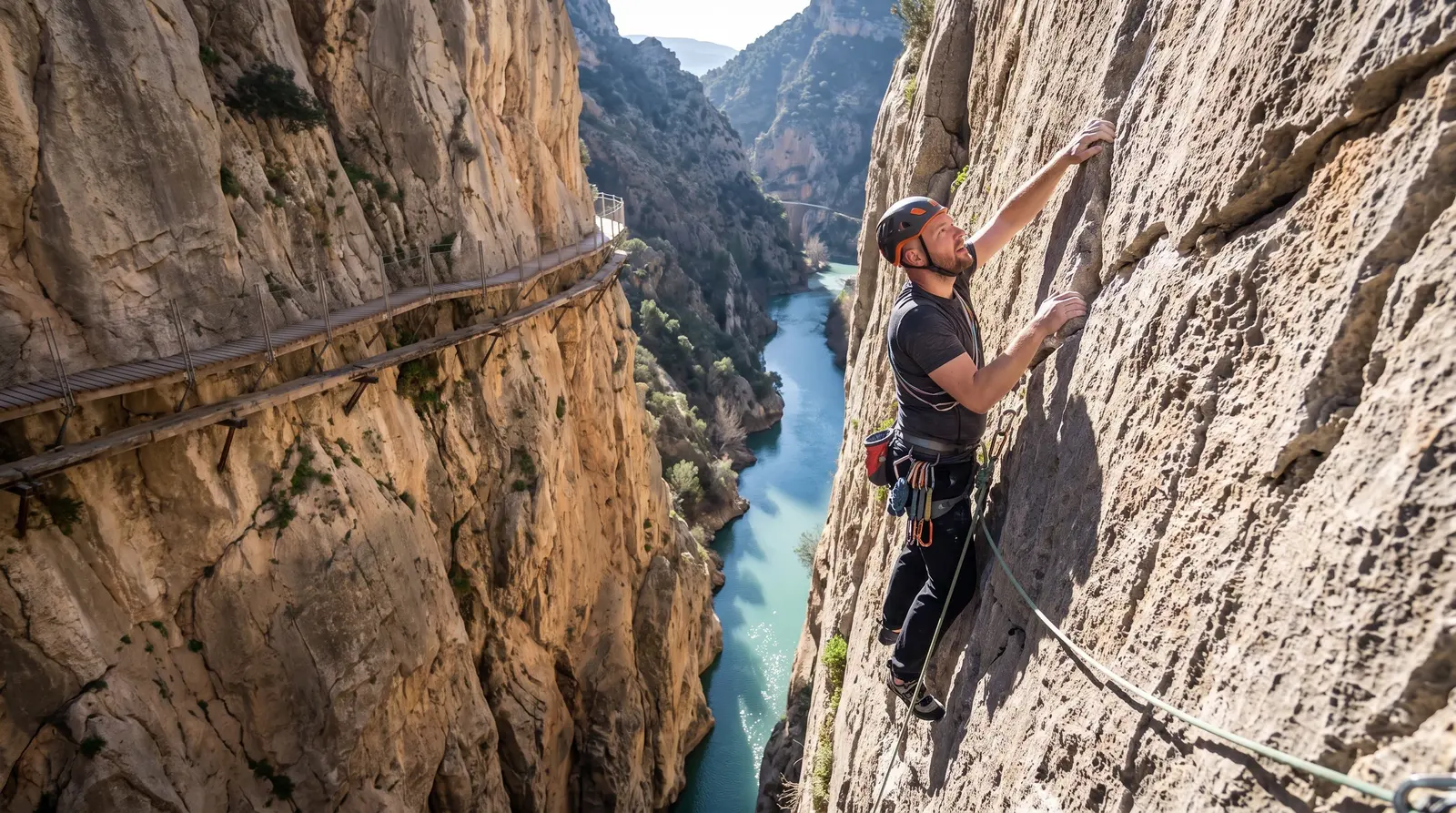
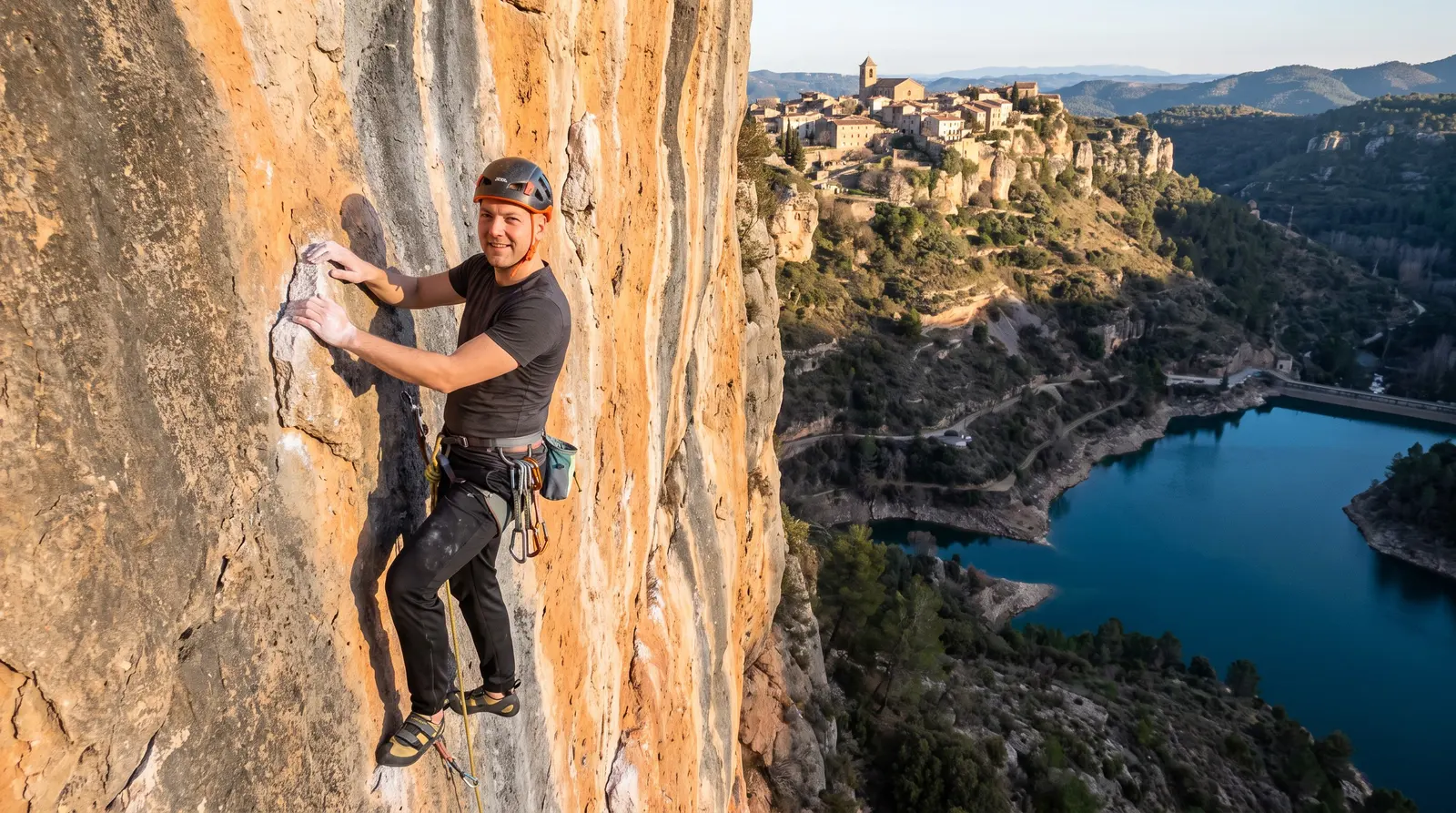
Siurana and Margalef are two of the best sport climbing areas in Europe, and they sit in neighbouring valleys of the Priorat wine region, about two hours from Barcelona. Siurana climbing means steep-to-vertical grey and orange limestone with technical, often crimpy moves and stern grades. Margalef climbing is a different game: conglomerate cliffs full of pockets, from easy slabs to some of the hardest routes in the world. Go between October and May (Siurana is mostly a winter crag, Margalef shines in autumn and spring), base yourself in Cornudella de Montsant or Margalef, and book your Margalef parking online before you drive in.
I'm a strength and conditioning coach, not a local or a mountain guide, so this guide is built from the local sources cited at the bottom: the Montsant Nature Park, the Margalef council's new access system, theCrag/27 Crags, Mountain Project and Catalan news. Rules here changed in 2025, so this page focuses on what is current. For other trips, see our climbing trips and crag guides hub and our list of the best climbing destinations in Europe.
Siurana and Margalef at a glance
| Siurana | Margalef | |
|---|---|---|
Rock | Grey and orange limestone | Conglomerate, full of pockets |
Style | Sport; sustained, technical, crimpy; long pitches | Sport; pockets on slabs, walls and steep caves |
Size | Well over 1,700 routes across the Siurana area crags (theTopo) | 1,831 routes in 95 sectors (2024 guidebook) |
Grade spread | Easy to 9b; grading is known as stiff | About 4 to 9b+; around 600 routes in the 5th and 6th grades |
Best months | November to March for the sunny south faces; autumn and spring with crag choice | September, October, March, April, May; shady routes in summer |
Base | Cornudella de Montsant, Siurana village, Camping Siurana | Margalef village (refuge, free village campsite, apartments) |
Airports | Reus (closest) or Barcelona El Prat (about 1.5 to 2 hours by car) | |
Access rules | Park in the marked lots; no special restrictions listed for the main valley sectors | Paid, booked car access (5 euros per vehicle per day) since October 2025; no overnight stays in the protected area |
Nearby | Montsant (conglomerate, nesting closures), Arbolí, Vilanova de Prades | |
Topos | 27 Crags premium topo (Toni Arbones); local printed guide | Margalef 2024 guidebook (Palau and Ayupova); 27 Crags |
If you think in US grades, our grade converter translates French sport grades, and climbing grades explained covers how the systems compare.
Siurana vs Margalef: which one suits you?
Most visitors climb in both, because they are close enough for day trips from one base. But the rock asks for different things, and that matters for choosing where to spend most of your days.
- Choose Siurana if you like footwork, small edges and long, sustained pitches where the crux is staying calm 30 m up. Mountain Project describes thin, technical lines with incut pockets and sharp edges, and quotes the area as "sternly graded". It is a classic place to learn patience.
- Choose Margalef if you like pockets, varied angles and a bigger choice of easy and moderate routes. Its sectors range from vertical slabs to deep caves, and the pockets reward precise finger placement more than raw crimp strength.
- Climbing with a mixed-ability group or a family? Margalef usually wins: theTopo notes short approaches, safe belay areas and a strong family scene.
- Visiting in deep winter? Siurana's south-facing walls catch the sun, which is why so many climbers come in December to February.
From an S&C point of view, the two areas load your fingers differently. Pockets put more stress on individual fingers, especially in mono and two-finger holds, so ramp up gradually on the first days in Margalef, warm up properly (see our climbing warm-up) and back off if a finger feels "tweaky". Our guide to climbing finger injuries explains the warning signs.
When to go: month by month
| Months | Siurana | Margalef |
|---|---|---|
September to October | Can still be warm; pick shaded walls early in the season | Prime season |
November to February | Prime season on the sunny south faces; cold in the shade and after sunset | Good on sunny days; pick sunny sectors (MargalefClimb publishes a winter top 10) |
March to May | Good; choose shadier walls as it warms up | Prime season |
June to August | Generally too hot for the sunny crags | Shady routes only, early and late in the day |
Two dates matter for crowds. The Montsant Nature Park director told the climbing magazine Lacrux that the regulated Margalef zones exceed their capacity at Easter and at All Saints (Tots Sants, around 1 November). If you can, avoid those weeks or arrive very early. Nesting season matters too: some Montsant crags are closed from 1 January to 15 July (see Access below).
For more winter options, see our winter climbing destinations.
Getting there and getting around
Fly into Reus if there is a flight that suits you, or Barcelona El Prat, which has far more connections. Mountain Project notes that using Reus saves about an hour of driving. From Barcelona, theTopo puts Siurana at about 1.5 hours and Margalef at about 2 hours by car. The route runs via Tarragona and Reus, then the C-242 to Cornudella de Montsant; the Siurana road turns off just past Cornudella.
You realistically need a car. In Siurana many crags are within walking distance of each other once you are there, but you still need to get to the area, shop and reach Margalef or Montsant. The Montsant crags have steep 20 to 40 minute approaches and need a car to reach the parking. Book the rental early for Easter and late autumn.
Where to stay
- Cornudella de Montsant is the practical base for Siurana: cafés, restaurants, small grocery shops and a climbing shop, according to theTopo. Apartments and rooms are the usual options.
- Siurana village and Camping Siurana. The hilltop village has a hotel and the Catalan club refuge (Refugi de Siurana, run by the CEC), and Camping Siurana sits close to the crags. Both are listed in the Montsant park's climber leaflet.
- Margalef village has a refuge, apartments and houses. MargalefClimb reports that the free village campsite, Camping El Pont, is open with no booking needed, while Camping La Presa by the reservoir is closed.
- Vans and motorhomes: overnight stays inside the protected area around Margalef are banned because of fire risk. Use the designated motorhome areas in the villages. We could not find a current official rule on sleeping in the Siurana crag car parks, and reports from van users conflict, so don't plan on it.
The climbing in Siurana
Siurana is the village on the cliff above the Siurana reservoir, in the municipality of Cornudella de Montsant. The climbing wraps around the village and the valley below it. Local developer Toni Arbones, who has bolted routes here since the 1990s, is credited with turning Siurana into a world destination, and he also produces the 27 Crags premium topos for the area.
Valley sectors: El Pati, L'Olla, Espero Primavera
The best-known cluster is reached from a car park on the Siurana road about 4.5 km from Cornudella, with space for around 25 cars. From there a short path leads right to Espero Primavera, or you follow the Camí de Fontescaldes past El Cargol to El Pati and L'Olla. theTopo lists over 270 routes in this group. Classics on Mountain Project include Mayling (6c) at L'Olla, Viagraman (6c+) and Crosta Panic (7a+) at El Pati, Mandragora (7b+) at Espero Primavera and Bistec de Biceps (7b+) at L'Olla.
El Pati is also home to La Rambla (9a+), one of the most famous sport routes in the world: a 41 m line first climbed in its full length by Ramón Julián Puigblanque in 2003, and repeated by Chris Sharma, Adam Ondra and Margo Hayes, whose 2017 ascent was the first female 9a+.
Village and other sectors
Around the village and further out, theTopo lists sectors including the north faces of Siurana, Siuranella (with L'Escamarla, 7c+, among Mountain Project's classics), Can Melafots, Can Piqui Pugui, Grau dels Masets, Corral Nou and La Reina Mora. The north faces give you shade in the warmer months; the south-facing walls are the winter sun traps.
How the grades feel
Expect Siurana to feel stiff, especially if you are used to gym grades or softer holiday crags. A sensible plan is to start two grades below your usual onsight level for the first day or two, learn to read the rock and rest well between attempts. Long, sustained pitches also mean forearm pump is often the limiting factor rather than a single hard move.
The climbing in Margalef
Margalef sits at the western edge of the Montsant massif. Its conglomerate is a natural concrete of stones and pebbles, and erosion has left it riddled with pockets. The 2024 guidebook counts 1,831 routes in 95 sectors, and more than 250 new routes have been bolted and 120 rebolted over the last five years, according to its publisher.
The main zones, by route count on 27 Crags:
- Sant Salvador (about 570 routes), around the hermitage of Sant Salvador. One of the two barrier-controlled parking zones.
- La Catedral (about 425 routes).
- Espadelles (about 335 routes), reached via the reservoir zone.
- Pantano / Embassament (about 320 routes), around the Margalef reservoir. The second barrier-controlled zone.
- La Taverna (about 145 routes) and smaller crags such as Cova de'n Ros.
Grades run from easy 4s to 9b+, and the hard caves have drawn the world's best climbers for two decades. For most visitors, though, the appeal is the huge amount of 6a to 7b climbing on short approaches. MargalefClimb publishes top-10 lists of sunny winter routes and shady spring and summer routes, which makes picking a sector much easier.
Montsant and Arbolí: nearby options
- Montsant is the long conglomerate escarpment above Cornudella, La Morera de Montsant and Escaladei. Turisme Priorat counts about 90 sectors and 1,500 routes on the massif (including Margalef), graded from 3 to 9a+. The Montsant crags themselves offer long endurance climbing on pockets and pebbles, with steep 20 to 40 minute approaches. Sectors include Racó de Missa, El Carrasclet and Totxos de La Morera.
- Arbolí is a nearby village crag listed within the Siurana area, with nearly 400 routes on 27 Crags, a good option when the main Siurana sectors are busy.
- Vilanova de Prades, further into the Prades mountains, is the largest crag in theTopo's Siurana area listing.
Access, rules and ethics
This is the section most competitor guides miss or get out of date. Read it before you go.
Margalef: paid, booked car access since October 2025
- Since 14 October 2025, barriers control vehicle access to the two main climbing zones: Sant Salvador and the reservoir (Pantano/Embassament) zone, including Espadelles. The system is run by the Margalef council with the approval of the Montsant Nature Park.
- Entry requires an online booking and costs 5 euros per car or van per day. Walking or cycling in is free. MargalefClimb reports that moving to the other zone the same day needs a new (free) booking and code, and links the booking page on its current status page.
- Capacity is 210 vehicles at Sant Salvador and 190 in the reservoir zone, according to Lacrux. Climbing itself is not limited.
- Don't park on the verge outside the barriers to dodge the fee. Lacrux reports that some drivers do, and the fee pays for maintaining the parking and the areas (the council put the cost at around 50,000 to 65,000 euros a year).
- No overnight stays inside the protected area because of fire risk.
Montsant Nature Park: nesting zones
Climbing in the Parc Natural de la Serra de Montsant has been regulated since 2006 to protect nesting Bonelli's eagles, golden eagles and peregrine falcons. Crags fall into three types: unrestricted, conditional (seasonal closures) and always prohibited. Crags in the conditional zones are closed from 1 January to 15 July, and some smaller crags are permanently closed. Check the official Montsant climbing regulation map and the access notes on 27 Crags or theCrag for each crag before you walk in.
Siurana
We found no special access restrictions for the main Siurana valley sectors on 27 Crags. Use the marked car parks, which fill on weekends and holidays, and don't block farm tracks. If a crag page or a sign on site shows a closure, follow it.
Ethics everywhere
- Keep noise down near villages and other climbers; pack out all rubbish, including tape and fruit peel.
- Toilets: the park asks climbers to bury human waste in a small hole away from paths and to carry out toilet paper, tampons and wipes.
- No fires, and no camping outside designated areas.
- Don't add bolts or rebolt without talking to the local developers and, in the park, the park authorities.
- Follow good crag manners in general; our climbing etiquette guide covers the basics.
Gear to bring
- Rope: La Rambla alone is 41 m, and many main-sector routes are long, so a 70 m rope is the sensible minimum and an 80 m rope gives extra margin. Always knot the end and check route lengths in the topo. Our climbing rope guide explains length and diameter choices.
- Quickdraws: count the bolts in the topo. The Margalef guidebook lists bolt counts per route; long Siurana pitches need more than the 10 to 12 draws that many gym climbers own.
- Helmet for the belayer and climber, especially under popular walls (best climbing helmets). The park leaflet itself lists helmet, rope and suitable belay systems as essentials.
- Belay device you know well, ideally assisted braking for long days of projecting (best belay devices).
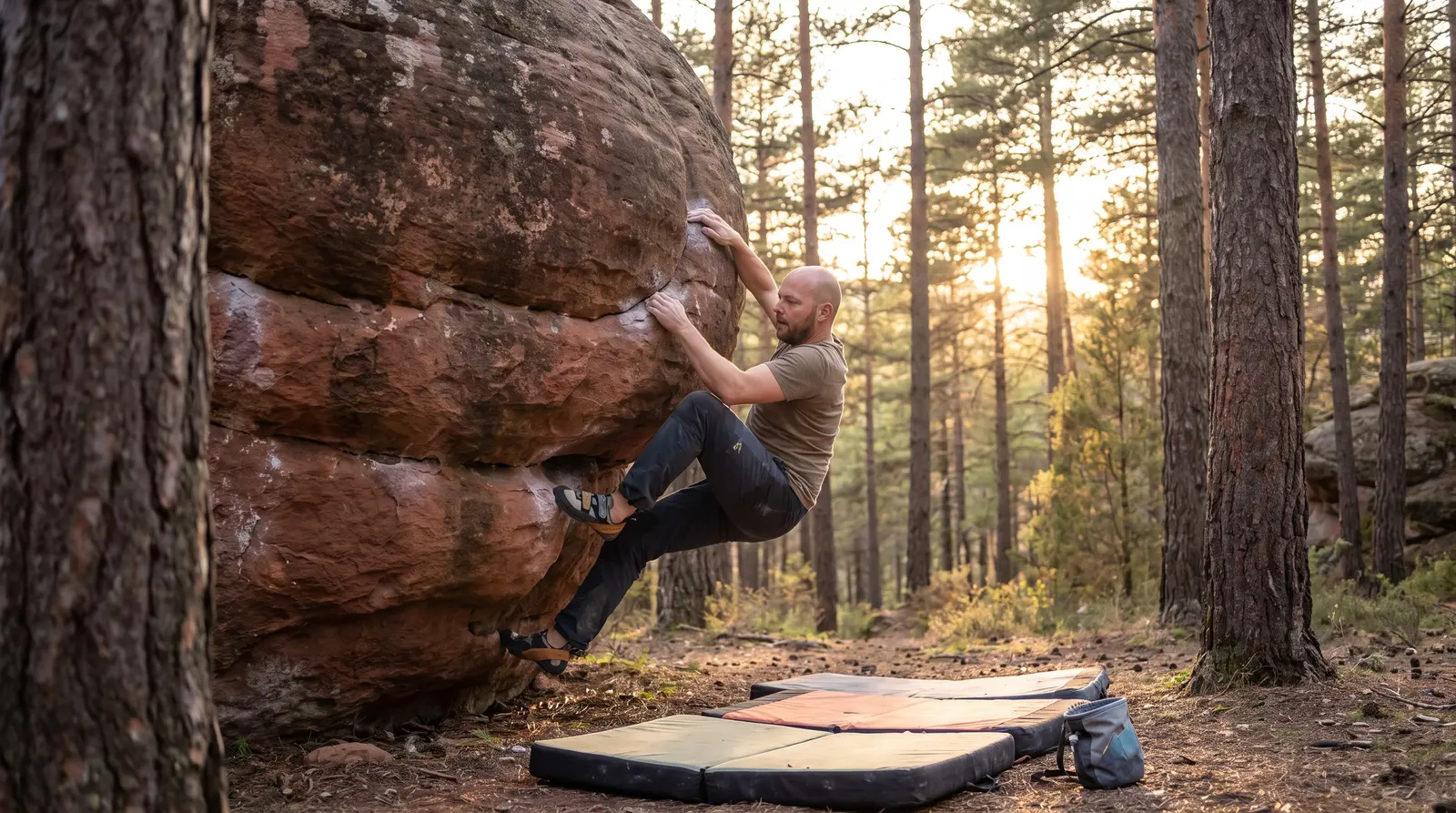
- Shoes: a precise, downturned pair helps on Margalef pockets; a stiffer edging shoe helps on Siurana's small footholds.
- Skin care: both rocks can be sharp. Bring tape, a file and balm (climbing skin care).
- Warm layers for winter belays in the shade, and sun protection for the south faces.
New to outdoor sport climbing? Start with our climbing gear for beginners checklist and learn lowering and cleaning from a qualified instructor before the trip.
Guidebooks and apps
- Margalef (2024 edition) by Vicent Palau and Maya Ayupova, published by Distribuciones Mor: 1,831 routes, 95 sectors, 412 pages, with separate English and Spanish books. It includes approaches, bolt counts and bolters' names. Sold in Margalef and online.
- Siurana: a local printed guide is sold in Cornudella and online; check that you buy the latest edition. The old Rockfax Costa Daurada (2002) is out of date.
- Apps: 27 Crags has premium topos for Siurana and Montsant by Toni Arbones and covers Margalef with offline topos. theCrag has community data for all three areas.
Rest days, costs and safety
Rest days: walk up to Siurana village at sunset, swim or walk around the reservoirs in warm months, visit the Priorat wine villages such as Escaladei, or hike on the Montsant ridge. From an S&C angle, a pattern of two days on, one day off suits most people on a 1 to 2 week trip; skin and finger tendons usually decide the rest day before your muscles do. See how often should you climb.
Costs (in words): the area is cheaper than the Alps and most Mediterranean resort crags. Your main costs are flights, the car, accommodation and the Margalef parking fee. Campsites and the free Margalef village site keep budgets low; apartments are best shared.
Safety:
- Emergency number: 112 (EU-wide, also in the park's leaflet).
- Check bolts and lower-offs; routes are rebolted regularly, but not all at once.
- Loose stones and pebbles can come off conglomerate. Wear a helmet and don't belay right under the wall unless you need to.
- South faces get hot even in winter sun. Carry plenty of water.
- Check that your travel insurance covers sport climbing and rescue. Our climbing travel insurance guide explains what to look for.
A sample 7-day plan
- Day 1: arrive, shop in Cornudella, short session at Espero Primavera or L'Olla (Siurana) well below your limit.
- Day 2: Siurana valley sectors (El Pati, L'Olla). Learn the rock; try one longer route.
- Day 3: Margalef, booked parking at the reservoir zone. Easy and moderate pocket routes to adapt your fingers.
- Day 4: rest: Siurana village, the reservoir or a wine village.
- Day 5: Margalef, Sant Salvador zone. Pick a project for later in the week.
- Day 6: Siurana village or north-face sectors (shade if it is warm), or Arbolí if the main sectors are busy.
- Day 7: back to your favourite crag for the project, then pack and drive to the airport the next morning.
Out of nesting season, swap a day for one of the open Montsant crags. For general trip logistics, see how to plan a climbing trip.
Useful Spanish and Catalan for the crag
Searching in Spanish ("escalada Siurana", "escalada Margalef") brings up more local news on access. A few words help on topos and signs:
| English | Spanish | Catalan |
|---|---|---|
Route | vía | via |
Anchor / lower-off | reunión | reunió |
Parking | aparcamiento | aparcament |
Reservoir | pantano / embalse | pantà / embassament |
Climbing prohibited | escalada prohibida | escalada prohibida |
Siurana and Margalef reward climbers who adapt: patience and footwork on Siurana's limestone, precise fingers on Margalef's pockets. Respect the nesting closures, book your Margalef parking, and you will have one of the best sport climbing trips in Europe. If you want something with easier logistics in the same season, compare El Chorro or Kalymnos.
FAQ
When is the best time to climb in Siurana and Margalef?
Autumn to spring. Most of Siurana's cliffs face roughly south, so Mountain Project notes most visitors come between November and March, and winter sun is strong. Margalef is at its best in September, October and March to May, with shady sectors usable in summer. Easter and the All Saints holiday in early November are the busiest periods.
Do you have to pay to climb in Margalef?
Climbing itself is free. Since 14 October 2025, cars and vans entering the Sant Salvador and reservoir (Pantano/Embassament) zones pass a barrier and need an online booking costing 5 euros per vehicle per day. Walking or cycling in is free. Check the current status on the Margalef booking page before you go, as the system is new.
Is Siurana or Margalef better for beginners?
Margalef has more easy routes: the 27 Crags topo counts about 600 routes in the 5th and 6th French grades. Siurana's easier routes exist but it is known as a sternly graded crag for technical, crimpy climbing, so many visitors drop a grade or two in their first days.
What rope length do I need for Siurana?
Plan for long pitches. La Rambla at El Pati is 41 m, and many routes in the main sectors are long. A 70 m or 80 m rope gives you margin, but always check route lengths in the topo and tie a knot in the end of the rope.
Sources
- Diari de Tarragona / ACN, Regulen l'accés a la zona de Margalef del Parc Natural de la Serra de Montsant (2025)
- MargalefClimb, Current status of Margalef (2025)
- Turisme Priorat, Climbing on the Montsant massif
- Mountain Project, Siurana area page
- theTopo (27 Crags), Siurana area guide
- Lacrux, Auge, limitación, equilibrio: Margalef y el dilema de los puntos calientes de la escalada moderna (2025)