Kalymnos Climbing Guide: When to Go, Where to Climb and What to Bring
 Petr Hess, strength & conditioning coach
Updated 2 Nov 2026 · 14 min read
Key takeaways
Best for: Sport climbers planning a first or repeat trip to Kalymnos
- Go September to November or March to early June; October is peak season and the busiest.
- Fly to Kos, taxi to Mastichari and take the ferry to Pothia; leave a buffer day because wind cancels boats.
- Bring an 80 m rope, 16 to 20 quickdraws and a helmet, and always knot the end of the rope.
- Pick sectors by shade: Grande Grotta and Poets in the morning, north-facing Arginonta Valley and Heroes in the afternoon.
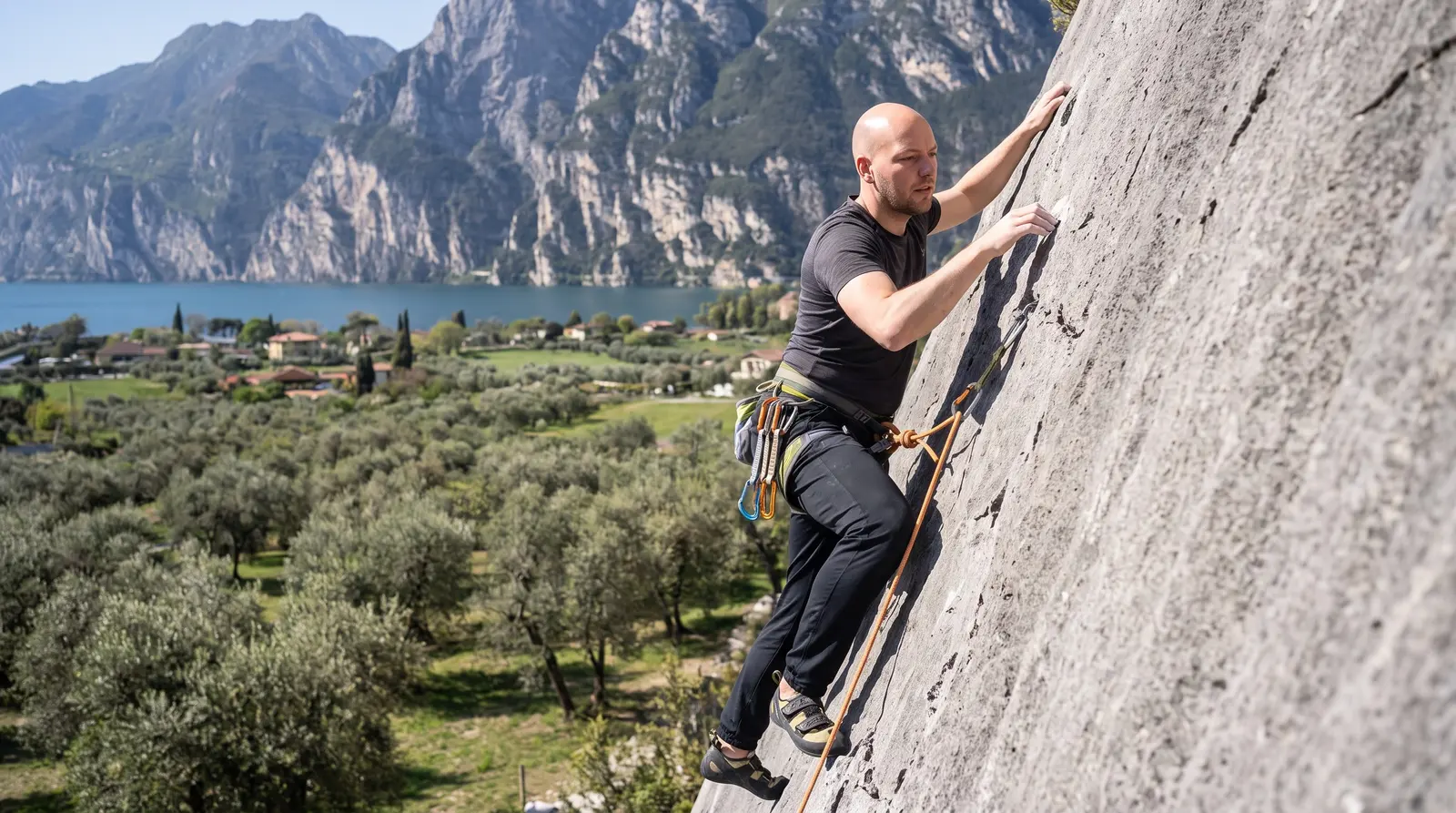
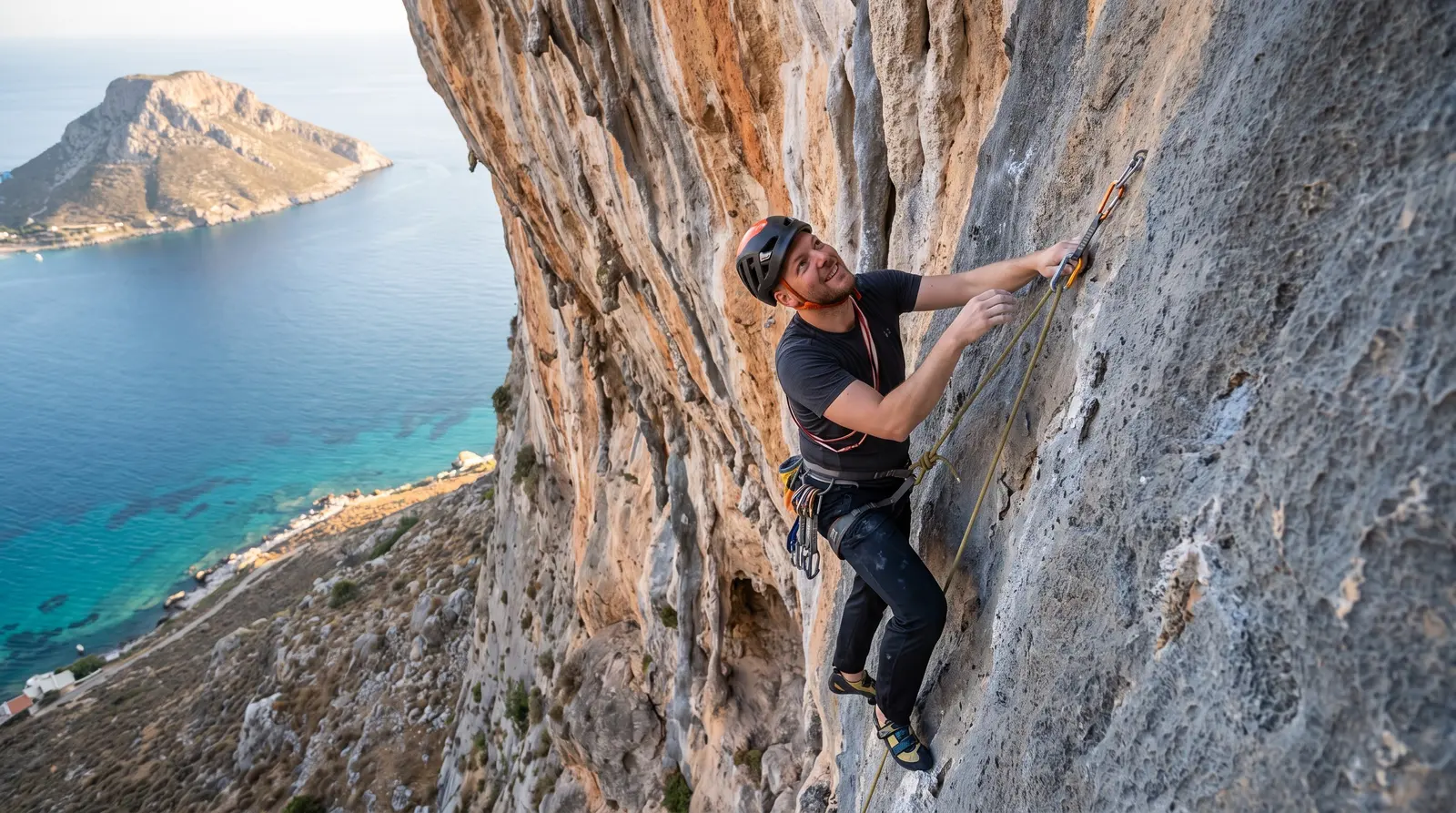
Kalymnos climbing means steep, featured limestone above the Aegean: tufas, caves, stalactites and long single pitches, almost all bolted sport routes, from the 4s up to 9a. Go in autumn (September to November) or spring (March to early June), stay in Masouri or Armeos, rent a scooter if you have the right licence, and bring an 80 m rope and at least 16 quickdraws. It suits everyone from first-time outdoor leaders to 8th-grade climbers, which is why it is one of the most popular sport climbing islands in the world.
I'm a strength and conditioning coach, not a climbing guide or a local. This Kalymnos climbing guide is built from the local guidebook team's published information, the festival organisers, crag databases and climbers' trip reports, all linked below. Where I add anything about training, skin or fatigue, it comes from an S&C point of view. If you are still choosing between islands and crags, our best climbing destinations in Europe and the trips hub compare Kalymnos with the alternatives.
Kalymnos at a glance
| Topic | The short version |
|---|---|
Rock and style | Limestone: slabs, vertical walls, overhangs, caves, tufas and stalactites. Almost entirely bolted single-pitch sport, plus some multi-pitch. |
Size | 4,216 routes in the 2025 guidebook; The Topo lists about 4,600 routes in 71 crags. |
Grades | French sport grades, roughly 4 to 9a. About half the routes are graded below 6b+, and more than 700 are 7b or harder (57hours). |
Best months | September to November and March to early June. October is peak season. |
Nearest airports | Kos (KGS) plus a ferry from Mastichari; Kalymnos (JKL) for domestic flights from Athens. |
Base | Masouri, Armeos and Myrties on the west coast, below the main crags. |
Getting around | Walk, bus, taxi or scooter/car rental. |
Rope and draws | 80 m (260 ft) rope, 16 or more quickdraws; up to 20 for the longest pitches. |
Rest days | Beaches, a boat to Telendos, hiking, Greek food. |
Guidebook | Kalymnos 2025 Edition, Aris Theodoropoulos and Katie Roussos, Vertical-Life (9th edition, November 2024), with a digital version in the Vertical-Life app. |
Emergency | 112. A trained volunteer rescue team has operated on the island since 2013. |
Why Kalymnos is worth the trip
Three things set Kalymnos apart from most sport crags.
- Volume and density. Thousands of routes sit within a short scooter ride of each other, and many of the best-known sectors are a 10 to 25 minute walk from the coast road. The local guidebook team keeps bolting new sectors every year, funded partly by guidebook sales.
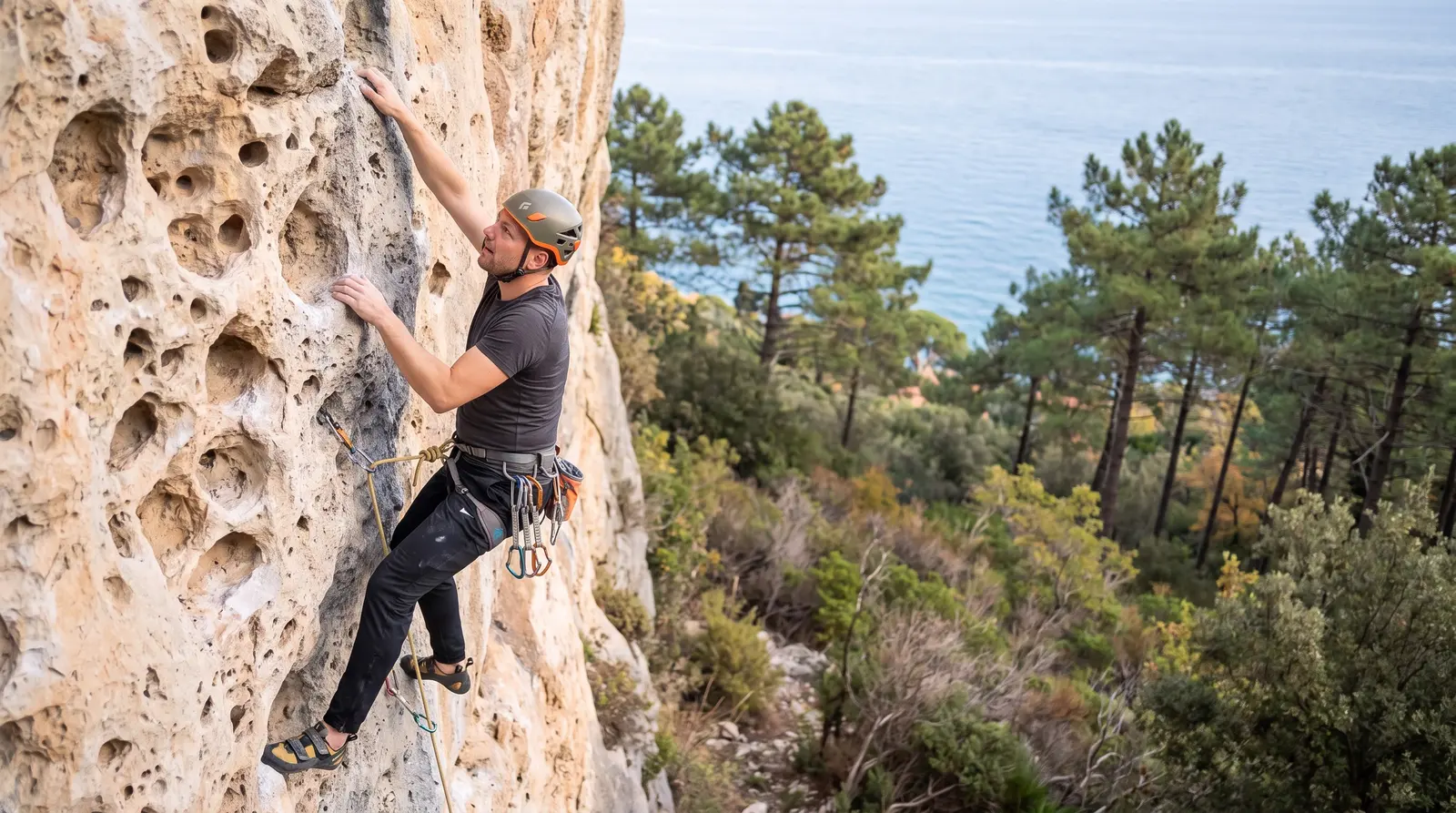
- The style. Kalymnos is famous for tufas: vertical ribs and blobs of limestone that you pinch, bridge and even kneebar. Even moderate routes can be steep but juggy, which feels very different from the crimpy vertical limestone of many European crags.
- Range. There are beginner slabs, long 6a to 6c endurance pitches, classic 7a tufa lines and world-class hard routes such as Los Revolucionarios (9a). Mixed-ability groups and families do well here.
Grades use the French system. If you think in YDS, 6a is roughly 5.10a, 7a roughly 5.11d and 7c roughly 5.12d; our grade converter and climbing grades explained guide cover the rest. Climbers' reports differ on whether Kalymnos feels soft or stiff. What matters more is the style: if you only climb on vertical crimps at home, 50 m of steep tufa will pump you out at a grade you'd normally cruise.
Best time to climb Kalymnos: month by month
The festival organisers describe autumn and spring as the best seasons, but the island's mix of aspects means you can climb year-round if you choose crags by sun and wind. The Topo gives September to November and March to early June as the best conditions.
| Months | Conditions | How to climb them |
|---|---|---|
September | Warm, often hot in the sun. | Climb shaded walls in the morning or late afternoon; north-facing sectors in the middle of the day. |
October | Peak season; usually ideal temperatures. | Expect queues on classics at the Grande Grotta, Poets and other popular sectors. Book flights and rooms early. |
November | Cooler, quieter, more chance of rain and wind. | Good friction. Sunny walls become pleasant; check ferry forecasts. |
December to February | Cool, wetter and windier; many businesses close. | Possible on sunny, sheltered walls, but plan for rain days and ferry cancellations. |
March to early June | Second main season. Spring can bring a little more rain, but the rock dries quickly. | Similar strategy to autumn; by late May, shade matters again. |
Late June to August | Hot and humid in the sun. | Only for hardened summer climbers: shaded, breezy sectors such as Secret Garden, Arginonta Valley and Heroes. Caves like Sikati can be too hot and humid. |
The Kalymnos International Climbing Festival is organised by the Municipality of Kalymnos, has run since 2000 and is held in autumn (October in recent years). It brings talks, films, social events and a lot of climbers, so the island is busiest that week. Dates change each year: check kalymnosclimbingfestival.gr before you book if you want to join it, or avoid it.
How to get to Kalymnos
Via Kos (the usual route)
Most climbers fly into Kos, then take a taxi of about 10 minutes from the airport to the port of Mastichari, where ferries leave for Pothia, the main town on Kalymnos. The guidebook team's travel page suggests agreeing the taxi price first, and buying ferry tickets at the kiosks by the pier. The festival organisers put the fast crossing at around 30 minutes; slower car ferries take longer. Ferries from Kos town to Pothia also run.
Two practical notes from the guidebook team and climbers' reports:
- Wind cancels boats. The guidebook team says only severe winds disrupt the ferries and that this is relatively rare, but it does happen. Don't book a tight connection to your flight home.
- Timetables change often, and return services can be limited at weekends. Check the current timetable for your exact dates.
Via Athens
Kalymnos has its own small airport (JKL) with domestic flights from Athens, and year-round ferries run from Piraeus, Athens' port. The ferry takes roughly 9 to 14 hours depending on the route. Flights to the small airport can be cancelled in gusty winds, so build in a spare day.
From the port to Masouri
Taxis wait at Pothia port and the ride over the hill to Masouri takes about 20 to 30 minutes; Wikivoyage puts the fare at about €15 and advises insisting on the meter. Buses link Pothia with the west-coast villages. Many apartments offer a pickup if you ask.
Getting around: scooter, car, bus or walk
You can climb for a week without wheels: the Poets approach, for example, starts near the coast road in Armeos, and the Grande Grotta is about a 20 minute walk up from the coast. But a scooter or small car opens up the quieter crags on the north and east of the island (Arginonta, Skalia, Pezonda) and makes rest days easier.
- Licence: the guidebook team says scooter rental requires a licence for 50cc motorbikes, and non-EU drivers technically need an international driving permit. Riding without the right licence can also void your travel insurance after an accident.
- Roads are mostly paved but narrow, winding and sometimes worn. Wear the helmet the rental agency gives you, carry the rope on your back rather than balanced on the footboard, and don't ride tired after a long day.
- Cars are usually manual. Wikivoyage lists scooter rental from about €10 per day in tourist areas; prices vary by season.
Where to stay
Base yourself on the west coast, under the main crags:
- Masouri: the climbers' and tourist centre, with apartments, studios, restaurants and bars along the busy main road.
- Armeos: next to Masouri and closest to the Poets and Grande Grotta approaches.
- Myrties: a short way along the coast road, with the boat pier for Telendos.
Most accommodation is self-catering studios and small family-run apartment blocks, plus a few hotels. In October, book well ahead.
The climbing: Kalymnos sectors by level and shade
With 70-plus crags, the main skill is matching sector to time of day. Use the crag planner in the guidebook or app for exact shade times; the examples below come from the guidebook team's sector pages and published sector descriptions.
The big classics above Masouri and Armeos
- Grande Grotta. The iconic cave of stalactites and tufas, facing south-west to west. It stays in the shade until about 14:00 on the right and 15:00 on the left in spring and autumn, so climb it in the morning. Classics include DNA (7a), a pumpy jug-filled tufa line that most visitors queue for, and Aegialis (7c) on the cave's edge. Bergsteigen.com recommends an 80 m rope, with a second rope for a few routes; approach about 20 minutes.
- Panorama. Right of the Grande Grotta, mostly 6b to 7a, with steep tufa routes such as Cyclops (6c) and big views over Telendos.
- Poets. The closest sector to Armeos and Masouri, with one of the highest concentrations of classic moderate routes on the island. It is in the shade in the morning and is one of the busiest walls, so arrive early.
- The Seaside Kitchen (Ghost Kitchen). A large, popular sector (132 routes on The Topo) with stalactites in the centre and technical slab climbing on the sides.
- Arhi. Long slabs, mostly 6a to 6b with a few 6c. The guidebook team calls an 80 m rope essential here.
- Odyssey. One of the island's biggest crags, with about 140 routes listed on The Topo. Expect company in peak season.
Shady sectors for warm days
- Arginonta Valley. North-facing, about a 5 minute walk, with slabs, bulges and steep overhangs, mostly 5c to 7a. Shade from about 11:30 (Left Cave and Right Wall) or 12:30 (Middle Wall) for the rest of the day, according to the guidebook team's sector notes. Respect fences and gates: access here once depended on goodwill with a local shepherd.
- Heroes, above Skalia. North-west facing, about 25 routes up to 20 to 25 m long, walls in shade until about 14:00 and the cave interiors until about 15:00. The sector page asks for at least a 70 m rope and 16 quickdraws.
- Secret Garden. Tufa climbing that climbers recommend in summer because it is shady and breezy.
Further afield
- Sikati Cave. A classic deep cave, well worth the trip in cool conditions, but often too hot and humid in summer.
- Pezonda. A newer crag on the north-east coast, on the Arginonta to Vathy road, about a 20 minute walk in. The Valhalla sub-sector has outstanding orange rock (for example Heidrun 6b+, Ymir 7b, Valhalla 7b+). The guidebook team asks for an 80 m rope on the Lemon Crumble Wall, notes that beehives are often kept nearby, and warns there is no mobile phone signal. Helmets are mandatory on the loose Lemon Crumble Wall.
- Telendos. The island facing Masouri, a few minutes by boat from the pier in Myrties. It has single-pitch sectors (for example Pescatore, with routes from 5b+ to 8a+) and adventurous multi-pitch routes. Check the last boat back before you set off.
If you are new to outdoor sport climbing
Kalymnos is a good first sport-climbing trip, but not a place to learn to lead from scratch. Polished classics, long pitches and lowering off 35 to 40 m routes add risk. If you have only climbed indoors, read our climbing gear for beginners guide, and consider a course or a local guide for your first days: several companies on the island run beginner and learn-to-lead courses. Start on moderate slabs and vertical walls (Arhi, Arginonta Valley, the easier parts of Poets) before the steep caves.
Gear to bring
| Item | Recommendation | Why |
|---|---|---|
Rope | 80 m (260 ft); 70 m (230 ft) minimum | Many newer routes and classics need more than 60 m. The guidebook team recommends 80 m for Arhi and Pezonda's Lemon Crumble Wall, and Bergsteigen.com for the Grande Grotta. |
Quickdraws | 16 minimum, 20 for the longest pitches | Long pitches; some cave routes and extensions eat draws. |
Belay device | Assisted-braking device you know well | Long, steep routes mean long lowers and big falls. See our belay device guide. |
Helmet | Yes, especially for multi-pitch and newer crags | Loose rock on newer or less-travelled sectors; mandatory on some walls. See our climbing helmet guide. |
Knee pads | Optional | Useful on tufa and cave routes with kneebars. |
Shoes | A comfortable pair plus a steeper, downturned pair | Long slabs reward comfort; caves reward toe power. |
Skin kit | Tape, balm, nail file | Sharp limestone and tufa pinches wear skin fast. See our climbing skin care guide. |
Sun and water | Hat, sunscreen, 1.5 to 2 L of water each | Many approaches are in the sun, even to shaded crags. |
Why does rope length matter so much here? On a 40 m pitch, a 70 m rope leaves you short when lowering, and a rope that runs through the belay device can drop the climber to the ground. Wikivoyage, the guidebook team and the sector pages all repeat the same rule: tie a stopper knot in the end of the rope, every time, and check the route length in the guidebook before you climb. A bicolour or middle-marked rope helps on long lowers. Our climbing rope guide explains diameters, dry treatment and length in more detail.
The Edelrid Tommy Caldwell Eco Dry CT 9.3 comes in 80 m on Edelrid's spec sheet, and its ColorTec construction changes colour at the middle, which makes long lowers easier to judge. A 9.3 mm rope is light for its length but wears faster than a thicker workhorse; if you'll be top-roping and working routes all trip, a 9.5 to 9.8 mm 80 m rope is the more durable choice. Skip it if you already own a 70 m rope and plan to stick to sectors that the guidebook marks as fine for 70 m.
Access, ethics and rules
We found no climbing permit or crag fee mentioned in the sources we checked. What the guidebook team and sector pages ask:
- Buy the guidebook or app. Sales fund bolts and lower-offs for new sectors and the rebolting of older ones.
- Respect private land. Use the marked approach trails, close gates, keep away from goats and beehives, and never cut fences.
- Keep children away from the base of the cliffs and never directly below climbers. Stonefall from parties above is a real risk at busy sectors.
Plus the general good practice that applies at any bolted crag: when several people top-rope a route, run the rope through your own quickdraws and let only the last climber lower through the fixed lower-off, which saves wear on the anchors. Take your rubbish and used tape home. Many of the shared-crag manners in our bouldering etiquette guide apply here too.
Some sectors have specific notes (helmet zones, fixed-rope approaches, nesting or grazing areas). Read the sector intro in the guidebook before you go.
Guidebooks and apps
- Kalymnos 2025 Edition by Aris Theodoropoulos and Katie Roussos, published by Vertical-Life (9th edition, November 2024). The official site lists 4,216 sport routes on 624 pages with a fold-out crag map, a crag planner and GPS coordinates for every sector. It is in English and comes with a digital version.
- Vertical-Life app: the digital version of the guidebook.
- The Topo (formerly 27 Crags) and theCrag: crowd-sourced topos and logbooks, useful for recent comments, but the official guidebook is the reference for route lengths and safety notes.
- climbkalymnos.com: the guidebook team's site, with new-sector news, maintenance updates and travel tips.
Rest days, costs and safety
Rest days
Take a boat from Myrties to Telendos for lunch and a swim, hike, or spend a day on the beach. From a training point of view, plan a rest day every second or third day: Kalymnos routes are long and steep, and fatigue builds over consecutive days, which is when fingers and elbows tend to complain. Our forearm pump guide explains why endurance falls apart when you climb on consecutive days, and a proper climbing warm-up on an easy route before the tufa project is cheap insurance.
Costs
Flights and peak-season October rooms are the big variables; self-catering studios and taverna meals keep daily costs down, and scooter rental is a modest daily extra. Prices change every year, so we don't quote them beyond the examples above.
Safety
- Emergency number: 112. The island has a trained volunteer rescue team (since 2013). Some crags, such as Pezonda, have no mobile signal: tell someone where you are going.
- Heat: dehydration and heat exhaustion are the most common trip-wreckers in September and May. Climb in the shade, start early.
- Loose rock on newer or less-travelled routes. Wear a helmet, and don't stand under the climber.
- Rope length and lowering: knot the end of the rope, close the system, and communicate clearly before lowering.
- Scooters: road accidents are a real risk on narrow mountain roads.
- Insurance: make sure your policy covers sport climbing and rescue, and scooter riding if you rent one. See our guide to climbing travel insurance.
A sample 7-day Kalymnos plan
This plan assumes autumn or spring and a mid-grade group (6a to 7a). Swap sectors by the guidebook's shade times on the day.
- Day 1, arrival and easy mileage: Poets in the morning shade. Climb several grades below your limit, check how the grades feel and how your skin copes.
- Day 2, the classic cave: Grande Grotta and Panorama in the morning while they are in the shade. Try DNA or Cyclops if they're at your level.
- Day 3, slab and endurance: Arhi or Arginonta Valley (shade from late morning). Long, less steep routes give your forearms a break.
- Day 4, rest: boat to Telendos, beach, swim and eat well.
- Day 5, tufa day: the Seaside Kitchen or Odyssey, or Secret Garden if it's warm.
- Day 6, explore: scooter to Pezonda or Heroes for quieter rock in the afternoon shade.
- Day 7, finish easy: a short morning session on favourites, then pack. Leave a buffer for ferry delays on the way home.
For packing, our trip packing list covers the non-rope essentials, and how to plan a climbing trip walks through budgeting and logistics. If you want another limestone sport trip afterwards, compare Kalymnos with the Finale Ligure climbing guide, the El Chorro climbing guide or our list of winter climbing destinations.
FAQ
When is the best time to climb in Kalymnos?
Autumn and spring. The Topo gives September to November and March to early June as the best months, and October is the busiest. Summer and winter are possible if you pick crags by shade, wind and rain: north-facing sectors such as Arginonta Valley or Heroes in the heat, sunny walls in winter.
What rope length do I need for Kalymnos?
Bring an 80 m (260 ft) rope. A 60 m rope still works on many older routes, but many newer routes and some classics need 70 m or more, and 80 m is recommended for long crags such as the Grande Grotta, Arhi and parts of Pezonda. Always tie a knot in the end of the rope.
How do I get to Kalymnos?
Most climbers fly to Kos, take a short taxi to the port of Mastichari and catch a ferry to Pothia, the main town on Kalymnos. Kalymnos also has a small airport with domestic flights from Athens, and ferries run from Piraeus (Athens) in roughly 9 to 14 hours.
Do I need a scooter in Kalymnos?
Not strictly. Many popular sectors are walkable from Masouri and Armeos, and buses and taxis run on the main road. A scooter or car makes the outlying crags (Arginonta, Skalia, Pezonda) much easier. To rent a scooter you need the right licence for that vehicle class, not just a car licence, so check before you travel.